Healthcare facilities planning sterile processing department upgrades face storage overhaul cost considerations ranging from $500,000 to over $12 million. The global sterilization equipment market reached $18.33 billion in 2025 and continues expanding at 7.3% annually through 2031. Rising surgical volumes, stricter infection control requirements, and equipment complexity drive SPD investment in comprehensive renovations that directly impact patient safety and operational efficiency.
Understanding true project costs requires evaluating equipment purchases, construction expenses, technology integration, and long-term operational factors. Modern SPD investment decisions involve multidisciplinary Value Analysis Committees balancing clinical needs with financial constraints while ensuring regulatory compliance. Facilities must develop budgeting strategies accounting for initial capital expenses alongside projected maintenance, utility consumption, and workflow improvements over equipment lifespans.
Key Takeaways
A sterile processing storage overhaul involves comprehensive renovation of SPD infrastructure including equipment replacement, workflow redesign, and facility construction. Healthcare facilities undertake these projects to address infection control requirements, accommodate surgical growth, and modernize outdated storage systems that compromise patient safety. The SPD serves as the operational heart of hospitals, directly affecting surgical throughput and compliance with CDC and Joint Commission standards.
Aging equipment, inefficient layouts, and insufficient capacity create workflow bottlenecks, delaying procedures and increasing contamination risks. Modern overhauls integrate advanced storage solutions with strict dirty-to-clean separation protocols required by FGI guidelines. Facilities experiencing instrument loss, extended turnaround times, or compliance violations require systematic renovations addressing both physical infrastructure and operational processes.
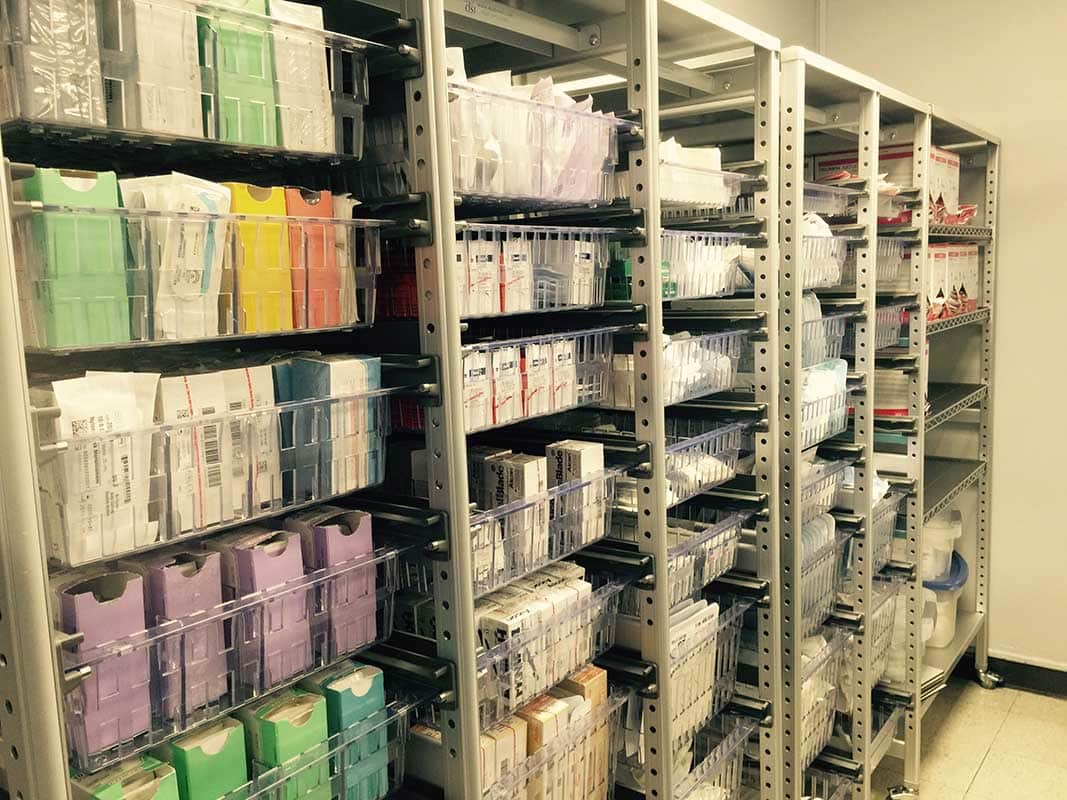
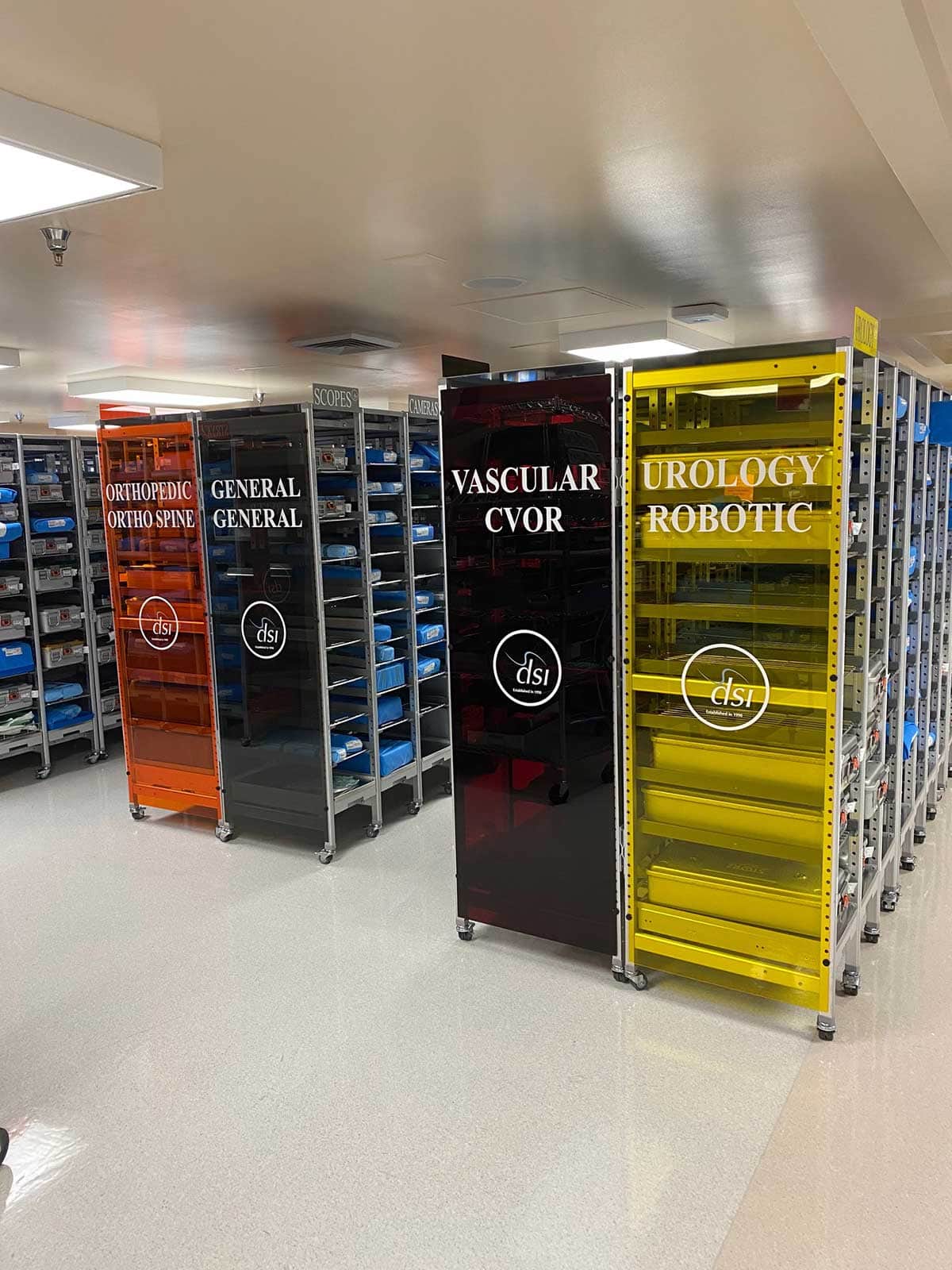
Sterile processing storage encompasses all systems used to store, organize, and transport surgical instruments throughout decontamination and sterilization workflows. These systems include stationary cabinets, medical carts, high-density shelving, pass-through units, and automated tracking solutions that maintain instrument integrity. Proper storage protects sterile instruments from contamination while enabling efficient inventory management and rapid retrieval for surgical procedures.
Storage systems must support regulatory compliance, prevent instrument damage, and facilitate accurate inventory tracking across departments. Facilities prioritize solutions reducing staff search time, minimize expired supplies, and support real-time visibility into instrument availability.
Core components include decontamination area storage, sterilization equipment housing, sterile instrument storage, and case cart preparation zones. Each zone requires specialized storage addressing unique environmental controls, workflow patterns, and compliance requirements. Integration between zones ensures smooth instrument progression from dirty receiving through final sterile distribution without contamination risk.
Supporting infrastructure encompasses environmental controls, pass-through barriers enforcing workflow separation, and inventory management technology enabling instrument tracking. Modular storage systems provide flexibility for future expansion while maintaining strict compliance with sterilization protocols. Facilities select components based on surgical volume, instrument complexity, and available space.
Modern storage overhauls reduce surgical site infections by maintaining proper instrument sterility throughout processing and storage phases. Research indicates 87% of hospitals prioritize cost reduction, while 76% emphasize resource optimization through improved SPD efficiency. Effective storage systems prevent instrument loss, reduce processing time, and ensure consistent availability for scheduled procedures.
Workflow improvements directly translate to reduced labor costs as staff spend less time searching for supplies. Enhanced inventory visibility prevents overstocking and waste from expired products. Facilities achieving efficient SPD operations experience improved OR readiness, reduced procedure delays, and measurable improvements in regulatory compliance scores.
Market expansion drives equipment innovation and pricing competition among manufacturers. The global sterilization equipment market, valued at $18.33 billion in 2025, is projected to reach $27.60 billion by 2031 with sustained 7.3% growth. Parallel markets, including sterilization services ($3.52 billion to $5.49 billion by 2030) and surgical storage cabinets ($1.41 billion to $1.65 billion by 2031), demonstrate comprehensive industry expansion.
Technology advancement, particularly in instrument tracking systems, shows accelerated 10.2% annual growth reaching $627.4 million by 2030. These emerging capabilities command premium pricing but deliver measurable ROI through reduced instrument loss and improved inventory management. Facilities evaluating storage investments must consider how market trends affect both initial purchase costs and long-term value propositions.
The sterilization equipment segment commands the largest market share, while specialized tracking and automation systems demonstrate the fastest expansion rates. Surgical storage cabinets maintain steady 2.3% growth, reflecting mature market dynamics. Sterilization services grow at 7.9% annually as outsourcing becomes viable for facilities lacking capital for complete overhauls.
Market segmentation reveals diverse growth patterns with automation and smart storage capturing increasing budget allocations from large health systems. Academic medical centers and large hospitals drive premium equipment adoption while community hospitals favor cost-effective modular solutions.
RFID tracking, automated inventory management, and environmental monitoring sensors transform traditional storage into intelligent systems providing real-time data. These technologies enable predictive maintenance, prevent instrument loss, and support data-driven decision making for Value Analysis Committees. Integration costs range from $50,000 to over $200,000, but deliver substantial efficiency gains through reduced labor and improved asset utilization.
Smart storage systems interface with hospital information systems, providing comprehensive visibility across the supply chain and clinical workflows. Cloud-based platforms enable remote monitoring, automated reordering, and performance analytics supporting continuous improvement initiatives. Facilities planning long-term SPD investment increasingly prioritizes technology-ready, high-density storage infrastructure supporting future capability expansion without requiring complete system replacement.
Large hospitals and academic medical centers demonstrate 92% adoption rates for advanced storage systems compared to 78% among mid-size community hospitals. Geographic distribution affects procurement strategies, with urban facilities handling higher surgical volumes requiring premium equipment. Rural hospitals, accounting for 45% of hospital beds in 2023, face tighter capital constraints, favoring durable, low-maintenance solutions.
The United States operates approximately 6,100 hospitals with over 907,000 staffed beds, creating substantial demand for storage infrastructure. Ambulatory surgical centers represent the fastest-growing segment as outpatient procedures shift from traditional hospital settings. ASC facilities favor compact, high-efficiency systems maximizing storage capacity within space-constrained environments.
Healthcare procurement relies on multidisciplinary Value Analysis Committees balancing clinical requirements with financial constraints and compliance obligations. VACs include physicians, nurses, supply chain specialists, clinical engineers, and administrators, ensuring comprehensive evaluation perspectives. Committee processes prevent individual department preferences from driving purchases, lacking broader organizational value.
Successful equipment selection requires engaging VACs early in planning phases before capital budget requests or vendor demonstrations. Comprehensive evaluation considers Total Cost of Ownership over 5-to-10-year periods rather than focusing solely on initial purchase prices.
VACs provide structured evaluation frameworks ensuring equipment purchases deliver measurable value, supporting patient care and operational efficiency. Committee composition brings diverse expertise, preventing siloed decision-making that overlooks interdepartmental impacts. Early VAC engagement enables thorough vendor evaluation, pilot testing, and stakeholder input before committing substantial capital resources.
Effective committees establish clear evaluation criteria weighted according to facility priorities and strategic objectives. Members review clinical evidence, reference facility experiences, and evaluate vendor support capabilities alongside equipment specifications.
Quality assessment focuses on equipment performance, durability, and proven efficacy, maintaining sterilization standards required by regulatory bodies. Clinical outcomes remain paramount, with patient safety considerations outweighing cost savings that compromise infection control effectiveness. Equipment must demonstrate compliance with FDA requirements, Joint Commission standards, and FGI guidelines.
Financial evaluation extends beyond purchase price to a comprehensive cost analysis, including installation, training, maintenance contracts, and consumable supplies. Vendor support capabilities, including maintenance response times, staff training programs, and technical expertise, significantly impact long-term equipment value.
Total Cost of Ownership analysis reveals operational expenses, including utilities, maintenance, labor, and consumables, often exceeding initial capital investment. Five-year TCO projections identify cost avoidance opportunities through improved efficiency, reduced waste, and lower labor requirements, offsetting premium equipment prices. Facilities making purchase decisions solely on the lowest bid frequently experience higher long-term costs from maintenance issues and operational inefficiencies.
Strategic budgeting evaluates equipment ROI through both hard savings, like reduced utility consumption, and soft savings, including improved workflow efficiency. Premium equipment with higher initial costs often delivers superior long-term value through lower failure rates and reduced maintenance requirements.
Sterile processing storage is divided into four primary categories, each serving distinct workflow requirements. Market share distribution shows stationary cabinets commanding 40%, mobile solutions 35%, pass-through units 15%, and automated systems 10% of total storage investment. Category selection depends on facility size, surgical volume, available space, and budget allocation.
Equipment manufacturers, including STERIS, Getinge, and specialized storage providers, offer solutions across all categories. Facilities typically combine multiple storage types, creating integrated systems supporting complete instrument processing workflows. Category pricing ranges from under $2,000 for basic mobile carts to over $200,000 for comprehensive automated tracking systems.
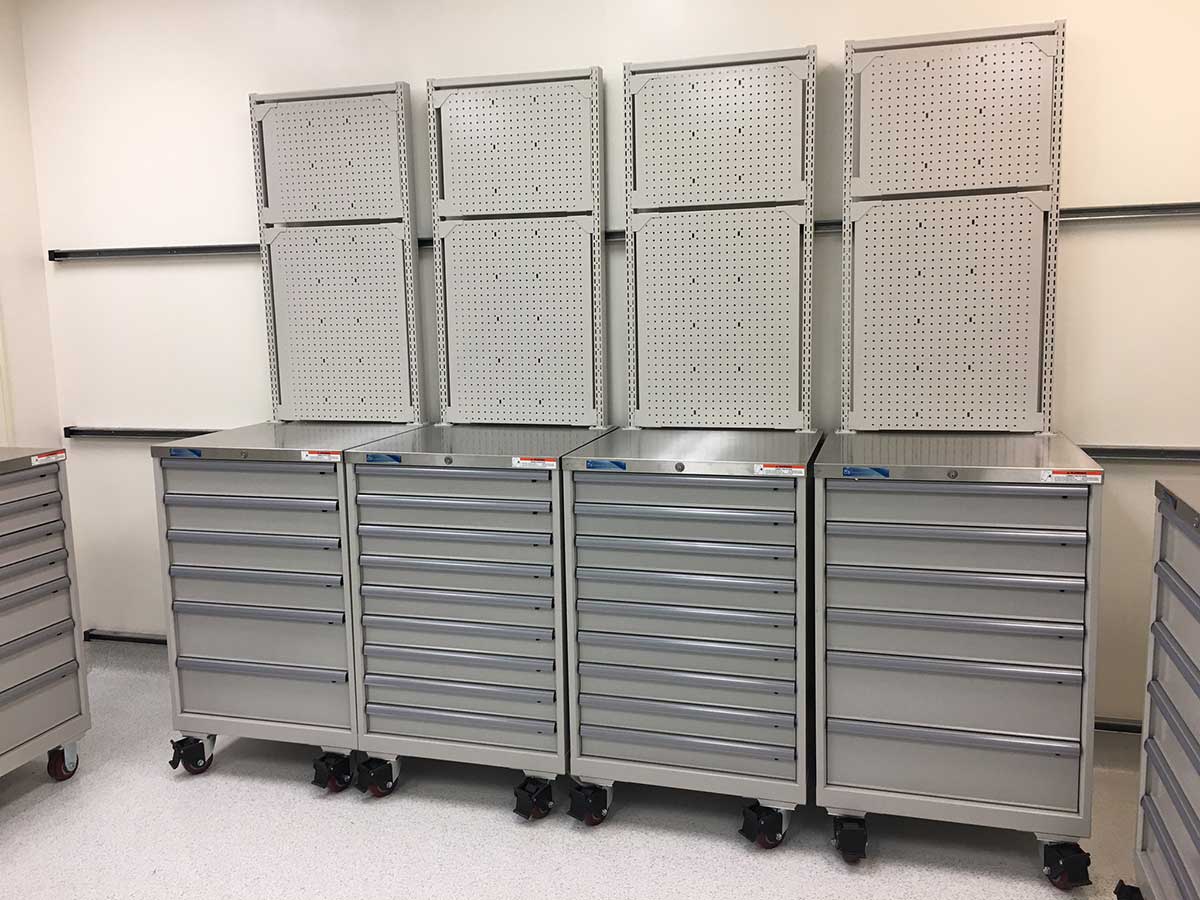
Stationary storage cabinets hold approximately 40% of the storage segment market share with pricing from $3,500 to $10,685 per unit. These stainless steel products feature modular designs, adjustable shelving, and glass doors providing visibility while maintaining sterile environments. Permanent installations offer maximum durability and customization, fitting specific room dimensions.
Facilities undergoing complete gut-and-rebuild renovations favor stationary cabinets providing long-term structural solutions. Disadvantages include limited layout flexibility once installed and higher initial construction costs.
Mobile storage carts represent 35% of the segment market share with units priced between $1,864 and $4,196. Lightweight construction using aluminum or polymer materials with locking casters enables flexible positioning and instrument transport between departments. Wire shelving configurations maximize space utilization in constrained environments while supporting frequent workflow reconfigurations.
High-density mobile systems particularly benefit ASCs and mid-size hospitals lacking space for extensive permanent installations. Open shelving designs require strict environmental controls, maintaining sterility, but facilitate rapid instrument access and visual inventory management.
Pass-through cabinets hold 15% market share, ranging from $8,000 to $25,000 per unit, requiring significant structural modifications. Double-door designs with electronic interlocks and optional HEPA filtration enforce strict dirty-to-clean workflow separation critical for FGI compliance. These scope cabinets and specialized units prevent contamination while streamlining instrument progression through processing phases.
Automated smart storage systems represent 10% market share with integration costs from $50,000 to over $200,000. RFID tracking, automated inventory management, and environmental monitoring deliver real-time data supporting operational decision-making and compliance documentation. Premium health systems and academic medical centers increasingly adopt these technologies despite higher costs, given substantial efficiency gains and improved instrument accountability.
Complete SPD overhauls range from $500,000 for small facility renovations to over $12 million for large health system projects. Budget classifications depend on facility size, construction scope, equipment selection, and technology integration levels. Cost variation stems primarily from construction expenses averaging $700-$730 per square foot for new healthcare facilities. Gut-and-rebuild renovations cost approximately 55% of new construction at $385 per square foot, while moderate renovations average 35% at $245 per square foot. Equipment purchases represent 20-30% of total project costs.
Budget overhauls for small facilities and ASCs range from $500,000 to $1,500,000, including storage systems costing $20,000 to $40,000. These projects prioritize essential equipment replacement and workflow improvements without extensive construction or technology integration. Mid-range overhauls for medium hospitals span $2,000,000 to $5,000,000, incorporating comprehensive equipment updates and moderate facility renovations.
Premium overhauls for large health systems reach $5,000,000 to $12,000,000+, including advanced automation, extensive construction, and complete workflow redesign. Storage system investments in premium projects range from $300,000 to $600,000, supporting sophisticated inventory management and instrument tracking capabilities. Additional costs, including design services, project management, and contingency planning, add 15-20% to base equipment and construction budgets.
New healthcare construction, averaging $700-$730 per square foot, represents the highest cost scenario for facilities requiring complete building additions. Gut-and-rebuild renovations at 55% of new construction costs ($385 per square foot) suit facilities with sound building structures requiring complete interior reconfiguration. Moderate renovations at 35% of new construction ($245 per square foot) address targeted improvements without extensive structural modifications.
Construction scope significantly impacts total project costs, with mechanical, electrical, and plumbing upgrades often exceeding 40% of construction budgets. Environmental control requirements, including HVAC systems, add substantial expense. Facilities must budget for temporary SPD operations during construction, preventing surgical service interruptions.
Technology integration costs range from minimal expenditures for budget projects to $225,000-$650,000 for premium automated tracking and inventory management systems. RFID infrastructure, software licensing, network integration, and ongoing system maintenance create multi-year financial commitments beyond initial installation expenses. Comprehensive storage solutions increasingly require technology compatibility even when full automation implementation occurs in future budget cycles.
Additional project costs include architectural and engineering services (8-12% of construction costs), project management fees (5-8%), and commissioning expenses validating system performance. Contingency budgets of 10-15% protect against unforeseen construction challenges, equipment delays, and scope modifications. Staff training, workflow redesign consulting, and temporary operational arrangements add further costs often underestimated in initial project planning.
Total Cost of Ownership extends beyond initial purchase prices to encompass 5-10 years of operational expenses, including maintenance, utilities, and labor. Comprehensive TCO analysis reveals operational costs frequently matching or exceeding capital investment over equipment lifespans, requiring careful long-term budgeting. Facilities evaluating competing proposals must project maintenance contracts, consumable supplies, utility consumption, and staffing requirements alongside purchase prices.
Premium equipment with higher initial costs often delivers superior long-term value through energy efficiency, reduced maintenance, and improved workflow, reducing labor expenses. Budget-oriented purchases, saving capital dollars, may generate higher operational costs from frequent repairs and excessive utility consumption.
Five-year operational analysis includes equipment maintenance contracts averaging 8-12% of the initial purchase price annually for comprehensive service coverage. Utility consumption for sterilization equipment, environmental controls, and automated systems contributes substantial ongoing costs varying by equipment efficiency and local rates. Labor expenses, including SPD staffing, training, and workflow inefficiencies, represent the largest operational cost component, often exceeding equipment and utility expenses combined.
Consumable supplies, including sterilization wraps, chemical indicators, and packaging materials, create recurring costs scaling with surgical volume and instrument complexity. Equipment downtime generates indirect costs through delayed procedures, overtime staffing, and emergency rental equipment, affecting both revenue and patient satisfaction.
Modern storage systems reduce instrument loss, preventing replacement costs for missing items, averaging $300-$3,000 per instrument depending on complexity. Improved inventory visibility eliminates overstocking and waste from expired supplies. Workflow efficiency gains reduce staff search time, converting non-productive hours into additional processing capacity, supporting surgical growth.
Automated tracking prevents instrument shortages, causing procedure delays that affect OR utilization and hospital revenue generation. Enhanced sterilization monitoring reduces reprocessing cycles for instruments failing validation testing, saving labor, utilities, and consumable supplies. Facilities achieving 15-20% efficiency improvements through storage modernization realize substantial annual cost avoidance, justifying multi-million-dollar capital investments over 5-7 year payback periods.
ROI calculation combines cost avoidance through improved efficiency with hard savings from reduced utilities, maintenance, and labor expenses. Premium automated systems delivering 20-25% workflow improvements achieve 4-6 year ROI despite initial costs exceeding budget alternatives. Mid-range equipment with moderate automation features typically achieves a 5-8 year ROI, balancing capability, and affordability for community hospitals.
Successful ROI presentations quantify both tangible savings, including reduced overtime and supply waste, alongside intangible benefits improving patient safety. Value Analysis Committees require detailed financial models projecting annual savings, implementation costs, and break-even timelines supporting capital requests.
Facility characteristics, including size, location, patient volume, and academic affiliation, significantly influence storage overhaul cost and equipment selection. Large hospitals and academic medical centers demonstrate 92% adoption rates for advanced storage systems compared to 78% among mid-size community hospitals. Urban facilities handling complex procedures and high surgical volumes require premium automation, justifying higher capital investments through improved throughput.
Rural hospitals representing 45% of hospital beds face tighter capital constraints, favoring durable, cost-effective solutions minimizing ongoing maintenance requirements. Geographic location affects construction costs, labor availability, and vendor service accessibility, influencing total project expenses.
Large hospitals with 500+ beds prioritize comprehensive automation, extensive storage capacity, and advanced technology integration supporting complex surgical programs. Premium overhauls ranging from $5,000,000 to $12,000,000+ include sophisticated RFID tracking, automated inventory management, and comprehensive workflow redesign. These facilities justify substantial investments through high surgical volumes, generating significant revenue dependent on efficient SPD operations.
Academic medical centers additionally require research capabilities, teaching functionality, and compliance with multiple regulatory bodies, increasing system complexity. Advanced technology adoption enables data collection supporting research initiatives, resident training, and continuous quality improvement programs.
Mid-size community hospitals balance cost constraints with operational requirements through phased implementations, spreading capital expenses across multiple budget cycles. Storage investments ranging from $100,000 to $300,000 focus on proven technologies delivering measurable efficiency without requiring extensive IT infrastructure. These facilities often adopt modular systems enabling future expansion as surgical volumes increase.
ASC facilities emphasize space efficiency, rapid turnaround times, and compact equipment fitting limited footprints typical of outpatient settings. Budget-conscious approaches ranging from $20,000 to $40,000 for storage systems prioritize mobile solutions and high-density configurations, maximizing capacity.
Urban hospitals benefit from competitive vendor markets, readily available technical support, and access to specialized installation contractors, reducing implementation costs. Higher patient volumes and complex case mixes justify premium equipment investments, generating measurable returns through improved throughput. Geographic proximity to manufacturer representatives minimizes equipment downtime through rapid maintenance response.
Rural facilities face limited vendor competition, higher transportation costs, and restricted access to specialized technical support, increasing TCO beyond equipment purchase prices.
Self-sufficient systems requiring minimal maintenance suit facilities with limited engineering staff and restricted budgets for ongoing service contracts. Careful equipment selection, prioritizing reliability and vendor support networks covering remote locations, prevents extended downtime affecting community surgical access.
Successful SPD overhauls require comprehensive planning, integrating clinical workflow analysis, financial modeling, and long-term strategic objectives. Design storage layouts enforcing strict dirty-to-clean workflow, preventing contamination while optimizing staff efficiency and instrument processing throughput. Early engagement with multidisciplinary teams, including SPD managers, OR directors, materials management, and facilities planning, ensures alignment across departments.
Plan for technological integration compatibility with future upgrades, even when current budgets prevent immediate automation implementation. Modular systems supporting incremental capability expansion provide flexibility, accommodating changing surgical programs, regulatory requirements, and operational needs. Comprehensive application galleries demonstrate successful implementations across diverse facility types, informing planning processes and equipment selection decisions.
Healthcare facilities planning sterile processing storage overhauls face substantial capital commitments ranging from $500,000 for small facilities to over $12 million for large health systems. Comprehensive cost analysis encompassing equipment, construction, technology integration, and long-term operational expenses enables informed budgeting supporting patient safety and surgical efficiency. Strategic planning, engaging Value Analysis Committees, evaluating Total Cost of Ownership, and prioritizing workflow optimization ensure successful projects delivering measurable returns on substantial SPD investment.
Distribution Systems International specializes in helping acute care facilities maximize storage capacity while improving workflow efficiency through customized sterile processing solutions. Explore expert consultation services providing on-site analysis, detailed ROI calculations, and turnkey implementation support for your SPD modernization project.
Before committing capital to a sterile processing storage overhaul, talk to the experts who've been engineering SPD solutions since 1990. Distribution Systems International provides a complimentary on-site analysis that covers your current inventory levels, workflow inefficiencies, and space constraints — giving you the data you need to build a realistic budget and a defensible ROI for your Value Analysis Committee.
DSI's turnkey approach handles every phase, from CAD-engineered layout design to full implementation and inventory transfer, so your project stays on schedule and within scope. No guesswork. No hidden costs.
Contact Distribution Systems International today to schedule your free storage analysis and get a clear picture of what your SPD overhaul will actually cost.

With 21 years of sales management, marketing, P&L responsibility, business development, national account, and channel management responsibilities under his belt, Ian has established himself as a high achiever across multiple business functions. Ian was part of a small team who started a new business unit for Stanley Black & Decker in Asia from Y10’ to Y14’. He lived in Shanghai, China for two years, then continued to commercialize and scale the business throughout the Asia Pacific and Middle East regions for another two years (4 years of International experience). Ian played college football at the University of Colorado from 96’ to 00’. His core skills sets include; drive, strong work ethic, team player, a builder mentality with high energy, motivator with the passion, purpose, and a track record to prove it.