Key Takeaways
Healthcare facilities face critical decisions regarding sterile processing operations that directly affect patient safety, supply chain performance, and operational efficiency. The global SPD market is projected to reach $11.28 billion by 2025, reflecting widespread investment in both in-house and outsourced processing models. Strategic selection requires a comprehensive analysis of cost structures, regulatory compliance requirements, and facility-specific operational constraints.
The third-party outsourcing market for central sterile services is estimated at $4.5 billion in 2025, representing a significant shift as healthcare executives evaluate capital expenditure reduction alongside quality control maintenance. The decision framework must address supply chain management challenges, including staffing, turnaround time requirements, and instrument complexity, while ensuring adherence to Joint Commission and CDC guidelines.
Sterile processing serves as the operational foundation, ensuring surgical instruments are properly cleaned, disinfected, and sterilized. This function directly prevents healthcare-associated infections and supports continuous surgical scheduling. Processing failures create immediate patient safety risks and potential regulatory violations.
Healthcare facilities depend on consistent instrument availability for all procedures, from routine surgeries to emergency interventions. Processing departments must maintain validated sterilization cycles while managing inventory tracking and compliance documentation. The integration of comprehensive solutions supports these complex operational requirements across multiple departments.
SPD operations encompass decontamination, assembly, sterilization, storage, and distribution of all reusable medical instruments. These departments process thousands of instrument sets daily, requiring specialized equipment and trained technicians. Quality control systems verify proper cleaning and sterilization before instruments return to clinical use.
Documentation requirements mandate detailed tracking from the point of use through sterilization to delivery for the next procedure. Each instrument set requires cycle verification, biological indicator validation, and proper storage maintenance. Comprehensive workflow management ensures instruments meet all regulatory standards before reaching operating rooms.
Patient safety represents the highest priority at 95% importance level for all sterile processing decisions. Properly sterilized instruments eliminate transmission risks for bloodborne pathogens and surgical site infections. Processing failures can result in procedure cancellations, patient harm, and regulatory penalties.
Quality compliance ranks at 90% importance level, directly affecting accreditation status and legal liability. Healthcare facilities must demonstrate adherence to AAMI, AORN, CDC, and FDA guidelines through validated processes. Sterile processing excellence supports optimal surgical outcomes while maintaining institutional reputation and patient trust.
The Joint Commission establishes core requirements for sterile processing departments, including proper equipment maintenance and staff competency verification. CDC guidelines mandate specific protocols for cleaning, disinfection, and sterilization of all reusable medical devices, requiring regular compliance audits.
FDA regulations govern sterilization equipment and device reprocessing, ensuring manufacturers meet validated performance specifications. AAMI and AORN publish technical standards covering instrument handling, packaging materials, and storage conditions. Facilities must implement these standards through documented policies and ongoing staff education programs.
In-house SPD maintains all processing operations within the hospital facility, providing direct oversight and immediate control. Outsourced processing transfers sterilization responsibilities to third-party vendors operating off-site specialized facilities. The SPD market demonstrates 11.33% CAGR through 2031, reaching a projected value of $21.48 billion.
Market data shows the sterilization services segment valued at $3.52 billion in 2024, projected to reach $5.49 billion by 2030. Third-party outsourcing market growth reflects healthcare facilities prioritizing capital expenditure reduction and specialized expertise access. Each model presents distinct operational advantages and implementation challenges.
An in-house SPD is a centralized sterilization facility located within the hospital, providing complete processing control. This model enables direct communication between OR teams and processing staff, supporting immediate instrument availability. Facilities maintain dedicated space, equipment, and personnel exclusively for internal sterilization operations.
In-house departments offer rapid turnaround times critical for emergency procedures and specialized instrument requirements. Staff expertise develops specifically around the facility's unique surgical programs and equipment inventory. This approach requires significant capital investment but provides maximum operational flexibility and immediate response capabilities.
Outsourced processing involves contracting third-party service providers to handle sterilization at off-site processing facilities. These vendors operate specialized centers serving multiple healthcare clients with validated processes and compliance management. Offsite sterilization services account for 68.2% of the U.S. market share in 2024, compared to 31.8% onsite services.
The sterilization services segment demonstrates strong growth driven by cost reduction priorities and access to specialized expertise. Outsourced models eliminate major capital expenditure while providing scalable capacity for increasing surgical volumes. U.S. sterilization services market estimated at $1.46 billion in 2024 with 11.01% CAGR through 2030.
Hybrid models combine in-house and outsourced services, allowing facilities to optimize resource allocation based on instrument complexity. Routine instrument sets are processed internally, while specialized or complex devices utilize third-party vendor capabilities. This approach balances immediate control requirements with specialized processing expertise and capital expenditure reduction.
Facilities implementing hybrid models maintain core processing capacity while outsourcing overflow volumes or highly specialized instruments. The strategy provides operational flexibility during peak surgical periods without requiring maximum equipment investment. Hybrid implementation requires detailed inventory analysis, determining optimal processing location for each instrument category.
Cost efficiency ranks at 85% importance level, driving strategic evaluation of capital expenditure versus operational expenses. Facilities compare multi-million dollar equipment investments against annual outsourcing contracts ranging from $50,000 to $500,000+. Financial analysis must include equipment maintenance, utility costs, and certified technician recruitment expenses.
Turnaround time requirements rank at 80% importance, directly affecting surgical scheduling and emergency response capabilities. Specialized surgical programs require immediate instrument availability that may exceed off-site processing capabilities. Staffing and training considerations rank at 75% importance, reflecting ongoing challenges in recruiting qualified technicians.
In-house SPD requires capital equipment investment ranging from $500,000 to $2,000,000+ for washers, sterilizers, and support systems. This substantial upfront cost must be evaluated against outsourced annual contracts, typically $50,000 to $500,000+, depending on volume. One hospital avoided $1.2 million in capital expenditure by transitioning to a hybrid model, balancing internal and external processing.
Total cost of ownership extends beyond equipment purchase to include maintenance contracts, utility consumption, and facility modifications. Outsourced models transfer these operational expenses to vendor contracts calculated on a per-tray basis, ranging from $0.50 to $3.00 per instrument set. The cost comparison analysis must project expenses across a 5-10 year equipment lifecycle.
Turnaround time directly impacts surgical scheduling efficiency and emergency procedure capabilities. Ophthalmology and flexible endoscopes require immediate processing due to equipment scarcity and rapid patient scheduling needs. In-house departments provide same-day turnaround, supporting high-volume surgical programs and emergency cases.
Offsite processing typically requires 24 to 48-hour cycles, including transportation logistics and scheduled pickup/delivery routes. This extended timeframe necessitates a larger instrument inventory to maintain adequate OR readiness between processing cycles. Facilities must evaluate whether surgical volume and case complexity justify an in-house processing investment versus inventory expansion.
Staffing and training rank at 75% importance level, reflecting critical workforce challenges in sterile processing departments. Certified technicians require specialized training in decontamination protocols, sterilization validation, and regulatory compliance documentation. Recruitment and retention difficulties in competitive labor markets drive many facilities toward outsourced models with vendor-supplied expertise.
In-house departments must maintain adequate staffing across multiple shifts, supporting continuous processing operations and emergency coverage. Training programs require ongoing investment, ensuring staff competency with new equipment and evolving regulatory standards. Outsourced vendors provide trained personnel, eliminating direct recruitment burdens and allowing facilities to focus on core competencies while maintaining consistent processing quality control.
Facility size significantly influences SPD model selection, with large hospital systems utilizing purchasing power unavailable to smaller facilities. Regional variations affect vendor availability and transportation logistics, particularly in rural areas with limited service access. Market concentration shows North America holds 35% of the global SPD market, while Europe holds 28%.
Urban hospitals handle higher surgical volumes requiring sophisticated processing capabilities and rapid turnaround time management. Rural facilities face unique challenges balancing limited resources against geographical isolation, affecting outsourcing viability. Surgical complexity and specialty program development create specific processing requirements influencing strategic model selection.
Large hospital systems leverage purchasing power by negotiating favorable outsourcing contracts across multiple facilities within integrated delivery networks. These organizations standardize processes, reducing variation and improving compliance consistency. Multi-facility systems can implement hybrid approaches, assigning specialized processing to centralized locations while maintaining basic capabilities locally.
Smaller facilities and ambulatory surgery centers must carefully evaluate high capital costs against limited surgical volumes. These organizations often prefer outsourcing, eliminating equipment investment while accessing specialized expertise and validated processes. Independent facilities lack negotiating leverage, requiring thorough vendor evaluation and service level agreement definition.
Sixty percent of rural residents hospitalized in 2010 went to rural hospitals requiring local processing capabilities. Rural hospitals often maintain in-house SPDs due to geographical isolation, making offsite transportation impractical and risky. Distance from vendor facilities increases instrument transit time, reducing operational flexibility for emergency procedures.
Urban hospitals benefit from multiple vendor options and shorter transportation distances, supporting reliable outsourced processing. Higher surgical volumes in urban facilities justify sophisticated equipment investment and specialized staff recruitment. Regional market concentration affects vendor availability, with North America and Europe representing a combined 63% of the global SPD market.
A mid-sized hospital experiencing 25% year-over-year increase in robotic procedures faced severe processing capacity constraints. Robotic surgeries and complex orthopedics require specialized processing protocols exceeding many in-house department capabilities. Advanced procedures utilize delicate instruments demanding validated cleaning processes and specialized training unavailable in standard SPD configurations.
High surgical volumes justify capital equipment investment, providing economies of scale across thousands of annual instrument cycles. Low-volume facilities struggle to justify multi-million dollar investments when outsourcing provides adequate capacity at predictable costs. Specialty program expansion often triggers strategic reassessment of processing capabilities and potential model transitions.
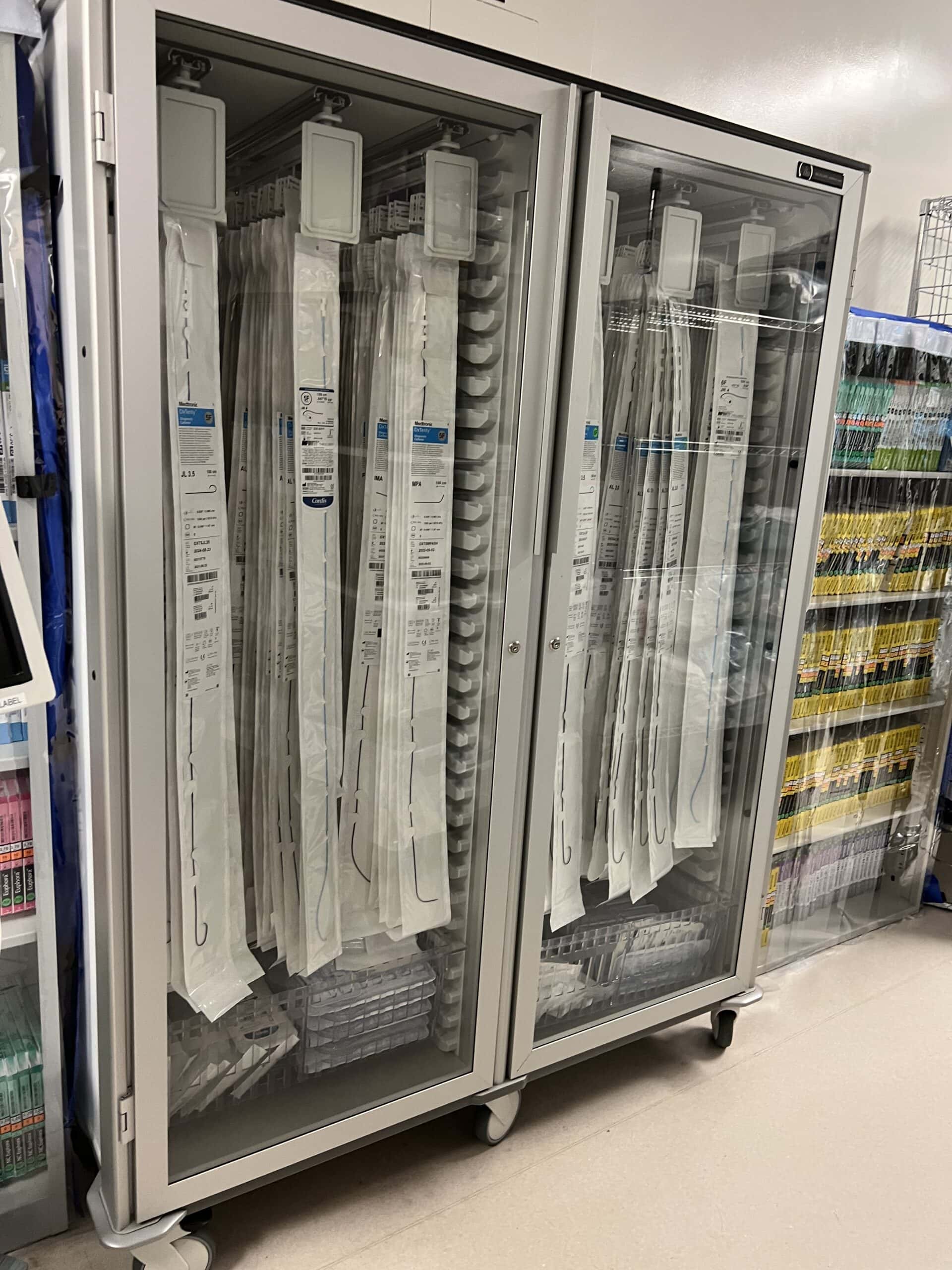
Technology and innovation rank at 70% importance level, supporting workflow efficiency and compliance documentation requirements. Advanced equipment includes washer/disinfectors, sterilizers, and automated tracking systems managing instrument flow from decontamination through distribution. Modern sterile storage solutions incorporate climate control and modular designs, protecting instrument integrity.
Workflow management systems provide real-time tracking, inventory visibility, and compliance documentation supporting regulatory requirements. These technologies integrate with existing hospital information systems, creating comprehensive audit trails. Strategic implementation of specialized services enhances operational efficiency across complex processing environments.
Washer/disinfectors cost $100,000 to $400,000 each, representing major capital investment for automated cleaning and thermal disinfection. Sterilizers cost $50,000 to $300,000 each, providing validated steam or low-temperature sterilization cycles for temperature-sensitive instruments. Total equipment investment for comprehensive in-house SPD ranges from $500,000 to $2,000,000+, depending on capacity requirements.
Workflow design separates contaminated and clean areas, maintaining proper decontamination protocols and preventing cross-contamination. Processing flow progresses from receiving and decontamination through assembly, sterilization, and final storage in environmentally controlled areas. Facilities must accommodate these spatial requirements, often consuming significant square footage that could support alternative revenue-generating clinical uses.
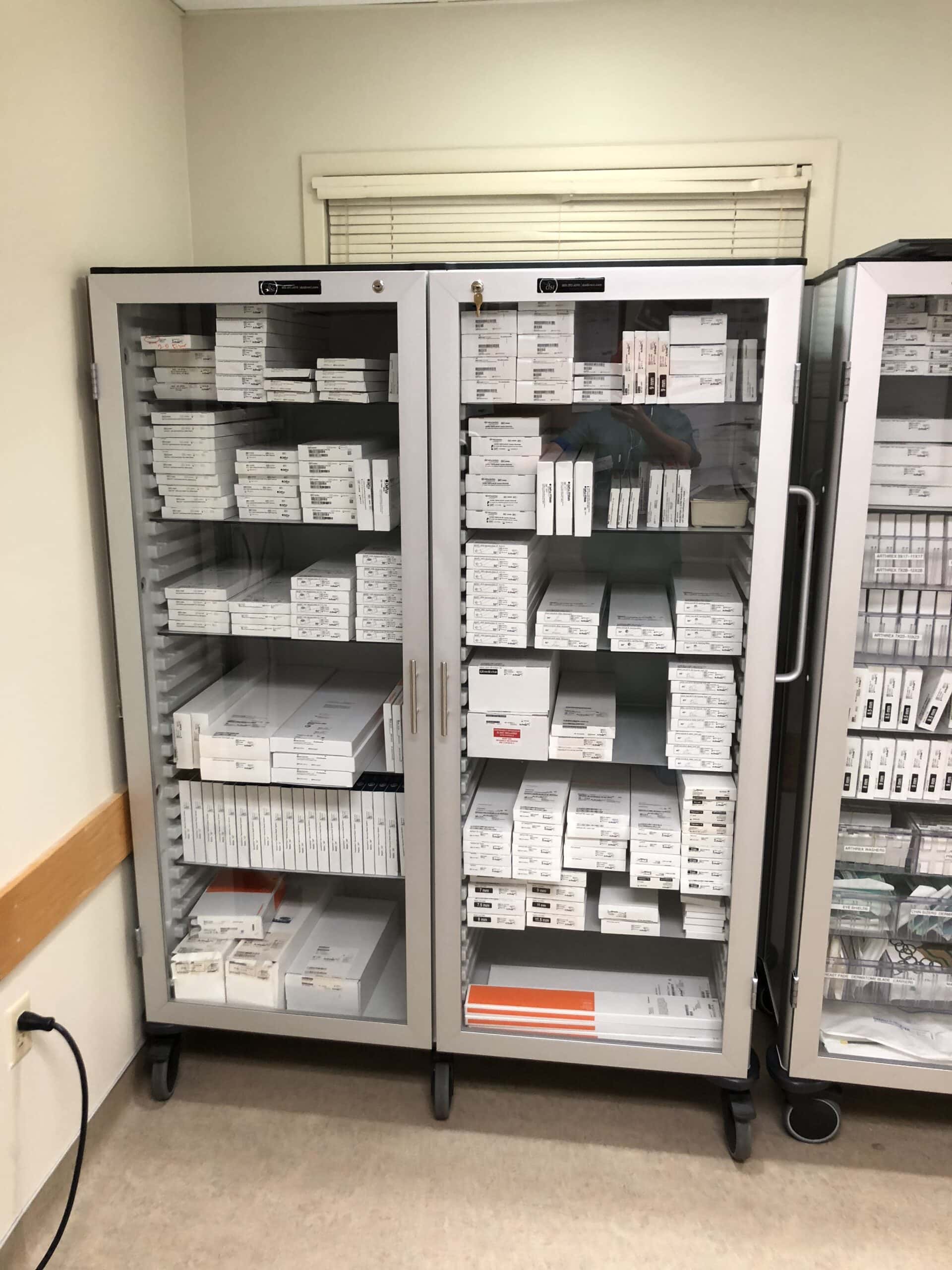
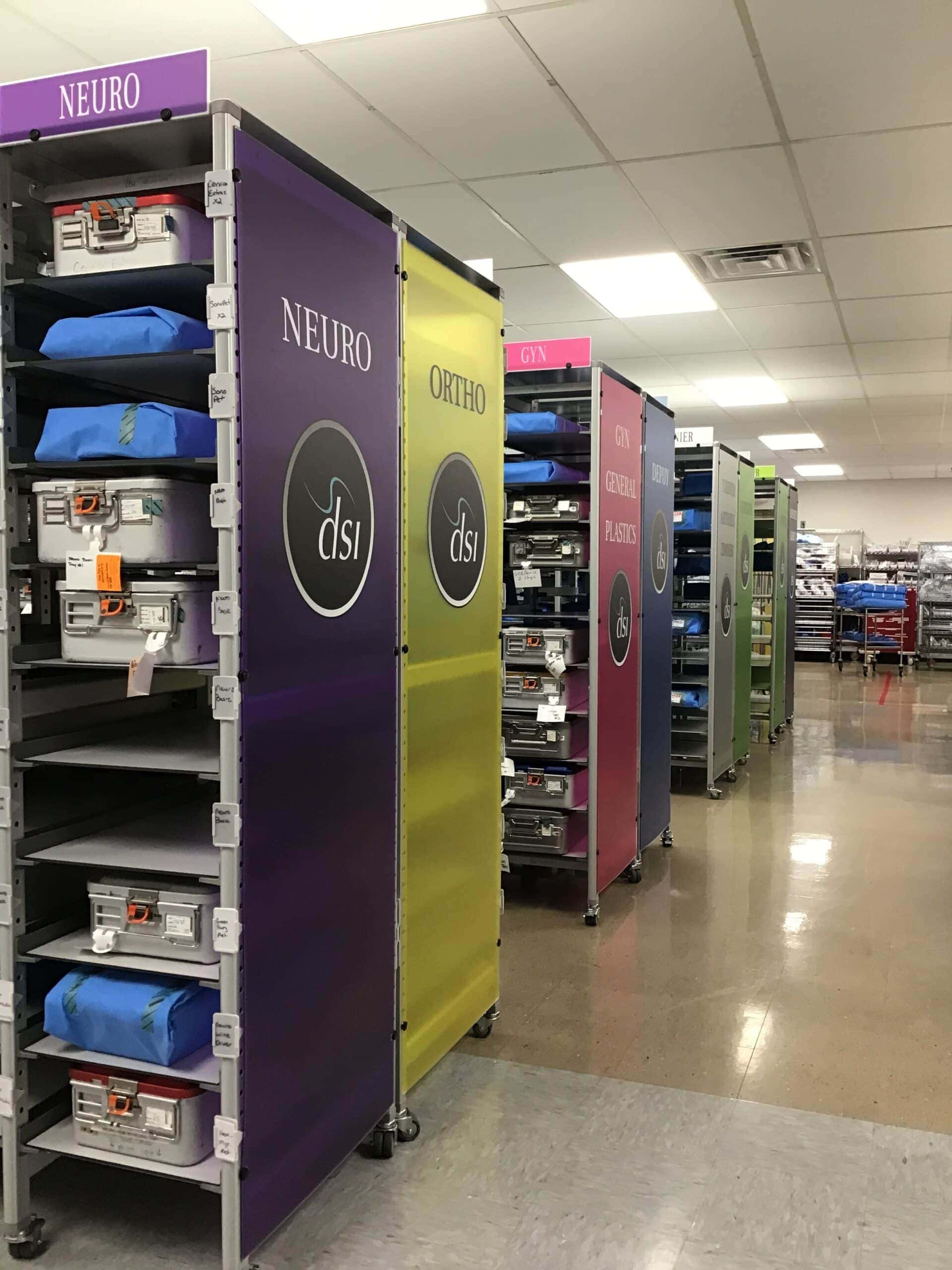
Sterile storage solutions maintain instrument integrity through controlled temperature, humidity, and airflow, protecting wrapped instruments from contamination. Implementation costs range from $20,000 to $100,000 for budget systems, up to $300,000 to $500,000 for premium installations. Modern modular storage systems maximize limited space while providing high-density capacity and improved inventory visibility.
Advanced storage incorporates automated retrieval systems, reducing manual handling and improving workflow efficiency. Temperature and humidity monitoring ensures compliance with AAMI guidelines, protecting sterile barrier integrity until the point of use. Proper storage extends instrument shelf life, reducing reprocessing frequency and associated labor costs.
Workflow management systems provide digital tracking from instrument collection through sterilization to delivery, supporting comprehensive compliance documentation. Annual licensing costs range from $20,000 to $50,000 for basic systems up to $150,000 to $300,000 for premium platforms. These systems integrate real-time location tracking, biological indicator validation, and automated reporting, reducing manual documentation errors.
Advanced platforms incorporate RFID technology, enabling automated inventory counts and instrument set verification before case delivery. Data analytics identify processing bottlenecks and instrument utilization patterns supporting continuous improvement initiatives. Integration with hospital systems creates unified visibility across OR scheduling, inventory management, and processing status.
Financial evaluation requires a comprehensive analysis extending beyond initial equipment purchase to total cost of ownership calculations. Capital equipment, annual contracts, operational expenses, and opportunity costs must factor into strategic decision frameworks. In-house capital equipment ranges from $500,000 to $2,000,000+, while outsourced annual contracts typically cost $50,000 to $500,000+.
Hybrid models present mixed investment scenarios ranging from $200,000 to $1,200,000, balancing internal capabilities with external services. Specialized stainless steel products and track systems support efficient workflow in both in-house and hybrid configurations. Long-term financial projections must account for equipment lifecycle, vendor contract escalation, and evolving surgical program requirements.
In-house SPD capital equipment costs begin at $500,000 for budget configurations and exceed $2,000,000 for premium installations. Washers/disinfectors represent $100,000 to $400,000 per unit, with facilities typically requiring 2-4 units for adequate capacity. Sterilizers cost $50,000 to $300,000 each, with multiple units needed to support different sterilization modalities.
Operational expenses include maintenance contracts, utility consumption, replacement parts, and consumable supplies totaling hundreds of thousands annually. Labor costs for certified technicians across multiple shifts represent the largest ongoing expense category. Facilities must also account for facility modifications, including HVAC upgrades and clean/dirty area separation requirements.
Outsourced services annual contracts range from $50,000 to $150,000 for budget arrangements up to $300,000 to $500,000+ for premium service levels. Pricing structures typically utilize per-tray costs ranging from $0.50 to $3.00 per instrument set based on complexity. U.S. sterilization services market estimated at $1.46 billion in 2024 with 11.01% CAGR through 2030.
Contract negotiations must define service level agreements specifying turnaround times, quality metrics, and emergency processing capabilities. Transportation logistics, including shipping and tracking of instrument sets, require adherence to Department of Transportation regulations for infectious materials, including climate control during transit. Vendor selection should evaluate processing capacity, regulatory compliance history, and geographic coverage supporting consistent service delivery.
The hybrid model mixed investment ranges from $200,000 to $500,000 for budget implementations up to $800,000 to $1,200,000 for comprehensive systems. This approach reduces total capital expenditure compared to full in-house operations while maintaining critical processing control. Facilities process routine instruments internally while outsourcing complex or specialty items requiring specialized capabilities.
Financial viability depends on accurate instrument categorization, determining optimal processing location based on turnaround requirements and complexity. Hybrid models provide flexibility during surgical volume fluctuations, avoiding capacity constraints from either pure approach. Cost optimization requires ongoing analysis, balancing internal processing costs against vendor pricing and service quality performance.
Strategic SPD decisions require systematic evaluation frameworks addressing patient safety, quality compliance, supply chain optimization, and operational efficiency priorities. Healthcare leaders must conduct comprehensive total cost of ownership analyses projecting expenses across 5-10 year planning horizons. Detailed technical literature supports informed evaluation of equipment specifications and implementation requirements.
Best practices emphasize phased implementation approaches, minimizing operational disruption during transitions between processing models. Facilities should establish clear performance metrics to monitor instrument availability, processing turnaround times, and compliance documentation accuracy. Regular reassessment ensures selected models continue meeting evolving surgical program requirements and regulatory standards.
Facilities should conduct a total cost of ownership analysis comparing equipment lifecycle expenses against outsourcing contract projections. Organizations facing recruitment challenges for certified technicians or equipment approaching end-of-life should evaluate outsourcing alternatives. Space-constrained urban hospitals may realize greater value by converting processing areas to revenue-generating clinical departments.
Instrument complexity evaluation determines whether specialized processing requirements exceed in-house capabilities, justifying third-party vendor expertise. Facilities expanding into robotic surgery or complex orthopedic programs should assess whether existing equipment supports new requirements. Strategic transitions enable capital reallocation while maintaining quality control and regulatory compliance through vendor partnerships.
Facilities should audit current storage conditions, ensuring compliance with AAMI and AORN guidelines for temperature, humidity, and airflow. Modular solutions maximize limited space while protecting wrapped instruments from dust and physical damage throughout storage periods. Integration of specialized workstations improves processing efficiency and ergonomic working conditions.
RFID and barcode tracking systems provide accurate inventory management and create digital audit trails supporting regulatory compliance. Phased implementation during low-volume surgical periods minimizes workflow disruption while establishing new processes and staff training. Technology integration should connect storage systems with OR scheduling, ensuring adequate instrument availability across all procedures.
Strict adherence to Department of Transportation regulations for infectious materials governs all instrument transportation between facilities. Contract negotiation must establish clear service level agreements defining guaranteed turnaround times and emergency processing capabilities. Vendor compliance history requires a thorough evaluation, including regulatory inspection results and quality performance metrics.
Transportation protocols must address climate control, maintaining instrument integrity during transit, and preventing contamination exposure. Facilities should define quality metrics, including processing cycle validation, biological indicator results, and on-time delivery performance. Regular vendor audits verify continued compliance with Joint Commission, CDC, and FDA requirements protecting facility accreditation status.
Healthcare executives must balance patient safety priorities with cost efficiency objectives when selecting SPD operational models. Comprehensive evaluation frameworks address facility characteristics, surgical program requirements, and long-term financial projections supporting informed strategic decisions. The decision framework integrates quality control maintenance with operational flexibility across changing surgical volumes and specialty program development.
Successful implementation requires careful planning, addressing equipment selection, staff training, vendor evaluation, and compliance documentation systems. Organizations like DSIDirect provide specialized expertise supporting healthcare facilities throughout strategic planning and implementation processes. Their consultative approach helps directors of materials management optimize sterile processing operations while maintaining regulatory compliance and patient safety standards.
Contact specialized healthcare storage professionals to develop customized sterile processing solutions meeting your facility's unique operational requirements and strategic objectives.
Choosing the right SPD model is only half the equation. How you store, organize, and manage sterile instruments after processing directly affects OR readiness, regulatory compliance, and patient safety.
Distribution Systems International (DSI) has partnered with acute care facilities across the country since 1990, delivering LEAN-based supply chain optimization solutions purpose-built for sterile processing environments. From high-density modular storage systems to sterile instrument cabinets and case carts, DSI provides the infrastructure healthcare providers need to support both in-house and hybrid SPD operations.
Our team conducts a complimentary on-site analysis, develops custom CAD-designed layouts, and manages full turnkey implementation—so your SPD team can stay focused on its core competencies. Contact Distribution Systems International today to schedule your free storage consultation and discover how the right storage strategy strengthens your entire sterile processing supply chain.
With 21 years of sales management, marketing, P&L responsibility, business development, national account, and channel management responsibilities under his belt, Ian has established himself as a high achiever across multiple business functions. Ian was part of a small team who started a new business unit for Stanley Black & Decker in Asia from Y10’ to Y14’. He lived in Shanghai, China for two years, then continued to commercialize and scale the business throughout the Asia Pacific and Middle East regions for another two years (4 years of International experience). Ian played college football at the University of Colorado from 96’ to 00’. His core skills sets include; drive, strong work ethic, team player, a builder mentality with high energy, motivator with the passion, purpose, and a track record to prove it.