Key Takeaways
Robotic surgery systems represent multi-million dollar investments requiring strict adherence to manufacturer guidelines and regulatory standards. Proper robotic surgery storage solutions protect these assets while ensuring patient safety and operational efficiency. Healthcare facilities must implement compliant storage systems that meet AORN and Joint Commission requirements while supporting sterile processing department workflows.
This guide examines best practices storage protocols for robotic instrument storage, including environmental controls, physical protection requirements, and space optimization strategies. From understanding manufacturer guidelines robotic surgery standards to selecting appropriate surgical equipment storage systems, facilities gain actionable insights for maintaining compliance and regulatory requirements for healthcare storage.
Effective medical supply storage directly impacts case turnover times, infection prevention, and return on investment for robotic surgery programs.
Proper robotic surgery storage solutions protect high-value surgical equipment while meeting compliance and regulatory requirements for healthcare storage. Manufacturer guidelines robotic surgery best practices form the foundation of safe, efficient sterile processing department operations.
Manufacturer's Instructions for Use (IFU) dictate all aspects of robotic instrument storage. Strict IFU adherence ensures patient safety, regulatory compliance, and extends asset longevity. Storage represents an extension of the reprocessing cycle, not a separate function.
Robotic instruments contain small moving parts and lumened structures that make them vulnerable to damage and incomplete reprocessing. IFU violations result in contamination, functional impairment, and case delays. Given that delayed cases can cost facilities over $2,000 per minute, compliant storage systems protect both patients and budgets.
AORN and The Joint Commission establish environmental standards for medical supply storage. Sterile storage areas require temperatures between 18°C and 23°C (64°F to 73°F) with relative humidity maintained at 30% to 60%. These parameters preserve sterile packaging integrity and prevent microbial growth.
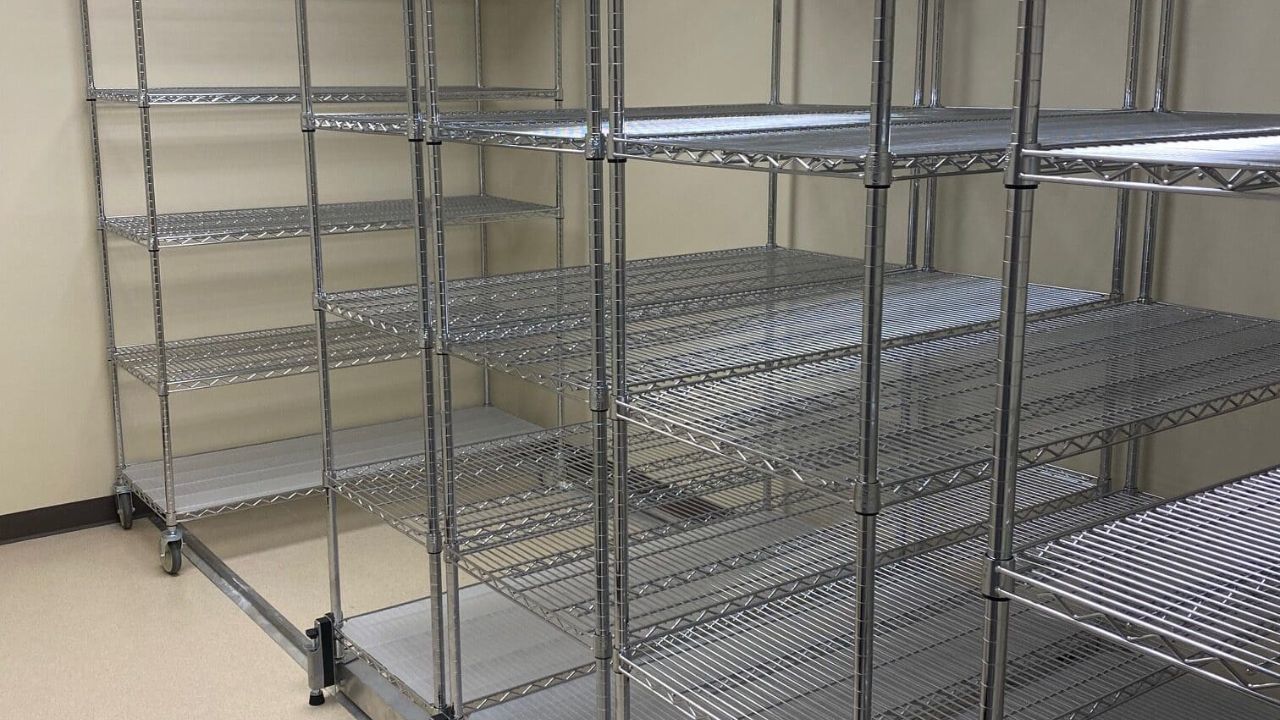
Shelving must sit at least 8 inches above the floor with solid bottom shelves to protect against environmental cleaning and flooding. Store instruments flat without folding sterile barriers to prevent packaging damage. These regulatory requirements for healthcare storage apply universally across all surgical equipment storage facilities.
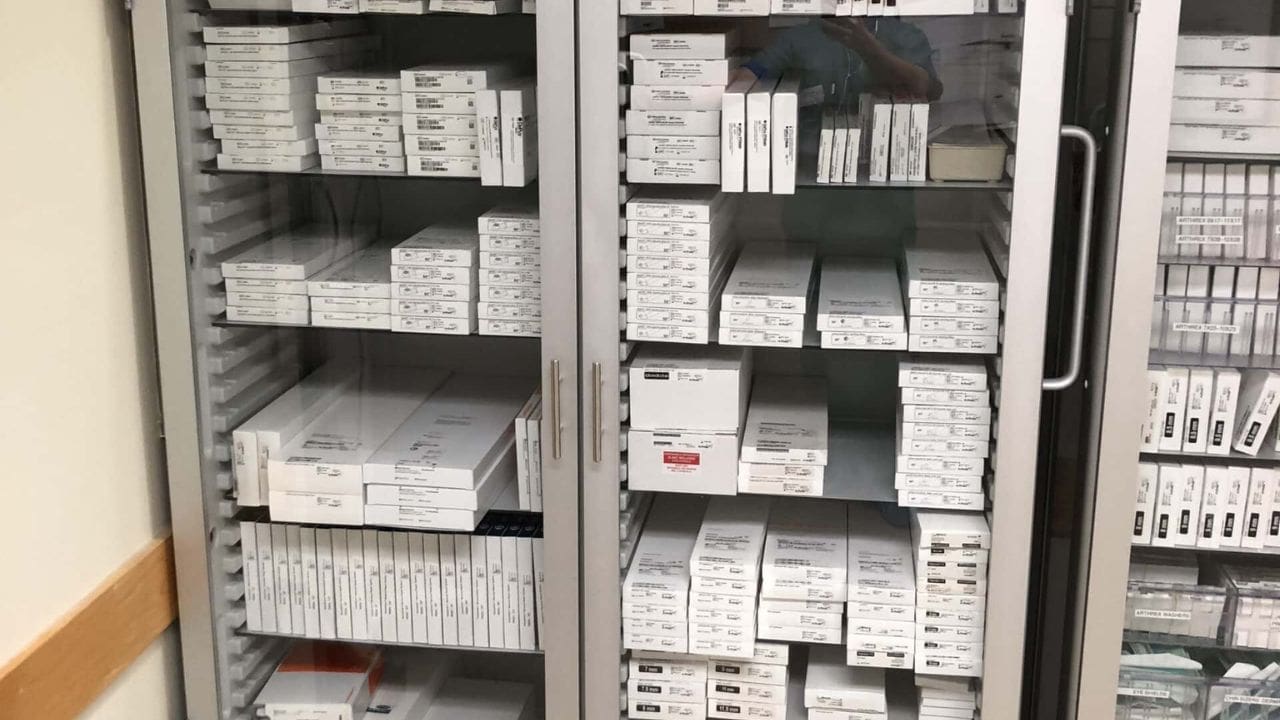
Dedicated, enclosed storage systems—specialized carts, cases, and cabinets—protect robotic surgery storage solutions from dust, contaminants, and physical damage. Shelving requires smooth, clean surfaces that won't snag or tear sterile packaging like peel pouches.
Organization must prevent crush damage while allowing proper air circulation. Specialized transport cases protect robotic arms and instruments during movement between the OR and sterile processing department. This systematic approach to robotic instrument storage maintains sterility throughout the entire instrument lifecycle.
Manufacturer guidelines robotic surgery standards protect significant capital investments while ensuring optimal performance. Understanding these requirements helps facilities implement best practices storage that balance safety, efficiency, and cost control.
Leading manufacturers like Intuitive (da Vinci) mandate standardization protocols including instrument color coding for visibility. Dedicated, secure, enclosed robotic surgery storage solutions are required for all instruments and accessories. Physical protection during transport and storage prevents damage to delicate components.
The investment scale justifies strict storage protocols: systems cost $500,000 to $2,500,000 with $190,000 annual service fees. Individual instrument tips average $200 each with 10 to 14 use lifespans. Per-surgery costs range from $3,500 to $6,000. These figures make proper surgical equipment storage essential for ROI protection.
Delayed cases cost facilities over $2,000 per minute, making compliant storage systems financially critical. Validated automated cleaning cycles reduce manual steps by 25%, saving 66 minutes of direct labor per four-instrument set. Complete automated reprocessing workflows save 142 minutes total.
Unreliable manual reprocessing forces 50% inventory increases, costing hospitals up to $425,000 annually in unnecessary purchases. Manufacturer guidelines robotic surgery prevent these losses while ensuring sterile processing department efficiency. Proper robotic instrument storage directly impacts both patient safety and facility economics.
Optimized robotic surgery storage solutions improve operational efficiency while meeting compliance and regulatory requirements for healthcare storage. Strategic surgical equipment storage design reduces turnover time and maximizes facility resources.
High-density, vertical storage systems cut supply retrieval time by 25% while increasing storage capacity over 60%. These compliant storage systems support faster case turnover and improved sterile processing department operations.
A motor-racing pit-stop model for robotic instrument storage reduced OR turnover from 99.2 minutes to 53.2 minutes—a 46.4% improvement. Room ready time dropped from 42.2 minutes to 27.2 minutes. Formalized logistics roles for "Robotic Support" and "Scrub Technician" positions eliminate task overlap, creating standardized best practices storage workflows that meet manufacturer guidelines robotic surgery requirements.
Modular shelving delivers 30-40% space savings versus open wire systems. Adjustable shelves maximize vertical space utilization while eliminating blue wrap stacking that compromises organization and sterility.
Full basket extension (100%) improves accessibility for medical supply storage. Adjustable compartments optimize PAR level management, reducing inventory errors. Handle labels enhance location identification, supporting efficient robotic surgery storage solutions that streamline sterile processing department workflows. These modular systems adapt to changing needs while maintaining compliance standards.
Sterile processing department protocols directly impact patient outcomes and regulatory compliance. Effective robotic instrument storage requires strict environmental controls and standardized workflows that meet manufacturer guidelines robotic surgery standards.
AORN recommends standardizing equipment placement and setup to reduce flow disruptions. Storage shelving requires smooth, clean surfaces that won't snag or tear sterile packaging. Environmental controls must maintain temperatures between 18°C and 23°C with 30-60% humidity.
Position shelving at least 8 inches above floors with solid bottom shelves to protect against contamination. Store instruments flat without folding sterile barriers to preserve packaging integrity. Specialized transport cases protect robotic arms during movement between locations. These best practices storage methods form the foundation of compliant storage systems.
Virginia Mason Medical Center reduced sterile processing errors from 3% to 1.5% over 37 months using color-coding and shadow boards. This demonstrates how systematic robotic surgery storage solutions improve safety outcomes while meeting compliance and regulatory requirements for healthcare storage.
Dedicated, enclosed storage systems shield surgical equipment storage from dust and environmental contaminants. Proper physical arrangement prevents crush damage while maintaining air circulation around sterile packages. Specialized carts and cases secure delicate robotic arms and instruments, protecting high-value medical supply storage investments while ensuring sterility throughout the instrument lifecycle.
Healthcare facilities must navigate strict compliance and regulatory requirements for healthcare storage to maintain accreditation and ensure patient safety. Understanding these standards guides selection of compliant storage systems that protect both patients and institutional credentials.
AORN and The Joint Commission establish surgical equipment storage standards that govern sterile processing department operations. Temperature must remain between 18°C and 23°C (64°F to 73°F) with relative humidity at 30% to 60%. These parameters preserve sterile packaging and prevent microbial growth.
Storage positioning requires minimum 8-inch floor clearance with solid bottom shelves protecting against environmental cleaning and flooding. All medical supply storage must prevent sterile packaging damage. These manufacturer guidelines robotic surgery requirements apply universally across healthcare facilities, forming the baseline for best practices storage protocols.
Enclosed, secure robotic surgery storage solutions shield instruments from environmental contaminants. Integrated environmental control systems automatically maintain required temperature and humidity ranges, ensuring continuous compliance without manual monitoring.
Physical design features prevent both contamination and damage to delicate robotic instrument storage. Tracking system integration documents IFU compliance throughout the instrument lifecycle, creating audit trails that satisfy regulatory inspectors. These compliant storage systems address all regulatory requirements while supporting efficient sterile processing department workflows and protecting high-value surgical equipment storage investments.
Selecting appropriate robotic surgery storage solutions requires evaluating multiple factors that affect compliance, efficiency, and cost. Strategic surgical equipment storage decisions impact sterile processing department workflows and long-term facility operations.
Implement standardization by procedure or service line using consistent, hospital-wide color schemes. Many facilities color-code entire departments—Orthopedics, Urology, Robotics—to improve tracking and management. This visual system supports best practices storage while meeting manufacturer guidelines robotic surgery requirements.
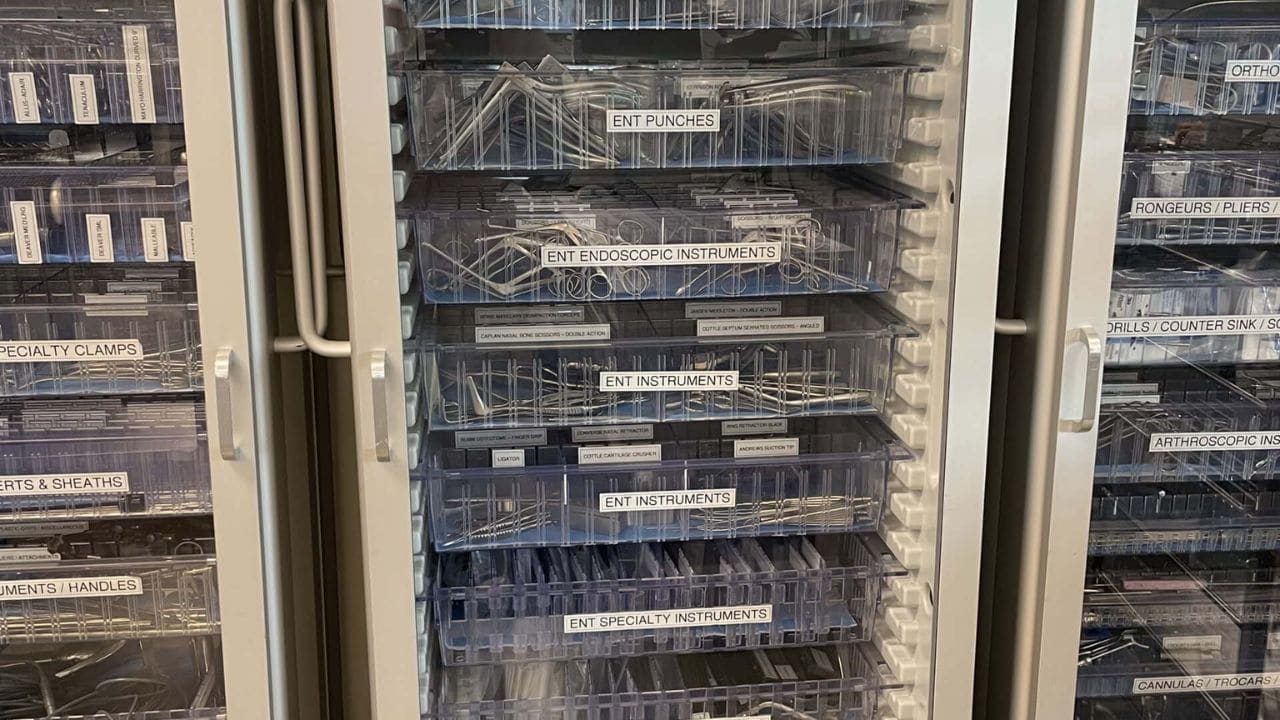
Utilize manufacturer-approved methods like heat-fused color coatings or color-coded tags for instrument-level identification. Apply color-coding to storage locations including shelving, drawers, and tray tags, creating visual matches between instruments and designated areas. Barcode-based instrument life-cycle management increases documentation accuracy while decreasing untraceable sterilization records. These compliant storage systems streamline robotic instrument storage across the entire facility.
Physical protection for delicate instruments with small moving parts ranks as the primary consideration. Space optimization through high-density systems and environmental control capability to maintain sterility are equally critical. Compatibility with tracking systems—barcode or RFID—ensures compliance and regulatory requirements for healthcare storage are met.
Automated tracking solutions reduce tray assembly time over 50% while cutting daily and monthly inventory time. These systems ensure compliance for instruments with designated use limits, protecting both patients and investments. Prioritizing these factors when selecting medical supply storage creates efficient, compliant robotic surgery storage solutions that support sterile processing department excellence.
Distribution Systems International offers comprehensive robotic surgery storage solutions designed to meet manufacturer guidelines and robotic surgery standards. Their systems address surgical equipment storage challenges while ensuring compliance with regulatory requirements for healthcare storage.
DSI's product line includes MODU-MAX Hanging Solution for vertical storage optimization and MODU-MAX High Density Baskets for compartmentalized inventory management. SterileShelf™ clean storage technology and MODU-WALL Wire Shelving provide easy item identification across sterile processing department applications.
These compliant storage systems deliver space optimization, inventory management, and enhanced workflow. Features include PAR level control, quick retrieval time, and increased employee productivity. DSI's robotic instrument storage solutions integrate these capabilities into cohesive medical supply storage systems that meet best practices storage requirements.
DSI systems achieve 30-40% space savings versus traditional open wire shelving. Their configurations fit the Supply Chain, sterile processing department, and OR Core environments. Full basket extension (100%) improves accessibility while adjustable compartments optimize space utilization.
Baskets improve PAR level management through compartmentalized inventory control. Open wire designs enable rapid visual identification. These robotic surgery storage solutions reduce retrieval time and streamline workflows across multiple departments, supporting efficient surgical equipment storage operations.
Rust-free construction with no sharp edges protects sterile packaging integrity. Anti-microbial properties and non-porous surfaces simplify cleaning while meeting infection control standards. Chemical, moisture, and heat resistance ensures durability in demanding sterile processing department environments.
Adjustable shelving maximizes vertical space while eliminating blue wrap stacking. Dedicated container locations and handle labels improve identification and organization. Custom configurable designs provide cost-effective robotic instrument storage that adapts to facility needs. These compliant storage systems deliver durable medical supply storage solutions that meet manufacturer guidelines robotic surgery requirements while supporting operational efficiency.
Effective robotic surgery storage solutions directly impact patient safety, operational efficiency, and financial performance. Implementing best practices storage systems creates measurable improvements across all surgical equipment storage metrics.
Optimized instrument tray systems reduced setup times by 35% in endourological procedures, minimizing time scrub technicians spend counting and organizing. Color-coded compliant storage systems detect errors 1.9 seconds faster—11.1 seconds versus 13.0 seconds with conventional methods.
Advanced sterilization systems cut da Vinci endoscope processing from 60 minutes to 28 minutes using V-PRO™ maX 2 technology. Proper robotic instrument storage protocols prevent contamination and physical damage, ensuring instruments function correctly during procedures. These improvements translate directly to better patient outcomes through reduced infection risk and surgical precision.
Strictly follow manufacturer's Instructions for Use (IFU) throughout the instrument lifecycle. Implement barcode or RFID technology for comprehensive robotic instrument storage tracking and management. Monitor KPIs including case volume, utilization, procedure times, and OR turnover to identify improvement opportunities.
Train all perioperative and sterile processing department staff on storage systems and color-coding protocols. Conduct regular audits preventing non-standardized procedure introduction. Maintain environmental controls within required parameters: temperature 18-23°C, humidity 30-60%. These steps ensure medical supply storage meets compliance and regulatory requirements for healthcare storage while supporting manufacturer guidelines robotic surgery standards. Facilities that prioritize compliant storage systems protect patients, staff, and capital investments while optimizing surgical equipment storage performance.
Distribution Systems International delivers compliant storage systems engineered specifically for robotic instrument storage. Their MODU-MAX and SterileShelf solutions provide 30-40% space savings while meeting manufacturer guidelines, robotic surgery requirements, and compliance and regulatory requirements for healthcare storage.
Distribution Systems International delivers configurable robotic surgery storage solutionsthat include anti-microbial surfaces, adjustable shelving, and color-coding capabilities that reduce retrieval times and improve sterile processing department efficiency. Whether upgrading existing surgical equipment storage or designing new facilities, Distribution Systems International offers customized medical supply storage that protects high-value investments while enhancing workflow.
Contact Distribution Systems International to discuss how their best practices storage systems can optimize your robotic surgery program's performance and regulatory compliance.

With 21 years of sales management, marketing, P&L responsibility, business development, national account, and channel management responsibilities under his belt, Ian has established himself as a high achiever across multiple business functions. Ian was part of a small team who started a new business unit for Stanley Black & Decker in Asia from Y10’ to Y14’. He lived in Shanghai, China for two years, then continued to commercialize and scale the business throughout the Asia Pacific and Middle East regions for another two years (4 years of International experience). Ian played college football at the University of Colorado from 96’ to 00’. His core skills sets include; drive, strong work ethic, team player, a builder mentality with high energy, motivator with the passion, purpose, and a track record to prove it.