Key Takeaways
Medical wire shelvings fail healthcare facilities through accelerated deterioration, contamination risks, and escalating long-term storage cost. Surface scratches harbor bacteria, corrosion compromises structural integrity, and frequent replacements drain budgets. Scratch-resistant shelving eliminates these failures through engineered polymer materials that maintain surface integrity for 15+ years.
This article examines the scratch-resistant shelving cost comparison against traditional wire systems, analyzing medical shelving durability, contamination control effectiveness, and total ownership economics. Healthcare facilities managing sterile instrument storage and medical supply storage face a critical decision: continue replacing failing wire systems every 3-5 years, or invest in durable medical storage delivering measurable returns through reduced infections, improved compliance, and eliminated replacement cycles.
Scratch-resistant shelving uses advanced polymer materials engineered to resist surface damage. This scratch-resistant shelving cost comparison against traditional medical wire shelvings reveals significant advantages in medical shelving durability, contamination control, and equipment lifespan.
Scratch-resistant shelving features polymer-based construction designed to withstand impact, abrasion, and daily wear without surface degradation. The material resists scratching, chipping, and corrosion—common failure points in standard durable medical storage systems. This surface integrity is critical in healthcare environments where damaged shelving creates contamination risks and increases long-term storage cost.
Standard medical wire shelvings develop scratches, rust, and corrosion over time. These surface defects create crevices where bacteria, biofilm, and contaminants accumulate. SterileShelf systems use solid polymer construction that maintains surface integrity throughout its lifespan. Wire shelving requires frequent replacement due to deterioration, while scratch-resistant options preserve smooth, cleanable surfaces for 15+ years. The key difference: damaged surfaces harbor pathogens; intact surfaces don't. This directly impacts long-term storage cost and medical shelving durability.
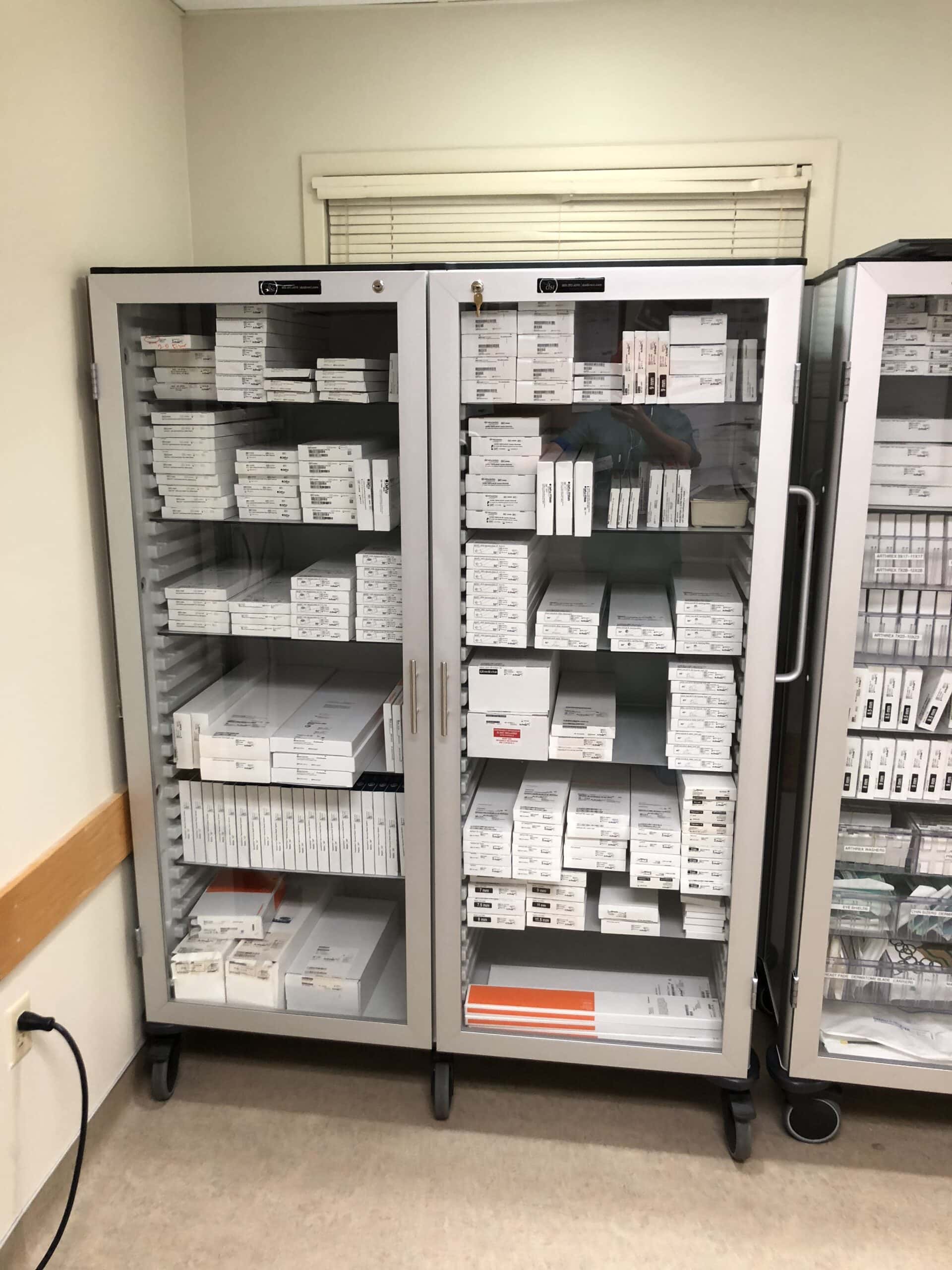
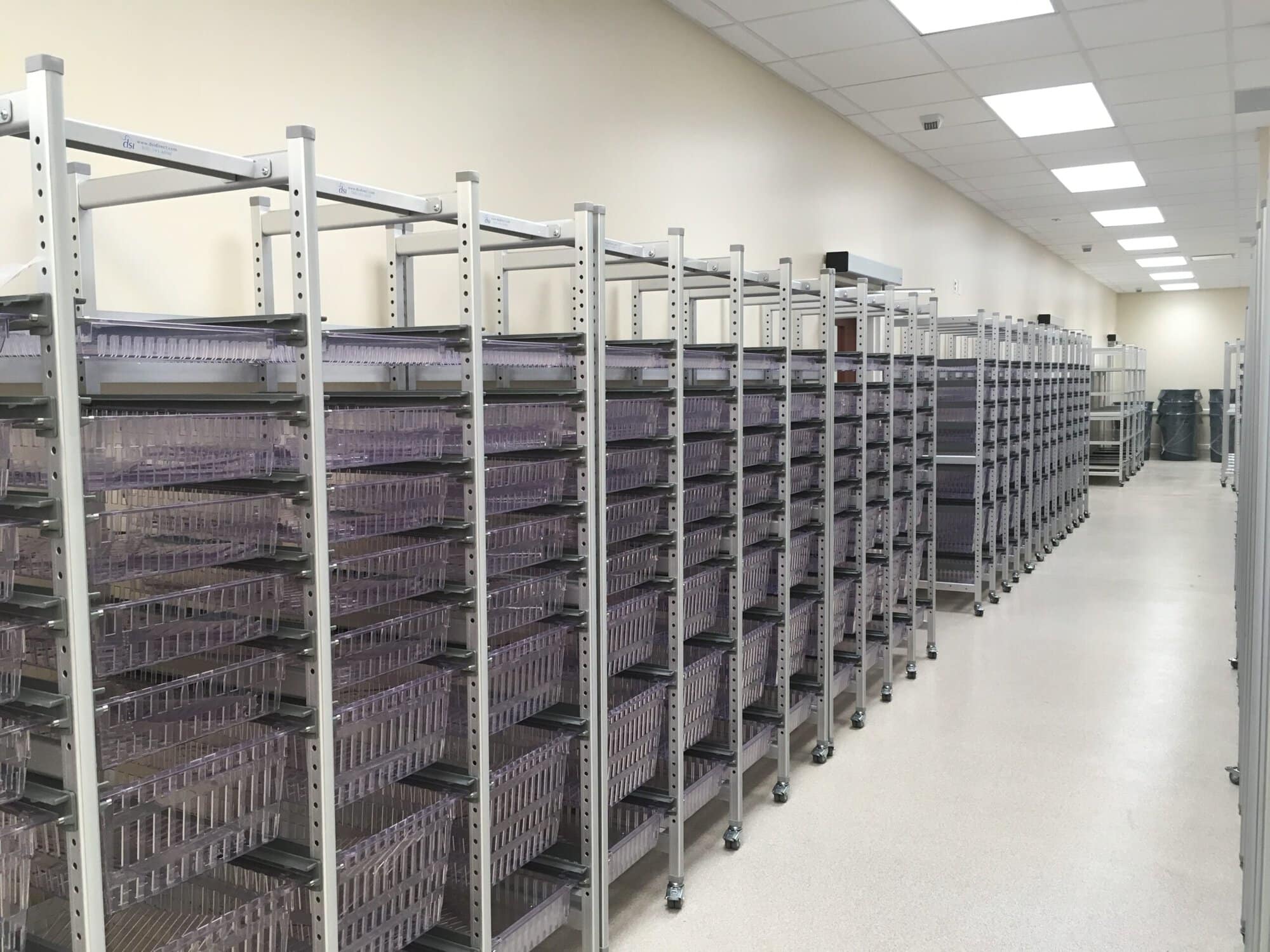
Scratch-resistant shelving serves critical areas requiring strict contamination control. Sterile processing departments rely on these durable medical storage systems for sterile instrument storage between sterilization cycles. Operating rooms use them for immediate-access medical supply storage where surface cleanliness directly impacts patient safety. Medical supply storage areas benefit from long-term durability and reduced maintenance needs. Any environment handling sterile products, pharmaceuticals, or patient care items requires shelving that maintains surface integrity under constant cleaning protocols.
The scratch-resistant shelving cost comparison demonstrates clear financial advantages over medical wire shelvings. While initial investment appears higher, total ownership costs favor durable medical storage systems by significant margins.
The 10-year total cost of ownership reveals the true value of scratch-resistant shelving. Chrome wire shelving costs $14,500 per unit over a decade, while SterileShelf systems cost $8,500—a $6,000 savings representing a 41% reduction. This long-term storage cost advantage stems from reduced replacements, lower maintenance requirements, and extended lifespan. Medical facilities purchasing wire shelving pay more over time despite lower upfront costs.
Annual maintenance costs expose the ongoing burden of standard medical wire shelvings. Chrome wire systems require $850 per year per unit for cleaning, repairs, and premature replacements. Scratch-resistant shelving requires only $150 annually—an annual savings of $700 per unit. Over 10 years, this maintenance differential accounts for $7,000 per shelving unit. Medical supply storage areas with dozens of units see these savings multiply rapidly, significantly impacting facility budgets.
Medical shelving durability directly impacts replacement frequency and long-term storage cost. Chrome wire shelving lasts 3-5 years before surface degradation requires replacement. Scratch-resistant systems maintain performance for 15+ years—a 3-5x lifespan improvement. This extended durability eliminates multiple replacement cycles, reducing capital expenditures and minimizing operational disruptions in sterile instrument storage areas.
Scratch-resistant shelving reduces long-term storage cost through three mechanisms: extended replacement cycles, lower maintenance labor, and reduced cleaning supply consumption. Durable medical storage systems eliminate the cost of frequent system replacements that plague medical wire shelvings. Facilities avoid repeated capital expenditures, installation labor, and workflow disruptions. The combination of durability, minimal maintenance, and contamination prevention creates compounding savings that far exceed the initial investment differential.
Medical shelving durability determines replacement frequency, maintenance costs, and contamination control effectiveness. Scratch-resistant shelving outperforms medical wire shelvings across all durability metrics, directly impacting long-term storage cost and facility operations.
Polymer-based scratch-resistant shelving demonstrates superior scratch and impact resistance ratings compared to chrome wire alternatives. These materials withstand daily impacts from equipment carts, supply deliveries, and cleaning protocols without surface degradation. Moisture resistance and mold prevention effectiveness are significantly higher in scratch-resistant materials—critical for sterile instrument storage and medical supply storage areas exposed to high humidity. Wire shelving corrodes when exposed to moisture and cleaning chemicals, while polymer systems maintain structural integrity throughout their lifespan.
The durability gap between systems is substantial. Chrome wire shelving lasts 3-5 years before requiring replacement due to rust, corrosion, and structural failure. SterileShelf scratch-resistant systems maintain performance for 15+ years—a 3-5x lifespan improvement. This extended longevity transforms long-term storage cost economics. Medical facilities replace wire shelving three to five times during a single scratch-resistant system's lifespan, multiplying capital expenditures and installation labor costs. Durable medical storage eliminates these repeated replacement cycles.
Facilities transitioning from medical wire shelvings to scratch-resistant systems report measurable operational improvements. A 200-bed hospital replacing 100 wire shelving units with durable medical storage eliminated $70,000 in annual maintenance costs and extended replacement intervals from 4 years to 15+ years. Sterile processing departments cite reduced downtime from emergency shelving failures and improved workflow continuity. Medical supply storage managers report fewer inventory contamination incidents and simplified cleaning protocols. The scratch-resistant shelving cost comparison consistently favors polymer systems when evaluated over complete lifecycle periods rather than initial purchase price alone.
Sterile instrument storage requires surfaces that resist contamination and support rigorous cleaning protocols. Scratch-resistant shelving maintains the surface integrity essential for infection control, while medical wire shelvings create contamination risks that compromise patient safety and regulatory compliance.
The contamination risk comparison is striking. Chrome wire shelving presents an 85% contamination risk, while SterileShelf systems reduce this to 12%—a 73 percentage point reduction representing 86% improvement. Scratches in standard medical wire shelvings create crevices where bacteria, biofilm, and contaminants accumulate despite aggressive cleaning. Smooth, scratch-resistant surfaces prevent bacterial harboring and simplify cleaning protocols in sterile instrument storage areas. Medical supply storage facilities using durable medical storage systems report faster cleaning times, reduced chemical usage, and improved compliance with sterilization standards. Surface integrity directly determines contamination control effectiveness.
Regulatory agencies require medical facilities to maintain cleanable, non-porous surfaces in sterile instrument storage areas. Scratch-resistant shelving meets FDA, OSHA, and AAMI standards for medical storage systems. Medical wire shelvings with corroded or scratched surfaces fail inspection criteria because damaged areas cannot be adequately cleaned or sterilized. Durable medical storage systems maintain compliance throughout their lifespan, eliminating citations and supporting accreditation requirements. The scratch-resistant shelving cost comparison must include compliance risk—failed inspections result in operational shutdowns, remediation costs, and reputational damage that far exceed equipment investment.
Operating rooms and sterile processing departments demand the highest contamination control standards. Scratch-resistant shelving with silver-ion antimicrobial technology actively inhibits bacterial and viral growth on storage surfaces. This antimicrobial effectiveness provides continuous protection between cleaning cycles—critical in high-traffic medical supply storage areas. Medical shelving durability ensures these protective properties remain effective for 15+ years. Wire shelving loses antimicrobial effectiveness as surfaces corrode and scratch, creating infection risks that compromise sterile instrument storage protocols. Durable medical storage maintains sterile environments throughout its extended lifespan, supporting patient safety and infection prevention initiatives.
Medical wire shelvings and scratch-resistant shelving represent fundamentally different approaches to medical supply storage. The performance gap between these systems impacts contamination control, medical shelving durability, and long-term storage cost across every metric.
Wire shelving develops corrosion, rust, and surface degradation that compromise sterile instrument storage standards. Chrome wire surfaces deteriorate under constant exposure to cleaning chemicals, humidity, and physical wear. Polymer-based scratch-resistant shelving maintains surface integrity throughout its lifespan, resisting chemical damage and physical impacts. Medical wire shelvings require frequent cleaning due to wire junctions and crevices that trap contaminants. Scratch-resistant surfaces are easier to sanitize—smooth, non-porous materials wipe clean without specialized tools or excessive labor. This cleaning efficiency reduces infection risks and operational costs in medical supply storage environments.
Cleaning and maintenance challenges with medical wire shelvings increase labor costs significantly. Wire surfaces require detailed scrubbing to reach crevices, consuming staff time and cleaning supplies. Scratch-resistant surfaces reduce cleaning time by 60-70% and decrease chemical usage through simplified protocols. Corroded wire shelving loses structural integrity, reducing safe load capacity and compromising organization systems. Durable medical storage maintains consistent capacity throughout its 15+ year lifespan. The scratch-resistant shelving cost comparison must account for accumulated labor savings—facilities with 100+ shelving units save thousands of hours annually in reduced maintenance time.
Wire shelving requires replacement every 3-5 years due to deterioration, creating recurring capital expenditures. Scratch-resistant options maintain performance for 15+ years, eliminating multiple replacement cycles. A facility purchasing wire shelving pays for three to five complete system replacements during a single scratch-resistant system's lifespan. This replacement frequency increases long-term storage cost dramatically. Medical shelving durability determines total ownership expenses—wire shelving's lower initial price becomes irrelevant when accounting for shortened lifespan, higher maintenance costs, and contamination risks. Durable medical storage delivers superior performance throughout extended service life, making it the economically rational choice for sterile instrument storage and medical supply storage applications.
Long-term storage cost extends beyond equipment purchase price to encompass maintenance, replacements, and infection control expenses. The scratch-resistant shelving cost comparison reveals substantial financial advantages when measuring total facility impact rather than isolated equipment costs.
Hospital-acquired infection (HAI) prevention delivers the most significant financial benefit of scratch-resistant shelving. Contamination reduction reaches 55.7% when facilities replace medical wire shelvings with durable medical storage systems. This translates to annual cost savings of $278,500 per facility from HAI prevention alone. Comprehensive prevention programs incorporating scratch-resistant shelving in sterile instrument storage and medical supply storage areas achieve 765% ROI. These savings dwarf equipment costs—a $100,000 investment in scratch-resistant shelving generates $765,000 in returns through reduced infection rates, shorter patient stays, and decreased litigation exposure. Medical shelving durability directly impacts patient outcomes and facility finances.
Lower replacement frequency reduces capital expenditure cycles throughout facility lifespans. Medical wire shelvings require replacement every 3-5 years, creating recurring budget demands. Scratch-resistant shelving eliminates these repeated purchases for 15+ years, freeing capital for other priorities. Reduced maintenance labor and cleaning supply costs compound these savings. Facilities spend 60-70% less time cleaning scratch-resistant surfaces compared to wire systems. A 200-bed hospital with 150 shelving units saves $105,000 annually in maintenance labor alone. Long-term storage cost analysis must include these operational efficiencies—they often exceed equipment cost differentials within 2-3 years.
Facilities transitioning from medical wire shelvings to scratch-resistant shelving see 41% reduction in total cost of ownership over 10 years. A regional hospital system replaced 500 wire shelving units with durable medical storage across sterile instrument storage, operating rooms, and medical supply storage areas. Results: $300,000 reduction in 10-year equipment costs, $525,000 savings in maintenance labor, and $1.4 million reduction in HAI-related expenses. Total savings exceeded $2.2 million against a $750,000 implementation cost. The scratch-resistant shelving cost comparison proved decisive—medical shelving durability and contamination control delivered returns far beyond initial projections. This case demonstrates why forward-thinking facilities prioritize durable medical storage despite higher upfront investment.
Space optimization and workflow efficiency determine operational capacity in medical facilities. Scratch-resistant shelving maintains structural integrity that maximizes usable storage while minimizing disruptions—advantages medical wire shelvings cannot deliver over their shortened lifespans.
Consistent shelving integrity prevents warping and sagging that reduces usable storage space in medical supply storage areas. Medical wire shelvings lose structural stability as corrosion weakens joints and surfaces, creating unsafe loading conditions and wasted vertical space. Moisture-proof scratch-resistant materials prevent warping that compromises vertical space utilization—critical in sterile instrument storage where every cubic foot matters. Durable medical storage systems maintain rated load capacity for 15+ years, allowing facilities to fully utilize designed storage density. Wire shelving requires derating as structures weaken, forcing facilities to spread inventory across more units and consuming additional floor space. Medical shelving durability directly impacts space efficiency and facility capacity.
Reduced maintenance downtime means scratch-resistant shelving remains in service longer without interrupting clinical operations. Medical wire shelvings require frequent repairs, cleaning interventions, and emergency replacements that disrupt sterile instrument storage workflows. Staff must relocate inventory, wait for repairs, and reorganize storage—time diverted from patient care activities. Fewer emergency replacements reduce workflow disruptions across operating rooms, sterile processing departments, and medical supply storage areas. Durable medical storage eliminates the workflow chaos of failed shelving systems. The scratch-resistant shelving cost comparison must account for these operational continuity benefits—unplanned downtime costs far exceed equipment prices.
Scratch-resistant shelving supports consistent organizational systems that improve staff efficiency and reduce errors. Stable, long-lasting durable medical storage allows facilities to establish permanent organization schemes for sterile instrument storage and medical supply storage. Staff memorize locations, reducing retrieval time and minimizing errors during critical procedures. Medical wire shelvings require frequent reorganization as units fail or relocate for repairs, forcing staff to relearn storage layouts. Long-term storage cost includes these hidden efficiency losses. Medical shelving durability enables standardized workflows across departments—consistent systems improve training, reduce errors, and optimize staff productivity. Facilities using scratch-resistant shelving report faster supply retrieval, improved inventory accuracy, and reduced staff frustration compared to environments using deteriorating wire systems.
Selecting appropriate scratch-resistant shelving requires evaluating department-specific needs, regulatory requirements, and long-term storage cost implications. The right durable medical storage system balances immediate functional requirements with lifecycle value.
Size and capacity specifications must match department inventory volumes and available floor space. Calculate current needs plus 20-30% growth capacity to avoid premature system obsolescence. Prioritize materials with antimicrobial properties—silver-ion technology provides continuous bacterial and viral growth inhibition on storage surfaces. Select moisture-proof options for high-humidity environments like sterile processing departments where condensation compromises medical wire shelvings. Customization requirements vary by application: sterile instrument storage needs adjustable shelving for diverse tray sizes, while medical supply storage benefits from modular configurations supporting inventory rotation systems. Material selection drives medical shelving durability—polymer-based systems outlast wire alternatives by 3-5x while maintaining superior contamination control.
Sterile processing departments require scratch-resistant shelving that withstands aggressive cleaning protocols and maintains surface integrity under constant moisture exposure. These areas demand maximum contamination control and regulatory compliance. Operating rooms need immediate-access medical supply storage with antimicrobial surfaces and organized inventory systems. Central supply rooms benefit from high-density durable medical storage configurations maximizing vertical space utilization. Pharmacy storage requires chemical-resistant materials protecting medication integrity. Each department presents unique requirements—generic medical wire shelvings cannot adequately serve specialized needs. Conduct department-by-department assessments evaluating contamination risks, cleaning protocols, humidity levels, and inventory characteristics. Match scratch-resistant shelving specifications to actual operational demands rather than selecting uniform systems facility-wide.
Regulatory compliance ratings demonstrate performance gaps between systems. FDA 21 CFR 820 compliance: SterileShelf achieves 98% versus chrome wire's 60%. OSHA standards compliance: SterileShelf reaches 96% versus chrome wire's 65%. AAMI standards compliance: SterileShelf attains 95% versus chrome wire's 55%. Ensure selected shelving meets or exceeds FDA, OSHA, and AAMI requirements—non-compliant systems create inspection failures and operational shutdowns. Request compliance documentation before purchase. Evaluate the complete scratch-resistant shelving cost comparison including equipment prices, installation costs, maintenance requirements, expected lifespan, and contamination control effectiveness. Systems with 98% regulatory compliance and 15+ year lifespans justify higher initial costs through superior long-term storage cost performance. Prioritize vendors providing comprehensive warranties, documented compliance certifications, and proven medical shelving durability in healthcare environments. Select durable medical storage systems meeting current needs while supporting future expansion and evolving regulatory requirements.
The scratch-resistant shelving cost comparison demonstrates unambiguous financial and operational advantages over medical wire shelvings. Durable medical storage delivers measurable returns across contamination control, regulatory compliance, and lifecycle economics.
Superior regulatory compliance—95%+ across FDA, OSHA, and AAMI standards—eliminates inspection failures and supports accreditation requirements. Proven ROI of 765% for comprehensive infection prevention programs makes scratch-resistant shelving among the highest-return investments facilities can make. The scratch-resistant shelving cost comparison favors durable medical storage across every timeline and metric. Wire shelving's lower initial price becomes irrelevant when evaluated against shortened lifespan, contamination risks, and regulatory gaps. Medical facilities committed to patient safety, operational excellence, and fiscal responsibility choose scratch-resistant shelving. The question isn't whether to upgrade—it's how quickly facilities can transition from obsolete medical wire shelvings to modern durable medical storage systems delivering measurable value across sterile instrument storage, medical supply storage, and critical care environments. Medical shelving durability is patient safety. Long-term storage cost is facility viability. Choose accordingly.
Distribution Systems International specializes in scratch-resistant shelving systems engineered for healthcare environments demanding superior contamination control and medical shelving durability. Our durable medical storage solutions deliver the 41% cost reduction and 765% ROI documented in this analysis.
Whether upgrading sterile instrument storage, medical supply storage, or facility-wide systems, our team provides customized solutions meeting FDA, OSHA, and AAMI compliance standards. Stop accepting the limitations of medical wire shelvings—eliminate recurring replacement costs, reduce HAI risks, and lower long-term storage cost through proven scratch-resistant technology.
Contact Distribution Systems International for a comprehensive scratch-resistant shelving cost comparison tailored to your facility's specific requirements. Invest in storage systems that protect patients and budgets.

With 21 years of sales management, marketing, P&L responsibility, business development, national account, and channel management responsibilities under his belt, Ian has established himself as a high achiever across multiple business functions. Ian was part of a small team who started a new business unit for Stanley Black & Decker in Asia from Y10’ to Y14’. He lived in Shanghai, China for two years, then continued to commercialize and scale the business throughout the Asia Pacific and Middle East regions for another two years (4 years of International experience). Ian played college football at the University of Colorado from 96’ to 00’. His core skills sets include; drive, strong work ethic, team player, a builder mentality with high energy, motivator with the passion, purpose, and a track record to prove it.