Key Takeaways
Healthcare storage seems like infrastructure, invisible until it fails. But the surfaces storing your sterile supplies, medications, and patient care equipment directly impact infection rates, regulatory compliance, and operational costs. Two critical factors determine storage safety: weight capacity and surface porosity. Shelving rated below 600-800 lbs creates structural failure risks costing $5,000-$100,000+ per incident. Porous surfaces like chrome wire mesh harbor bacterial counts of 10³-10⁵ CFU/cm² despite documented cleaning, while non-porous alternatives achieve 99.9%+ reduction with the same effort.
This guide examines why porous storage surfaces create infection control failures that cleaning cannot fix, how microscopic pores shield pathogens from disinfectants, and the systematic approach to eliminating these risks from clinical areas. The evidence demonstrates that material selection, not cleaning intensity, determines surface safety.
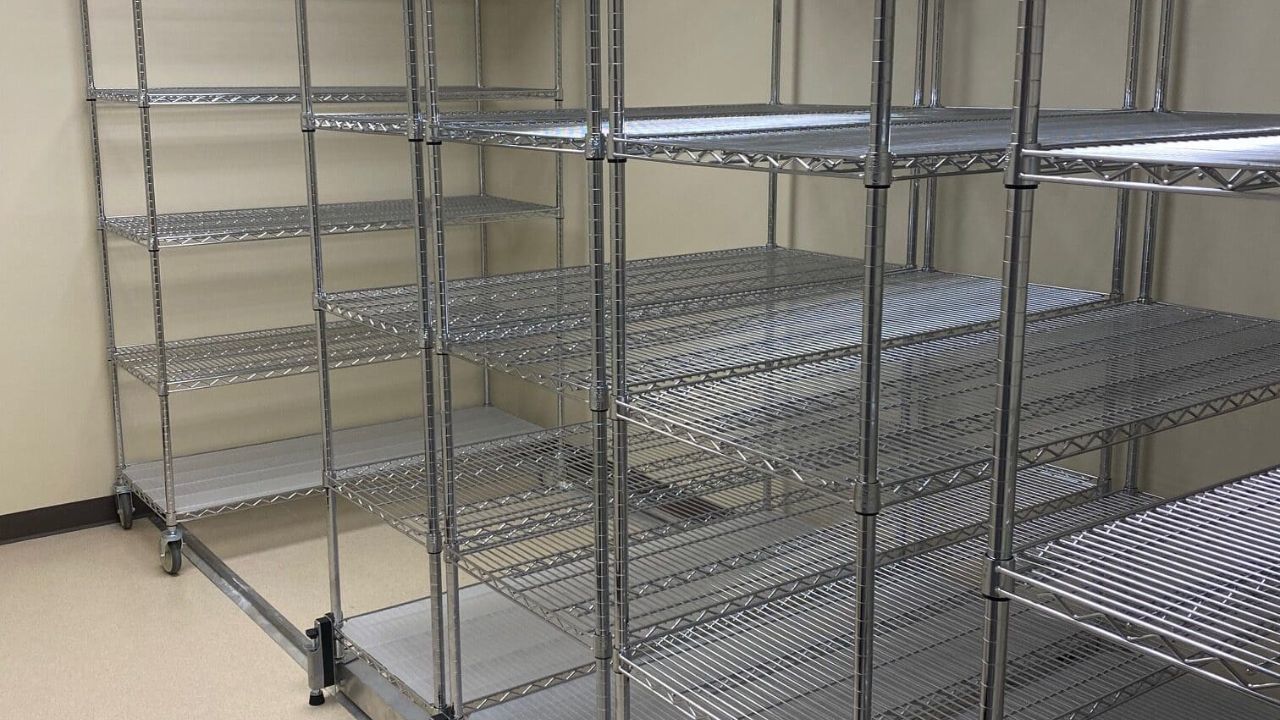
Porous surfaces contain microscopic pores, crevices, and rough textures measured by surface roughness (Ra values). Chrome wire mesh shelving registers 5-20 μm Ra, while stainless steel measures just 0.1-0.5 μm Ra. These pores trap bacteria deep within the material structure, creating reservoirs that cleaning agents cannot reach.
The result: porous materials maintain bacterial counts of 10³-10⁵ CFU/cm² even after cleaning, while non-porous surfaces achieve <10² CFU/cm². This fundamental difference in material choice drives the contamination risk in healthcare storage environments.
Porous vs. Non-Porous Storage Materials
| Material Category | Common Examples | Why It's Risky (or Not) | Cleaning Limitations | Replace vs. Acceptable |
| High-Risk Porous | Chrome wire mesh, wood composites | Bacteria in crevices; 10³-10⁵ CFU/cm² contamination | Only 70-90% reduction after cleaning; 2-3x longer cleaning time | Replace |
| Low-Risk Non-Porous | Stainless steel, sealed polymers | Smooth surface; <10² CFU/cm² | 99.9%+ reduction after cleaning | Acceptable |
Understanding Surface Safety Levels:
Porous surfaces create multiple failure points in infection control. Microscopic pores shield bacteria from both mechanical cleaning and chemical disinfection. When biofilms form in these protected spaces, they become 100-1,000x more resistant to antimicrobials than free-floating bacteria. Understanding how proper medical storage stops bacterial contamination is critical for effective infection prevention.
Mechanisms That Make Porous Storage Higher Risk:
Soil creates a physical barrier preventing disinfectant contact. On porous surfaces, soil accumulates in microscopic pores where it cannot be fully removed, permanently compromising disinfection effectiveness.
Cross-Contamination Pathway:
Porous surfaces concentrate in high-touch, high-moisture zones where infection risk peaks. Legacy chrome wire shelving dominates clean utility rooms, medication storage, and mobile carts, precisely where clean supplies contact contaminated surfaces most frequently. These areas represent the highest contamination risk in healthcare facilities.
Common Facility Storage Zones
| Location | Typical Porous Items | Touch Frequency | Moisture Exposure | Risk Rating |
| Clean utility | Chrome wire shelving, fabric bins | High | High (near sinks) | High |
| Medication rooms | Damaged shelving, cardboard organizers | High | Medium | High |
| Mobile carts | Chrome wire shelving | Very high | Medium | High |
| Sterile processing | Worn surfaces, chrome wire | Very high | Very high | High |
Hidden/Overlooked Storage Areas:
Storage "Miss Points" During Cleaning:
☐ Undersides of shelves
☐ Wire mesh intersections on chrome shelving
☐ Bin rims and seams
☐ Behind stored equipment (30-100 lb cases)
☐ High shelves with access difficulty
Heavy items stored on porous surfaces face dual threats: structural instability from inadequate weight capacity and contamination from bacterial reservoirs. Sterile instrument trays (15-50 lbs) and equipment cases (30-100 lbs) contact surfaces harboring 10³-10⁵ CFU/cm², transferring pathogens directly to packaging. Proper medical storage bins with non-porous surfaces eliminate this transfer pathway.
High-Touch Clean Supplies Most Prone to Recontamination
| Supply Type | Weight Range | Risk If Contaminated | Preferred Storage |
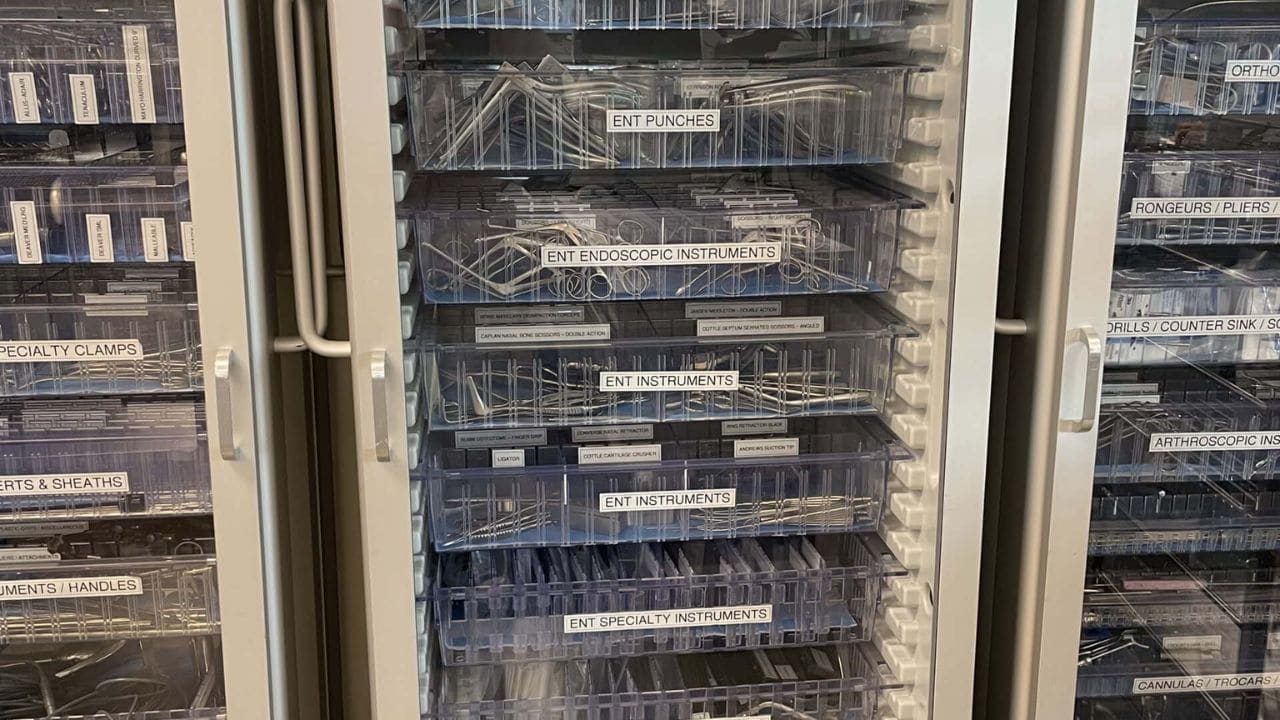
| Sterile instrument trays | 15-50 lbs | Surgical site infection | Stainless steel in closed cabinets |
| Supply bins | 20-40 lbs | Multi-patient cross-contamination | Non-porous bins on sealed surfaces |
| Equipment cases | 30-100 lbs | Device malfunction | Stainless steel (600-800 lb capacity) |
| Linen stacks | 40-80 lbs | Pathogen exposure | Sealed polymer away from moisture |
Items Vulnerable to Moisture and Barrier Compromise:
Red Flags That "Clean Storage" Has Become "Dirty Holding":
Moisture in porous materials prevents desiccation, allowing bacteria to remain viable for months. C. difficile spores persist for 5+ months; MRSA and VRE survive weeks to months on moist porous surfaces. This extended survival transforms storage into persistent contamination reservoirs that continuously recontaminate clean supplies, representing a critical infection control challenge.
Why Spores and Biofilm-Prone Organisms Raise Stakes:
Environmental and workflow failures amplify the inherent risks of porous surfaces. High humidity, splash zones, and unclear cleaning ownership convert structural vulnerabilities into active contamination sources.
Environmental Conditions That Amplify Risk:
Workflow Conditions That Amplify Risk:
"Temporary Fixes" That Backfire:
Standards assume cleanable surfaces, but porous materials fundamentally cannot meet performance expectations. Environmental rounds inspect visible cleanliness while bacteria thrive invisibly in microscopic pores.
Practical Expectations for Environmental Cleaning:
What Environment-of-Care Rounds Look For:
"Designed for Cleanability" Means:
Porous storage drives hidden costs through failed cleaning cycles, contaminated supplies, and structural failures. The 2-3x cleaning time burden creates compliance gaps while biofilm resistance ensures inferior results regardless of effort.
Operational Cost Drivers:
Why Porous Storage Leads to Repeat Audit Findings:
Environmental cultures showing 10³-10⁵ CFU/cm² on chrome wire despite documented cleaning damages program credibility. Biofilms (100-1,000x resistant) become visible proof of failure, undermining staff confidence and regulatory standing.
Risk stratification drives replacement priorities. High-acuity zones demand immediate action; low-risk areas tolerate interim controls while budgets align with safety requirements.
Risk Classification Framework
| Risk Level | Criteria | Examples | Minimum Controls |
| High | High acuity + high touch + moisture | Sterile processing, OR, ICU | Non-porous only; 600-800 lb capacity; eliminate chrome wire |
| Medium | Medium acuity + moderate touch | Floor clean utility, med rooms | Non-porous preferred; plan replacement within 12 months |
| Low | Non-clinical + low touch | Administrative storage | Sealed surfaces acceptable with monthly validation |
Decision Replace vs. Control
| Condition | Recommended Option | Triggers for Replacement |
| Chrome wire in high-risk zones | REPLACE | Any moisture exposure, biofilm visible, failed ATP |
| Damaged epoxy coating | REPLACE sections | Damage >10%, high-touch zones, corrosion |
| Chrome wire in low-risk zones | Control-by-process (interim) | Movement to higher-risk, moisture, audit findings |
Interim Controls During Transition:
Systematic assessment and targeted controls reduce risk while replacement plans are being developed. Inventory creates visibility; validation exposes failure; ownership ensures accountability.
Storage-Surface Inventory Must Capture:
Cleaning Methods by Surface Category
| Surface Category | Method | Minimum Frequency | Special Notes |
| Non-porous (stainless, polymer) | Clean then disinfect | High-touch: 3x/day | Achieves 99.9%+ reduction |
| Porous (chrome wire) | Clean, extended contact | 2x/day minimum | Only 70-90% reduction; requires 2-3x time, 50-100% more chemical |
| Porous (wood composite) | Dry wipe only | Should not be in clinical areas | Cannot be disinfected; REPLACE |
Ownership Matrix
| Task | Responsible Role | Frequency | Documentation |
| Shelf cleaning | EVS | Per risk level | Cleaning log noting porous surfaces require 2-3x time |
| ATP validation | Infection Prevention | Weekly (porous surfaces in high-risk zones) | Readings logged (target <500 RLU) |
| Replacement implementation | Facilities + Materials | Per action plan | Completion certificates, post-ATP validation |
Validation Methods
| Method | What It Measures | Best Use | Who Owns It |
| ATP testing | Organic matter (RLU) | Weekly for porous surfaces in high-risk zones | Infection Prevention + EVS |
| Environmental cultures | Bacterial counts (CFU/cm²) | Monthly high-risk porous; quarterly non-porous | Infection Prevention + Lab |
| Visual standards | Visible cleanliness | Daily EVS rounds | EVS supervisor |
Sustainment Controls:
Material selection eliminates risk at the source. Non-porous surfaces achieve 99.9%+ bacterial reduction with standard protocols; porous materials fail regardless of cleaning effort. Creating sustainable storage systems that also prioritize infection control requires careful material choice.
Lower-Risk Storage Materials
| Material | Why Easier to Clean | Recommended Use |
| Stainless steel 304/316 | 0.1-0.5 μm Ra; 99.9%+ reduction; 15+ year lifespan | Sterile processing, OR, high-moisture areas |
| Sealed polymers | 0.5-1.5 μm Ra; rust-proof; 99.9%+ reduction | Linen storage, wash-down zones, humid areas |
| Solid epoxy-coated | 0.5-1.0 μm Ra; cost-effective | Patient care areas, medication rooms |
When Coatings Help (and When They Don't):
Help:
Don't help:
Storage Design Checklist:
☐ Closed cabinets for sterile supplies
☐ Minimum 6-foot distance from sinks
☐ Sealed bins for all supplies (non-porous barrier)
☐ Shelves rated 600-800 lbs capacity
☐ Spacing for cleaning access (12 inches vertical, 6-8 inches from walls)
Porous materials are acceptable only in low-risk, non-clinical areas with: (1) minimal touch, (2) no moisture (<6 feet from sinks, humidity <60%), (3) monthly ATP validation, and (4) documented replacement timeline (maximum 12 months). Chrome wire and wood composites should be avoided entirely in sterile storage zones.
Factors Determining Covering vs. Replacement:
Cleaning Frequency Baseline
| Risk Level | Example Locations | Minimum Frequency | Event Triggers |
| High-risk porous (require replacement) | Sterile processing if legacy chrome wire | 3x/day | Visible soil, spills, moisture |
| High-risk non-porous | Same with stainless/polymer | 2-3x/day | Visible soil, before/after procedures |
| Medium-risk porous | Floor utility if legacy materials | 2x/day | Monthly ATP failures |
| Low-risk non-porous | Administrative storage | 2-3x/week | Dust, construction |
Immediate Response If Supplies Stored on Contaminated Porous Surface:
Prioritize zones with moisture exposure, high touch frequency, and structural risk. Quick wins eliminate the highest-risk scenarios while systematic replacement addresses the entire facility.
Fix First for Fastest Risk Reduction:
30–60–90 Day Plan
| Timeframe | Priority Actions | Deliverables | Success Metrics |
| 30 Days | Eliminate porous in high-risk zones; implement supply isolation; ATP testing program | Purchase orders for stainless/polymer; ATP baseline data | Zero porous in high-risk zones; ATP protocol established |
| 60 Days | Replace medium-risk porous; complete staff training; enhanced cleaning protocols | Training records; updated SOPs; capital budget | 75% reduction in porous materials; 100% staff trained |
| 90 Days | Complete clinical area replacement; validation program; accountability matrix | 100% non-porous in clinical storage; monthly ATP validation | Zero porous in patient care; 95% ATP tests passing |
Documentation Package for Inspections:
Porous storage surfaces create infection control failures that cleaning cannot fix. Microscopic pores harbor 10³-10⁵ CFU/cm² even after documented cleaning, while non-porous alternatives achieve 99.9%+ bacterial reduction with standard protocols. The evidence is clear: chrome wire mesh, wood composites, and damaged coatings in clinical areas compromise sterile supplies, waste cleaning resources, and damage program credibility.
Facilities face a choice: invest in non-porous materials (stainless steel, sealed polymers) rated for 600-800 lb capacity, or accept persistent contamination that no amount of cleaning can overcome. Biofilms on porous surfaces resist disinfectants at 100-1,000x normal levels. C. difficile spores survive 5+ months in moisture-exposed pores. The 2-3x cleaning time burden for inferior results (70-90% vs. 99.9%+ reduction) makes operational sense align with infection prevention imperatives.
The path forward requires systematic replacement prioritized by risk: high-acuity zones first, then medium-risk areas, with documentation demonstrating progress toward complete elimination of porous materials from clinical storage. The cost of inaction, contaminated supplies, structural failures, and regulatory findings far exceeds the investment in proper infrastructure.
Ready to eliminate porous storage risks in your facility? Contact our healthcare storage experts for a custom assessment and implementation plan.
With 21 years of sales management, marketing, P&L responsibility, business development, national account, and channel management responsibilities under his belt, Ian has established himself as a high achiever across multiple business functions. Ian was part of a small team who started a new business unit for Stanley Black & Decker in Asia from Y10’ to Y14’. He lived in Shanghai, China for two years, then continued to commercialize and scale the business throughout the Asia Pacific and Middle East regions for another two years (4 years of International experience). Ian played college football at the University of Colorado from 96’ to 00’. His core skills sets include; drive, strong work ethic, team player, a builder mentality with high energy, motivator with the passion, purpose, and a track record to prove it.