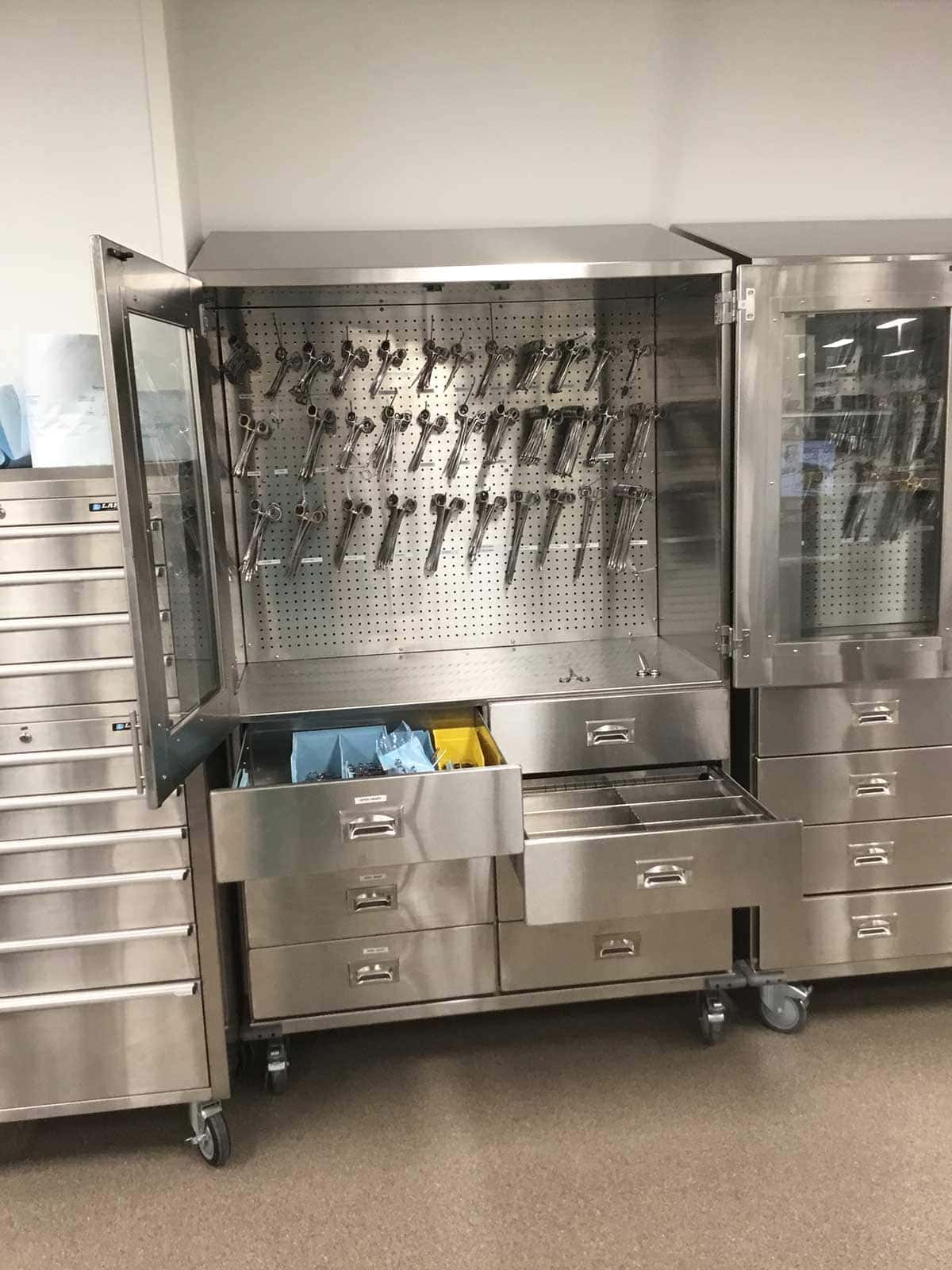
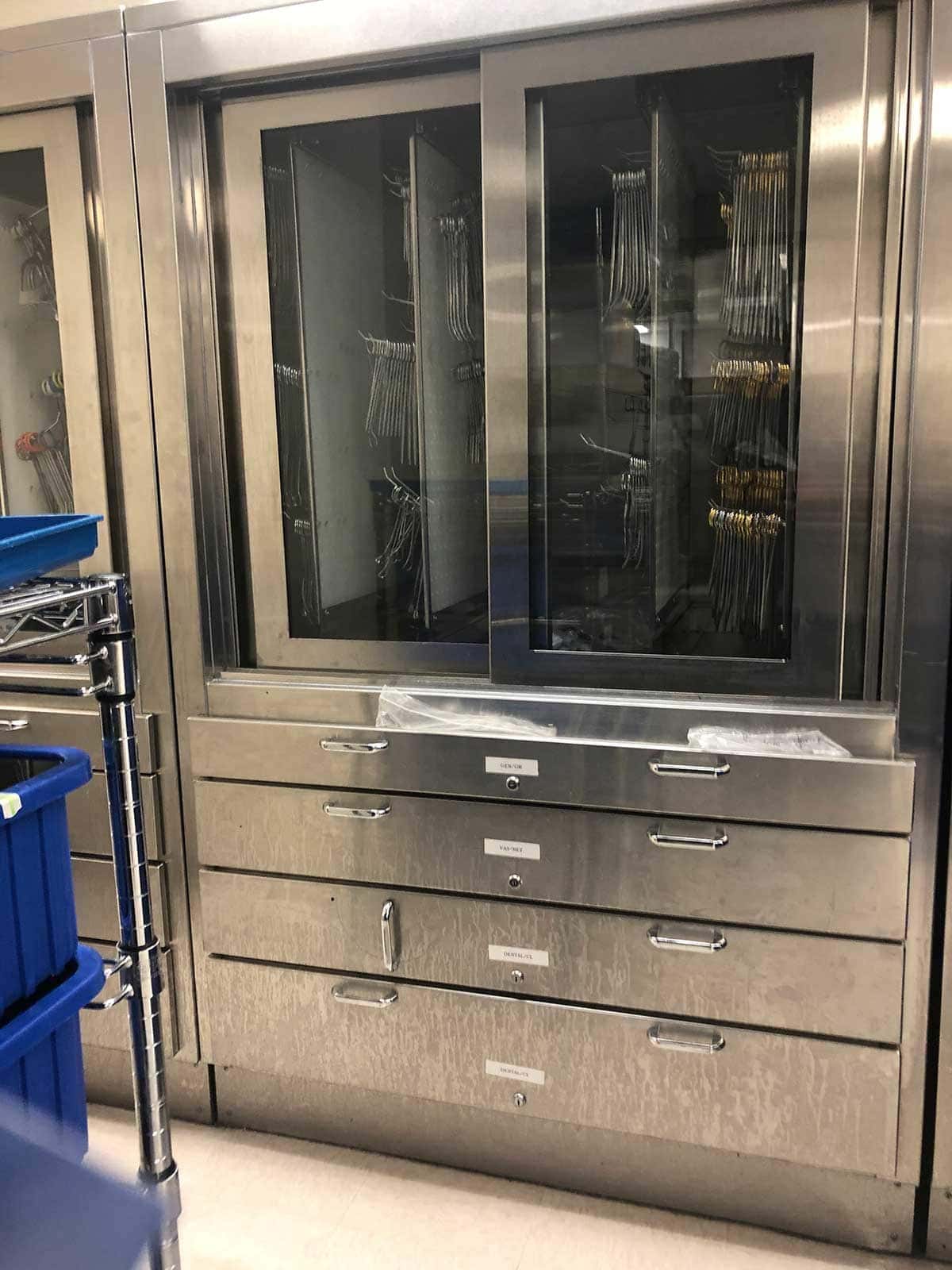
Key Takeaways
Healthcare storage failures rarely announce themselves with a single catastrophic event. They accumulate quietly, an extra five minutes searching for supplies here, an expired medication there, a near-miss that almost became an incident. By the time leadership notices, inefficiency has become embedded in daily operations.
The costs are real but often invisible. Staff time disappears into non-clinical tasks. Capital sits frozen in excess inventory. Compliance risk grows with every manual workaround. And patient safety erodes each time a stockout forces improvisation.
This guide identifies the 10 warning signs that signal your storage system needs attention. More importantly, it provides a practical framework for diagnosis, prioritization, and action, drawn from LEAN methodology and emerging best practices shaping healthcare logistics for 2026 and beyond.
Healthcare storage optimization is more than inventory management. It combines physical layout, workflow design, technology integration, and data analytics into a unified system. The goal: right supplies, right place, right time, every time.
The stakes are high. Stockouts delay patient care. Poor tracking leads to audit failures and liability exposure. Expired supplies drain budgets. Staff waste hours searching instead of treating patients. These medical inventory problems compound when systems rely on manual processes and reactive ordering.
The industry is shifting toward predictive, AI-powered inventory systems. IoT sensors track stock levels and environmental conditions in real time. Automated dispensing cabinets (ADCs) control access, document usage, and ensure compliance. The ADC market alone is forecast to reach $6.8 billion by 2033, growing at 8.1% CAGR, clear evidence that healthcare is betting on automation.
Not every storage problem announces itself. Many facilities operate with chronic inefficiencies they've normalized. The following signs of poor storage indicate your system needs attention, whether through process changes, technology upgrades, or full redesign.
Time spent hunting for supplies is time stolen from patients. When staff manually count inventory, track down misplaced items, or chase order status, productivity collapses.
This "motion" and "waiting" waste, LEAN terms for non-value-added activity, drives burnout. Nurses didn't train for years to count gauze pads. Manual counting also introduces errors, corrupting the data needed for accurate reordering. Bad data means more searching tomorrow.
Running out of supplies mid-procedure is a patient safety crisis. Stockouts force staff to improvise, delay treatment, or scramble for last-minute substitutes, often at premium prices.
Beyond the immediate clinical impact, supply uncertainty creates anxiety. Surgeons wonder if the needed implants will arrive. OR schedulers hedge on case timing. This uncertainty ripples through operations, affecting throughput and staff morale.
Every expired item represents pure financial loss. When supplies routinely pass their use-by dates, something is broken: stock rotation, demand forecasting, or both.
Proper First-In, First-Out (FIFO) practices prevent most expirations. Without them, newer stock gets used while older inventory sits forgotten. One hospital implemented standardized storage using LEAN methodology and reduced high-risk drugs in stock by 40.73%, directly cutting expiration risk and saving over €25,000.
When supplies spill into hallways, nurses' stations, and procedure rooms, storage capacity has failed. Clutter isn't just unsightly; it's a safety and infection control hazard.
Overflow stock is hard to track, easy to damage, and impossible to rotate properly. It also signals to staff that official storage can't be trusted. That perception fuels hoarding, which compounds the problem. Effective space management and storage solutions eliminate overflow by maximizing existing footprints.
A nurse transferring from one unit to another shouldn't need a treasure map. When every department organizes differently, efficiency collapses, and so does facility-wide visibility.
Standardization enables scale. Best practices can't spread when each unit invents its own system. Inconsistency also prevents meaningful data aggregation, making informed purchasing decisions impossible.
"Just in case" ordering is a symptom of system distrust. When staff can't verify what's actually available, they order defensively, tying up capital in excess inventory.
Overstocking creates its own problems. Storage areas become crowded. Expiration risk increases. And the excess inventory often ends up in those unofficial stashes that further cloud visibility. Real-time inventory data breaks this cycle. Strong materials management practices restore trust and eliminate defensive ordering.
Healthcare real estate is expensive. When high-value space sits half-empty while other areas burst at the seams, allocation has failed.
Traditional static shelving wastes square footage. High-density mobile shelving systems compact storage by eliminating fixed aisles. Modular designs adapt as needs change. A Hybrid 5S approach, combining LEAN organization with industrial engineering, achieved 15.7% space savings in hospital warehouse operations.
Storage that ignores infection control creates preventable contamination pathways. Cluttered areas resist proper cleaning. Damaged packaging exposes sterile contents.
The industry is responding with antimicrobial surfaces for cabinets, shelving, and carts. These materials actively inhibit microbial growth, supporting infection prevention protocols. But technology alone won't fix fundamentally disorganized spaces.
Hoarding is a trust indicator. When clinicians hide supplies in desk drawers, coat pockets, or unofficial cabinets, they've lost faith that the system will deliver what they need.
Personal stashes create unmonitored inventory. These supplies bypass expiration tracking, usage documentation, and charge capture. They also distort demand signals, making accurate forecasting impossible.
A single audit finding might be a fluke. Recurring citations indicate systemic failure. When inspectors repeatedly flag storage issues, the root cause requires investigation.
Manual tracking opens the door to compliance gaps, especially for batch-sensitive, recalled, or regulated products. Without automated documentation, maintaining accurate records becomes labor-intensive and error-prone. Each failure creates liability exposure.
Fixing storage problems requires understanding them first. Gut feelings and anecdotes won't drive investment decisions. You need data, baseline metrics that quantify the problem and measure improvement.
Effective healthcare storage assessment combines observation, measurement, and staff input. Walk the floor. Time the workflows. Ask the people doing the work. The goal is to move from "storage feels broken" to "storage costs us X hours and Y dollars per month."
Key Diagnostic Steps:
Metrics To Track:
| KPI | What It Signals |
| Stockout frequency | Supply reliability and patient safety risk |
| % expired inventory | Waste from poor rotation (aim for <2%) |
| Inventory turnover | Capital efficiency; LEAN systems achieve 30% higher turnover |
| Staff search time | Non-value-added activity stealing clinical hours |
| Rush order volume | Forecasting failures and system distrust |
You don't need a seven-figure technology project to start improving. Many high-impact changes require only process discipline and organizational commitment. Start where the stakes are highest and build momentum.
Prioritize High-Impact Areas:
Implement Proven Practices:
| Practice | Benefit |
| Standardized bin locations | Staff find items instantly in any unit |
| Color-coded labels and visual controls | Reduces search time, prevents picking errors |
| Data-driven PAR levels | Prevents both stockouts and overstocking |
| FIFO rotation protocols | Reduces expiration waste |
| 5S methodology (Sort, Set in Order, Shine, Standardize, Sustain) | Creates organized, maintainable storage |
These aren't theoretical benefits. One hospital implementing standardized medication storage using LEAN methodology achieved a 56.72% reduction in pharmaceutical dosage forms stocked and €25,357.98 in direct savings from waste elimination.
Leverage Technology Where It Adds Value:
Don't treat optimization as a one-time project. Healthcare facilities constantly evolve, new services launch, volumes shift, and products change. Without ongoing audits, refresher training, and PAR level adjustments, improvements erode within months. The fifth S in LEAN methodology, "Sustain", exists because maintaining gains is harder than achieving them. Build audit cycles and accountability into your operating rhythm from day one.
Don't overcomplicate systems. Overly rigid rules, excessive label types, or technology that adds steps will backfire. Busy clinical staff working under pressure will default to workarounds, the same workarounds you're trying to eliminate. The best storage system is one that staff actually use. Design for the midnight shift during a crisis, not the ideal Tuesday morning. If it isn't intuitive enough to follow when things get hard, it won't stick.
Meaningful improvement doesn't require years of planning. A focused 90-day sprint can transform a pilot unit and build the evidence for broader rollout.
90-Day Action Roadmap:
| Phase | Focus | Key Actions |
| Weeks 1–4 | Assess | Audit priority areas, gather baseline metrics, interview frontline staff, select pilot unit |
| Weeks 5–8 | Pilot | Implement 5S in pilot unit, establish data-driven PAR levels, standardize labeling, train staff |
| Weeks 9–12 | Scale | Measure results against baseline, refine approach, develop facility-wide rollout plan, build business case |
When To Seek External Help:
Professional storage consultation healthcare settings accelerates results and avoids common pitfalls. Consider external support when facing:
The 10 warning signs outlined here provide a practical diagnostic framework for identifying storage dysfunction. LEAN storage systems deliver measurable improvements, 15.7% space savings, 56.72% inventory reduction, 30% higher turnover when implemented with discipline. Start with a focused assessment of your highest-risk, highest-impact areas. Even modest improvements yield significant returns in patient safety, operational cost, and regulatory compliance.
Ready to diagnose your facility's storage challenges? Contact DSI Direct to discuss assessment options and optimization strategies tailored to your operations.
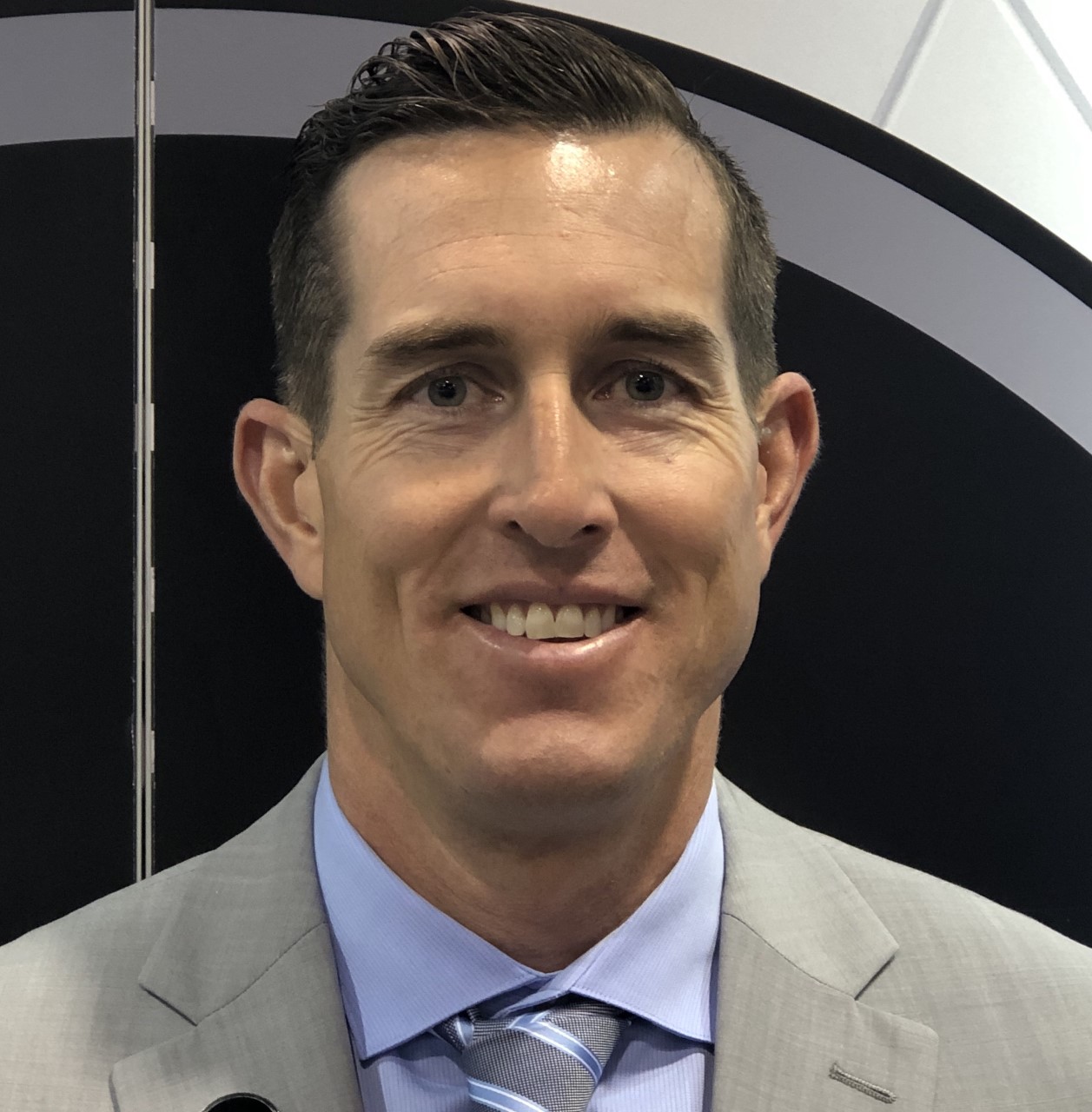
With 21 years of sales management, marketing, P&L responsibility, business development, national account, and channel management responsibilities under his belt, Ian has established himself as a high achiever across multiple business functions. Ian was part of a small team who started a new business unit for Stanley Black & Decker in Asia from Y10’ to Y14’. He lived in Shanghai, China for two years, then continued to commercialize and scale the business throughout the Asia Pacific and Middle East regions for another two years (4 years of International experience). Ian played college football at the University of Colorado from 96’ to 00’. His core skills sets include; drive, strong work ethic, team player, a builder mentality with high energy, motivator with the passion, purpose, and a track record to prove it.