Healthcare facilities face critical decisions when selecting sterile storage systems for their sterile processing departments. The choice between polymer-based solutions and traditional chrome wire shelving directly impacts infection prevention, regulatory compliance, and operational efficiency.
This comparison examines material performance, contamination risk, clinical implications, and financial outcomes to guide evidence-based procurement decisions. Understanding the fundamental differences between DSI SterileShelf and chrome wire shelving enables directors of materials management and SPD managers to optimize patient safety while controlling long-term costs.
Key Takeaways
Sterile storage systems protect processed instruments from environmental contamination until clinical use. These systems must maintain packaging integrity, control temperature and humidity, and prevent microbial infiltration throughout storage periods.
Effective sterile storage directly supports infection prevention and high-level disinfection protocols and regulatory compliance requirements. Proper storage design reduces healthcare-associated infection risk while ensuring immediate availability of sterile instruments for surgical procedures in operating rooms.
Healthcare-associated infections occur when patients contract infections during facility treatment or procedures. Advanced storage systems contribute to a 55.7% reduction in HAI incidence through superior environmental protection.
HAIs generate substantial regulatory scrutiny and financial penalties for facilities demonstrating inadequate infection control. Cross-contamination occurs when clean and dirty items share pathways or storage spaces without proper separation protocols.
Temperature control remains essential because a 5°C increase doubles bacterial multiplication rates within storage environments. Facilities must maintain strict environmental parameters to prevent microbial growth on stored sterile packages.
Joint Commission standard EC.02.06.01 specifically addresses non-cleanable surfaces that pose contamination risks in clinical settings. VA Directive 1116(2) establishes comprehensive compliance requirements for sterile processing and storage operations.
ANSI/AAMI ST79 provides detailed technical specifications for sterile processing equipment, medical devices, and environmental controls. ASHRAE 170-2017 defines ventilation and temperature requirements for healthcare facility storage areas with 98% importance ratings.
Compliance and regulatory standards consistently rank as the highest priority factor in storage system selection decisions. Facilities prioritize systems that ensure adherence to multiple regulatory frameworks without requiring complex workarounds.
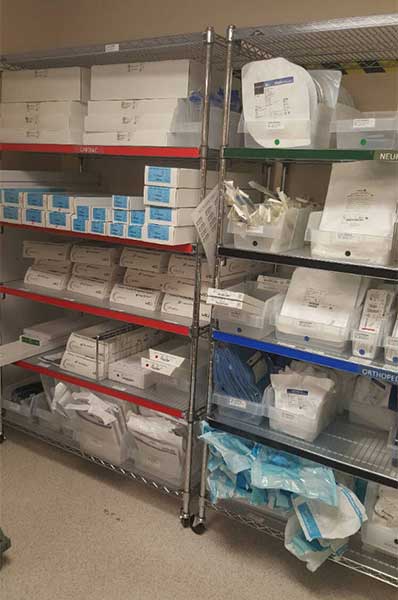
Chrome wire shelving demonstrates an 85% contamination rate due to corroded surfaces harboring bacterial colonies. Polymer systems reduce contamination risk to 12% through seamless, non-porous construction materials.
This represents an 86% improvement in contamination risk when facilities transition from chrome wire shelving to polymer alternatives. Infection control and contamination risk receive 95% importance ratings from healthcare procurement professionals evaluating storage options.
Corroded surfaces create microscopic pitting that harbors bacteria and defeats standard cleaning protocols. These bacterial reservoirs directly compromise the sterility of stored instruments despite proper initial processing.
Material composition determines long-term performance, cleanability, and susceptibility to environmental degradation in healthcare settings. DSI SterileShelf utilizes engineered polymer construction, while chrome wire shelving relies on carbon steel with thin chromium plating.
The fundamental material differences create divergent durability profiles and maintenance requirements over operational lifespans. Understanding these distinctions enables accurate cost comparisons and risk assessments for storage system investments.
DSI SterileShelf exemplifies polymer system construction using engineered materials designed specifically for healthcare environments and medical equipment storage applications. AireCore represents advanced engineered polymer materials offering superior chemical resistance and structural integrity.
Chrome plating measures only 12.7 µm thick on a carbon steel substrate, creating vulnerability to mechanical damage. Chrome wire remains highly susceptible to rust and corrosion when exposed to healthcare environments containing moisture and chemical cleaners.
Chemical degradation from hospital-grade disinfectants rapidly compromises the protective chromium layer. Micro-scratches from bins and equipment contact breach the thin plating, exposing underlying steel to corrosive elements.
Chrome wire shelving typically requires replacement every 3-5 years due to progressive corrosion and structural degradation. Polymer systems maintain functional integrity for 15+ years without significant material breakdown.
Standard chrome wire shelf capacity reaches 600-800 lbs per shelf under optimal conditions. Plating becomes easily breached by micro-scratches from bins during normal loading and unloading operations.
The stainless steel products category offers intermediate durability between chrome wire (3-10 years) and polymer systems (15+ years). Material selection directly determines replacement frequency and associated labor costs.
Facilities face a high risk of Joint Commission citations for non-cleanable surfaces when using corroded wire shelving. Open shelving design allows continuous dust accumulation and airborne contamination between cleaning cycles.
Open design characteristics permit dust accumulation even when facilities upgrade to stainless steel wire construction. Air disturbance in busy corridors invites bacterial settlement on exposed stored items without barrier protection.
Higher humidity levels create ideal breeding conditions for bacteria and mold on porous or corroded surfaces. These environmental factors exponentially increase maintenance requirements and infection control risks for open shelving systems.
Storage system selection directly affects contamination rates, workflow efficiency, and compliance with sterile processing department best practices. Clinical implications extend beyond initial cost to encompass patient safety outcomes and operational productivity measures.
The comparison between polymer and chrome wire systems reveals substantial differences in infection risk mitigation. Operational considerations include staff workflow efficiency, inventory management capabilities, and regulatory audit readiness.
Chrome contamination reaches 85% while polymer systems maintain only 12% contamination rates in comparable environments. Open wire construction allows continuous dust infiltration versus closed cabinets, providing comprehensive barrier protection.
Event-related shelf-life standards consider packages sterile indefinitely unless specific events compromise packaging integrity. Facilities must maintain storage temperatures at or below 75°F (24°C) to prevent accelerated microbial growth.
Humidity requirements mandate maintaining levels between 20-60% to inhibit bacterial multiplication and spore germination. Temperature and humidity deviations create conditions that rapidly compromise sterility despite proper initial processing protocols.
Modular systems deliver 25% reduction in manual workload by streamlining inventory access and replenishment processes. PAR level management involves maintaining adequate supply quantities without overstocking, which increases carrying costs.
Ease of use and efficiency receive 78% importance ratings from facilities evaluating storage system impact on medical staff productivity. FlexCell modular interior systems allow customizable configurations that adapt to changing inventory requirements.
HEPA filtration in premium systems achieves ISO 4 cleanliness standards that eliminate airborne particulate contamination. Advanced filtration directly supports infection prevention while reducing manual cleaning frequency requirements.
Best practices mandate separating clean and dirty items along distinct pathways to prevent cross-contamination during processing. Facilities must implement closed systems in high-traffic areas where air disturbance increases contamination risk.
Effective solutions incorporate PAR level management with clear labeling systems that facilitate accurate inventory control. Durability and lifespan considerations receive 82% importance ratings reflecting long-term operational impact on facility budgets.
The sterile processing department functions as the area responsible for processing, storing, and distributing medical instruments to patient care areas. Storage system performance directly determines SPD's ability to maintain sterility throughout the supply chain.
Financial analysis must extend beyond the initial acquisition price to encompass maintenance, replacement, and operational cost differentials. Total cost of ownership calculations reveal the true economic impact of storage system decisions over operational lifespans. The cost comparison demonstrates how premium initial investments generate substantial long-term savings through extended durability. Understanding TCO components enables facilities to justify capital expenditures based on measurable financial returns.
A standard chrome wire shelving unit costs approximately $350 upfront for basic five-shelf configurations. Chrome wire systems range from $100-$390 per unit, while stainless steel wire alternatives cost $300-$800 per unit.
Chrome wire options span the $150 budget tier to the $390 premium tier, depending on capacity and coating quality. Closed cabinets require a $2,000 budget investment versus $15,000+ for premium configurations with integrated environmental controls.
Initial cost differences for stainless steel significantly exceed chrome wire alternatives due to superior material properties. However, these higher upfront investments deliver extended operational lifespans that reduce replacement frequency.
Chrome wire 10-year TCO reaches approximately $14,500 when accounting for replacement cycles and maintenance requirements. Polymer system 10-year TCO totals approximately $8,500 due to minimal maintenance and elimination of replacement cycles.
This represents $6,000 savings per unit over a decade when facilities select polymer versus chrome wire systems. The 41% reduction in total costs demonstrates significant financial advantages of durability-focused procurement.
Total cost of ownership encompasses acquisition costs plus long-term maintenance and replacement expenses throughout operational lifespan. Facilities must calculate TCO to accurately compare systems with different durability profiles and maintenance requirements.
Facilities achieve payback periods of 5.6 months when replacing 100 chrome units with polymer alternatives. A 100-unit replacement program generates $600,000 savings over 10 years through eliminated replacement and maintenance costs.
Return on investment materializes through operational efficiencies and risk mitigation that reduce labor and compliance costs. Hard savings represent direct financial benefits like eliminated replacement cycles that immediately impact facility budgets.
Soft savings encompass intangible benefits like improved staff productivity that reduce labor hours. Enhanced service efficiency allows SPD technicians to focus on instrument processing rather than inventory management tasks.
Facility characteristics, including size, type, and geographic location, significantly affect storage system adoption patterns. Decision-maker demographics and generational perspectives shape procurement priorities and technology acceptance rates across healthcare organizations. Market preferences reflect the interplay between clinical requirements, budget constraints, and organizational priorities. Understanding these influencing factors helps facilities benchmark their storage infrastructure against comparable institutions.
Large hospitals with 500+ beds demonstrate 78% adoption rates of advanced storage systems driven by scale and resources. Medium hospitals, ranging 100-500 beds, show 62% adoption rates, balancing compliance needs with moderate budget constraints.
Small hospitals with fewer than 100 beds exhibit 38% adoption rates, reflecting significant space and capital limitations. Clinics and urgent care facilities maintain only 25% adoption rates due to basic storage requirements and limited budgets.
Small hospitals face significant space constraints that necessitate compact, high-density storage configurations. Facility type directly determines storage complexity requirements and available capital for infrastructure investments.
Rural facilities encounter limited capital budgets that restrict investment in advanced storage technologies despite clinical benefits. Geographic isolation from service providers complicates implementation and ongoing technical support for complex systems.
Rural healthcare organizations face challenges implementing complex systems without local technical expertise and support infrastructure. Budget constraints significantly limit advanced system adoption rates among facilities serving smaller patient populations.
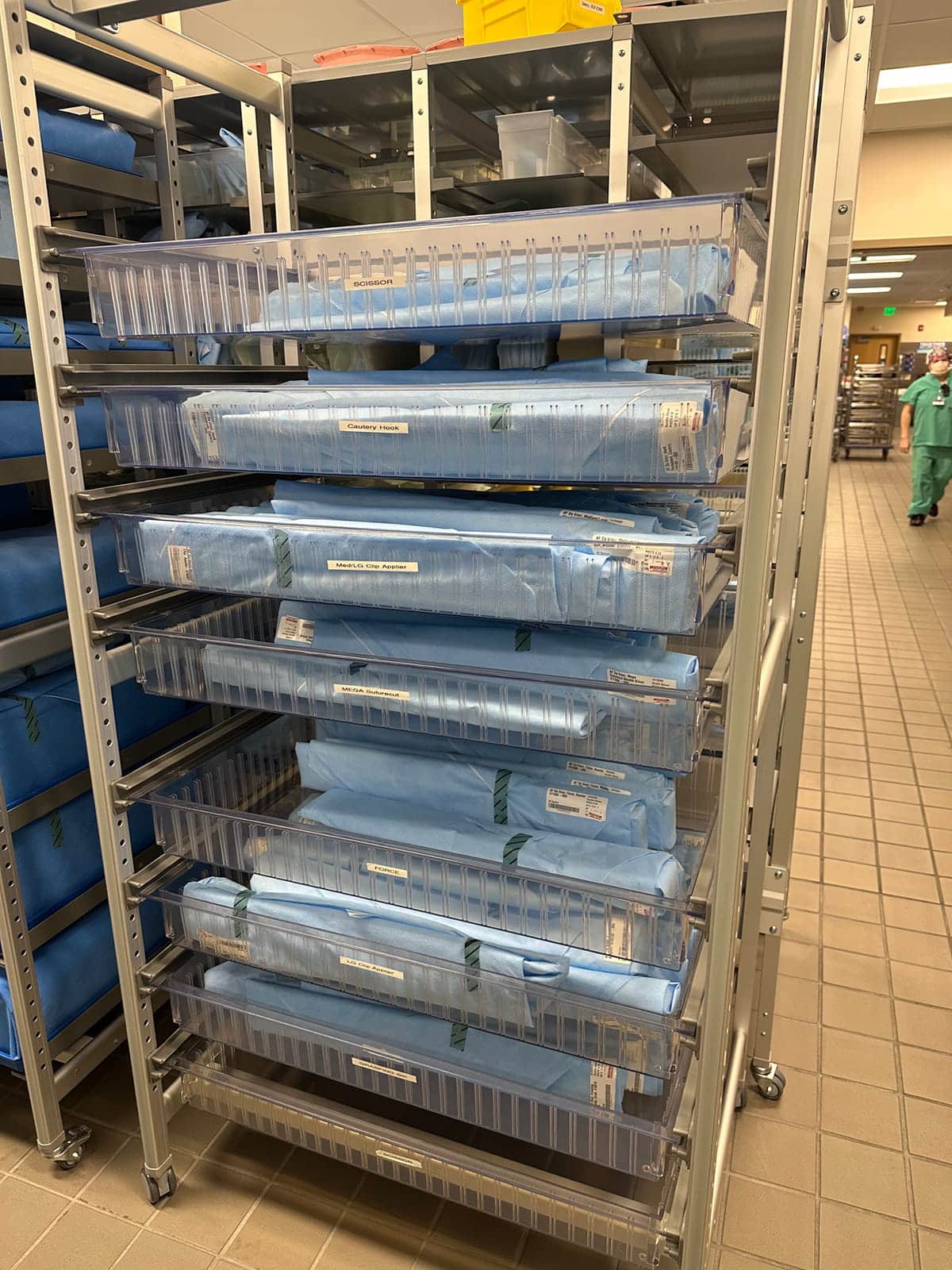
DSI SterileShelf represents premium polymer system examples designed for facilities prioritizing long-term durability and infection control. The application gallery demonstrates diverse implementation scenarios across different facility types and sizes.
Baby Boomer healthcare leaders typically prioritize proven technologies and focus heavily on initial capital expenditure minimization. Generation X managers balance cost considerations with operational efficiency improvements and staff workload reduction benefits.
Millennial administrators increasingly advocate for data-driven, technologically integrated solutions offering real-time monitoring capabilities. These generational differences create varying receptivity to advanced storage technologies and innovative procurement approaches.
Market growth trends reveal accelerating adoption of polymer and modular systems driven by regulatory requirements. Technology evolution enables advanced features, including environmental monitoring and inventory management integration capabilities. The market landscape demonstrates clear movement away from traditional open wire shelving toward closed protective systems. Understanding market dynamics helps facilities align storage investments with industry direction and best practices.
The Global Sterile Storage Cabinet Market reached a $3.46 billion valuation in 2024, driven by infection control priorities. Market projections indicate growth to $3.60 billion in 2025 and $5.50 billion by 2035, reflecting sustained expansion.
The market demonstrates 4.3% CAGR during the forecast period, supported by healthcare industry investment and regulatory requirements. The Medical Supply Storage Cabinets market achieved $2.82 billion in 2024 as facilities modernize aging healthcare equipment and storage infrastructure.
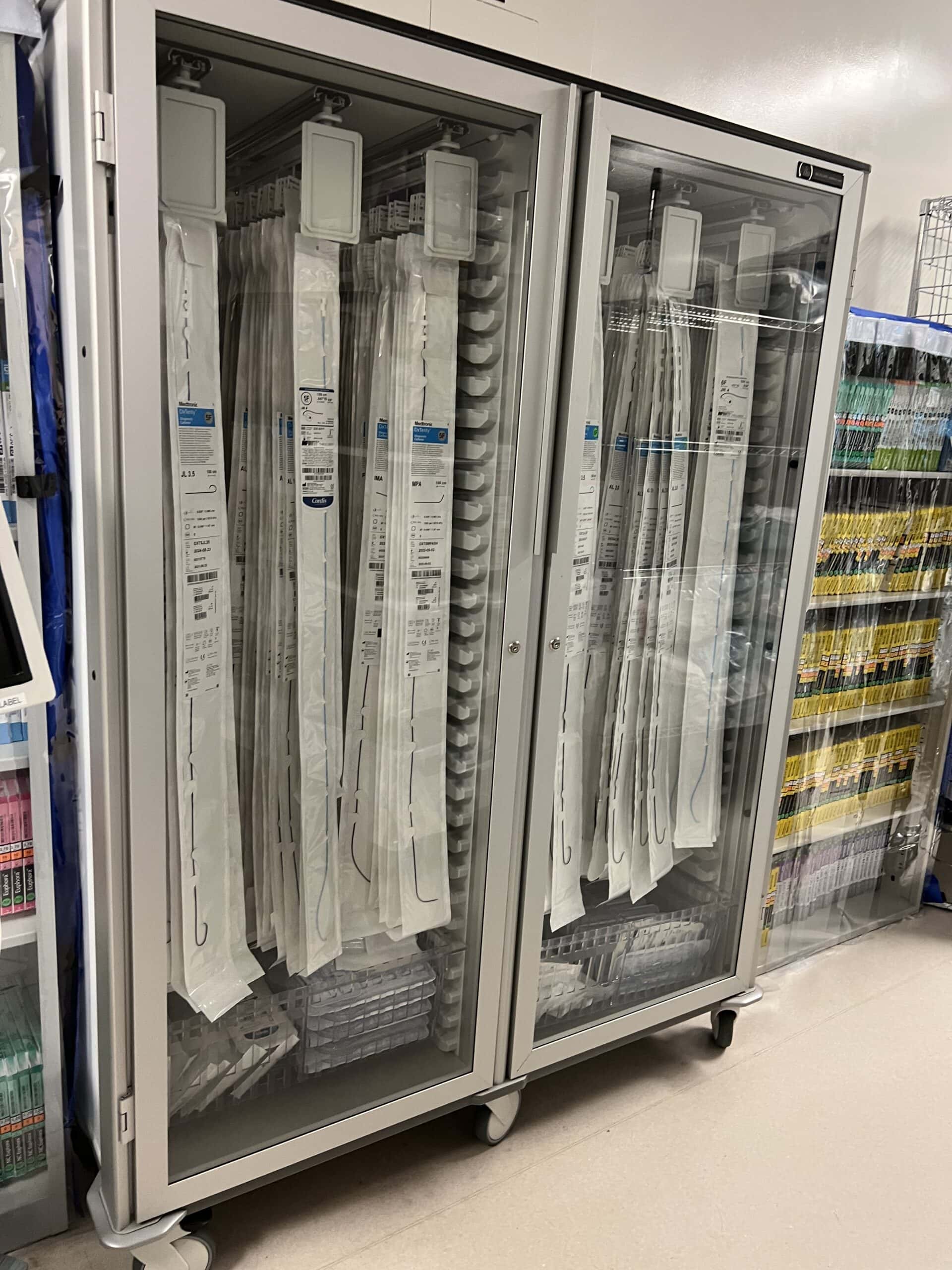
Market expansion from $3.15 billion in 2022 to $3.31 billion in 2023 represents 5.1% growth acceleration. The product gallery showcases evolving storage technologies addressing contemporary healthcare requirements.
Cost and total cost of ownership considerations receive 88% importance ratings from healthcare procurement professionals evaluating options. Closed cabinets currently hold 35% market share, driven by superior infection control capabilities and regulatory compliance.
Modular systems capture 28% market share through flexibility and adaptability to changing clinical inventory requirements. Open shelving maintains only 18% market share, concentrated in non-critical storage applications with lower contamination risk.
Premium systems require a higher upfront investment justified by superior clinical performance and regulatory compliance capabilities. Advanced features, including environmental controls, address emerging regulatory standards and infection prevention protocols.
Fixed systems hold 12% market share in applications requiring permanent installations with optimized space utilization. Temperature and humidity-controlled cabinets represent 7% market share, serving highly sensitive instrument storage requirements.
Modular systems range from $3,500 for small configurations to $15,000 for high-density installations with advanced features. Fixed systems span $4,000 basic installations to $18,000 integrated configurations with custom specifications.
Controlled cabinets require $8,000 for basic temperature control to $25,000 for full ISO 4 environmental management. These premium systems address stringent regulatory requirements for sensitive instruments requiring precise environmental conditions.
Structured decision frameworks help facilities systematically evaluate storage options against clinical and financial criteria. The Ethical Infection Prevention and Control framework provides methodology for balancing patient safety with budget constraints.
Decision frameworks ensure comprehensive evaluation of technical specifications, compliance requirements, and operational impact factors. Systematic approaches reduce procurement bias and support evidence-based investment decisions aligned with facility priorities.
The first step involves identifying specific issues, including compliance gaps or infection risks within the current storage infrastructure. Facilities must recognize deficiencies before initiating procurement processes for replacement systems.
Information gathering requires assessing TCO, clinical efficacy, and regulatory compliance across alternative storage solutions. Analyzing alternatives demands comparing options based on patient safety impact and long-term financial value delivery.
The decision phase involves selecting systems offering the highest patient protection while delivering measurable financial value. This systematic approach ensures procurement decisions prioritize patient safety while maintaining fiscal responsibility.
Best practices mandate implementing closed systems in high-traffic areas where air disturbance increases environmental contamination risk. Facilities must separate clean and dirty pathways to prevent cross-contamination during sterilization processes and instrument handling workflows.
PAR level management with clear labeling facilitates efficient inventory control and prevents both overstocking and stockouts. Modular configurations allow flexible adaptation to changing clinical demands and inventory composition over time.
The Medical Cabinetry market demonstrates projected growth to $11.71 billion by 2027 with 4.7% CAGR, indicating robust demand. Market growth reached 4.8% in 2024, reflecting the accelerating adoption of advanced storage technologies across healthcare segments.
The Surgical Instrument Storage market achieved a $1.41 billion valuation, serving specialized requirements for surgical department storage needs. Clinical efficacy evaluation requires quantifying contamination risk reduction and HAI prevention capabilities of alternative systems.
Budget constraint analysis must incorporate TCO calculations rather than focusing exclusively on initial acquisition costs. Facilities should evaluate payback periods and long-term ROI to justify premium system investments delivering superior clinical outcomes.
The evidence demonstrates clear advantages for polymer systems over traditional chrome wire shelving across clinical and financial metrics. DSI SterileShelf reduces contamination risk by 86% while delivering 41% lower total cost of ownership over operational lifespans. Chrome wire shelving's low initial cost creates a false economy through frequent replacement requirements and elevated infection control risks.
Healthcare facilities prioritizing patient safety and long-term value increasingly adopt closed, polymer-based systems meeting stringent regulatory requirements. The market shift toward advanced storage technologies reflects growing recognition that sterile processing infrastructure directly impacts clinical outcomes. DSIDirect has supported healthcare facilities since 1990 in transitioning from traditional wire shelving to engineered polymer solutions that optimize infection prevention and operational efficiency.
Sterile processing departments require storage systems that protect instrument sterility while supporting efficient workflows and regulatory compliance. The comprehensive comparison reveals that initial cost differences between systems pale against long-term clinical and financial consequences. Facilities must evaluate storage investments through total cost of ownership frameworks that account for replacement cycles, contamination risk, and operational impact.
Ready to optimize your sterile processing department with advanced storage solutions that reduce contamination risk and deliver measurable ROI? Contact our team for a comprehensive facility assessment and customized storage system design that meets your clinical and operational requirements.
Distribution Systems International has helped acute care facilities eliminate contamination risk and reduce storage costs since 1990. Our DSI SterileShelf polymer systems are engineered specifically for SPD environments where sterilization processes, medical instruments, and patient care areas demand zero-compromise storage. We deliver a complete turnkey solution—from on-site analysis and CAD design to full implementation—so your medical staff can focus on patient care, not supply management.
Contact Distribution Systems International today to schedule your complimentary facility assessment and see how SterileShelf can transform your sterile processing department.

With 21 years of sales management, marketing, P&L responsibility, business development, national account, and channel management responsibilities under his belt, Ian has established himself as a high achiever across multiple business functions. Ian was part of a small team who started a new business unit for Stanley Black & Decker in Asia from Y10’ to Y14’. He lived in Shanghai, China for two years, then continued to commercialize and scale the business throughout the Asia Pacific and Middle East regions for another two years (4 years of International experience). Ian played college football at the University of Colorado from 96’ to 00’. His core skills sets include; drive, strong work ethic, team player, a builder mentality with high energy, motivator with the passion, purpose, and a track record to prove it.