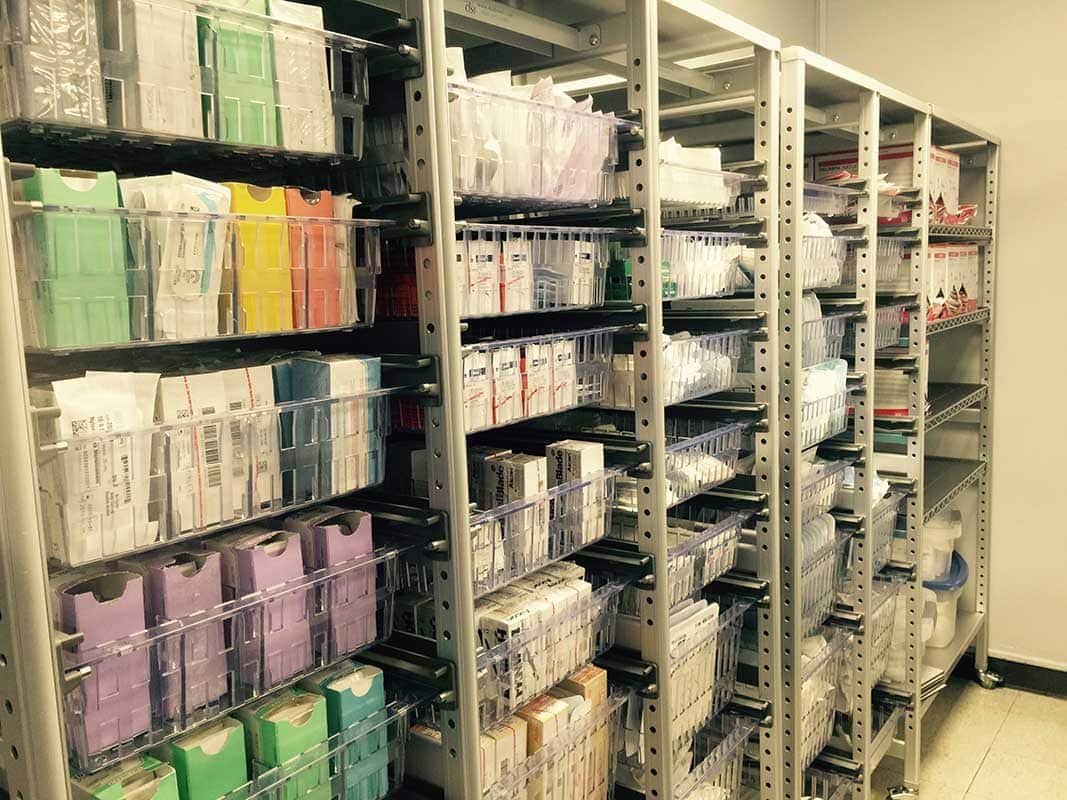
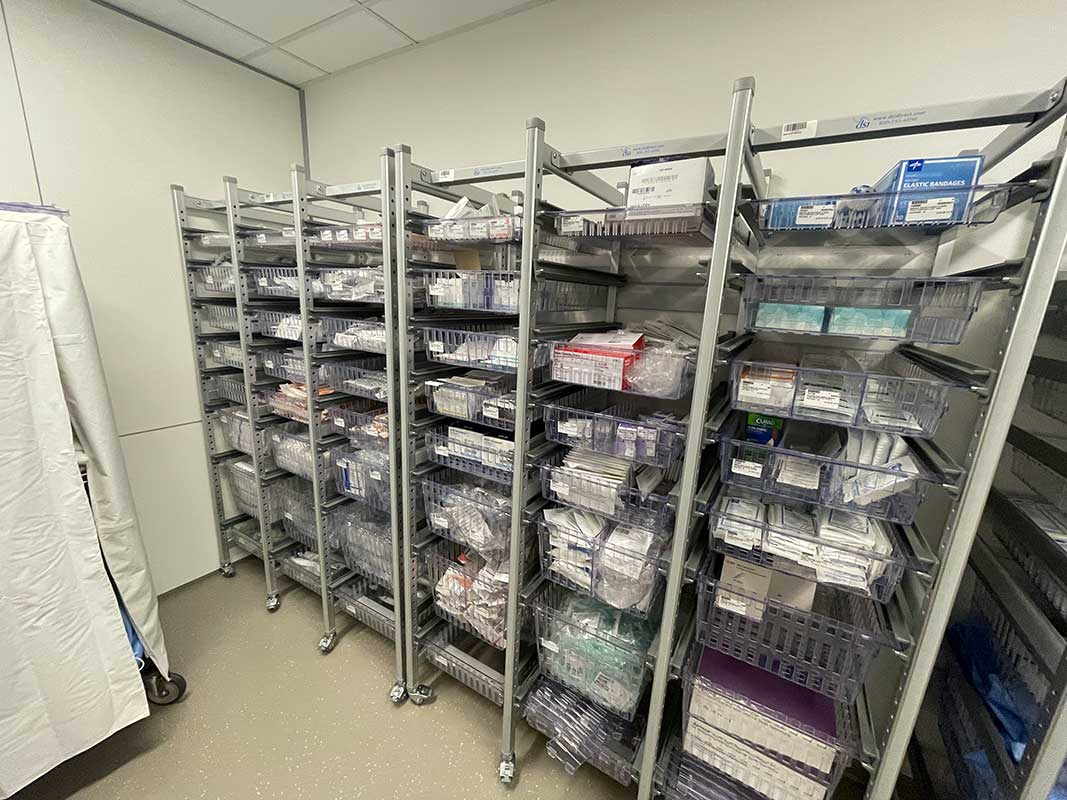
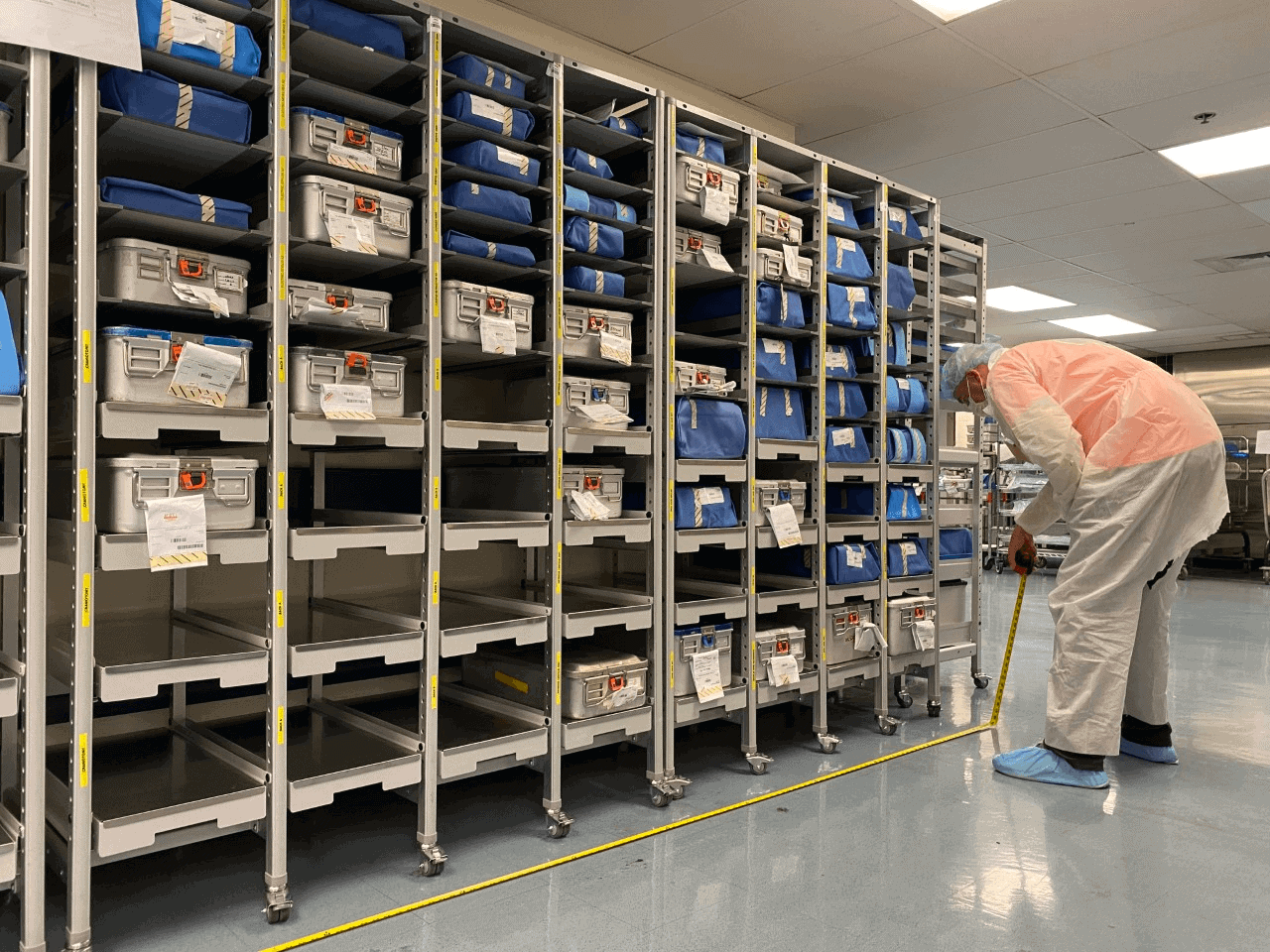
Selecting case carts for surgical services departments involves evaluating design features, workflow requirements, sterility pathways, and economic performance. Well-chosen carts reduce turnover delays, improve first-case readiness, and support efficient sterile processing flow. Poor cart selection creates mobility problems, contamination risk, and hidden labor costs that undermine operating room productivity.
The decision extends beyond initial price to include mobility quality, contamination control, customization capacity, and total cost of ownership. High-volume surgical departments benefit from staged cart systems that enable parallel case preparation and minimize supply-related disruptions.
Surgical case carts are mobile storage units that transport sterile instruments, supplies, and trays from central processing to operating rooms. They support workflow efficiency by enabling pre-staged case setup, reducing supply search time, and maintaining contamination control during transport. Proper cart deployment allows facilities to prepare one cart while another is in use and a third undergoes processing. This three-cart rotation eliminates supply bottlenecks and supports consistent turnover performance.
Primary functions include sterile instrument containment, secure transport through shared corridors, inventory organization, and integration with sterile processing workflows. Carts must accommodate varying tray sizes, protect contents from environmental contamination, and enable ergonomic handling.
Open case carts feature exposed shelving, allowing quick visual access and easier loading. They typically cost less, weigh less, and simplify manual handling during high-turnover operations. However, open designs provide limited protection from airborne contamination during transport and offer less security for expensive instrumentation. Market data suggest open carts held approximately 57.3% revenue share in 2025.
Closed case carts include enclosed bodies with double doors, creating a protective barrier during transport through shared hallways. They improve contamination control, support safer transport in facilities with complex traffic patterns, and enable secure storage of high-value instruments. Closed designs carry higher acquisition costs, weigh more, and require larger storage footprints. A separate analysis reported that closed case carts held approximately 73% share in 2024.
Standard case carts use fixed shelf configurations, common door designs, and universal caster assemblies to support broad surgical applications. They dominate purchase volume because they offer predictable lead times, lower acquisition costs, and simpler integration. Approximately 72% of deployed carts follow standardized designs, while custom-configured models represent 28% of the market.
Custom case carts incorporate specialty shelving, tote systems, adjustable dividers, and upgraded mobility components to match unique workflow requirements. Premium closed configurations add features such as status indicators, numbering systems, and enhanced caster assemblies. The incremental cost difference between a USD 3,000 open cart and a USD 4,916 premium closed cart reaches approximately USD 1,916 before optional accessories.
Stainless steel accounts for approximately 78% of case cart material share because it withstands repeated washer cycles and chemical sterilants. Hybrid metal-polymer designs represent about 17% of the market, incorporating polymer bumpers and handles for impact resistance. Primarily, polymer and specialty nonferrous materials constitute roughly 5% of deployments. Stainless construction ensures infection-control compliance and extends cart service life.
Mobility upgrades include six-inch polyurethane casters, directional locks, low-rolling-resistance wheels, and ergonomic push handles. Caster upgrades typically range from USD 300 to USD 593, while specialized shelving options add USD 372 or more. High-quality casters reduce staff pushing force, improve steering precision, and extend wheel service life.
Case carts function as mobile staging platforms, enabling parallel preparation of multiple procedures without occupying operating room space. They reduce the time clinical staff spend searching for supplies, minimize procedure delays from missing instruments, and support predictable turnover schedules. Proper case cart systems transform sterile processing from reactive service into a synchronized workflow.
The workflow value extends beyond transport to include inventory visibility, contamination control, and labor efficiency. Staged carts prepared the night before surgery enable operating rooms to begin cases on schedule without last-minute supply searches. An effective case cart configuration integrates with broader facility workflows to support measurable improvements in throughput and staff productivity.
Implementation studies demonstrate that well-designed case cart programs can deliver 38% improvement in maximum patient throughput within six months. One facilitation project sustained 95% first-case on-time starts by staging completed carts the night before scheduled procedures. Turnover times fell below the 28-minute target in high-performing service lines. Overnight staging and parallel cart preparation eliminate supply-related delays that traditionally extend room changeover intervals.
A Lean operating room study reported median turnover reduction from 37 minutes alongside supplies stocked in carts overnight. The same project estimated a USD 19,500 per day return on investment from combined workflow improvements. These results illustrate that carts deliver maximum value when integrated with broader perioperative efficiency programs.
Surgical case carts represent meaningful workflow technology rather than simple storage accessories. They reduce labor costs by eliminating redundant supply trips, improve charge capture through better inventory tracking, and lower overstocking expenses. The three-cart model allocates one unit to active use, one to preparation, and one to return processing.
Financial benefits include faster room utilization, reduced idle time, lower staff overtime, and better instrument lifecycle management. Facilities report fewer unplanned staff interruptions, cleaner infection-control pathways, and improved documentation of instrument usage. Premium cart investments often amortize quickly when measured against reduced turnover delays and improved throughput capacity.
A 2023 health technology review found no studies directly comparing open versus closed case carts in surgical settings. This evidence gap means procurement decisions must rely on workflow analysis, contamination risk assessment, and facility-specific requirements rather than comparative clinical trials. No case-cart-specific evidence-based guidelines exist to standardize selection criteria across facility types.
Syndicated market reports disagree materially on some segment shares, creating uncertainty in prevalence estimates. Implementation case studies provide valuable directional evidence but should not be generalized universally without considering local workflow differences. Facilities should conduct internal pilots and track site-specific performance metrics.
Primary buyers include directors of materials management, operating room directors, perioperative service leaders, and sterile processing managers in acute care hospitals. Ambulatory surgical centers represent a fast-growing buyer segment. The purchasing process involves multi-stakeholder committees including CEOs, CFOs, physicians, nursing managers, and purchasing directors.
Decision drivers prioritize workflow efficiency, contamination control, regulatory compliance, staff ergonomics, and total cost of ownership over initial acquisition price. Approximately 71% of buyers initiate purchases to replace outdated technology, while 60% aim to improve clinical outcomes. Cost reduction motivates nearly half of purchases, but operational performance and compliance concerns typically outweigh pure price considerations.
North America accounts for 41.2% of global surgical case cart demand, with the United States representing approximately 90% of North American revenue. Urban facilities dominate high-volume cart deployments because 93.7% of Medicare-certified ambulatory surgical centers operate in urban settings. Only 6.3% of ASCs serve rural markets.
Rural hospitals represent 35.1% of U.S. community hospitals and typically favor versatile, standardized cart designs over specialty configurations. These facilities face tighter capital budgets, lower procedure density, and a greater need for multipurpose equipment. Geographic concentration in urban markets drives faster adoption of advanced cart features.
Cart procurement follows a committee-based structure engaging clinical, operational, and financial decision-makers simultaneously. Operating room directors evaluate workflow integration, turnover impact, and staff usability. Materials management leaders assess inventory control, sterile processing compatibility, and supply chain efficiency. Nursing managers prioritize ergonomics, safety, and infection-control compliance.
Physicians influence cart selection when specialty instrumentation requires custom configurations or enhanced contamination protection. Chief financial officers evaluate return on investment, capital allocation priorities, and total cost of ownership. Purchasing directors negotiate vendor terms, coordinate implementation timelines, and manage contract compliance.
Replacing outdated technology drives 71% of purchasing initiatives as older carts create mobility, maintenance, and infection-control problems. User requests from perioperative staff account for 42% of purchases. Improving clinical outcomes motivates 60% of buyers who connect cart performance to faster case readiness and better sterile instrument protection. Lowering operational costs drives 49% of purchases through reduced labor, better inventory control, and improved throughput.
Key challenges include balancing premium features against budget constraints, coordinating multi-stakeholder approval processes, and ensuring chosen carts integrate with existing sterile processing workflows. Buyers must evaluate stainless steel products for washer compatibility while assessing mobility features for corridor constraints.
The market divides into five functional categories based on design, enclosure, customization, and specialized transport requirements. Closed standard case carts represent the largest segment at approximately 46% of the estimated share. Open standard designs account for roughly 27%. Closed premium-custom configurations represent about 17%, supporting specialty services with complex instrumentation needs.
Space-saver and mini case carts occupy approximately 6% of the market, addressing facilities with constrained corridors and elevator capacity. Over-the-road and off-site transport carts constitute roughly 4%, serving facilities with shared sterile processing or external transport requirements.
Open standard case carts feature exposed shelving, stainless steel frames, six-inch casters, and minimal door enclosures. They represent approximately 27% of the estimated market share and typically cost around USD 3,000 for basic configurations. These designs prioritize quick loading, visual inventory access, and lighter weight.
Closed standard case carts include full enclosure with double doors, washer-safe stainless bodies, and configurable shelf options. They account for roughly 46% of the estimated share and serve as the default choice for most hospital operating room suites. Closed premium-custom configurations represent about 17% of deployments, adding specialty shelving, tote systems, upgraded casters, and numbering features. Premium models such as the Pedigo Revolution closed cart cost approximately USD 4,916 to USD 5,735 before accessories.
Space-saver and mini case carts address facilities with narrow corridors, small elevators, or limited staging areas. These designs reduce footprint while maintaining essential instrument capacity for lower-volume procedures. They represent approximately 6% of the estimated market share and serve ambulatory centers, specialty clinics, and older hospitals.
Over-the-road and off-site transport carts feature reinforced enclosures, secure latching, and enhanced contamination barriers for external movement. They constitute roughly 4% of the market and support facilities with centralized sterile processing serving multiple locations. These designs protect instruments during vehicle transport, extended hallway travel, or outdoor pathway movement.
Budget-tier clinical carts start around USD 1,199 to USD 2,009 for non-sterile supply transport. Mid-range surgical case carts begin near USD 3,000 for open stainless steel designs with standard casters. Premium closed carts reach USD 4,916 to USD 5,735 before adding optional accessories. Caster upgrades add USD 300 to USD 593, while specialty shelving contributes USD 372 or more.
The price-feature relationship reflects material quality, enclosure complexity, mobility components, and customization depth. High-volume facilities justify premium pricing through improved throughput, reduced staff injury, and better contamination control. Total cost of ownership extends beyond purchase price to include maintenance, washer compatibility, and expected service life.
Operational factors include procedure volume, turnover targets, sterile processing capacity, transport pathway complexity, and staff ergonomics requirements. High-volume operating rooms require carts supporting rapid parallel preparation and minimizing changeover delays. Facilities with shared corridors or elevator transport prioritize enclosed designs, maintaining contamination control.
Economic evaluation should compare the initial acquisition cost against labor savings, throughput improvements, and reduced supply waste over the expected cart lifespan. Facilities implementing track systems for inventory management often integrate case carts as mobile nodes within broader workflow optimization programs.
Staging completed carts the night before surgery eliminates morning supply delays and enables operating rooms to begin first cases on schedule. Pre-staged carts support 95% first-case on-time start performance when integrated with consistent preparation protocols. Three-cart rotation models maintain continuous supply flow without requiring dedicated storage space within operating room suites.
Inventory control improves through better tracking of instrument sets, reduced hallway stock accumulation, and centralized materials management. Carts function as mobile inventory nodes documenting instrument usage, supporting accurate charge capture, and reducing overstocking waste. Enhanced control reduces expired product losses and eliminates redundant instrument purchases.
Premium mobility features reduce staff injury risk, improve steering precision, and extend wheel service life under heavy daily loads. Facilities investing USD 300 to USD 593 in caster upgrades often recoup costs through lower worker compensation claims and reduced replacement frequency. Enhanced contamination control from enclosed designs reduces infection risk and supports regulatory compliance.
Workflow improvements from proper OR mobility solutions generate returns through faster turnover, higher case volume, and reduced labor costs. A single operating room improvement program reported USD 19,500 daily return on investment from combined workflow changes, including case cart staging. Premium cart investments amortize quickly when facilities operate multiple high-volume operating rooms.
Total cost includes acquisition price, caster replacement, shelf maintenance, washer compatibility, expected service life, and labor efficiency impacts. Stainless steel construction extends cart lifespan but carries higher initial costs than polymer alternatives. Washer-compatible designs reduce manual cleaning labor but require chemical-resistant materials.
Labor efficiency represents the largest lifecycle cost component because staff time spent searching for supplies, managing difficult steering, or dealing with cart failures exceeds the initial purchase price. Facilities should calculate the total cost across the expected five-to-ten-year service life rather than comparing purchase prices alone. Comprehensive evaluation balances upfront capital against ongoing operational expenses and replacement timing.
The competitive field includes specialized stainless cart manufacturers, broader perioperative equipment suppliers, and workflow optimization companies. Leading brands such as Pedigo, STERIS, and Blickman differentiate through accessory ecosystems, warranty programs, and sterile processing integration. Mid-tier vendors compete on standardized designs, predictable lead times, and institutional pricing programs.
Vendor selection should prioritize workflow understanding, implementation support, and long-term partnership capability over product specifications alone. Facilities benefit from vendors who conduct on-site workflow analysis, provide custom design assistance, and offer ongoing service support.
Pedigo leads in premium closed carts with extensive accessory options, configurable shelving, and door security features. STERIS dominates sterile-processing-integrated designs with clean-dirty indicators, directional locking casters, and deep shelf configurations. Blickman offers broad product families spanning open, closed, mini, and over-the-road variants with lifetime warranty programs. MAC Medical, Capsa Healthcare, Lakeside Manufacturing, and InterMetro compete across broader healthcare transport and storage portfolios.
Premium brands emphasize value-based selling through workflow consultation, custom configuration, and long-term support. Standard cart suppliers focus on reliable delivery, proven designs, and competitive institutional pricing for volume purchases.
Budget-tier vendors publish transparent catalog prices to enable rapid procurement decisions for standardized products. Mid-tier suppliers increasingly use quote-gated or discount-MSRP hybrid models, allowing negotiation flexibility. Premium vendors prefer value-based institutional pricing through custom configuration and long-term partnership agreements.
Pricing strategy reflects vendor positioning between commodity volume sales and consultative value sales. Facilities purchasing standard carts benefit from transparent pricing and competitive bidding. Complex specialty requirements favor vendors offering custom design services, even when initial quotes appear higher.
Vendor differentiation emerges through specialty expertise, accessory breadth, warranty programs, custom engineering capability, and implementation support quality. High-volume specialty services benefit from vendors offering instrument-specific tote systems, adjustable dividers, and specialty shelving configurations. General surgical services prioritize proven reliability, washer compatibility, and durable construction.
Implementation support differentiates vendors through on-site workflow analysis, custom CAD drawings, and turnkey installation services. Vendors who understand LEAN methodology, KANBAN inventory principles, and sterile processing workflows deliver better outcomes than product-only suppliers. Strategic vendor selection should evaluate solutions’ capability rather than catalog breadth alone.
Effective implementation begins with comprehensive workflow analysis, mapping current supply movement, identifying bottlenecks, and documenting contamination risk points. Cross-functional teams should include operating room staff, sterile processing personnel, materials management, infection control, and facility planning. Pilot programs in one or two operating rooms allow validation of cart configurations before full deployment.
Training programs should address proper cart loading, cleaning protocols, pathway separation, and three-cart rotation logistics. Staff buy-in improves when frontline workers participate in cart selection and configuration decisions. Ongoing monitoring of first-case on-time starts, turnover times, and supply-related delays validates implementation success.
Workflow analysis should map instrument movement from sterile processing through operating rooms and back to decontamination. Contamination risk increases when carts travel through shared corridors, public elevators, or non-restricted areas. Separate clean and dirty pathways reduce cross-contamination risk but require sufficient cart inventory to maintain flow.
Sterility maintenance depends on proper cart enclosure, pathway segregation, and handling protocols throughout transport cycles. Facilities with complex layouts or multi-building campuses may require over-the-road cart designs for external movement. Integration with application gallery examples helps facilities identify configurations matching their specific layout and contamination control requirements.
Heavy loads create safety concerns for staff pushing fully loaded carts through long corridors or tight turns. High-quality six-inch casters with low rolling resistance reduce pushing force and improve steering precision. Directional locks and brakes prevent uncontrolled movement on slopes or in elevators.
Poor mobility features increase worker compensation claims, reduce staff satisfaction, and slow cart adoption rates. Facilities should test loaded carts with actual perioperative staff before finalizing purchases. Weight distribution, caster quality, and handle ergonomics significantly impact daily usability more than cosmetic design features.
Committee-based purchasing ensures cart selection aligns with clinical needs, operational workflows, and financial constraints simultaneously. Operating room directors contribute workflow requirements and throughput targets. Sterile processing managers evaluate washer compatibility and preparation efficiency. Materials management assesses inventory control and supply chain integration.
Financial leadership evaluates the total cost of ownership and capital allocation priorities. Physician input ensures specialty instrumentation requirements receive proper accommodation. Purchasing directors coordinate vendor negotiations and contract terms. Successful programs maintain ongoing cross-functional engagement beyond initial purchase through continuous monitoring.
Effective surgical services department equipment selection requires evaluating case carts across four critical dimensions simultaneously. Throughput impact measures how carts support faster turnover, better first-case readiness, and improved parallel preparation capacity. Route and sterility fit assesses contamination control during transport through shared pathways and elevator travel. Ergonomics evaluation examines mobility quality, staff safety, and handling effort.
Lifecycle economics extends beyond initial purchase price to include maintenance costs, replacement timing, washer compatibility, and labor efficiency gains. Facilities operating high-volume surgical programs justify premium investments through measurable workflow improvements. Lower-volume sites balance functional requirements against capital constraints while maintaining regulatory compliance. DSIDirect has supported surgical departments nationwide since 1990 through comprehensive workflow analysis and custom cart integration.
Successful cart programs integrate standardized designs with facility layout requirements, specialty instrumentation needs, and contamination control protocols. Multi-stakeholder committees ensure clinical usability, operational efficiency, and financial sustainability align throughout the selection process. Continuous performance monitoring validates initial selection decisions and identifies opportunities for ongoing optimization.
Selecting the right case cart shapes, OR turnover, sterility control, and lifecycle cost for years. Distribution Systems International helps surgical services teams evaluate open and closed configurations, mobility upgrades, and three-cart rotation models that match real procedure volume. We design Triton case cart programs around your SPD pathways, instrument trays, and traffic flow. Schedule a complimentary case cart and storage analysis with our team today. Contact Distribution Systems International to start.

With 21 years of sales management, marketing, P&L responsibility, business development, national account, and channel management responsibilities under his belt, Ian has established himself as a high achiever across multiple business functions. Ian was part of a small team who started a new business unit for Stanley Black & Decker in Asia from Y10’ to Y14’. He lived in Shanghai, China for two years, then continued to commercialize and scale the business throughout the Asia Pacific and Middle East regions for another two years (4 years of International experience). Ian played college football at the University of Colorado from 96’ to 00’. His core skills sets include; drive, strong work ethic, team player, a builder mentality with high energy, motivator with the passion, purpose, and a track record to prove it.