Surgical centers managing high case volumes face constant pressure to optimize space, protect sterile supplies, and support rapid turnaround between procedures. Effective OR layout and storage optimization directly impact case efficiency, infection control compliance, and surgeon workflow continuity. The global surgical instrument storage cabinets market reached USD 1.42 billion in 2024, with North America accounting for 42% of revenue and a projected 6.8% compound annual growth rate through 2033.
Storage selection involves more than cabinet dimensions and aesthetics. Healthcare facility managers show infection control ranks as the most significant criterion at 75%, while initial cost registers only 3.45% in surgery-unit environments. High-volume surgery programs require storage systems that balance capacity, durability, cleanability, and adaptability as surgical service lines evolve.
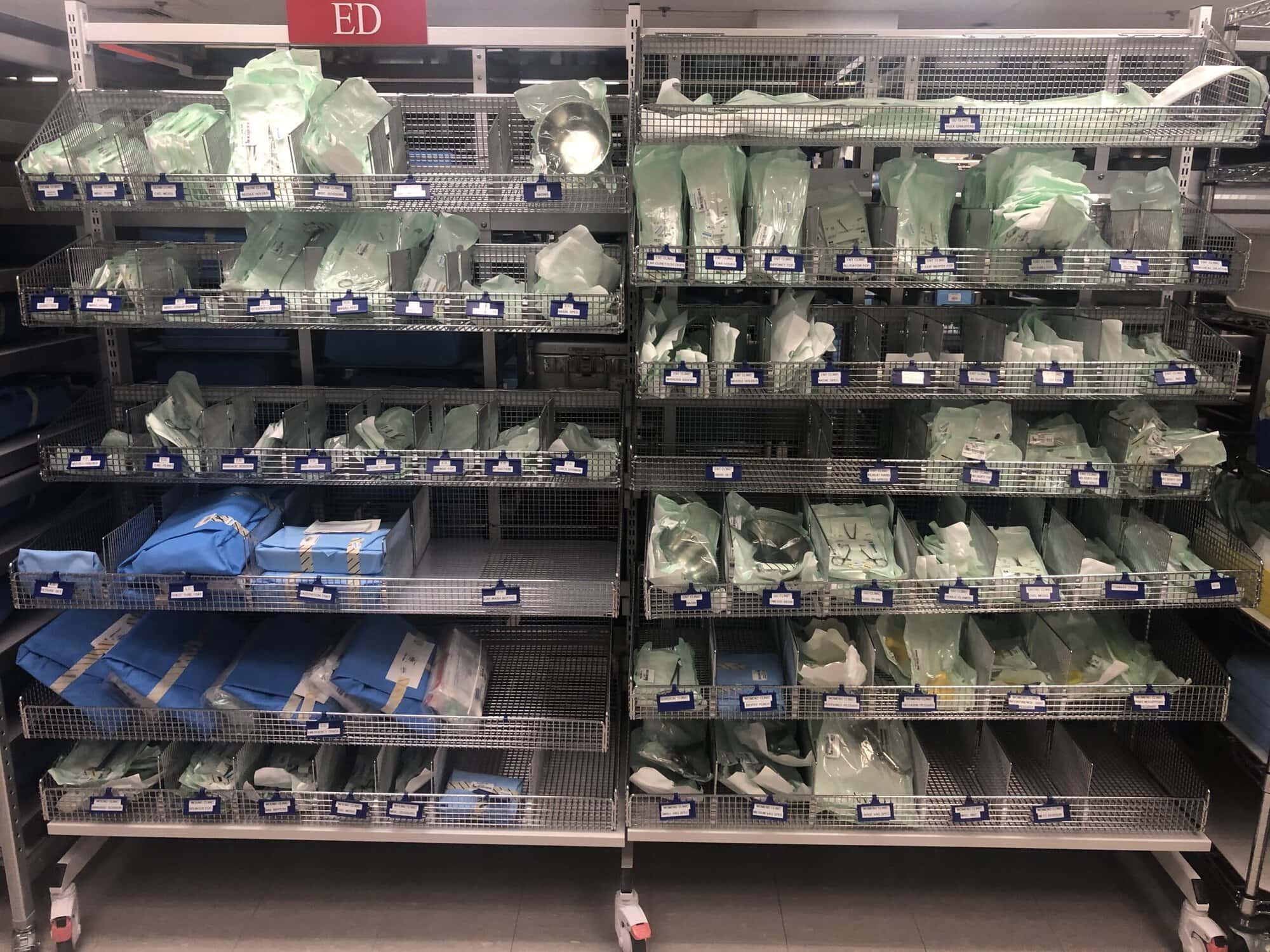
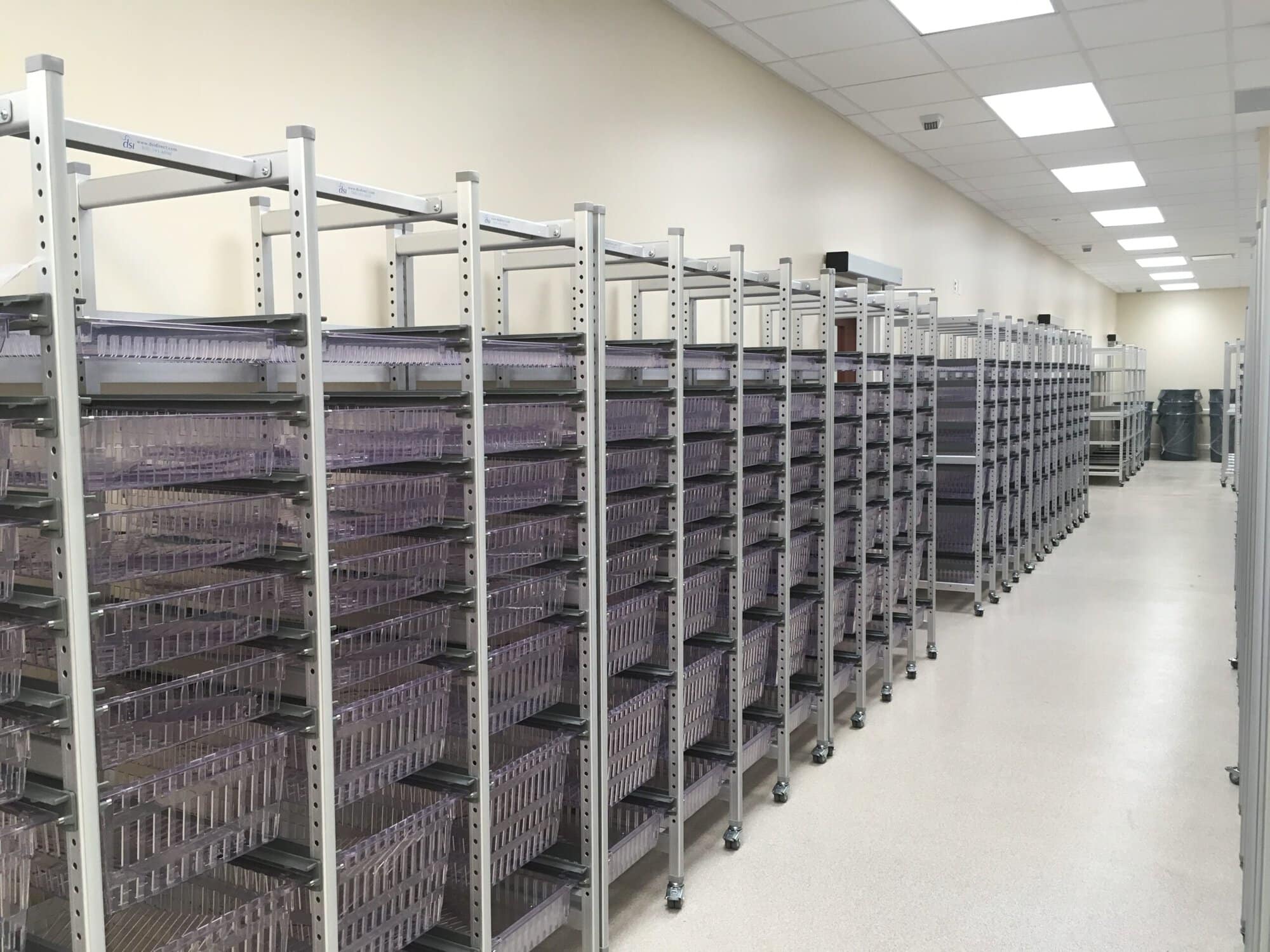
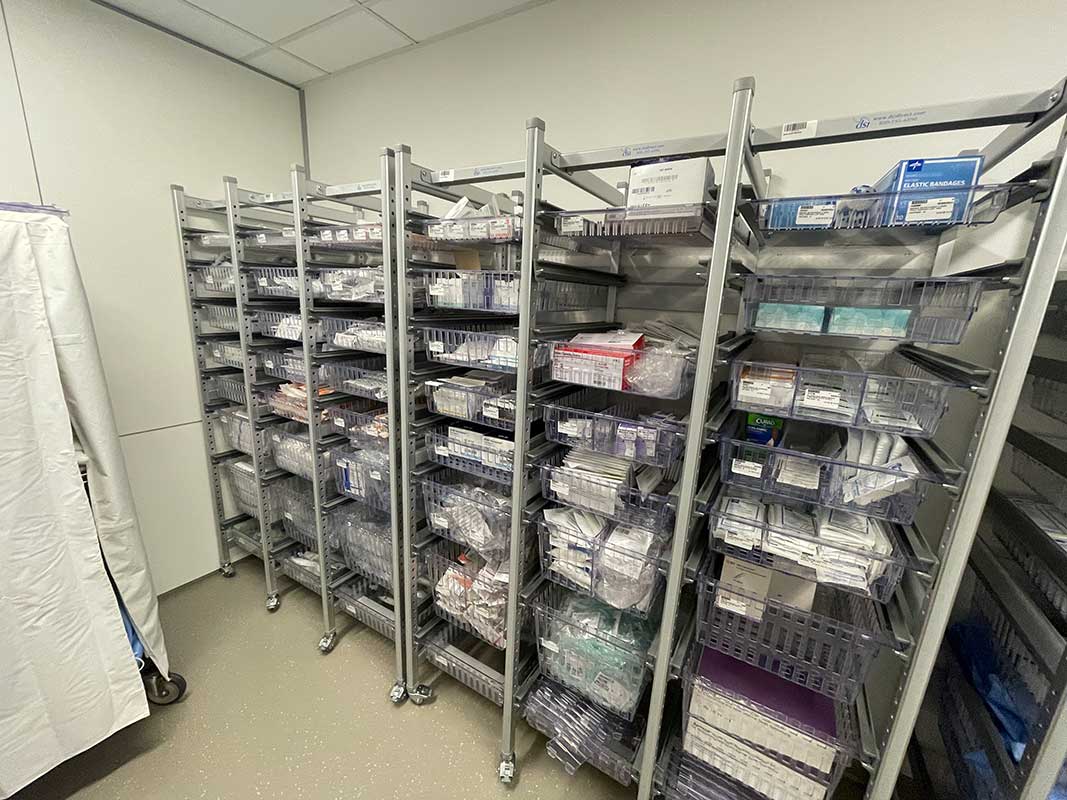
Storage layouts fall into five major categories, each serving distinct operational needs and spatial constraints. Floor-standing cabinets dominate high-capacity applications, wall-mounted units optimize tight footprints, and mobile carts provide flexible staging and transport.
Floor-standing systems account for approximately 35% of the market, wall-mounted cabinets hold 20%, and mobile solutions represent 18%. Modular casework systems contribute 17%, while dedicated robotic and specialty cabinets comprise the remaining 10%.
Floor-standing stainless-steel cabinets deliver the highest enclosed storage capacity for central sterile processing and surgical core areas. These units feature glazed or solid doors, adjustable shelving, pegboard interiors, and welded stainless-steel bodies with smooth satin finishes that resist corrosion and support repeated chemical cleaning. Tempered glass options with sloped tops reduce dust accumulation and improve visual inventory access.
Budget floor-standing cabinets start at $4,044, mid-range units average $5,339, and premium models reach $9,809. These systems serve large hospitals and ambulatory surgery centers with high case volumes requiring substantial instrument and supply storage adjacent to operating rooms.
Wall-mounted cabinets preserve floor area for equipment circulation and simplify cleaning protocols by eliminating base accumulation zones. These units position frequently accessed supplies close to the point of use while maintaining clear sightlines and unobstructed traffic flow. Budget wall-mounted systems begin at $2,369, mid-range options average $3,159, and premium configurations cost $4,235.
Wall-mounted storage works best in procedure rooms, small-to-mid-sized operating rooms, and clinic settings where floor space constraints limit stainless steel products installation. Facilities managing tight footprints often combine wall-mounted cabinets with selective mobile units for overflow and staging.
Mobile carts and cabinets on wheels enable rapid instrument movement between sterile processing, case cart assembly zones, and operating rooms. These units support flexible deployment for overflow staging, procedure-specific kits, and just-in-time delivery workflows. Budget mobile carts start at $349, mid-range models average $989, and premium units reach $3,219.
Mobile storage provides the lowest entry cost but delivers less enclosed capacity than fixed installations. Unmanaged mobile units can contribute to circulation clutter, so high-volume facilities typically integrate medical carts within defined staging zones rather than allowing unstructured placement.
Material selection determines infection control performance, structural durability, and lifecycle cost across cleaning cycles, impact exposure, and chemical sterilization protocols. Stainless steel dominates high-acuity operating room applications due to corrosion resistance, impact strength, and compatibility with aggressive disinfection methods. Aluminum offers lighter weight and easier handling for reconfigurable or mobile applications where maximum structural robustness matters less than flexibility.
Healthcare facility managers in surgery-unit environments rank infection control and durability ahead of all other selection criteria. Material choice directly affects how storage systems support contamination prevention, withstand repeated cleaning, and maintain functional integrity over multi-decade service lives.
Stainless steel provides superior durability and impact resistance for heavy-duty use in sterile processing and operating room environments. Welded stainless-steel bodies with smooth satin finishes resist corrosion from repeated chemical exposure and support rigorous cleaning protocols without surface degradation. Steel hinges, latches, and tempered glass options maintain structural integrity under constant opening cycles and equipment contact.
Aluminum delivers lighter weight and easier handling when staff reposition units during renovations or workflow changes. Material selection should prioritize stainless steel for stationary high-volume installations and consider aluminum-clad or hybrid construction where reconfigurability outweighs maximum impact resistance.
Durability ranks as the most significant criterion for 54.84% of healthcare facility managers evaluating surgery-unit materials. Fixed casework systems carry a 31-year depreciation schedule compared to 7 years for modular installations, making material longevity and structural resilience critical financial factors. Welded stainless-steel construction withstands decades of use without joint failure, surface rust, or hinge degradation.
Long-term durability reduces replacement cycles, minimizes maintenance labor, and preserves infection control integrity as facilities age. Modular storage solutions offer shorter depreciation horizons but provide reconfiguration value for growing programs.
Infection control ranks as the most significant selection criterion for 75% of healthcare facility managers in surgery-unit environments. Stainless steel supports contamination prevention through smooth, non-porous surfaces that resist biofilm formation and tolerate aggressive disinfection protocols. Flame resistance ranks most significant for 43.75%, ease of maintenance for 37.10%, and maintenance cost for 28.33% of facility decision-makers.
User safety registers as most significant for 28.33% of respondents, while initial cost ranks lowest at 3.45%. Material choices must prioritize cleanability, chemical compatibility, and long-term contamination control over short-term acquisition savings.
Robotic surgery adoption rose from 1.8% in 2012 to 15.1% in 2018 across a 73-hospital cohort study. Surgeons performing robotic procedures increased from 8.7% to 35.1% during the same period, creating new demands for accessory storage, tower staging zones, and cable management systems. Room size effects proved statistically significant during robotic pre-docking and docking stages, while equipment, cords, and lack of space emerged as major contributors to environmental flow disruptions.
Storage layout decisions must account for robotic system footprints, docking clearances, and dedicated zones for proprietary instruments and patient-side cart accessories.
Modular casework systems offer reconfigurability, lower installation costs, and multiple cabinet formats that adapt as surgical service lines evolve. These platforms accommodate robotic accessories alongside general surgical instruments without locking facilities into single-specialty configurations. Modular systems hold approximately 17% market share and carry a 7-year depreciation compared to 31 years for fixed built-ins.
Modular approaches win for adaptability and phased renovation strategies in facilities balancing multiple service lines. Dedicated robotic storage wins in mature, high-volume robotic programs where equipment-specific interiors, HEPA filtration, and powered features justify single-purpose installations.
Dedicated robotic and specialty cabinets provide equipment-specific storage with HEPA air filtration, hospital-grade power integration, and interiors designed for robotic adapters and accessories. These units maintain clean environments for sensitive instruments, reduce cable clutter, and support organized staging adjacent to robotic towers. Dedicated robotic cabinets hold approximately 10% market share, with budget models starting at $4,900, mid-range units at $5,900, and premium configurations exceeding $6,900.
Facilities should invest in dedicated robotic storage when procedure volumes justify single-purpose installations and workflow complexity demands specialized solutions. Centers with lower robotic volumes or evolving service mixes benefit more from modular platforms that accommodate multiple specialties.
Room size effects proved statistically significant during robotic pre-docking and docking stages across 56 procedures at two academic hospitals. Equipment, cords, and a lack of space consistently disrupted environmental flow, extending setup times and increasing staff frustration. Storage placement directly affects circulation patterns, docking clearances, and cable routing between robotic towers and patient-side carts.
Effective robotic layouts position scope cabinets and accessory storage adjacent to docking zones without obstructing anesthesia access or nursing circulation paths. Poorly planned storage creates bottlenecks during critical setup and turnover windows.
Facility planning evidence emphasizes unidirectional workflow from soiled arrival to sterile distribution, with physical separation of clean and soiled areas. Sterile-durables storage sizing must account for the number of operating rooms and procedure rooms served, while adjacency between sterile processing and surgical services reduces transport delays and contamination risk. OR storage planning intersects with workflow design, space utilization, infection prevention, equipment needs, workplace safety, and technology expansion.
Healthcare expenditures grew at 5.8% annually in the mid-2010s, with hospitals accounting for 32% of national health expenditures and operating rooms responsible for 60% of total hospital costs. Storage systems that reduce waste, improve pick efficiency, and support standardization continue attracting capital investment despite budget pressures.
Maintain unidirectional workflow from soiled arrival through decontamination, assembly, and sterile distribution to prevent cross-contamination. Physically separate clean and soiled areas using dedicated zones, controlled access points, and distinct circulation paths that prevent staff and supply routes from intersecting. Size sterile-durables storage based on the number of ORs and procedure rooms served, with capacity calculations accounting for case volume, specialty mix, and turnover targets.
Storage placement must align with departmental flow design rather than serving as a late-stage furniture specification. Track systems can support organized supply distribution while maintaining clean/dirty segregation.
Approximately 31.5% of hospitals in one cohort study began robotic surgery during a six-year observation period. Healthcare expenditures growing at 5.8% annually drive continuous service-line evolution, technology adoption, and space repurposing as facilities respond to market demands and reimbursement shifts. Storage systems must accommodate phased renovations, specialty expansion, and equipment changes without requiring complete teardown and replacement.
Modular casework platforms support evolving surgical services by allowing reconfiguration as programs mature and priorities shift. Facilities planning major renovations or service-line growth should prioritize adaptability over maximum capacity in fixed installations.
Floor-standing cabinets deliver higher capacity but occupy larger footprints compared to wall-mounted alternatives. Floor-standing systems work best in central sterile cores and large surgical suites with adequate circulation clearances, while wall-mounted units preserve floor area for equipment movement and simplify cleaning protocols in tight footprints. Mobile carts offer the lowest entry cost but provide less enclosed capacity than fixed units.
Space efficiency becomes critical in small-to-mid-sized operating rooms, procedure suites, and ambulatory surgery centers where every square foot affects case scheduling and patient throughput. Effective storage solutions balance capacity, accessibility, and circulation requirements.
Healthcare facility managers, directors of materials management, SPD managers, and OR directors drive storage system selection in high-volume surgical centers. Millennial proxy healthcare decision-makers account for approximately 50.61% of relevant occupations, Gen X represents 32.50%, and Boomer proxy professionals comprise 12.14% based on Bureau of Labor Statistics data. This mid-career-heavy demographic increasingly values workflow redesign, digital integration, and infection-control improvements with clear operational payback.
Storage selection should begin with cleanability and contamination control, then move to workflow efficiency and adaptability before considering first-cost optimization. Initial cost ranks as most significant for only 3.45% of facility managers evaluating surgery-unit materials.
Storage selection should begin with cleanability and contamination control because infection prevention ranks as the most significant criterion for 75% of healthcare facility managers. Durability ranks second at 54.84%, reflecting the importance of long-term structural integrity and resistance to repeated cleaning cycles. Only after addressing infection control and durability should buyers evaluate workflow efficiency, adaptability, and space utilization.
First-cost optimization should occur last because initial cost ranks as most significant for only 3.45% of decision-makers. Total cost of ownership, maintenance burden, and lifecycle value provide more informative selection frameworks than acquisition price alone.
Millennial proxy healthcare decision-makers represent approximately 50.61% of relevant management and clinical occupations involved in OR storage specification. Gen X professionals account for 32.50%, while Boomer-proxy decision-makers comprise 12.14% based on occupation-weighted Bureau of Labor Statistics age distributions. This mid-career-heavy demographic demonstrates greater willingness to invest in workflow redesign and digital inventory systems when operational and infection-control benefits justify capital expenditure.
Generational differences may influence receptivity to modular systems, technology integration, and process innovation over traditional fixed installations. Mid-career leaders prioritize measurable operational improvements and safety outcomes rather than minimum-cost solutions.
Approximately 94% of ambulatory surgery centers operate in urban areas and 6% in rural locations. California leads with 896 ASCs, Florida follows with 517, Texas holds 497, and Georgia operates 423 facilities. Regional aggregation shows the Southeast accounting for 32.82% of listed ASC capacity, the West Coast 18.55%, the Midwest 16.74%, the Northeast 13.05%, and the Southwest 12.35%.
Urban and metro markets justify specialty cabinets, modular casework, and robotic-specific storage more readily than rural facilities, prioritizing space-efficient multifunctional systems and lower-capital mobile options. Geographic concentration affects product mix, vendor reach, and local service availability.
Storage optimization requires integrating cabinet selection with perioperative flow design, inventory standardization, and contamination-control protocols. Define storage needs by procedure family and accessory variability rather than generic square footage because robotics, minimally invasive procedures, and high-turnover outpatient cases create different access and staging patterns. Align storage planning with flow design from the outset instead of treating it as a late-stage furniture specification.
Surgeon preference variation and lack of point-of-use inventory visibility create excess stock, emergency fulfillment, and waste without disciplined standardization. One laparoscopic cholecystectomy analysis across 10 surgeons showed disposable supply costs ranging from $92 to $637, with a $333 mean, illustrating how poorly standardized systems amplify complexity.
Define storage needs by procedure family and accessory variability to match capacity and accessibility requirements with actual surgical service patterns. Robotics programs require dedicated staging zones, minimally invasive procedures demand organized small-instrument storage, and high-turnover outpatient cases benefit from standardized case-cart assembly areas positioned near point-of-use distribution. Align storage planning with flow design from the outset by involving perioperative leaders, SPD managers, and materials directors during architectural programming.
Storage systems should support unidirectional flow from soiled arrival through decontamination, assembly, and sterile distribution without creating cross-contamination risk. Facilities pursuing comprehensive optimization should review their complete product gallery to identify integrated solutions.
Surgeon preference variation can amplify waste and complexity when storage systems lack standardized bins, clear labeling, and digital inventory tracking. Poorly standardized storage creates excess stock and emergency fulfillment cycles that increase carrying costs and expired-product waste. One analysis showed laparoscopic cholecystectomy supply costs ranging from $92 to $637 across 10 surgeons with a $333 mean, demonstrating the operational impact of preference-card variation.
Effective standardization requires storage systems that support consistent pick locations, visual inventory verification, and par-level management aligned with demand patterns. Materials managers should favor configurations that enable clear labeling and digital tracking over aesthetically attractive but operationally opaque installations.
Mobile units can contribute to clutter if unmanaged, especially in robotic and minimally invasive procedures where equipment, cords, and space constraints already create environmental flow disruptions. Define dedicated staging zones for mobile storage rather than allowing unstructured placement that obstructs circulation paths, anesthesia access, or robotic docking clearances. Position storage adjacent to point-of-use locations while maintaining clear sightlines, unidirectional traffic flow, and physical separation between clean and soiled areas.
Storage layouts should minimize travel distance between sterile supply access and patient-side setup locations without sacrificing infection-control zoning. Effective designs reduce motion waste, prevent bottlenecks during critical setup windows, and support rapid turnover between cases.
Different facility profiles require tailored storage approaches based on case volume, service mix, renovation horizon, and budget constraints. Large hospitals with high case volumes prioritize capacity and durability, growing facilities emphasize adaptability and phased expansion, and budget-sensitive rural centers favor space efficiency and lower capital requirements. Storage selection should match the facility's actual surgical profile rather than applying one-size-fits-all solutions.
Hospitals account for 32% of national health expenditures, with operating rooms responsible for 60% of total hospital costs. The surgical instrument storage cabinets market projects 6.8% compound annual growth from 2025 to 2033, driven by infection-control needs, increasing surgical volumes, and facility modernization.
Large hospitals with high case volumes require floor-standing stainless-steel cabinets as primary storage, supplemented by wall-mounted support units for point-of-use access and mobile staging carts for rapid instrument movement. This combination delivers maximum capacity, infection-control performance, and durability for sterile processing cores and surgical support areas.
High-volume facilities should prioritize welded stainless-steel construction, tempered glass visibility, and sloped tops that reduce dust accumulation. Budget allocations should favor premium construction and larger capacity over minimum-cost alternatives, given the 31-year depreciation horizon for fixed casework.
The market compound annual growth rate of 6.8% from 2025 to 2033 reflects increasing surgical volumes and facility modernization cycles. Growing or renovating facilities should emphasize modular casework with selected stainless components to support phased build-out, service-line evolution, and future reconfiguration without complete teardown. Modular platforms accommodate specialty expansion, technology changes, and space repurposing as programs mature.
Facilities planning major renovations should involve perioperative leaders and materials directors during architectural programming to align storage planning with flow design from the outset.
Budget-sensitive and rural facilities benefit from mobile stainless carts plus selective wall-mounted storage that preserves floor area while providing flexible deployment. Mobile units offer entry costs starting at $349 for budget models and $989 for mid-range configurations, delivering lower capital requirements than fixed installations. Wall-mounted cabinets starting at $2,369 provide enclosed storage without sacrificing floor space for equipment circulation.
This approach supports strong space efficiency and workflow flexibility while maintaining infection-control standards through stainless-steel construction and proper cleanability. Rural facilities managing smaller case volumes should prioritize multifunctional systems over single-purpose specialty cabinets.
Effective OR storage optimization requires balancing infection control, workflow efficiency, and adaptability within the constraints of available space and capital. Healthcare facility managers prioritize cleanability and durability far above initial cost when evaluating surgery-unit materials, with infection control ranking as most significant for 75% of respondents compared to only 3.45% for acquisition price. High-volume surgical centers achieve the best outcomes by defining storage needs by procedure family, aligning cabinet selection with perioperative flow design, and matching system types to actual case volume and service-line evolution.
Floor-standing stainless-steel cabinets serve high-capacity applications, wall-mounted units optimize tight footprints, mobile carts provide flexible staging, and dedicated robotic storage supports mature minimally invasive programs. Standardization across storage systems reduces surgeon preference variation, minimizes waste, and improves inventory accuracy while supporting rapid case turnover and contamination control.
High-volume surgical centers cannot afford storage layouts that slow turnaround, create infection control gaps, or fail to keep pace with growing robotic surgery programs. Distribution Systems International delivers storage systems purpose-built for the demands of the modern OR — from stainless steel floor-standing cabinets and wall-mounted units to modular and robotic instrument storage solutions.
Our process starts with a complimentary on-site storage analysis. We assess your current layout, case volume, and workflow patterns to design a configuration that maximizes capacity, supports compliance, and keeps your surgical teams moving efficiently between procedures.
Contact Distribution Systems International today to schedule your free OR storage consultation.

With 21 years of sales management, marketing, P&L responsibility, business development, national account, and channel management responsibilities under his belt, Ian has established himself as a high achiever across multiple business functions. Ian was part of a small team who started a new business unit for Stanley Black & Decker in Asia from Y10’ to Y14’. He lived in Shanghai, China for two years, then continued to commercialize and scale the business throughout the Asia Pacific and Middle East regions for another two years (4 years of International experience). Ian played college football at the University of Colorado from 96’ to 00’. His core skills sets include; drive, strong work ethic, team player, a builder mentality with high energy, motivator with the passion, purpose, and a track record to prove it.