Key Takeaways
Organizing robotic instruments and implementing effective service line management are critical to OR efficiency and patient safety. Modern robotic surgery instruments demand specialized OR storage solutions that differ fundamentally from conventional surgical equipment. Facilities face mounting pressure to reduce turnover times, prevent contamination, and maximize expensive equipment investments.
Medical storage best practices address these challenges through standardized workflows, environmental controls, and technology integration. Sterile instrument storage must balance accessibility with regulatory compliance while supporting high-volume surgical schedules.
This guide examines evidence-based strategies for optimizing medical supply storage systems, reducing errors, and preparing infrastructure for next-generation robotic platforms that require flexible, data-driven approaches to instrument organization and service line management.
Effective organizing of robotic instruments and service line management directly impacts OR performance and patient outcomes. Medical storage best practices center on standardized workflows, optimized physical layouts, and systematic instrument tracking. The difference between organized and disorganized systems is measurable in both time savings and error reduction.
Proper organization transforms OR efficiency and reduces clinical errors. Implementing a motor-racing pit-stop model for robotic surgery instruments achieved a 46.4% reduction in average total OR turnover time, dropping from 99.2 minutes to 53.2 minutes. Room ready time decreased from 42.2 minutes to 27.2 minutes through formalized instrument logistics that defined clear roles and task sequences.
Visual organization systems enhance error detection speed. Color-coded compartmentalized trays for sterile instrument storage enabled staff to identify errors 1.9 seconds faster than conventional storage methods. This matters during time-critical procedures where every second affects patient safety and surgical precision.
Poor organization creates immediate financial and operational consequences. Delayed or canceled cases cost facilities over $2,000 per minute. Hospitals face up to $425,000 in annual costs for unnecessary instrument purchases when unreliable manual reprocessing forces a 50% inventory increase.
Patient safety risks escalate with inadequate medical storage best practices. Robotic surgery instruments feature small moving parts and lumened structures requiring meticulous handling protocols. Without proper OR storage solutions and reprocessing systems, complete sanitation becomes virtually impossible. This increases infection risk and compromises surgical outcomes across all service line management areas.
Organizing robotic instruments requires strategic space planning and specialized storage infrastructure. Modern robotic systems demand flexible OR storage solutions that accommodate modular equipment while maintaining sterility and accessibility. The shift from fixed consoles to cart-based systems fundamentally changes storage requirements.
AORN recommends a minimum of 900 square feet for ORs accommodating robotic systems, with emphasis on flexible space planning for multiple mobile carts. This baseline ensures adequate room for equipment maneuverability and staff circulation during procedures.
Modern robotic systems like Hugo, Versius, and Carina use modular, cart-based designs that require decentralized and mobile storage solutions. These next-generation platforms eliminate the need for static storage built around single large consoles. Facilities must transition to dynamic medical storage best practices that support multiple smaller components including individual carts, arms, and vision systems.
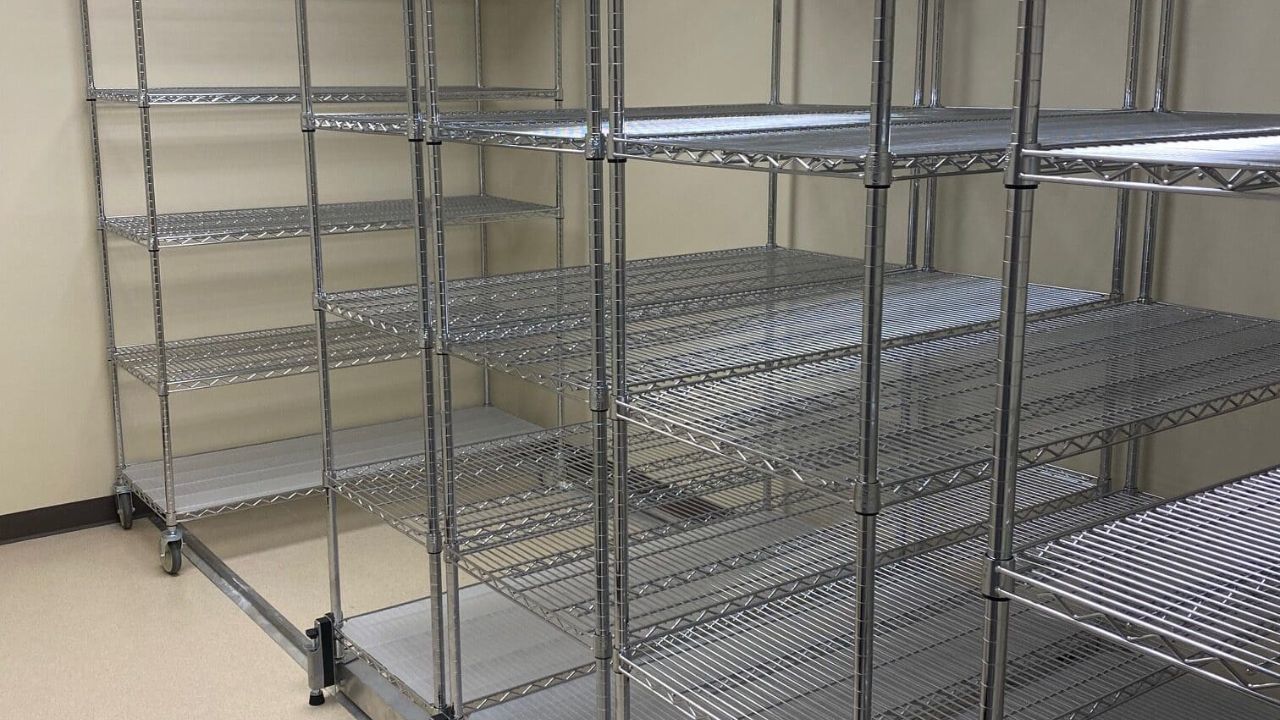
High-density, vertical storage systems increase storage capacity by over 60% while improving organization. These solutions maximize limited OR and sterile processing footprints without compromising accessibility to robotic surgery instruments.
Physical infrastructure must meet specific standards. Storage shelving requires placement at least eight inches above the floor with a solid bottom shelf to protect items from environmental cleaning and potential flooding. Specialized, enclosed storage systems like LogiCell carts and dedicated cases protect delicate instruments from dust, environmental contaminants, and physical damage. These protective solutions are essential for maintaining instrument integrity and extending equipment lifespan.
Sterile instrument storage demands surfaces that preserve packaging integrity. Storage shelving must have smooth, clean surfaces that will not snag or tear sterile packaging. Any rough edges or protrusions compromise the sterile barrier and increase contamination risk.
Instruments must be stored flat without folding the sterile barrier. Creasing or bending packaging creates weak points that allow microbial penetration. Proper storage positioning maintains manufacturer-validated sterility and ensures compliance with infection control standards across all OR storage solutions.
Service line management streamlines workflow by creating standardized systems across surgical specialties. Organizing robotic instruments and supplies by service line reduces confusion, eliminates search time, and ensures the right equipment reaches the right OR. These medical storage best practices translate directly to faster turnover and fewer errors.
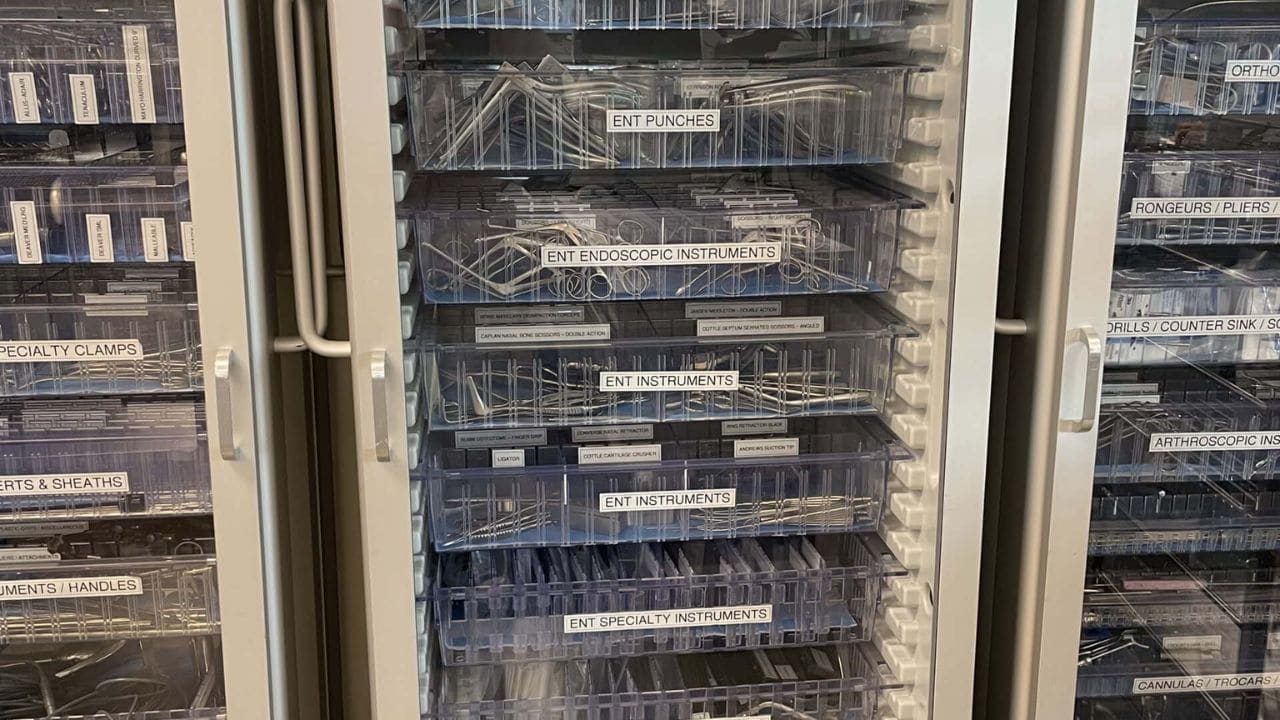
Hospital-wide color-coding by service line facilitates faster identification of correct carts and trays. Assigning distinct colors to specialties like Orthopedics, Urology, and Robotics reduces delays and eliminates the likelihood of selecting incorrect instrument sets. Visual differentiation speeds decision-making during high-pressure turnover periods.
Standardizing equipment placement and instrument table setup reduces flow disruptions and optimizes surgical team workflow. AORN conditionally recommends this approach as a core principle for OR storage solutions. Consistent positioning eliminates the learning curve when staff rotate between rooms and creates predictable workflows that improve efficiency across all service line management areas.
Surgical instrument tray optimization using Lean Six Sigma principles removes redundant instruments and simplifies handling. This approach reduced tray examination and removal time to an average of 7 minutes 35 seconds for orthopedic procedures by eliminating unused items that added no clinical value.
Specialty-specific optimization delivers measurable results. Optimized trays for endourological procedures reduced setup times by 35%. Smaller, focused instrument sets decrease sterilization time, reduce staff cognitive load during counting, and accelerate OR preparation for robotic surgery instruments and conventional tools alike.
Efficient hospital storage rack systems reduce supply retrieval time by 25% through automated delivery. Vertical carousels and high-density shelving bring required items directly to staff rather than requiring walking and searching through static shelves.
These OR storage solutions maximize vertical space in constrained sterile processing and supply areas. Automated systems maintain inventory visibility while condensing footprints, allowing facilities to store more medical supply storage items in less space. This infrastructure supports growing surgical volumes without facility expansion.
Sterile instrument storage forms the foundation of infection control in robotic surgery. Environmental controls and protective systems prevent contamination that compromises patient safety and equipment functionality. Medical storage best practices for robotic surgery instruments extend beyond physical organization to include strict environmental monitoring and validated storage protocols.
Sterile storage areas must maintain temperature between 18°C and 23°C (64°F and 73°F) and relative humidity between 30% and 60%. These environmental parameters preserve sterile packaging integrity by preventing moisture accumulation and material degradation. Deviations from these ranges compromise the sterile barrier even when packaging appears intact.
Virginia Mason Medical Center reduced its sterile processing error rate from 3% to 1.5% over 37 months using quality improvement tactics including color-coding and shadow boards. These visual management tools create standardized workflows that minimize handling errors during organizing robotic instruments for storage and retrieval.
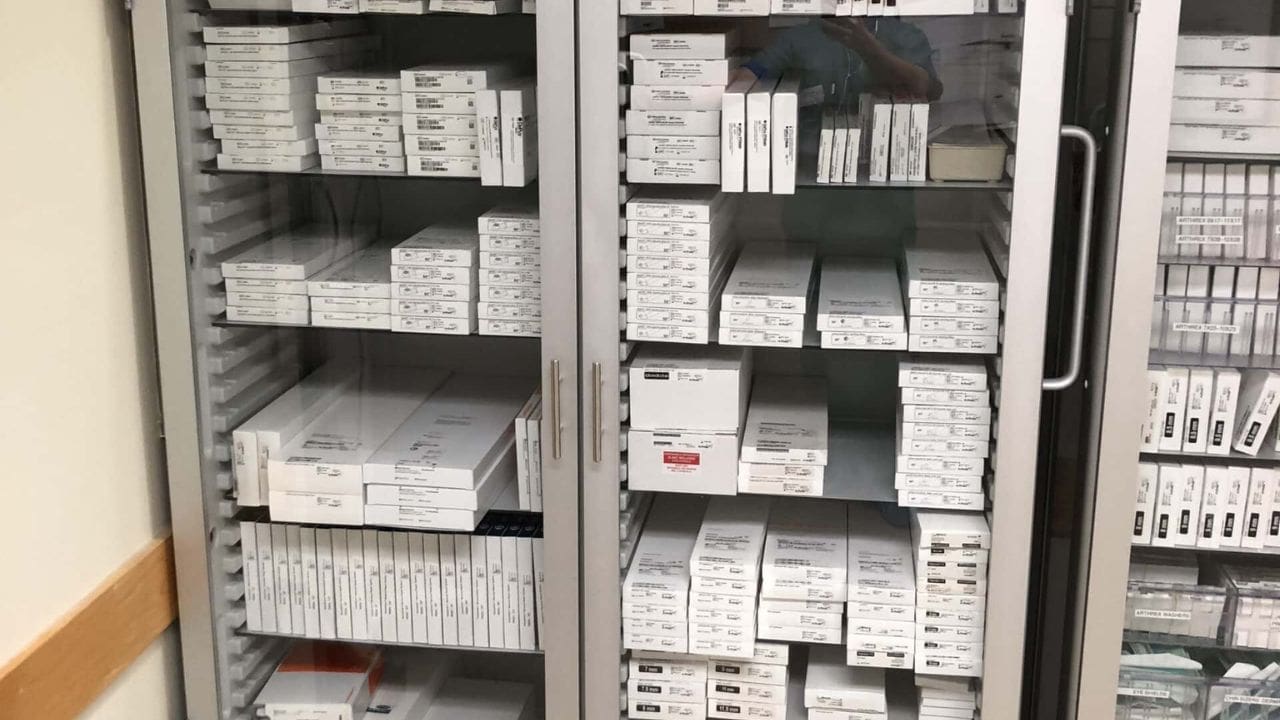
Dedicated, secure, and enclosed storage systems protect instruments from dust, environmental contaminants, and physical damage during transport and storage. Open shelving exposes delicate robotic surgery instruments to airborne particulates and accidental contact. Enclosed OR storage solutions create physical barriers that maintain the controlled environment required for sterility assurance.
Sengkang General Hospital's Automated Storage and Retrieval System (ASRS) ensures instruments are stored in a controlled environment while automating retrieval to meet high-volume OR demands. The system reduces contamination and damage risk by eliminating manual handling during storage and delivery. Automated sterile instrument storage maintains consistent environmental conditions and provides precise inventory tracking that supports efficient service line management across multiple surgical specialties.
Medical supply storage extends beyond the OR to impact entire healthcare facilities. Efficient systems reduce waste, improve access, and support multiple departments simultaneously. Medical storage best practices balance space constraints with the need for rapid retrieval during critical procedures.
Applying Lean Six Sigma methodology to analyze instrument usage data removes rarely or never-used instruments from circulation. This data-driven approach reduces tray size and complexity by eliminating items that add processing time without clinical value. Streamlined inventories simplify organizing robotic instruments and conventional supplies while reducing sterilization costs and storage footprints across service line management areas.
High-density, modular storage systems utilize vertical storage solutions like automated vertical carousels to eliminate walking and searching time. These systems bring supplies directly to staff rather than requiring navigation through traditional shelving. Vertical expansion maximizes limited floor space in sterile processing departments and OR supply rooms without sacrificing accessibility to robotic surgery instruments or high-turnover consumables.
Color-coded storage locations create a clear visual match between instruments, trays, and designated storage areas. This visual system aids rapid put-away and retrieval while minimizing search time and misplacement errors. Staff can locate correct items immediately without reading labels or consulting inventory lists. Consistent color schemes across OR storage solutions reduce cognitive load during time-sensitive procedures and ensure reliable access to sterile instrument storage regardless of which team member handles retrieval.
Technology transforms medical storage best practices by automating manual processes and providing real-time inventory visibility. Automated systems reduce labor costs, improve accuracy, and accelerate reprocessing cycles for robotic surgery instruments. Digital tracking solutions eliminate guesswork in service line management while ensuring compliance with manufacturer use-life specifications.
Automated washing and disinfection provides direct labor savings of 66 minutes per set of four robotic instruments. Staff previously required for manual cleaning can focus on higher-value tasks while machines deliver consistent, validated cleaning cycles. Overall time savings reach 142 minutes in the complete robotic instrument reprocessing workflow when facilities utilize automated systems throughout the sterile processing chain.
Sterilization speed increases dramatically with advanced equipment. The V-PRO™ maX 2 Low Temperature Sterilizer reduces sterilization time for two da Vinci endoscopes to 28 minutes compared to 60 minutes with conventional systems. Faster turnaround means more instruments available for scheduling, reducing the inventory investment required to support high-volume OR storage solutions and eliminating case delays from instrument unavailability.
Barcode-based instrument life-cycle management significantly increases the accuracy of use documentation and decreases untraceable sterilization records. These systems reduce time required for daily and monthly inventory counts by automating data capture at each processing stage. Digital tracking eliminates manual documentation errors that create compliance gaps in organizing robotic instruments across multiple service lines.
Automated instrument tracking and management solutions utilizing visual cues like color-coding reduce tray assembly time by over 50%. Integration of digital and physical organization methods creates fail-safes that catch errors before instruments reach the sterile field. Surgical Instrument Tracking Systems monitor the "life count" of each robotic instrument, ensuring instruments are used to maximum capacity and preventing premature disposal. This capability protects investments in expensive robotic surgery instruments while maintaining the precise inventory visibility required for effective sterile instrument storage and service line management.
Compliance with regulatory standards protects patient safety and preserves substantial equipment investments. Medical storage best practices must align with manufacturer instructions, industry guidelines, and institutional protocols. Non-compliance creates financial liability and operational disruptions that impact surgical scheduling and outcomes.
Validated automated cleaning cycles achieve a 25% reduction in manual cleaning steps for commonly used robotic instruments. Automation ensures consistent adherence to manufacturer Instructions for Use (IFUs) while reducing human error in critical reprocessing steps. These systems provide documented proof of compliance that satisfies regulatory audits for OR storage solutions.
The initial investment for a Robotic-Assisted Surgery (RAS) system ranges between $2.0 and $2.5 million, with annual maintenance costs exceeding $100,000. These figures underscore why strict compliance with storage and reprocessing protocols is essential. Proper sterile instrument storage and validated workflows protect investments by extending equipment lifespan and preventing damage that necessitates costly repairs or premature replacement.
Failure to follow IFUs leads to instrument contamination, functional impairment, and costly delays or cancellations of surgical cases. Each robotic surgery instrument has specific handling, cleaning, and storage requirements that cannot be substituted with generic protocols. Deviations compromise both patient safety and regulatory standing.
Instruments with designated number of uses require precise tracking to ensure compliance and improve visibility of adverse event reports. Many robotic instruments have manufacturer-specified use limits based on mechanical wear or material degradation. Without accurate documentation systems for organizing robotic instruments by use count, facilities risk using compromised equipment or discarding functional instruments prematurely, both of which create compliance and financial problems across service line management operations.
A structured, team-based approach with clear role definition, task allocation, and sequencing minimizes non-operative time while ensuring compliance checkpoints. The motor-racing pit-stop model demonstrates how systematic workflows embed verification steps into routine processes without adding separate inspection layers that slow throughput.
Continuously monitoring key performance indicators (KPIs) such as case volume, utilization, procedure times, complication rates, and OR turnover time is fundamental to identifying bottlenecks and sustaining improvements. Regular KPI review reveals when medical supply storage systems or sterile instrument storage protocols drift from standards before compliance failures occur. Data-driven management supports proactive corrections that maintain regulatory adherence while optimizing efficiency across all OR storage solutions.
Effective medical storage best practices require ongoing commitment to standardization, technology adoption, and adaptive planning. Facilities that implement systematic improvements to organizing robotic instruments and service line management achieve measurable gains in efficiency, safety, and cost control. Success depends on immediate action combined with long-term infrastructure planning.
Implement formalized instrument logistics roles with defined tasks for obtaining, opening, and removing sterile trays to eliminate task overlap and omission. Clear role assignments prevent delays caused by ambiguous responsibilities during OR turnover. Each team member must understand their specific duties in the workflow, creating accountability that reduces errors and accelerates transitions between cases.
Ensure all perioperative and sterile processing staff are thoroughly trained on standardized systems including color-coding and tracking protocols. Initial training alone is insufficient. Regular audits verify compliance and identify drift from established OR storage solutions before problems compound. Training reinforcement and periodic competency assessments maintain the rigor required for effective sterile instrument storage and service line management across shifts and staff rotations.
Plan for data storage and connectivity to prepare OR and hospital IT infrastructure for the massive data output of next-gen, data-driven robotic platforms. Future robotic surgery instruments will generate surgical video, performance metrics, and AI analytics requiring secure, high-capacity storage systems. Facilities must upgrade network bandwidth and data management capabilities now to support emerging technologies without disrupting current operations.
Focus on flexible space planning that accommodates modular, cart-based robotic systems with dedicated, accessible storage areas for multiple mobile carts. Next-generation platforms eliminate fixed consoles in favor of transportable components that require dynamic medical supply storage solutions. Design renovations and new construction around adaptable layouts that support evolving equipment configurations rather than purpose-built spaces that become obsolete as technology advances.
Distribution Systems International specializes in advanced OR storage solutions designed specifically for robotic surgery instruments and sterile processing environments. Our team understands the complex requirements of organizing robotic instruments across service lines while maintaining compliance with regulatory standards.
From high-density storage systems to automated inventory management, we provide medical storage best practices that reduce turnover time, prevent contamination, and maximize your facility's surgical capacity. Whether you're upgrading existing sterile instrument storage or planning infrastructure for next-generation robotic platforms, DSI delivers proven medical supply storage solutions tailored to your operational needs.
Contact Distribution Systems International today to discover how our expertise in service line management can transform your OR efficiency and support your robotic surgery program's growth.

With 21 years of sales management, marketing, P&L responsibility, business development, national account, and channel management responsibilities under his belt, Ian has established himself as a high achiever across multiple business functions. Ian was part of a small team who started a new business unit for Stanley Black & Decker in Asia from Y10’ to Y14’. He lived in Shanghai, China for two years, then continued to commercialize and scale the business throughout the Asia Pacific and Middle East regions for another two years (4 years of International experience). Ian played college football at the University of Colorado from 96’ to 00’. His core skills sets include; drive, strong work ethic, team player, a builder mentality with high energy, motivator with the passion, purpose, and a track record to prove it.