Selecting appropriate sterile processing systems determines infection control outcomes and operational costs. Small hospitals must balance regulatory compliance with budget constraints while maintaining patient safety standards. The right storage infrastructure protects sterile supplies from contamination while delivering measurable return on investment. Advanced systems offer space-saving configurations addressing footprint limitations of smaller facilities.
Key Takeaways
Sterile processing storage systems are specialized units designed to maintain instrument sterility until clinical use. These systems protect surgical tools and medical supplies from environmental contaminants, including dust, moisture, and airborne pathogens. Proper storage prevents healthcare-associated infections while ensuring compliance with Joint Commission and AAMI standards. The global sterile storage cabinet market reached $3.46 billion in 2024.
Closed cabinets dominate the market with 35% share due to superior contamination protection. These units feature sealed doors and adjustable interiors shielding supplies from environmental exposure. Modular systems hold 28% market share, offering flexibility through configurable interior components that adapt to changing inventory needs. Open shelving accounts for 18%, while fixed systems maintain 12% share.
Temperature and humidity-controlled cabinets represent 7% of the market but address critical compliance requirements. These premium units maintain precise environmental conditions through HEPA filtration and active monitoring. Small hospital storage solutions increasingly incorporate hybrid approaches combining multiple system types for different supply categories.
Advanced storage systems reduce healthcare-associated infection incidence by up to 55.7% through contamination prevention. Chrome wire shelving exhibits 85% contamination rates due to corroded surfaces harboring bacteria. Polymer systems demonstrate only 12% contamination risk, representing an 86% improvement. Temperature increases of 5°C double bacterial multiplication rates, making environmental controls essential.
Event-related shelf-life practices maintain sterility indefinitely unless physical damage occurs to the packaging. Storage failures create direct pathways for pathogens to reach sterile instruments. Inadequate systems generate regulatory citations carrying financial penalties and accreditation risks.
Compliance standards receive 98% importance ratings from healthcare procurement professionals. Joint Commission citation EC.02.06.01 addresses non-cleanable surfaces that fail inspection. VA Directive 1116(2), ANSI/AAMI ST79, and ASHRAE 170-2017 establish mandatory environmental parameters for sterile storage. HEPA filtration systems achieve ISO 4 cleanliness levels in premium controlled environments.
Event-related shelf-life guidelines state that packages remain sterile until specific events compromise integrity. Tears, water exposure, or physical drops require immediate reprocessing before clinical use. Temperature must remain at or below 75°F while humidity stays between 20-60% per CDC guidelines.
Infection control and contamination risk rank highest with 95% importance in purchasing decisions. Cost and total cost of ownership follow at 88% importance, reflecting budget pressures on small hospitals. Durability and lifespan receive 82% ratings as administrators evaluate long-term replacement cycles.
Ease of use and efficiency factors score 78% importance among sterile processing department managers. Systems reducing manual workload and improving workflow receive preference over complex configurations. Medical supply storage cabinets reached $2.82 billion in market value during 2024. The broader medical cabinetry sector projects $11.71 billion by 2027 with 4.7% annual growth.
Hospital procurement decisions begin with regulatory compliance verification against Joint Commission and AAMI standards. Facilities evaluate contamination risk data by comparing surface materials and environmental protection capabilities. Total cost of ownership calculations include initial purchase price plus maintenance, replacement cycles, and labor expenses. Durability assessments examine material resistance to chemical disinfectants and physical wear patterns.
Staff efficiency impacts receive quantitative analysis measuring time savings and workflow improvements. Small hospitals prioritize space-saving configurations, maximizing storage density within limited square footage. Budget constraints force ROI calculations demonstrating payback periods under 12 months.
The global sterile storage cabinet market will reach $3.60 billion in 2025 and $5.50 billion by 2035, representing 4.3% compound annual growth driven by infection control investment. Closed cabinets maintain market leadership through proven contamination prevention. Modular storage solutions gain share as facilities demand adaptable configurations supporting changing supply portfolios.
Open shelving declines in clinical applications but persists for verified dry, non-sterile storage. Temperature-controlled segments grow steadily despite premium pricing as regulatory scrutiny intensifies. The surgical instrument storage market alone reached $1.41 billion.
Small hospitals under 100 beds show only 38% adoption of advanced storage systems despite proven benefits. Limited capital budgets restrict access to premium temperature-controlled cabinets and comprehensive modular installations. Space constraints demand compact footprints with high-density storage capabilities exceeding traditional shelving efficiency.
Large hospitals with over 500 beds demonstrate 78% adoption rates with integrated automated inventory management. Medium facilities between 100-500 beds achieve 62% adoption through targeted departmental investments. Clinics and urgent care centers maintain 25% adoption. Small hospitals require flexible solutions balancing compliance obligations with realistic budget limitations.
Budget-friendly wire shelving options provide low initial costs but carry significant long-term contamination risks. Chrome wire units range from $100 to $390 per standard five-shelf configuration. Stainless steel alternatives cost $300-$800 but offer superior corrosion resistance. Polymer systems require $500-$1,200 investments yet deliver 15-plus-year lifespans, eliminating frequent replacement cycles.
Closed cabinets span $2,000-$15,000 depending on size, materials, and environmental control features. Temperature and humidity-controlled units represent the premium tier at $8,000-$25,000 with HEPA filtration capabilities.
Chrome wire shelving costs only $100-$390 initially but requires replacement every 3-5 years. Carbon steel cores with thin chromium plating corrode rapidly when exposed to hospital-grade disinfectants. Micro-scratches from plastic bins breach protective coatings, creating bacterial harboring sites. Load capacities reach 600-800 pounds per shelf despite contamination vulnerabilities.
Stainless steel wire products provide better durability at $300-$800 but maintain open designs allowing dust accumulation. Polymer systems at $500-$1,200 eliminate rust entirely through seamless, scratch-resistant construction. Budget options create false economy through hidden replacement costs and increased infection risks. Small hospitals save $6,000 per unit over 10 years by selecting polymer systems over chrome wire.
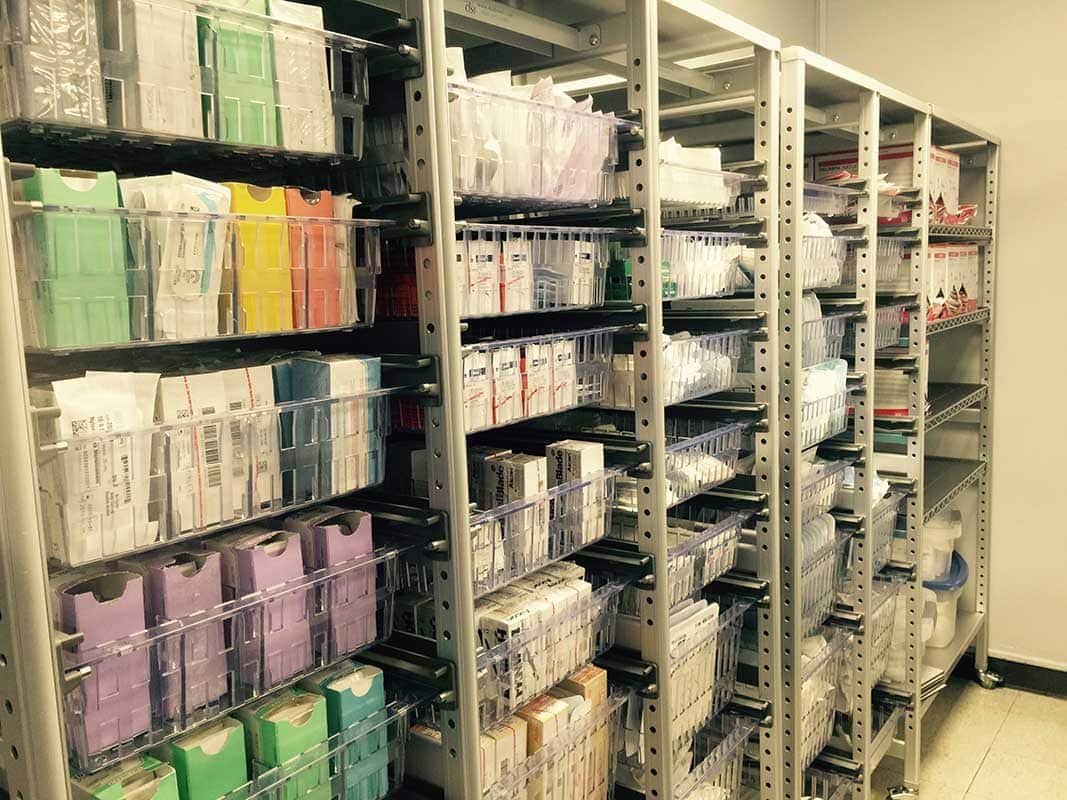
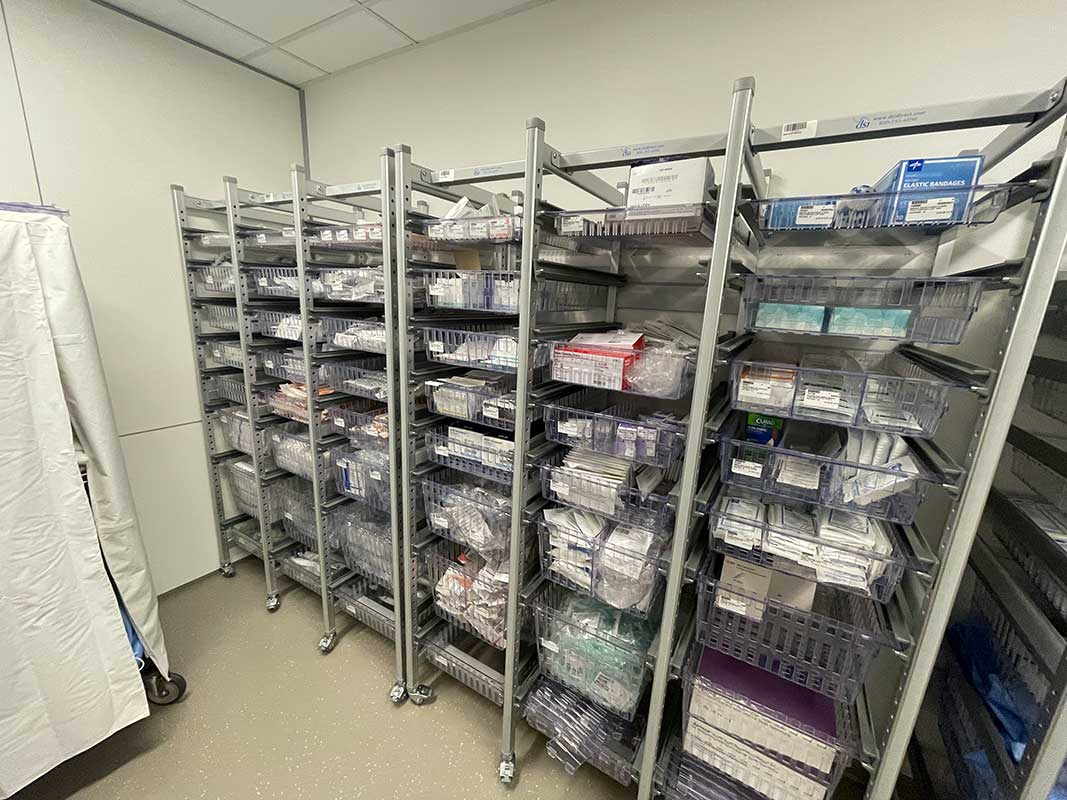
Modular systems reduce manual workload by 25% through organized configurations, improving inventory accessibility. FlexCell interior designs adapt quickly to changing supply mixes without requiring complete unit replacement. DSI SterileShelf engineered polymer construction delivers scratch resistance and seamless surfaces, preventing bacterial colonization. Closed cabinets provide physical barriers protecting sterile packages from environmental contaminants.
Adjustable shelving accommodates varying instrument tray heights while maintaining maximum storage density. Tempered glass doors enable visual inventory checks without compromising environmental protection. Premium units integrate with hospital information systems for automated PAR level monitoring.
Temperature-controlled cabinets maintain active regulation at or below 75°F with humidity between 20-60%. HEPA filtration achieves ISO 4 cleanliness levels, removing airborne particulates. These specialized scope storage units protect sensitive endoscopes and delicate instruments requiring strict environmental parameters. Premium systems comply with VA Directive 1116(2), ANSI/AAMI ST79, and ASHRAE 170-2017 standards.
Active monitoring alerts staff immediately when temperature or humidity deviates from acceptable ranges. Units cost $8,000-$25,000 but prevent instrument degradation and maintain sterile packaging integrity indefinitely. Small hospitals deploy controlled cabinets selectively for the highest-risk supplies.
Chrome wire shelving uses carbon steel with 12.7-micrometer chromium plating, susceptible to chemical degradation. Hospital disinfectants breach thin coatings, exposing steel cores that rust rapidly. Corroded surfaces develop pitting that standard cleaning protocols cannot penetrate, creating permanent bacterial reservoirs. Chrome wire demonstrates 85% contamination rates, making it unsuitable for sterile processing applications.
Polymer systems feature AireCore engineered materials with scratch-resistant properties, eliminating surface degradation pathways. Seamless construction prevents moisture accumulation and bacterial colonization in joints or seams.
Chrome wire shelving offers 600-800 pound load capacities at $100-$390 per unit initial cost. Lightweight construction enables easy reconfiguration, but thin plating fails rapidly under chemical exposure. Rust appears within months in high-humidity environments, requiring replacement every 3-5 years. Joint Commission citations for non-cleanable surfaces create regulatory risks outweighing upfront savings.
Stainless steel provides inherent corrosion resistance without surface coating vulnerabilities. Units cost $300-$800 but eliminate rust entirely while supporting similar load capacities. Open wire designs still allow dust settlement and airborne contamination.
AireCore engineered polymers reduce contamination risk to 12% compared to 85% for chrome wire. Scratch-resistant surfaces maintain smoothness throughout 15-plus-year lifespans, preventing bacterial harboring sites. Chemical immunity to hospital-grade disinfectants enables thorough cleaning without material degradation. Seamless construction eliminates joints where moisture and contaminants typically accumulate.
Polymer systems deliver 86% contamination improvement over chrome wire through superior material properties. Non-porous surfaces prevent pathogen penetration while remaining compatible with all standard cleaning protocols. Temperature stability maintains structural integrity under thermal cycling from autoclave proximity.
Chrome wire shelving lasts only 3-5 years before corrosion necessitates replacement. Polymer systems exceed 15-year lifespans through chemical resistance and structural stability. Seamless surfaces without welds or joints eliminate contamination collection points that defeat cleaning efforts. Smooth finishes enable complete disinfectant contact without pitting, interfering with pathogen removal.
Closed cabinet designs with tempered glass provide visual access while preventing environmental contamination. Adjustable interior components accommodate changing supply configurations without requiring new purchases. Powder-coated steel frames resist moisture while polymer shelves prevent rust entirely.
Chrome wire shelving carries a $14,500 total cost over 10 years, including multiple replacement cycles. Polymer systems cost $8,500 total over the same period despite higher initial investment, representing $6,000 savings per unit, equating to 41% reduction in long-term expenses. Small hospitals replacing 100 units realize $600,000 savings over 10 years.
Payback periods reach 5.6 months for polymer investments when comparing replacement cycle elimination. Hard savings include avoided purchase costs, reduced maintenance labor, and prevented regulatory fines. Soft savings emerge from improved staff productivity and reduced healthcare-associated infection rates. Efficiency gains from organized storage reduce time spent locating supplies by 25%.
Chrome wire requires replacement every 3-5 years as corrosion compromises cleanability. Three replacement cycles occur within 10 years, multiplying initial purchase costs and installation labor. Polymer systems function 15-plus years without replacement, eliminating recurring capital expenditures.
Replacement projects consume staff time coordinating inventory transfers and disrupting operations. Single installations of durable systems minimize operational interruptions. Maintenance expenses decrease when corrosion-resistant materials eliminate repair requirements.
Chrome wire 10-year total cost of ownership reaches $14,500 per unit, including replacements. Polymer systems cost $8,500 total over the same decade, saving $6,000 per unit. Facilities operating 100 units save $600,000 through material upgrades with 5.6-month payback periods.
Hard savings include preventing Joint Commission fines averaging $5,000-$25,000 per citation. Soft savings emerge as a modular organization reduces manual workload by 25%, freeing skilled technicians for instrument processing. Healthcare-associated infection reduction of 55.7% prevents treatment costs averaging $28,000-$45,000 per incident.
Small hospitals demonstrate ROI through total cost of ownership comparisons showing long-term savings. Payback calculations at 5.6 months make polymer systems financially superior. Infection control improvements reduce HAI-related treatment expenses and Medicare reimbursement penalties. Regulatory compliance prevents accreditation risks and citation fines.
Staff efficiency gains translate to labor cost reductions when technicians spend less time managing disorganized inventory. Space-saving configurations delay expensive facility expansions by maximizing existing footprint utilization. Durable systems eliminate budget uncertainty from unpredictable replacement timing.
Workflow organization must separate clean and dirty pathways, preventing cross-contamination. Closed cabinets in high-traffic corridors eliminate bacterial settlement from air disturbance. Strategic placement positions frequently accessed supplies closest to point-of-use locations. Environmental controls maintain temperature at or below 75°F with humidity between 20-60%.
PAR level management through modular systems ensures adequate supply without overstocking. Visual inventory systems using clear cabinet doors enable stock checks without environmental exposure.
Open shelving in busy corridors invites bacterial settlement from air disturbance. Closed systems create physical barriers preventing airborne contaminants from reaching sterile packages. Cross-contamination occurs when clean and dirty items move along shared pathways without proper separation. Unidirectional workflow designs ensure processed instruments never contact contaminated items.
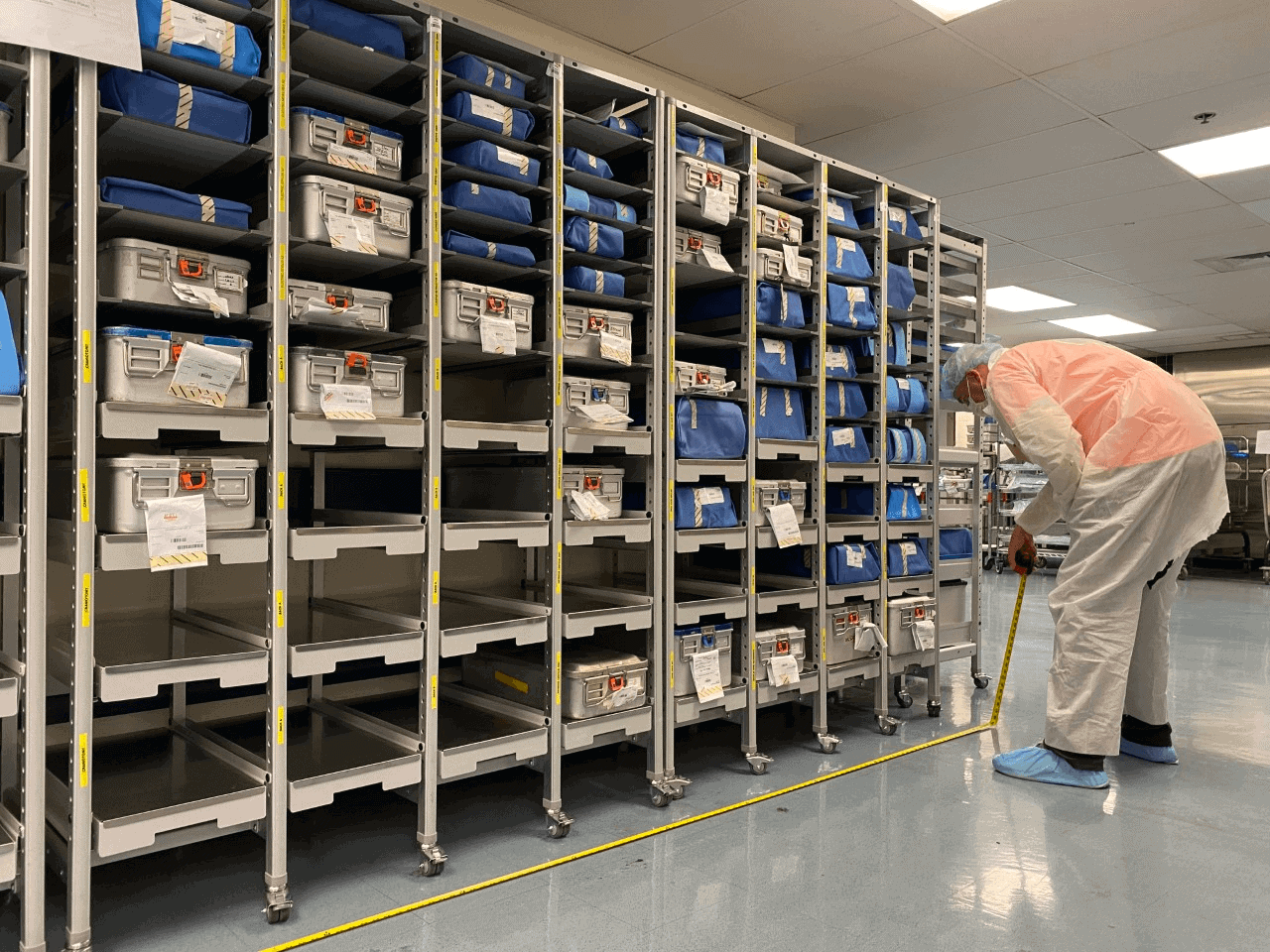
Sterile processing departments require distinct zones for decontamination, preparation, sterilization, and sterile storage. Temperature-controlled cabinets position sensitive instruments away from autoclave heat sources. High-density storage consolidates supplies in dedicated clean areas.
Sterile storage areas must maintain temperatures at or below 75°F to inhibit bacterial multiplication. Relative humidity must remain between 20% and 60%, preventing mold growth and packaging degradation. Temperature increases of 5°C double bacterial replication rates, making active monitoring essential.
HEPA filtration achieves ISO 4 cleanliness, removing airborne particulates. Active monitoring systems alert staff immediately when environmental parameters deviate from acceptable ranges. Small hospitals install localized environmental controls in sterile processing departments rather than upgrading entire facilities.
Modular storage with adjustable components adapts quickly to changing PAR levels without unit replacement. Clear labeling and visual management enable rapid stock assessments during shift changes. Organized systems reduce time spent locating supplies by 25%, freeing staff for patient care activities. Automated reorder triggers integrated with hospital information systems prevent stockouts and overstocking.
First-in-first-out rotation becomes simple with accessible configurations preventing expired product waste. Small hospitals utilize two-bin systems, ensuring continuous supply availability while minimizing carrying costs. Strategic PAR level placement positions high-turnover items at eye level.
Small hospitals under 100 beds demonstrate only 38% adoption of advanced storage systems. Rural facilities face limited capital budgets and geographic isolation from service providers. Urban healthcare centers adopt technologies rapidly while rural facilities encounter capital barriers. Regional differences emerge from varying regulatory enforcement intensity and facility consolidation patterns.
Generational leadership profiles influence decision-making, with Baby Boomers focusing on initial capital expenditure. Millennials entering management prioritize data-driven, integrated solutions with long-term value propositions. Geographic service availability determines maintenance feasibility for complex systems.
Rural facilities face limited capital budgets, restricting access to premium storage infrastructure. Geographic isolation from service providers complicates maintenance and increases response times. Small hospitals prioritize durable, low-maintenance systems requiring minimal specialized servicing. Space constraints demand compact, high-density configurations maximizing storage within existing footprints.
Urban healthcare centers rapidly adopt advanced technologies, managing high patient volumes. Rural facilities face capital budget barriers preventing comprehensive modernization. Limited staff resources necessitate simple systems requiring minimal training.
Baby Boomers focus on initial capital expenditure and proven technology performance records. Generation X balances cost considerations with operational efficiency improvements. Millennials prioritize data-driven, integrated solutions offering real-time monitoring and environmental analytics.
Younger administrators demand quantifiable ROI through total cost of ownership. Experienced leaders rely on vendor relationships and track records. Technology integration preferences vary with Millennials seeking compatibility with hospital information systems.
Northeast and West Coast regions demonstrate the highest penetration of premium temperature-controlled systems. Stringent state-level health regulations drive investment in advanced storage meeting elevated compliance standards. Southeast and Midwest regions favor mid-range solutions, balancing cost with essential regulatory requirements.
Regional healthcare consolidation creates purchasing power advantages, enabling bulk procurement. Service provider density in metropolitan areas supports complex systems requiring regular maintenance. Rural regions prioritize systems offering remote monitoring capabilities.
Small hospitals must identify compliance gaps and infection risks within the current storage infrastructure. Gathering information requires a total cost of ownership assessment comparing initial investment against long-term expenses. Alternative analysis evaluates patient safety impact, staff efficiency improvements, and budget constraint compatibility.
Systematic evaluation prevents costly mistakes from focusing solely on the initial purchase price. Small hospitals achieve optimal outcomes by balancing regulatory compliance with realistic capital availability. Strategic storage investments reduce healthcare-associated infections while improving staff productivity through organized, accessible supply placement. Partnering with consultative storage specialists like DSIDirect ensures comprehensive facility assessment and customized solution design.
The right sterile processing systems protect patient safety while delivering measurable return on investment. Small hospitals succeed through data-driven decision frameworks evaluating total ownership costs against infection control outcomes. Modern polymer and modular systems provide cost-effective solutions, eliminating the hidden expenses of budget alternatives. Facilities prioritizing long-term value over initial price achieve superior clinical results and financial performance.
Small hospitals can't afford the hidden costs of chrome wire shelving — repeated replacements, infection control failures, and Joint Commission citations add up fast. Distribution Systems International helps small and mid-sized acute care facilities replace outdated shelving with SterileShelf polymer systems engineered for compliance, durability, and long-term savings.
Our team conducts a complimentary on-site storage analysis, delivers custom CAD layouts, and manages full turnkey installation — so your SPD team experiences minimal disruption and maximum results.
Contact Distribution Systems International today to schedule your free sterile storage consultation and find out exactly how much your facility can save.

With 21 years of sales management, marketing, P&L responsibility, business development, national account, and channel management responsibilities under his belt, Ian has established himself as a high achiever across multiple business functions. Ian was part of a small team who started a new business unit for Stanley Black & Decker in Asia from Y10’ to Y14’. He lived in Shanghai, China for two years, then continued to commercialize and scale the business throughout the Asia Pacific and Middle East regions for another two years (4 years of International experience). Ian played college football at the University of Colorado from 96’ to 00’. His core skills sets include; drive, strong work ethic, team player, a builder mentality with high energy, motivator with the passion, purpose, and a track record to prove it.