Key Takeaways
Healthcare workers lose hours each week to inefficient storage. Searching for supplies, restocking carts, and managing inventory pulls clinicians away from patients. The problem isn't effort, it's design.
This article examines how optimized healthcare productivity storage layouts, standardized systems, and smart technology restore productivity and improve care delivery.
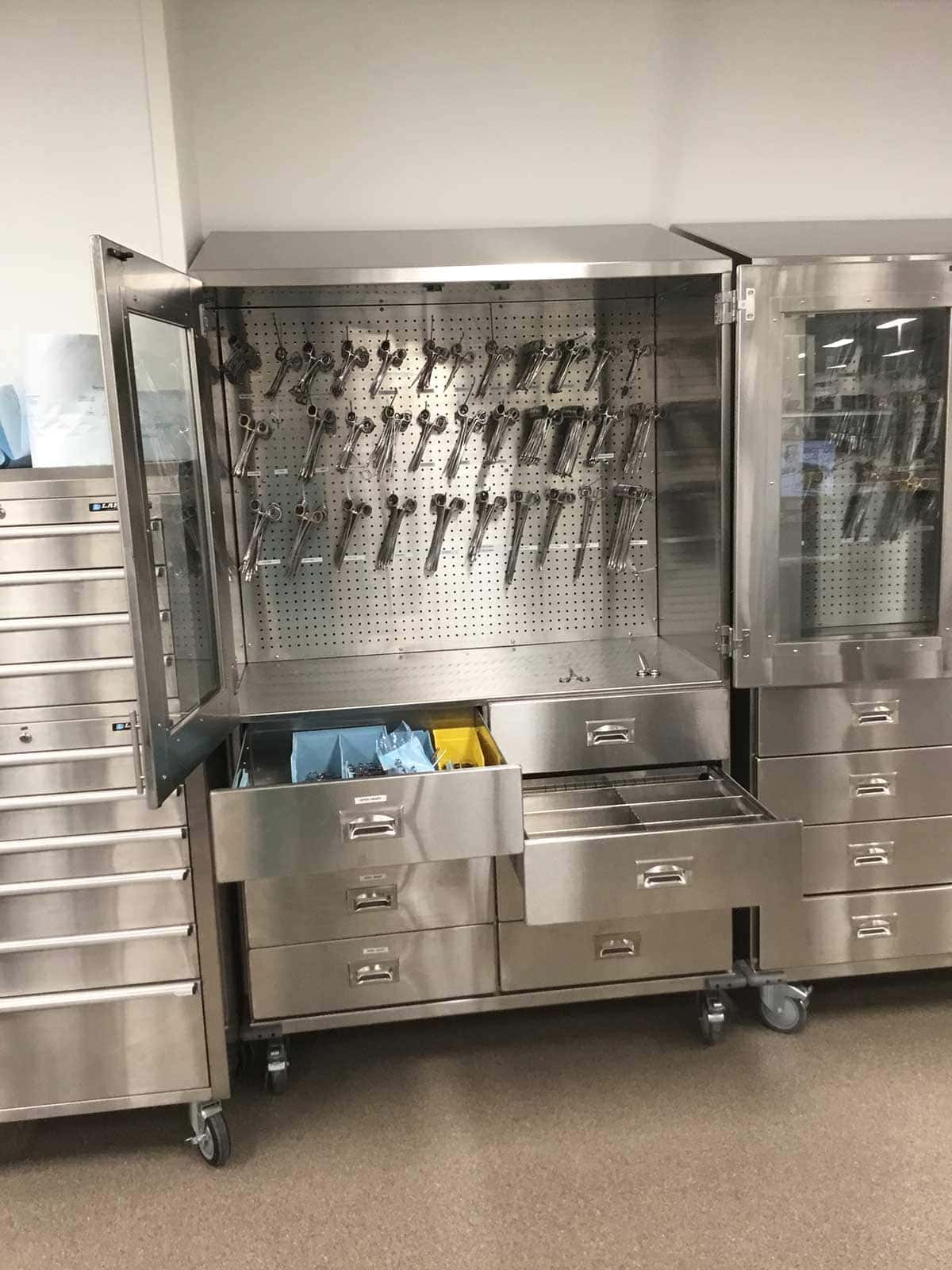
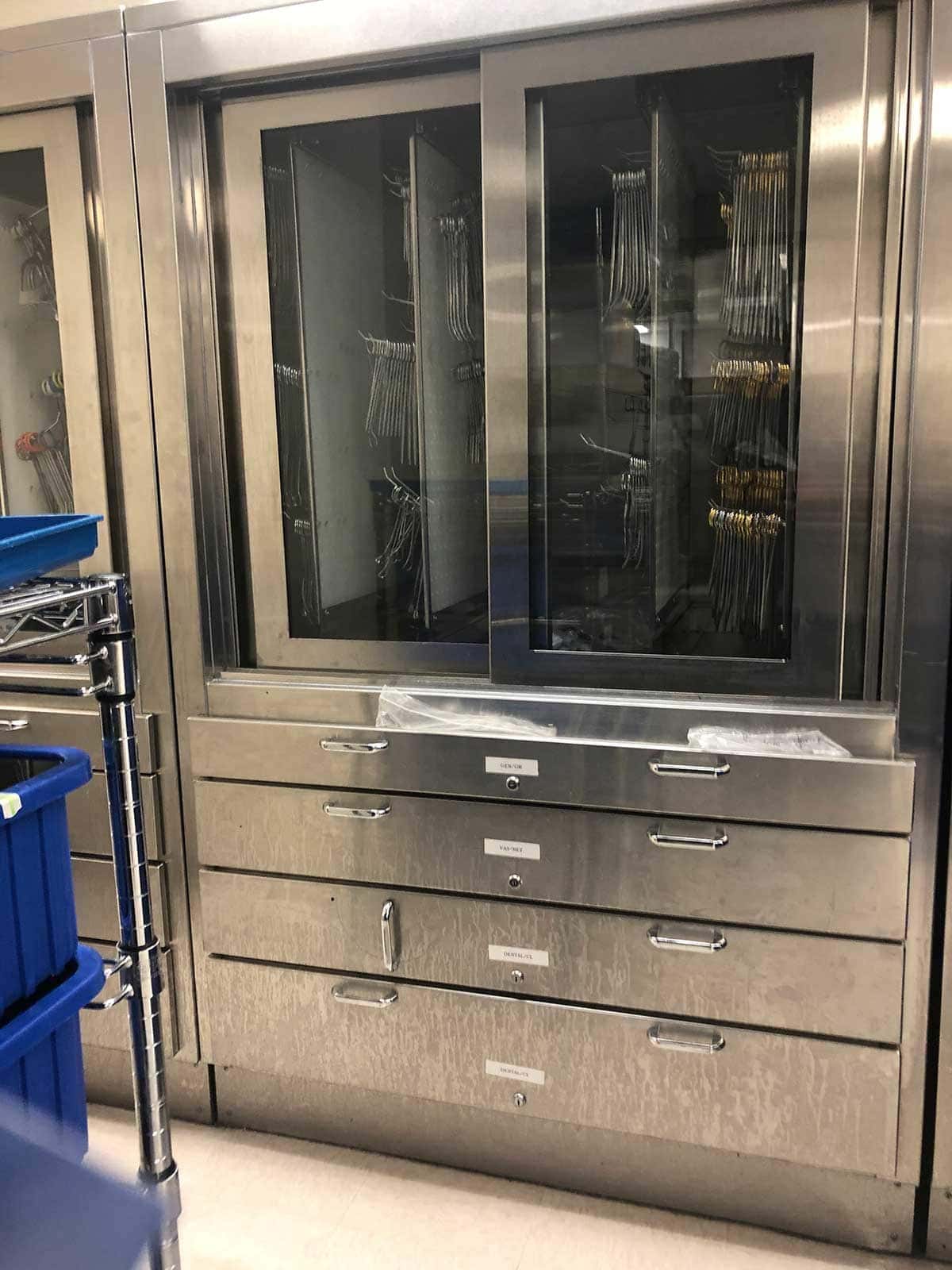
Healthcare worker efficiency measures how much time clinicians spend on direct patient care versus support tasks. Storage plays a larger role than most realize. Every minute a nurse spends hunting for supplies is a minute away from the bedside. Well-designed storage systems eliminate these interruptions and give clinical staff their time back.
Key Efficiency Metrics Linked to Storage
| Metric | Definition | Why It Matters for Storage |
| Time Spent on Logistics | Hours collecting, debiting, storing materials | Optimized storage reduced this by 55%–66% |
| Material Handling Errors | Frequency of supply retrieval mistakes | Optimization achieved 93% reduction |
| Nurse Satisfaction | Staff contentment with supply systems | Rose from 53% to 90% after automated storage |
Common Workflow Bottlenecks Tied to Storage
Disorganized storage creates a cascade of inefficiencies. Staff waste time searching. Errors increase. Patient care suffers. The fix isn't complicated; it just requires intentional design and proper medical storage bins configured for clinical workflows.
"Reorganization of internal storage and distribution logistics resulted in a 55% to 66% reduction in time spent collecting, debiting, and storing materials."
How Disorganized Storage Creates Delays And Errors
Impact On Staff Well-Being
Good storage design follows predictable patterns. When staff know exactly where to find supplies, in any room, on any unit, they work faster and make fewer errors. Attention to medical storage ergonomics further reduces physical strain and speeds retrieval. The data proves it.
Standardized Point-of-Care Storage Results
| Department | Reduction in Nursing Time |
| Respiratory Medicine | 27.71% |
| Acute Stroke Nursing Care | 26.16% |
| Orthopedics | 12.42% |
Core Design Principles
Balancing Access With Security
Smart storage systems remove guesswork from inventory management. Sensors track consumption. Software predicts demand. Staff spend less time counting and more time caring for patients. These advances in med-surg supply management are transforming how facilities operate.
Key Findings
Technology Comparison
| Technology | Key Benefit | Implementation Note |
| RFID | Eliminates manual counts; real-time visibility | Requires tagged items and readers |
| Smart Cabinets | 99%+ accuracy, automated alerts | Capital investment needed |
| AI Weight-Based Bins | Auto-reorder, 9% labor cost reduction | Requires connectivity |
| Barcoding | Quick verification at lower cost | Line-of-sight scanning required |
Measurable Outcomes From Automated Systems
Effective redesign starts with observation, not assumption. Watch how staff actually move through spaces. Ask what frustrates them. Then make targeted changes and track whether they work. Investing in point of use storage healthcare solutions, such as medical carts positioned at the bedside, delivers immediate impact on nursing workflow optimization.
Steps To Identify And Fix Storage Problems
Key Performance Indicators
| KPI | Target | Measurement Method |
| Time to Locate Items | 50%+ reduction | Stopwatch observation |
| Stock-Out Incidents | Near-zero | Inventory system logs |
| Material Handling Errors | 90%+ reduction | Incident reports |
| Staff Satisfaction | Significant increase | Survey scores |
Key Findings
Most storage projects fail for predictable reasons. Skipping staff input tops the list. The good news: small changes deliver measurable wins while you build toward larger improvements.
Common Mistakes
Fast, Low-Risk Starter Changes
Long-Term Roadmap
A major US health system projected $80 million in potential cost savings over 3–5 years following supply chain transformation. Well-designed medical storage systems improve healthcare worker efficiency and reduce search time through standardized layouts, point-of-care placement, visual management, and technology-enabled tracking.
Research demonstrates 55%–66% reductions in logistics time, 93% fewer material handling errors, and nurse satisfaction increases from 53% to 90%. By starting with low-cost quick wins and progressing toward smart storage technologies, healthcare facilities can reclaim thousands of hours annually for direct patient care.
Ready to optimize your healthcare storage systems? Contact DSI Direct to explore solutions tailored to your facility's workflow and space requirements.

With 21 years of sales management, marketing, P&L responsibility, business development, national account, and channel management responsibilities under his belt, Ian has established himself as a high achiever across multiple business functions. Ian was part of a small team who started a new business unit for Stanley Black & Decker in Asia from Y10’ to Y14’. He lived in Shanghai, China for two years, then continued to commercialize and scale the business throughout the Asia Pacific and Middle East regions for another two years (4 years of International experience). Ian played college football at the University of Colorado from 96’ to 00’. His core skills sets include; drive, strong work ethic, team player, a builder mentality with high energy, motivator with the passion, purpose, and a track record to prove it.