Key Takeaways
Healthcare facilities face a persistent challenge: storing more supplies in less space while maintaining compliance and operational efficiency. Traditional static shelving wastes up to half of available floor space on fixed aisles that sit empty most of the day. High-density storage systems solve this problem by consolidating shelving onto movable carriages or automated mechanisms, effectively doubling capacity without expanding your footprint.
This guide covers everything you need to implement high-density storage successfully—from system selection and ROI calculation to installation phases and compliance requirements. Whether you're evaluating your first high-density project or optimizing an existing system, you'll find actionable steps to maximize space utilization and achieve measurable returns.
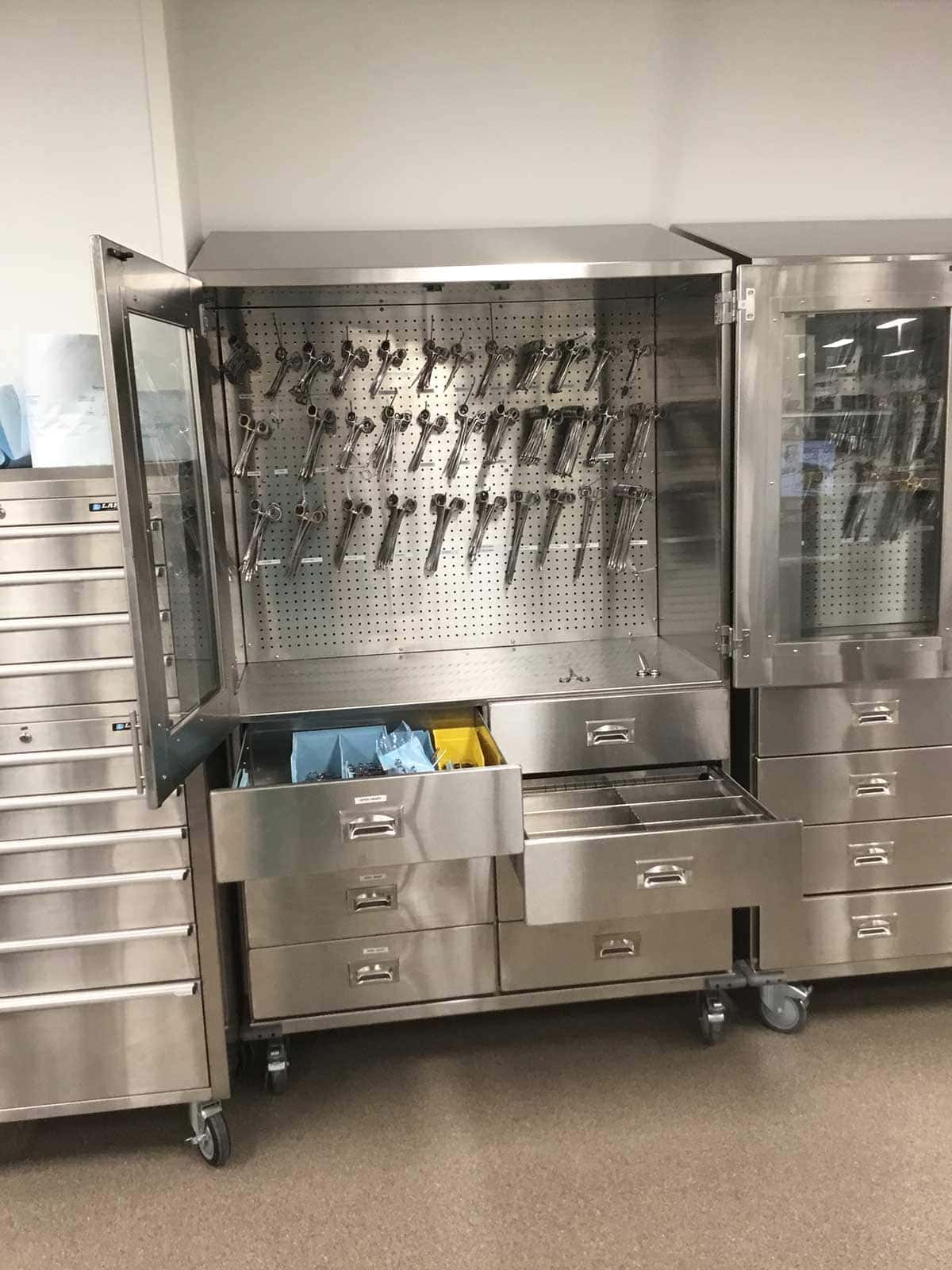
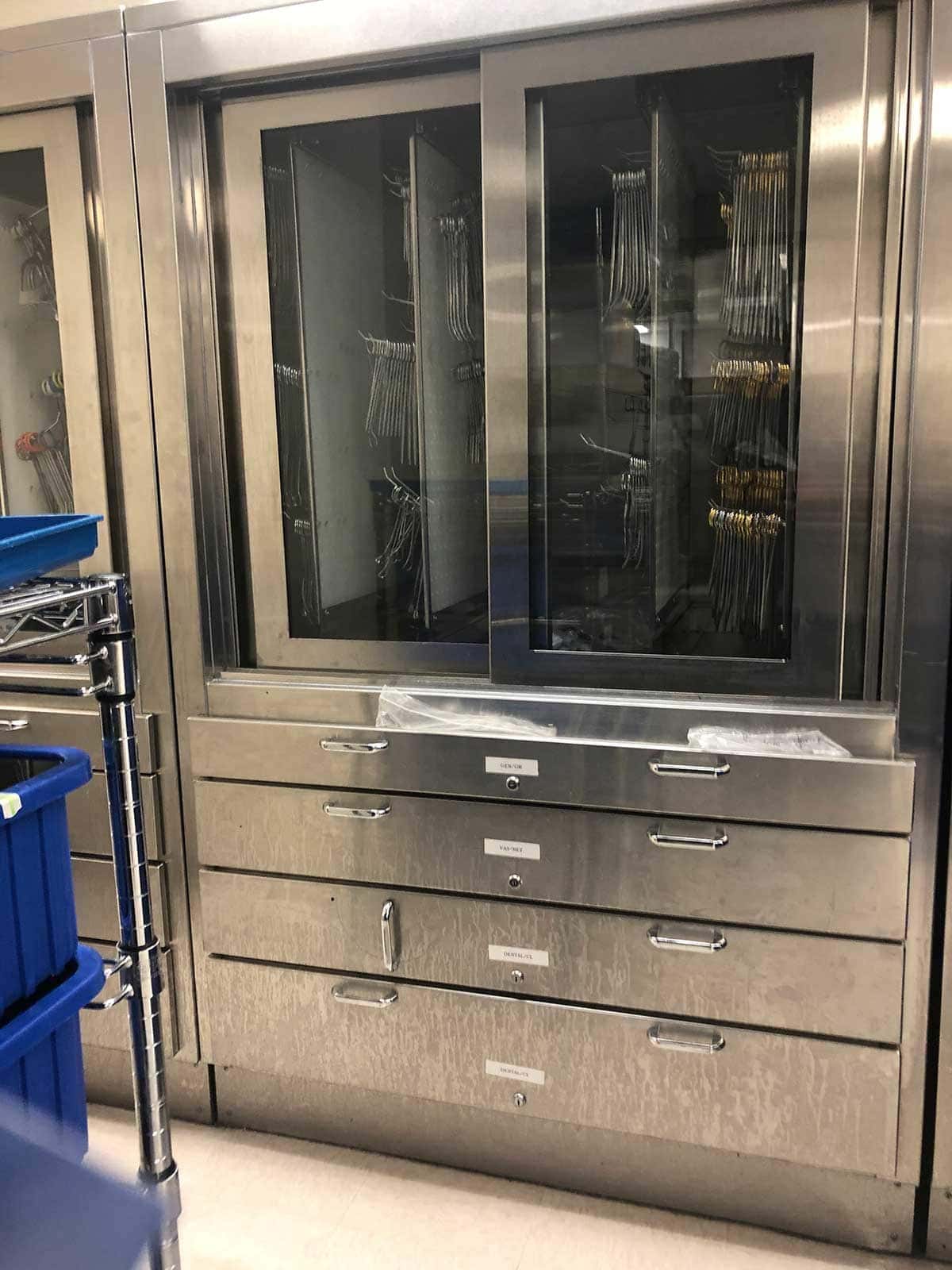
High density storage systems eliminate fixed aisles to maximize capacity within existing square footage. These medical supply storage solutions consolidate shelving onto movable carriages or automated mechanisms, typically doubling usable storage space without facility expansion.
| System Type | Relative Capacity | Space Savings | Key Mechanism |
| Traditional Shelving | 1.0x | 0% | Fixed aisle for every row |
| High-Density Mobile Shelving | 2.5x | 50% | Movable carriages, single aisle |
| Automated Storage/Retrieval | 3.5x | 70% | Fully automated cube utilization |
Key benefits driving adoption:
Four main system types serve different operational needs. Manual and powered mobile shelving work best for direct-access environments. Automated systems suit high-volume operations requiring maximum throughput. Choosing the right storage system depends on your facility's specific workflow and volume requirements.
| System Type | Space Savings | Access Type | Cost Range | Best For |
| Mobile Shelving (Manual) | 50% | Direct access | $5,000–$25,000/unit | Healthcare, records storage |
| Powered Mobile Shelving | 50% | Motorized | Higher than manual | High-traffic areas |
| AS/RS | 70% | Fully automated | Highest | Large-scale, cold storage |
| Push-Back/Pallet Flow | 40% | LIFO/FIFO | Moderate | Date-sensitive inventory |
Selection Considerations:
Successful healthcare storage implementation follows four phases: assessment, design, installation, and training. Each phase builds on the previous. Rushing any step creates downstream problems.
Phase 1 – Assessment and Analysis:
Phase 2 – Design and System Selection:
Phase 3 – Installation and Rollout:
Phase 4 – Training and New Protocols:
High-density storage requires higher upfront investment but delivers rapid payback through space consolidation and operational gains. The advantages of high-density shelving systems rest on avoided expansion costs and measurable efficiency improvements.
| Factor | Traditional Storage | High-Density Storage | Impact |
| Equipment Cost | $500–$2,000/unit | $5,000–$25,000/unit | Higher upfront |
| Space Required | Baseline | 50% reduction | Avoided expansion |
| Search Time | Baseline | Up to 35% reduction | Labor savings |
| Stockouts | Higher frequency | Up to 60% reduction | Inventory savings |
| Payback Period | N/A | 18–24 months | Strong ROI |
ROI Factors to Quantify:
High-density systems enhance compliance when properly maintained. Enclosed designs, locking mechanisms, and organized storage directly support regulatory requirements. Regular maintenance prevents safety incidents and preserves system performance. Effective space saving storage healthcare strategies must balance density gains with accessibility and safety.
Key Compliance Advantages:
| Task | Frequency | Purpose |
| Track/carriage inspection | Weekly | Ensure smooth operation |
| Safety interlock testing | Weekly | Verify personnel protection |
| Structural integrity audit | Quarterly | Confirm load capacity |
| Full system calibration | Annually | Maintain performance |
Safety Requirements:
Most high-density failures stem from inadequate planning, not equipment problems. Undersizing, poor change management, and incomplete cost analysis derail otherwise sound projects.
| Mistake | Cause | Solution |
| Undersized system | Poor future needs assessment | Build capacity buffer, use a modular design |
| Staff resistance | Inadequate change management | Early communication, phased rollout |
| Slow retrieval times | Incorrect SKU velocity profiling | Re-analyze data, adjust slotting |
| Extended payback | Underestimated transition costs | Include all costs in the ROI calculation |
Risks to Mitigate:
A structured timeline keeps projects on track and stakeholders aligned. Most implementations are complete within nine months from initial assessment to full operation. Prioritizing materials management optimization from the start ensures lasting operational gains.
| Phase | Timeline | Key Deliverables |
| Assessment & Planning | Weeks 1–6 | SKU profile, space audit, business case |
| Design & Procurement | Weeks 7–14 | Vendor selected, contract executed |
| Installation | Weeks 15–24 | System installed, IT integrated |
| Go-Live & Stabilization | Weeks 25–36 | Full operation, KPI tracking begins |
Immediate Action Items:
High-density storage systems deliver proven results—50% space savings, 35% faster retrieval, and payback within two years—but only when properly planned and executed. Integrating these systems with your broader materials management strategy amplifies results. The technology is proven. The ROI is documented. Success depends on execution.
Start with SKU velocity analysis and space audits to build your business case. Select modular systems that accommodate future growth. Plan phased rollouts that give staff time to adapt. Facilities that follow this approach transform constrained storage into strategic assets. Those who skip steps face undersized systems, staff resistance, and extended payback periods. The technology works. Your results depend on execution.
Ready to maximize your storage capacity? Contact DSI Direct to discuss your facility's high-density storage needs.

With 21 years of sales management, marketing, P&L responsibility, business development, national account, and channel management responsibilities under his belt, Ian has established himself as a high achiever across multiple business functions. Ian was part of a small team who started a new business unit for Stanley Black & Decker in Asia from Y10’ to Y14’. He lived in Shanghai, China for two years, then continued to commercialize and scale the business throughout the Asia Pacific and Middle East regions for another two years (4 years of International experience). Ian played college football at the University of Colorado from 96’ to 00’. His core skills sets include; drive, strong work ethic, team player, a builder mentality with high energy, motivator with the passion, purpose, and a track record to prove it.