Key Takeaways
Moisture infiltration in medical storage creates contamination pathways, degrades equipment, and violates regulatory standards. Traditional chrome wire shelving corrodes, harbors mold, and requires frequent replacement—costing facilities thousands annually while threatening patient safety. Moisture-proof storage systems, including sterile instrument storage solutions, eliminate these risks through antimicrobial materials and sealed construction that block humidity and bacterial growth.
This guide examines how moisture-proof storage prevents mold colonization and warping, extends equipment lifecycles by 3-5x, and reduces 10-year costs by 41%. Facilities adopting these systems achieve 86% contamination improvement, substantial HAI prevention savings, and full regulatory compliance while protecting the integrity of sterile supplies and surgical instruments.
Moisture-proof storage protects medical supplies from humidity, contamination, and material degradation. These systems use specialized materials and coatings to block moisture infiltration and prevent mold growth in healthcare facilities.
Moisture-proof storage employs non-porous materials and antimicrobial coatings to create barriers against humidity and bacterial growth. These systems prevent mold colonization and warping that compromise medical supplies and equipment. Modern moisture-proof systems like SterileShelf achieve 12% contamination risk—significantly lower than traditional storage options that struggle with moisture-related degradation.
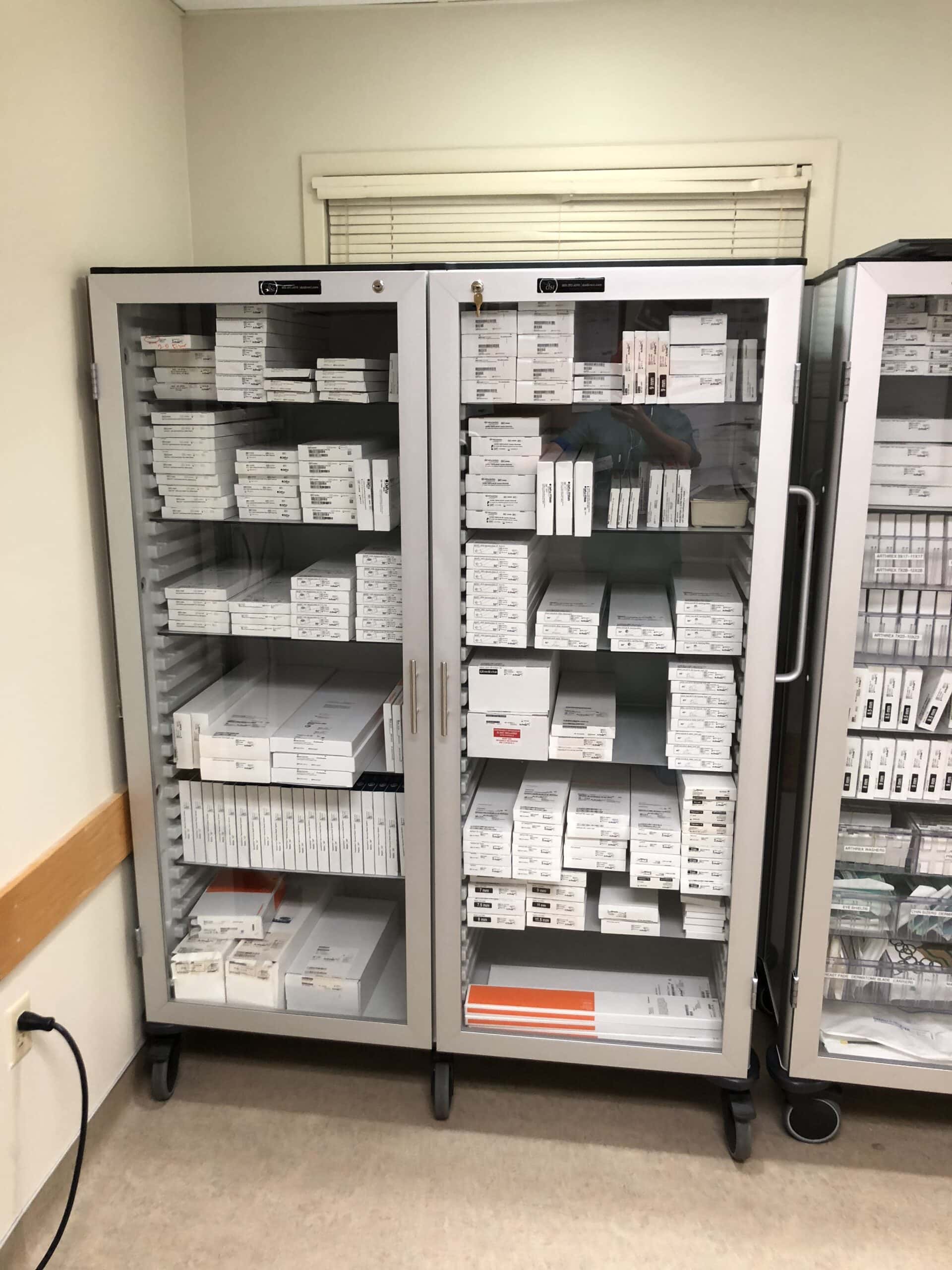
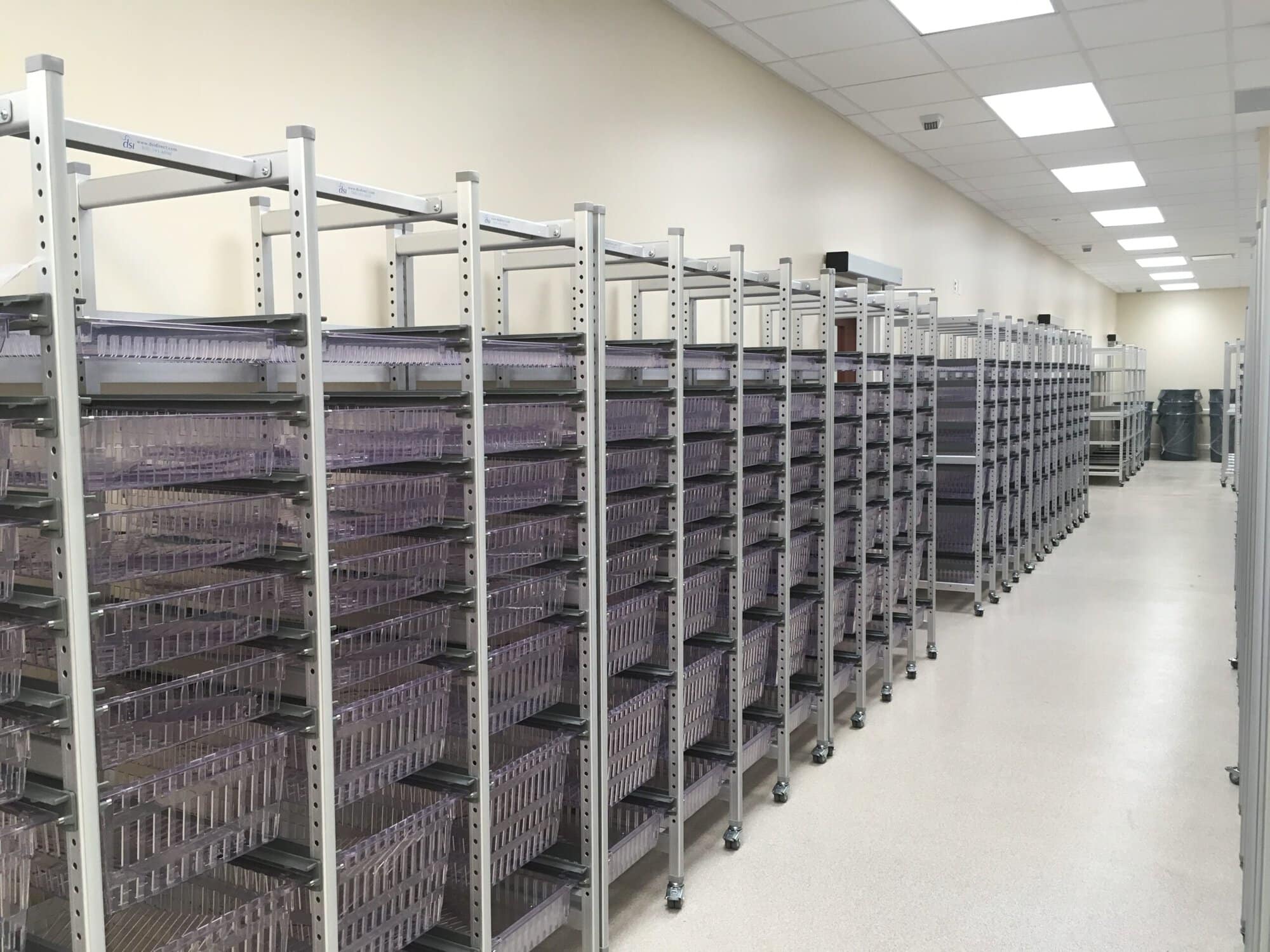
Healthcare facilities use three primary moisture-proof storage types: antimicrobial shelving with integrated coatings, sealed medical carts with gasket protection, and enclosed sterile instrument cabinets. Polymer-based antimicrobial systems outperform chrome wire shelving by resisting corrosion and preventing moisture accumulation in joints and welds. Advanced systems incorporate silver-ion antimicrobial technology that actively inhibits bacterial and fungal growth on contact surfaces, providing continuous protection beyond passive moisture barriers.
Moisture creates contamination vectors and degrades medical equipment, threatening patient safety and regulatory compliance. Healthcare facilities must prevent moisture-related failures to maintain sterile environments and equipment functionality.
Moisture enables mold and bacterial colonization on storage surfaces, creating contamination pathways to sterile supplies. Chrome wire shelving presents an 85% contamination risk due to moisture accumulation in joints, welds, and porous coatings where microorganisms thrive. Moisture-proof systems reduce contamination by 55.7%, preventing mold growth that violates infection control protocols and regulatory standards. Facilities using traditional storage face increased HAI risks and compliance violations from moisture-driven microbial proliferation.
Moisture exposure causes dimensional changes in materials through absorption, corrosion, and structural degradation. Instruments stored on moisture-damaged shelving develop surface defects, alignment issues, and contamination from corroded particles. Chrome wire shelving lasts only 3-5 years before moisture damage, corrosion, and material degradation necessitate replacement. Warped storage equipment compromises sterile barriers, damages delicate instruments, and creates gaps where contaminants penetrate packaging—directly impacting surgical readiness and patient outcomes.
Moisture-proof storage blocks humidity penetration and incorporates antimicrobial barriers that eliminate contamination pathways. These systems maintain dimensional stability and surface integrity throughout extended service life.
Moisture-proof storage uses non-porous surfaces and antimicrobial coatings to eliminate moisture accumulation where microorganisms colonize. This approach reduces contamination risk by 73 percentage points—an 86% improvement from 85% down to 12%—by removing the humidity conditions mold and bacteria require. Antimicrobial treatments actively inhibit bacterial growth, viral survival, and mold sporulation on contact surfaces, providing continuous protection between cleaning cycles. The combination of moisture barriers and antimicrobial technology prevents biofilm formation and cross-contamination that compromise sterile supplies.
Moisture-proof materials resist dimensional changes from humidity absorption, temperature fluctuations, and chemical exposure. Surgical instruments and medical carts maintain alignment and surface integrity when stored on systems that block moisture infiltration and corrosion. SterileShelf systems last 15+ years compared to chrome wire's 3-5 year lifespan—a 3-5x improvement that eliminates replacement cycles caused by moisture damage and material degradation. Extended durability preserves sterile barriers, protects instrument precision, and maintains storage system integrity throughout the facility's operational timeline.
Moisture-proof medical storage delivers measurable improvements in patient safety, operational efficiency, and financial performance. Facilities adopting these systems reduce infection risks while lowering maintenance costs and extending equipment lifecycles.
Mold-free, dry storage eliminates contamination pathways that transfer pathogens to sterile supplies and patient contact surfaces. Moisture-proof systems prevent HAIs through 55.7% contamination reduction, directly protecting patients from preventable infections. Facilities implementing comprehensive moisture-proof storage save $278,500 annually by avoiding HAI treatment costs, litigation exposure, and CMS reimbursement penalties. This protection maintains the highest patient care standards while ensuring regulatory compliance and reputation preservation.
Moisture-proof storage requires minimal maintenance compared to systems that corrode, harbor biofilms, and demand intensive cleaning. Chrome wire shelving costs $850 annually per unit in maintenance, while SterileShelf systems require only $150—generating $700 savings per unit yearly. Reduced maintenance frees staff from repetitive cleaning cycles and emergency replacements, allowing focus on patient care. Facilities eliminate downtime from corroded equipment failures and contamination incidents that disrupt surgical schedules and supply chain operations.
Moisture-proof storage delivers superior long-term value through extended lifecycles and reduced replacement frequency. Chrome wire shelving costs $14,500 over 10 years, while SterileShelf systems cost $8,500—a $6,000 savings per unit representing 41% cost reduction. Comprehensive prevention programs achieve 765% ROI by combining equipment longevity with HAI cost avoidance and operational efficiency gains. Facilities investing in moisture-proof storage eliminate multiple replacement cycles, reduce supply damage, and avoid the compounding costs of contamination-related failures.
Selection criteria must balance regulatory compliance, departmental requirements, and long-term performance. Facilities should evaluate systems based on measurable standards and specific operational demands.
Prioritize systems meeting FDA, OSHA, and AAMI compliance standards while offering antimicrobial protection and proven durability. SterileShelf achieves 98% FDA 21 CFR 820 compliance compared to chrome wire's 60%, ensuring alignment with medical device storage regulations. OSHA standards compliance reaches 96% for SterileShelf versus 65% for chrome wire, while AAMI standards compliance shows 95% versus 55%. Evaluate capacity requirements, weight ratings, and antimicrobial certifications to match facility workflows and inventory volumes. Systems must demonstrate compliance documentation, material certifications, and performance testing results before procurement approval.
Each department demands tailored moisture-proof storage based on environmental conditions and supply requirements. Sterile processing and central supply need enhanced moisture control due to high-humidity sterilization processes and temperature fluctuations. Operating rooms require mobile antimicrobial carts with sealed compartments for instrument protection during transport. Emergency departments benefit from rapid-access systems that maintain sterile barriers under frequent opening cycles. Configure storage density, shelving heights, and access patterns to match departmental workflows while maintaining moisture protection across all units.
Proper maintenance and organization maximize moisture-proof storage effectiveness and lifespan. Facilities must implement inspection protocols and storage techniques that preserve antimicrobial protection and environmental control.
Schedule quarterly inspections to verify seal integrity, surface cleanliness, and antimicrobial coating effectiveness. Check for physical damage, moisture infiltration signs, and material degradation that compromise protection. Moisture-proof systems require minimal maintenance compared to traditional storage—facilities spend $150 annually versus $850 for chrome wire systems per unit. Document inspection findings, cleaning protocols, and maintenance actions to maintain compliance records and track system performance. Replace damaged components immediately to prevent contamination pathways and maintain continuous moisture barriers.
Organize supplies with adequate airflow spacing to prevent moisture trapping between items and packaging. Avoid overstacking that blocks ventilation and creates condensation zones on contact surfaces. Maintain HVAC performance within facility specifications to support storage system environmental control capabilities. Rotate inventory using FIFO methods to prevent prolonged storage that increases moisture exposure risk. Position moisture-sensitive supplies on upper shelves away from floor-level humidity sources and cleaning operations. Proper moisture management through organized storage protects inventory integrity, extends supply shelf life, and maintains sterile barriers throughout the distribution chain.
Moisture-proof storage plays a critical role in safeguarding patient health, extending the lifespan of equipment, and reducing operational costs in medical environments. It's time for healthcare facilities to move beyond traditional systems and embrace antimicrobial storage solutions that align with modern safety and efficiency standards.
Say goodbye to outdated chrome wire shelving and make the switch to corrosion-resistant, antimicrobial storage options that comply with FDA, OSHA, and AAMI standards. Assess your current storage systems for moisture damage, contamination risks, and compliance gaps. Invest in advanced solutions like SterileShelf™, which offers tangible improvements in patient safety and operational effectiveness.
Contact Distribution Systems International today to evaluate your facility's storage needs, calculate the ROI of moisture-proof systems, and develop a tailored implementation plan. Protect patients, staff, and overall facility performance by upgrading to moisture-proof storage solutions built for the challenges of healthcare environments.
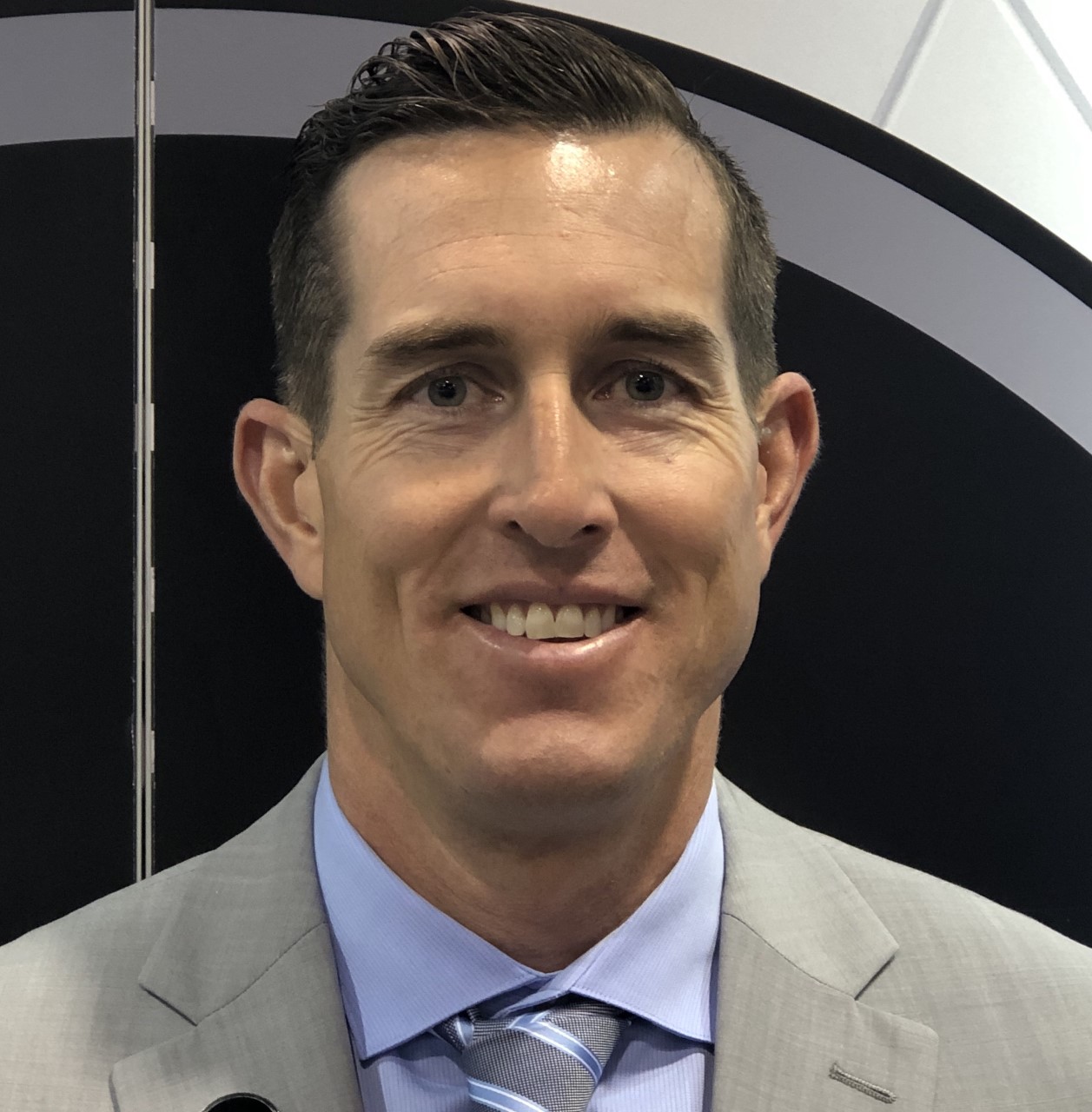
With 21 years of sales management, marketing, P&L responsibility, business development, national account, and channel management responsibilities under his belt, Ian has established himself as a high achiever across multiple business functions. Ian was part of a small team who started a new business unit for Stanley Black & Decker in Asia from Y10’ to Y14’. He lived in Shanghai, China for two years, then continued to commercialize and scale the business throughout the Asia Pacific and Middle East regions for another two years (4 years of International experience). Ian played college football at the University of Colorado from 96’ to 00’. His core skills sets include; drive, strong work ethic, team player, a builder mentality with high energy, motivator with the passion, purpose, and a track record to prove it.