Key Takeaways
Operating room efficiency determines surgical capacity, revenue, and patient access. Turnover time—the interval between cases—represents one of the largest opportunities for improvement in robotic surgery programs.
Optimized robotic surgery storage directly addresses this challenge by accelerating instrument retrieval, reducing staff movement, and eliminating workflow delays. Evidence demonstrates that high-density medical storage solutions, organized medical carts, and systematic sterile instrument storage can cut turnover time by 25% or more.
This article examines how specialized robotic instruments storage systems improve operating room efficiency through better organization, faster access, and reduced errors. Facilities that implement strategic medical supply storage gain measurable advantages: increased case volume, lower costs, and enhanced patient safety across surgical departments.
Robotic surgery storage refers to specialized medical storage solutions designed to house, protect, and organize robotic instruments and accessories throughout their lifecycle. These systems address the unique vulnerabilities of robotic instruments, which contain small moving parts and lumened structures that make them highly susceptible to damage and incomplete reprocessing. Efficient robotic instruments storage directly impacts operating room efficiency, workflow, patient safety, and cost management—critical when delayed cases can exceed $2,000 per minute in financial losses.
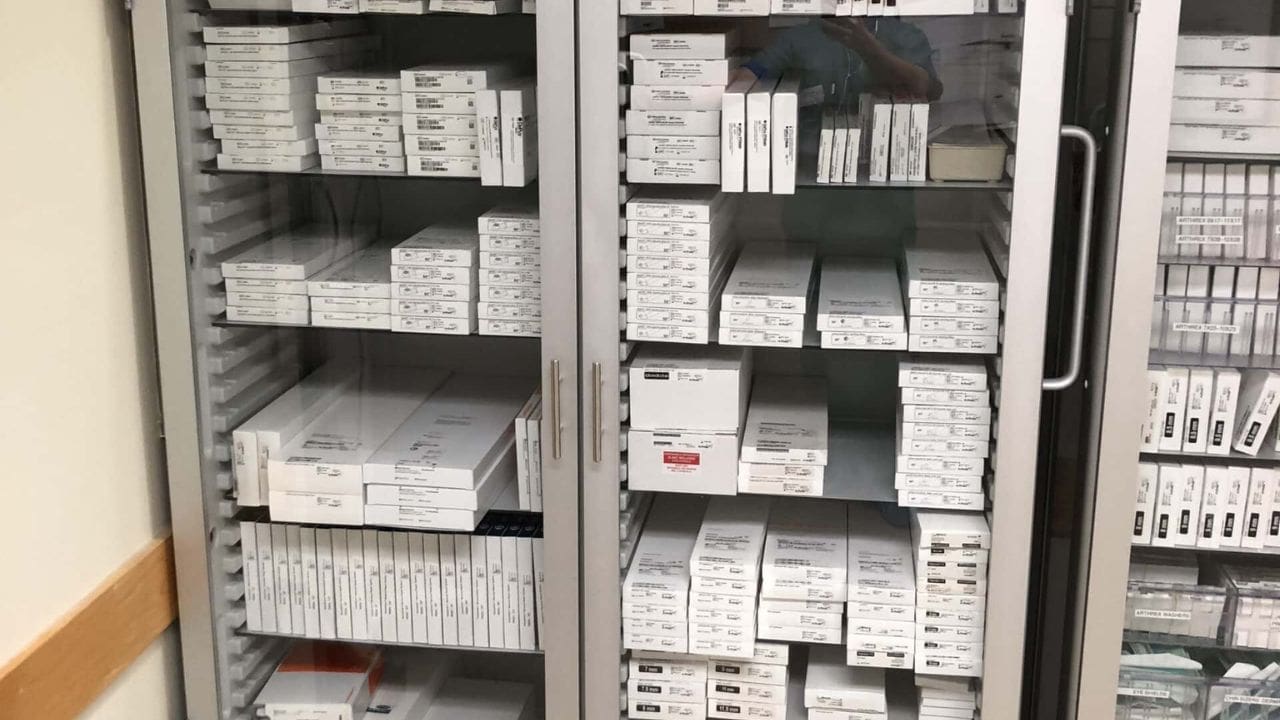
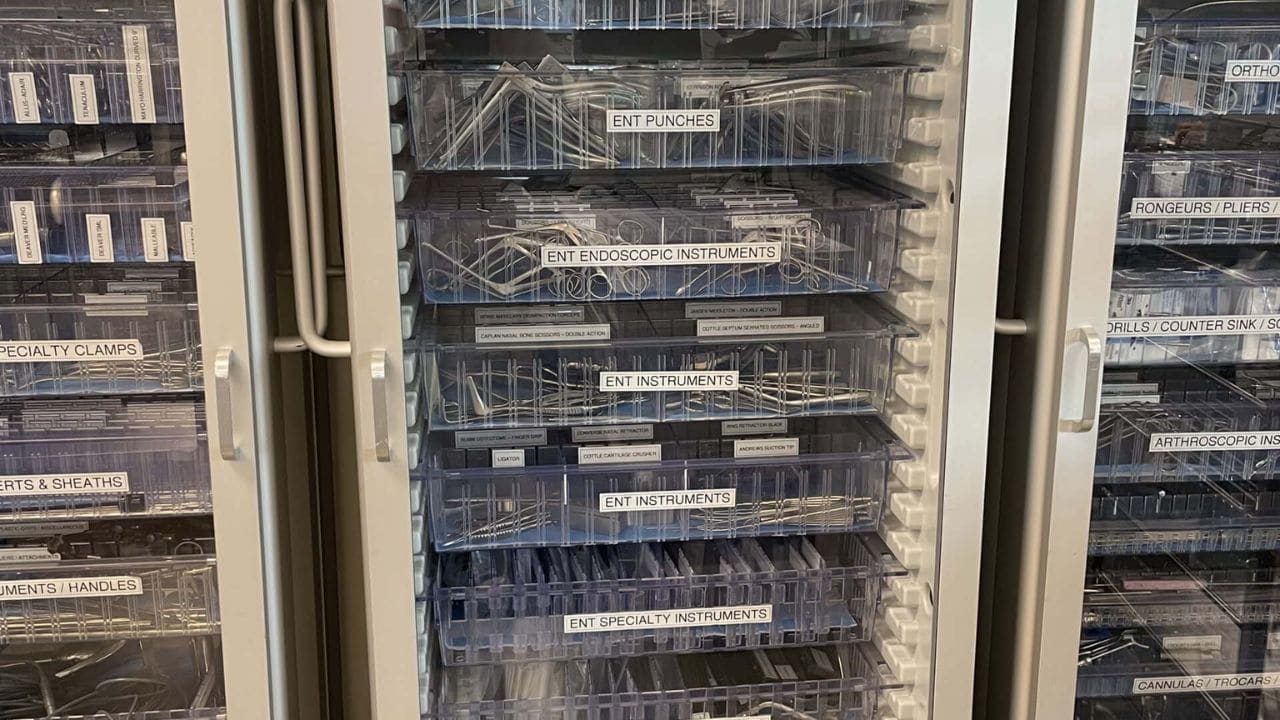
Proper sterile instrument storage systems ensure instruments remain contamination-free, accessible, and functional when needed. Medical carts, dedicated cabinets, and organized medical supply storage reduce retrieval time, minimize handling errors, and streamline turnover between procedures. The result is measurable turnover time reduction and improved operational performance across surgical departments.
Robotic instruments storage solutions are purpose-built systems that protect delicate surgical equipment from physical damage and environmental contamination. Dedicated, enclosed storage options—including specialized carts, cases, and cabinets—shield instruments from dust, contaminants, and handling damage during transport and storage. These solutions integrate into operating rooms and sterile processing departments to maintain instrument integrity.
These medical storage solutions directly improve instrument access and surgical workflow by eliminating search time, reducing reprocessing cycles, and ensuring the right tools are available when needed. Organized storage accelerates setup, minimizes delays, and supports consistent turnover time reduction across robotic procedures.
Operating room turnover time measures the interval between patient exit and surgical readiness for the next case. This metric directly affects case volume, revenue, and patient access. Efficient robotic surgery storage cuts turnover time by accelerating instrument retrieval, reducing staff movement, and eliminating search delays. High-density, modular storage systems alone reduce supply retrieval time by 25%, creating immediate workflow improvements.
Clinical evidence demonstrates even greater gains when medical storage solutions integrate with systematic workflows. A motor-racing pit-stop model that formalized instrument logistics reduced average total OR turnover time from 99.2 minutes to 53.2 minutes—a 46.4% reduction. Room ready time dropped from 42.2 minutes to 27.2 minutes. These results show that optimized robotic instruments storage, combined with defined roles and task sequencing, can exceed the 25% turnover time reduction benchmark in real-world surgical settings.
Faster instrument access drives measurable efficiency gains. High-density, vertical storage systems increase storage capacity by over 60% while bringing supplies directly to staff, eliminating walking and searching. Surgical instrument tray optimization further reduces setup times by as much as 35% in endourological procedures by removing redundant instruments and simplifying counts.
Organized medical supply storage reduces errors and delays throughout the turnover process. Streamlined sterile instrument storage minimizes handling steps—orthopedic tray optimization requires an average of 7 minutes 35 seconds to examine and remove instruments, demonstrating time saved through reduced complexity. Medical carts and standardized storage locations eliminate confusion, accelerate setup, and improve operating room efficiency across all robotic procedures.
Medical storage solutions reduce clutter and maximize space utilization in operating rooms where every square foot matters. High-density storage systems eliminate wasted vertical space while organizing supplies for rapid access. Automated systems deliver significant efficiency gains beyond physical storage—automated washing and disinfection provides direct labor savings of 66 minutes per set of four robotic instruments, with overall time savings of 142 minutes in the robotic instrument reprocessing workflow.
Medical carts and sterile instrument storage create better operational flow by positioning supplies near point-of-use locations. Specialized equipment accelerates critical processes—sterilization time for two da Vinci endoscopes drops to 28 minutes using V-PRO™ maX 2 Low Temperature Sterilizer, compared to 60 minutes with other systems. These improvements in robotic surgery storage translate directly to increased case capacity and reduced turnover time.
Robotic instruments storage integrates with established operating room protocols to standardize workflows. AORN issues a conditional recommendation to standardize equipment placement and setup to reduce flow disruptions. Formalized instrument logistics with defined roles streamline the setup and breakdown process—"Robotic Support" obtains sterile supply trays and places them on double ring stands outside the OR, while "Scrub Technician" coordinates special equipment and brings sterile trays into the room.
Standardized medical supply storage minimizes disruption to surgical team workflows by eliminating ambiguity and task overlap. Barcode-based systems increase accuracy of use documentation and decrease untraceable sterilization records while reducing time for daily and monthly inventory counts. This systematic approach to robotic surgery storage ensures instruments are tracked, available, and correctly positioned for maximum operating room efficiency and turnover time reduction.
Robotic surgery storage delivers better organization of robotic instruments and medical supplies, directly improving operating room efficiency. Automated instrument tracking and management solutions reduce tray assembly time by over 50%, accelerating preparation and minimizing staff workload. These medical storage solutions ensure compliance with medical storage regulations and standards while maintaining the integrity of sterile instrument storage throughout the facility.
Safety improvements represent a critical advantage of optimized robotic instruments storage. Virginia Mason Medical Center reduced its sterile processing error rate from 3% to 1.5% over 37 months using quality improvement tactics including color-coding and shadow boards. Visual organization strategies work—errors are detected 1.9 seconds faster in color-coded compartmentalized trays (11.1 seconds) compared to conventional trays (13.0 seconds). Structured medical supply storage reduces cognitive load, prevents misidentification, and supports consistent turnover time reduction across all procedures.
High-density supply storage solutions maximize limited space in operating rooms where physical constraints often limit case capacity. AORN recommends a minimum of 900 square feet for an OR with focus on flexible space planning that accommodates robotic surgery storage without compromising workflow. Vertical storage systems and medical carts utilize overhead space while keeping floor areas clear for equipment movement and staff circulation.
Flexible and scalable storage options accommodate growing medical needs while meeting regulatory requirements. Storage shelving must be at least 8 inches above the floor with a solid bottom shelf to protect items from environmental cleaning and potential flooding. Sterile storage areas must maintain temperature between 18°C to 23°C (64°F to 73°F) and relative humidity between 30% and 60% to preserve the integrity of sterile packaging. These standards ensure robotic instruments storage systems maintain compliance while supporting long-term operating room efficiency.
Assess operating room storage needs by monitoring key performance indicators such as case volume, utilization, procedure times, complication rates, and OR turnover time. These metrics identify bottlenecks and quantify improvement opportunities. Select medical storage solutions based on facility-specific requirements—enclosed, secure storage solutions protect delicate robotic instruments from damage and contamination while supporting sterile instrument storage protocols.
Integration of medical carts, robotic surgery storage, and sterile instrument storage systems requires attention to physical handling standards. Instruments should be stored flat, without folding the sterile barrier, to prevent damage to packaging. Storage should use smooth, clean surfaces that will not snag or tear sterile packaging such as peel pouches. Proper integration of medical supply storage systems ensures robotic instruments storage supports turnover time reduction and operating room efficiency without compromising safety or compliance.
Installing robotic surgery storage systems requires strict adherence to manufacturer's Instructions for Use (IFU)—the primary standard for ensuring patient safety, regulatory compliance, and longevity of high-value assets. Physical installation must accommodate environmental requirements, workflow patterns, and integration with existing medical storage solutions in operating rooms. Validated automated cleaning cycles can achieve a 25% reduction in manual cleaning steps, demonstrating the efficiency gains possible through proper system implementation.
Staff training ensures optimal use and maintenance of robotic instruments storage systems. Training programs should cover proper handling procedures, tracking protocols, and maintenance schedules. Regular audits must be conducted to ensure compliance and prevent introduction of non-standardized systems that could undermine operating room efficiency. Comprehensive training transforms medical carts and sterile instrument storage from simple equipment into strategic assets that deliver sustained turnover time reduction.
Advancements in storage technology will continue improving turnover time and operating room efficiency as robotic systems evolve. Next-generation robotic systems—Medtronic's Hugo, CMR Surgical's Versius, and Ronovo Surgical's Carina—are designed with modularity as cart-based systems, requiring dynamic, mobile storage solutions for multiple smaller components rather than single large consoles. This shift demands flexible robotic surgery storage that accommodates decentralized equipment while maintaining organized medical supply storage.
Automated Storage and Retrieval Systems (ASRS) represent the future of sterile instrument storage. Sengkang General Hospital's ASRS utilizes robots and conveyor belts to store, retrieve, and transport surgical instruments in a controlled environment, eliminating manual handling and human error. These smart storage systems integrate with medical carts and tracking technologies to optimize robotic instruments storage throughout the facility. The financial case is compelling—initial investment for Robotic-Assisted Surgery (RAS) systems ranges between $2.0 and $2.5 million with annual maintenance costs over $100,000, while hospitals can incur up to $425,000 in annual costs for unnecessary instrument purchases when unreliable manual reprocessing requires a 50% increase in instrument inventory. Automated medical storage solutions protect these investments while delivering sustained turnover time reduction across operating rooms.
Optimized robotic surgery storage delivers measurable turnover time reduction—25% or greater—by accelerating instrument access, streamlining workflows, and eliminating delays in operating rooms. High-density medical storage solutions, organized medical carts, and systematic sterile instrument storage reduce retrieval time, prevent errors, and increase case capacity. Evidence shows these improvements translate directly to better operating room efficiency, enhanced patient safety, and significant cost savings across surgical departments.
The long-term value of investing in medical storage solutions extends beyond immediate turnover time reduction. Proper robotic instruments storage protects high-value assets, ensures regulatory compliance, and prevents costly delays while positioning facilities for next-generation cart-based systems and automated technologies. Medical supply storage that integrates tracking systems, environmental controls, and standardized workflows creates sustainable competitive advantages—maximizing ROI on robotic surgery programs while improving outcomes for patients and surgical teams.
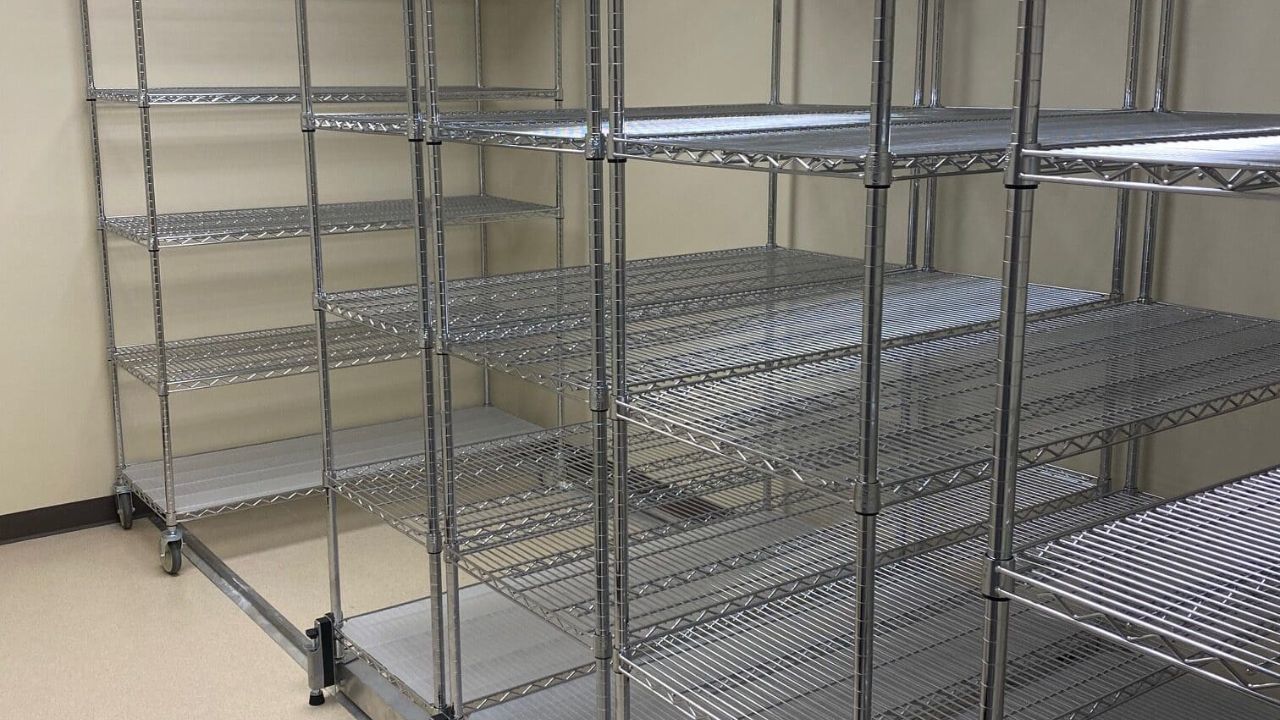
Distribution Systems International delivers complete robotic instrument storage systems designed to protect, organize, and manage high-value surgical assets. DSI's solutions include MODU-MAX hanging systems, high-density baskets, SterileShelf technology, and MODU-WALL wire shelving—all engineered to reduce turnover time, eliminate stacking of blue wraps, and provide dedicated locations for robotic arms and instrument tips.
With 30-40% space savings versus traditional wire shelving, rust-free antimicrobial surfaces, and adjustable compartments for PAR level control, DSI's medical storage solutions deliver measurable operating room efficiency improvements. Protect instruments averaging $200 per tip with systems built for quick retrieval, sterility maintenance, and cost savings. Contact DSI at 800.393.6090 or visit dsidirect.com to assess your facility's robotic surgery storage needs.

With 21 years of sales management, marketing, P&L responsibility, business development, national account, and channel management responsibilities under his belt, Ian has established himself as a high achiever across multiple business functions. Ian was part of a small team who started a new business unit for Stanley Black & Decker in Asia from Y10’ to Y14’. He lived in Shanghai, China for two years, then continued to commercialize and scale the business throughout the Asia Pacific and Middle East regions for another two years (4 years of International experience). Ian played college football at the University of Colorado from 96’ to 00’. His core skills sets include; drive, strong work ethic, team player, a builder mentality with high energy, motivator with the passion, purpose, and a track record to prove it.