Key Takeaways
Healthcare supply chains face relentless pressure: rising costs, increasing complexity, and zero tolerance for stockouts that delay patient care. Yet one of the most powerful optimization levers often receives insufficient attention: storage.
Where products sit, how they're organized, and what technology tracks them determines whether supplies reach patients on time. Data-driven medical supply chain optimization has delivered documented results: 66% reductions in material handling time, 93% fewer errors, and tens of millions in cost savings.
This guide examines how healthcare organizations can systematically optimize their supply chains through smarter storage decisions.
Storage is the backbone of medical supply chain performance. Every product pause point, from manufacturer to patient bedside, represents a storage decision that affects availability, cost, and patient outcomes.
Medical products follow a multi-stage journey before reaching patients. Each handoff introduces potential delays, damage risks, and data gaps:
Each node serves a distinct purpose:
Storage locations are decision points where physical inventory meets data. Without accurate information, products sit in the wrong place at the wrong time.
Storage organization is intrinsically linked to PAR (Periodic Automatic Replenishment) accuracy, the minimum inventory required before the next supply arrives. Organized storage prevents items from being misplaced, enabling accurate counts. Key data objects tied to storage include SKU/item master, batch/lot number, expiry date, temperature status, and location code.
Storage strategy directly determines whether the right product reaches the right patient at the right time. Poor decisions cascade into stockouts, waste, safety events, and cost overruns.
Storage placement determines how fast products reach the point of need. Healthcare facilities implementing data-driven storage optimization have achieved a 31.8% reduction in stockout events. Emergency orders decreased by 42.3% following the adoption of predictive analytics and optimized par level management. RFID and real-time tracking provide "X-ray vision" into supply levels, replacing manual counts with scientifically derived par levels.
High-impact items where stockouts are most critical include emergency drugs, surgical kits, blood products, ventilator supplies, and dialysis consumables.
Improper storage compromises product efficacy and patient safety. A study on standardization of nurse servers found a 40% decrease in adverse event reports. Implementation of innovative storage solutions achieved a 93% reduction in errors related to material handling.
Common integrity risks in medical supply storage include cold-chain breaks, light exposure, humidity damage, look-alike/sound-alike mix-ups, cross-contamination, and expired product use.
Storage decisions lock up capital and consume resources. Optimized PAR levels deliver 15% to 20% reduction in inventory costs by preventing overstocking and understocking. A major US health system projected $80 million in potential cost savings over three to five years following supply chain transformation.
Medical supply chains face unique pressures: strict regulations, product perishability, unpredictable demand, and fragmented systems.
Waste drivers include short shelf life products, slow-moving items, uncontrolled donations, poor FEFO compliance, and obsolescence from formulary changes. Advanced par level optimization tools and RFID technology have reduced product expiration rates to less than 1% in facilities that implemented them.
GMP and GDP govern pharmaceutical handling. Accreditation bodies audit storage practices, affecting layout, security, temperature control, and traceability. Real-Time Location Systems (RTLS) ensure medical devices are accounted for throughout their lifecycle, vital for FDA UDI compliance and patient safety.
Paper logs and disconnected systems blind organizations to optimization opportunities. Classic symptoms include multiple item codes for the same product, unknown batch locations, system-to-physical count discrepancies, and reorder points based on guesswork.
Healthcare organizations have multiple storage models, each with distinct trade-offs. Understanding these healthcare storage solutions helps facilities make informed decisions.
Centralized warehouses consolidate inventory, enabling economies of scale. They offer lower total inventory and simplified oversight, but create longer lead times and single points of failure. Centralized storage with RFID tracking has achieved 23% direct inventory reduction by enabling visibility and eliminating redundant stock.
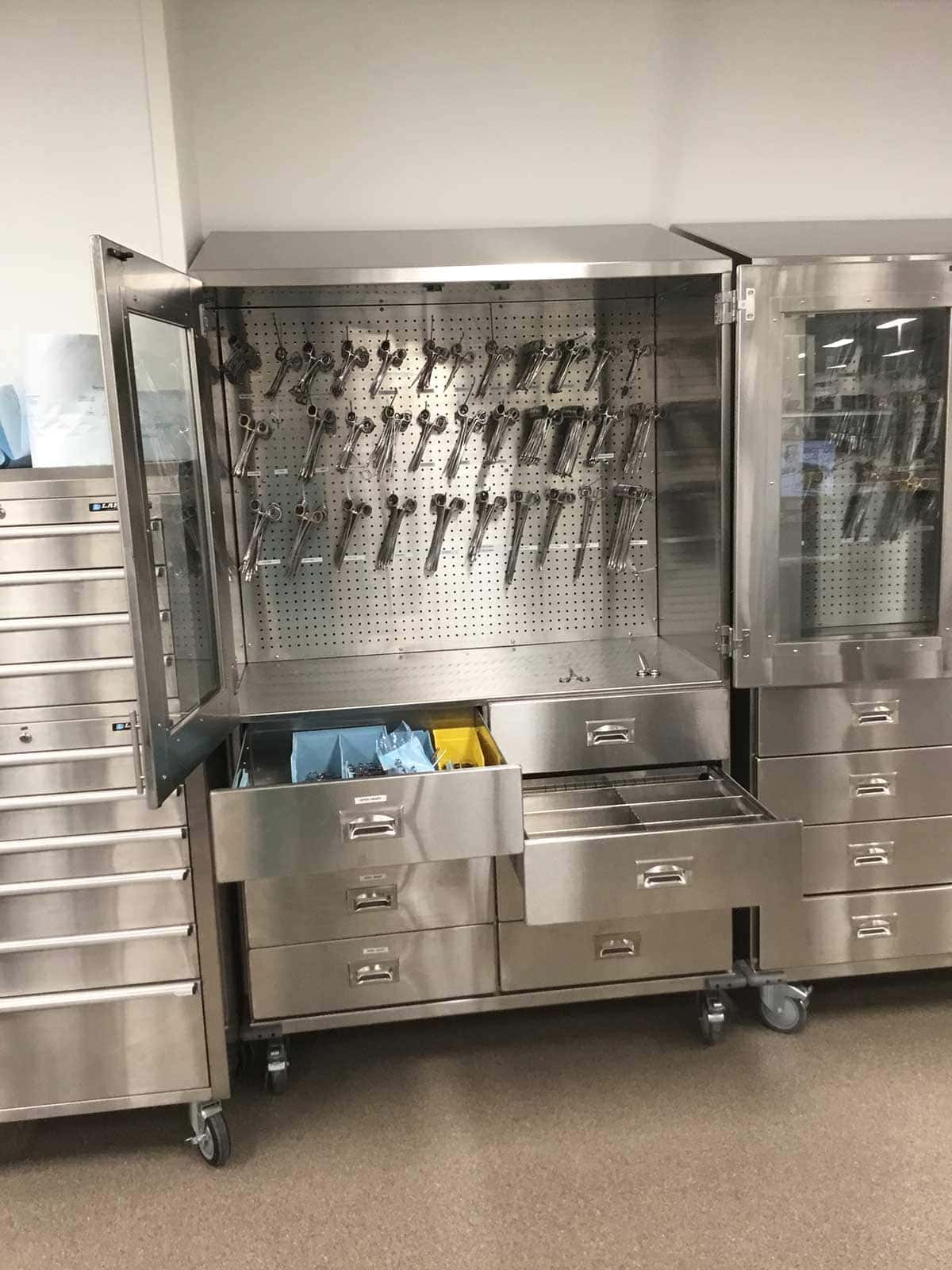
Point-of-use storage positions supplies at the department, unit, or bedside level for immediate access. Standardized systems such as "nurse servers" dramatically enhance nursing efficiency by reducing unnecessary movement.
Implementation of point-of-use systems showed nursing time reductions: Respiratory Medicine (27.71%), Acute Stroke Nursing Care (26.16%), and Orthopedics (12.42%).
Consignment shifts ownership to suppliers until consumption. Benefits include zero inventory investment and reduced obsolescence risk. Facilities using RFID for consignment tracking achieved a 65% reduction in consigned inventory while maintaining availability.
AS/RS uses robotics and software to store and retrieve products without manual handling. Key capabilities include space density (50-85% floor space reduction), 99.9%+ accuracy, full traceability, and controlled access.
Automated supply cabinets leveraging AI and IoT sensors maintain inventory accuracy rates of 99% or higher. Automation eliminated nurse time on stock orders, reducing it from 2 hours 39 minutes to zero. Time spent on supplies organization was reduced by 86%.
Cold-chain storage maintains precise temperature ranges: refrigerators (2–8°C) for vaccines and biologics, freezers (-15 to -25°C) for plasma, ultra-low freezers (-60 to -86°C) for mRNA vaccines, and cold rooms for bulk storage. Each requires continuous monitoring, backup power, and alarm systems.
Not all products deserve equal storage attention. Matching strategy to item characteristics optimizes space, labor, and capital.
ABC analysis classifies items by consumption value; VED classifies them by clinical criticality. High-value vital items (AV) need secure, climate-controlled storage with daily monitoring. Low-value desirable items (CN) use bulk storage with lean replenishment and monthly review. Effective inventory control strategies are essential for high-priority categories.
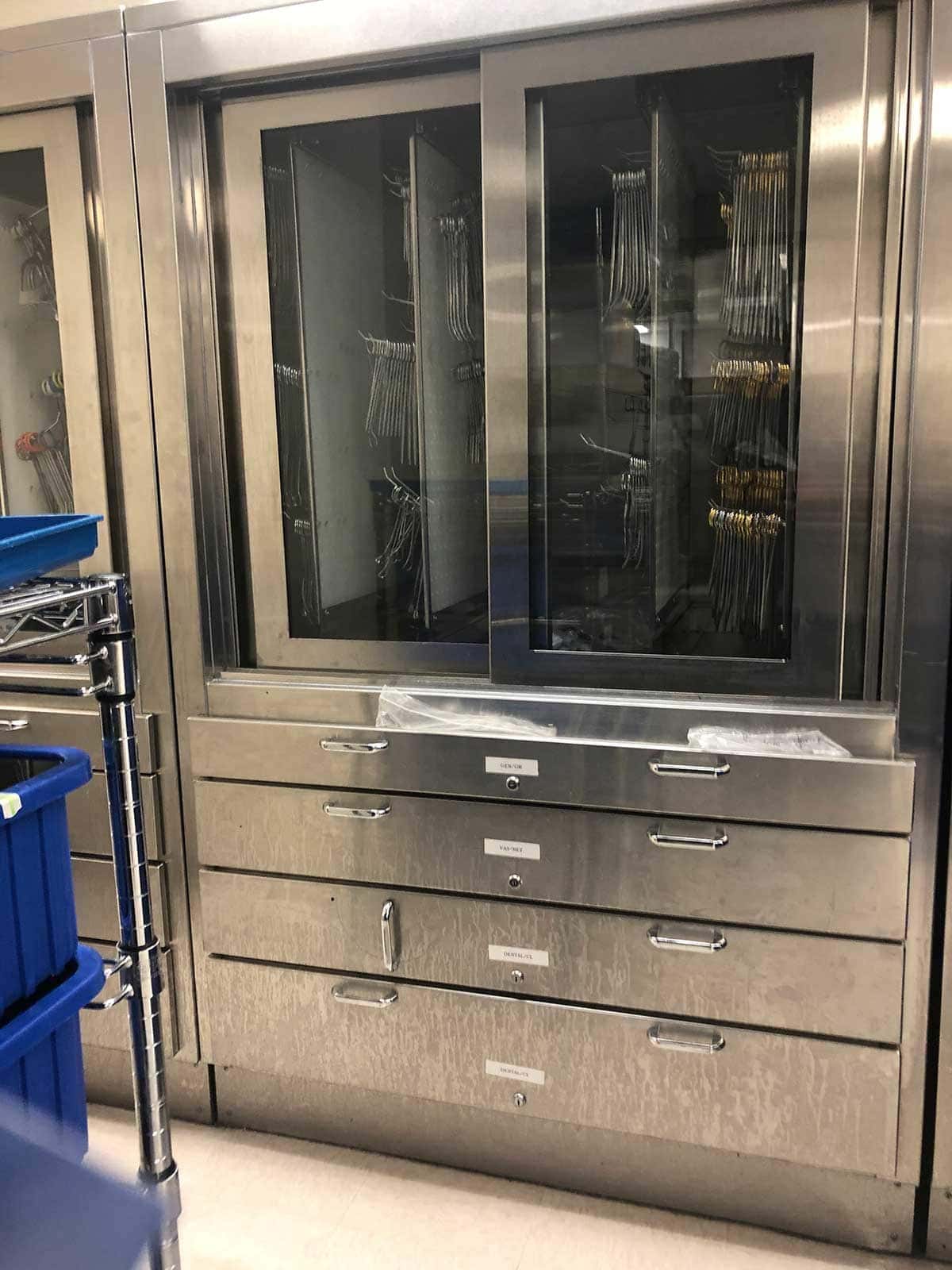
Strategies include bulk central storage, two-bin systems at point-of-use, lean replenishment, and space-efficient shelving. Modular casework utilizes reconfigurable systems and vertical storage to maximize square footage. High-density mobile shelving further maximizes floor space in central supply areas, labs, and pharmacies.
Technology transforms storage from a physical constraint into a data-driven advantage.
Barcodes and RFID enable automated tracking at receiving, put-away, picking, issue, and returns. Benefits include instant lot location for recalls, automated expiry management, and usage pattern visibility. RFID provides visibility from manufacturer to point of care, replacing manual counts with scientifically derived par levels, described as providing "X-ray vision" into supply levels.
Effective medical inventory management requires systems with location management, reorder rules, FEFO/lot control, handheld support, EHR/ERP integration, and analytics capabilities.
Use cases include demand forecasting, safety stock optimization, space utilization analytics, and cold-chain anomaly detection. AI-driven wireless weight-based bins automatically monitor consumption and trigger reorders. Materials management labor costs reduced by 9% through AI-driven automation.
Quality and compliance are foundational to safe storage. Proper storage system design healthcare facilities implement must address these requirements from the outset.
Core requirements include segregation of quarantined products, cleanliness protocols, pest control, security for controlled substances, comprehensive documentation, FEFO enforcement, proper handling of returns, and trained personnel.
The workflow requires detecting excursions, isolating affected stock, evaluating impact using stability data, documenting decisions, communicating to stakeholders, conducting root cause analysis, and regulatory reporting where required.
Storage solutions must fit the setting. A 500-bed hospital has different constraints than a rural clinic.
Practical moves include standard bin layouts, kanban systems, high-runner zoning, automated cabinets, and nurse involvement in layout design.
Reorganization of internal storage resulted in a 55% to 66% reduction in time spent collecting and storing materials. One case study documented 4,819 hours saved annually that were reallocated to patient care. Mobile storage units provide essential point-of-care access, improving nursing workflow. Effective materials management at each tier is essential for success.
Small-space strategies include vertical storage, strict formularies, frequent replenishment, consolidated suppliers, and shared regional storage for slow-movers.
Storage optimization follows a structured approach: map current state, design improvements, implement changes, and continuously refine.
Activities include facility walk-throughs, process mapping, stock location inventory, volume data collection, pain point documentation, technology assessment, and baseline benchmarking.
Segment by critical vs. non-critical, high vs. low value, fast vs. slow-moving, ambient vs. cold chain, and controlled vs. standard. Define storage location strategy for each segment.
Establish service level targets (99.5% for critical items), safety stock limits, inventory turn targets, expiry thresholds (<1%), and compliance requirements.
Identify candidate nodes, define roles, allocate items, model scenarios, assess risk, and select the optimal hybrid model combining central, regional, on-site, consignment, and 3PL storage.
Start with pilots, update SOPs, train staff, communicate broadly, plan cutover carefully, monitor intensively during transition, and celebrate early wins.
Review weekly (exceptions), monthly (KPI dashboard), quarterly (strategy), and annually (network redesign). Conduct root cause analysis and small improvement cycles.
What gets measured gets managed. The right KPIs connect storage decisions to availability, cost, and patient outcomes.
Key metrics include stockout rate (<2% overall), fill rate (≥98% standard), order lead time (<24 hours internal), and emergency order frequency (<5% of total). Benchmark targets from optimized facilities: stockout reduction of approximately 32%, emergency order reduction of approximately 42%.
Track inventory turnover (8-12 turns for consumables), days of inventory on hand (30-45 days facility level), expiry/waste rate (<1%), storage cost per m², and labor cost per line picked.
Nurse satisfaction with the supply system increased from 53% to 90% after implementation of an automated system that eliminated logistic tasks, demonstrating the link between storage optimization and workforce outcomes affecting patient care.
Storage-to-outcome linkages include reduced medication stockouts leading to fewer treatment delays, improved blood product storage yielding lower discard rates, and standardized crash cart organization enabling faster retrieval during codes.
Healthcare can't afford JIT failures. Supply shocks, transport delays, and pandemic surges require strategic buffer stock, dual sourcing, and emergency reserves.
Common failures include duplicate item codes, missing attributes, incorrect units of measure, and unlabeled bins. Corrective actions: master data cleanup, labeling standards, regular audits, and system integration.
Storage designed without clinician input creates workarounds. Design rules: co-design with nurses, minimize steps, use visual management, standardize across units, and ensure ergonomic placement.
Expert insight confirms optimization is a "multiyear, strategic journey", the $80 million savings projection required a three-to-five-year transformation.
Typical mistakes include using domestic refrigerators, no continuous monitoring, and inadequate backup plans. Solutions: pharmaceutical-grade equipment, continuous digital monitoring, and documentation rigor.
Fix data and visibility first. Stabilize cold chain. Redesign high-impact nodes. Standardize before automating. Align policies across facilities. Invest in workforce capability. Build governance for sustainability.
Quick wins include standardizing bin labels, implementing FEFO enforcement, deploying basic temperature monitoring, reorganizing high-runner locations, conducting 5S events, and establishing par level reviews.
Storage optimization delivers measurable results, but knowing where to start requires expertise. Contact DSI Direct to discuss how data-driven storage solutions can transform your facility's supply chain performance.

With 21 years of sales management, marketing, P&L responsibility, business development, national account, and channel management responsibilities under his belt, Ian has established himself as a high achiever across multiple business functions. Ian was part of a small team who started a new business unit for Stanley Black & Decker in Asia from Y10’ to Y14’. He lived in Shanghai, China for two years, then continued to commercialize and scale the business throughout the Asia Pacific and Middle East regions for another two years (4 years of International experience). Ian played college football at the University of Colorado from 96’ to 00’. His core skills sets include; drive, strong work ethic, team player, a builder mentality with high energy, motivator with the passion, purpose, and a track record to prove it.