Key Takeaways
The transition to modular, cart-based robotic surgery systems is fundamentally reshaping operating room infrastructure requirements. Next-gen robotic surgery platforms demand advanced storage solutions that accommodate multiple mobile components, protect high-value instruments, and integrate digital tracking systems.
With initial investments exceeding $2 million and potential costs of $2,000 per minute for delayed cases, proper storage infrastructure is critical for operational and financial success. This guide examines how healthcare facilities can implement future-proof storage systems that support robotic surgery innovation while maximizing efficiency, ensuring regulatory compliance, and delivering measurable ROI.
From smart tracking technologies to automated retrieval systems, understanding emerging trends in the future of robotic surgery storage enables administrators to make strategic infrastructure decisions.
Next-gen robotic surgery represents a fundamental shift from large, fixed platforms to modular, cart-based systems that demand entirely new storage infrastructure. These advanced storage solutions must accommodate multiple mobile components while protecting high-value instruments and managing unprecedented data volumes.
Next-generation robotic systems—including Medtronic's Hugo, CMR Surgical's Versius, and Ronovo Surgical's Carina—feature modular designs that prioritize flexibility over the fixed-base platforms of previous generations. These cart-based systems allow for customizable OR configurations and reduced footprint requirements.
The initial investment for a Robotic-Assisted Surgery (RAS) system ranges between $2.0 and $2.5 million, with annual maintenance costs exceeding $100,000. This substantial capital outlay makes proper storage critical for protecting equipment longevity and maximizing ROI.
Robotic instruments combine high acquisition costs with limited use-life cycles, making reprocessing and sterile instrument storage critical operational factors. These instruments feature small moving parts and lumened structures that are highly susceptible to damage and incomplete reprocessing.
A delayed or canceled OR case due to unavailable or contaminated instruments can cost facilities upwards of $2,000 per minute. This financial reality drives the demand for future-proof storage systems that ensure instrument availability while maintaining sterilization standards.
The shift to modular robots requires transitioning from static storage for single large consoles to dynamic, mobile storage solutions for multiple smaller components—carts, arms, and vision systems. Medical supply storage must now be decentralized and mobile, with dedicated, secure carts for each component that can be easily docked, charged, and stored outside the sterile field.
Robotic surgery innovation also generates massive surgical data volumes requiring robust storage platforms. These systems—often cloud-based or integrated into hospital IT infrastructure—must securely manage surgical video, performance metrics, and AI model data alongside physical instrument storage.
Healthcare facilities must address complex instrument logistics, ergonomic design requirements, and infrastructure scalability to support the future of robotic surgery storage. Preparation requires integrating physical medical supply storage with data management systems while maintaining regulatory compliance.
The primary challenge in preparing ORs for next-gen robotic surgery is integrating complex instrument reprocessing logistics with data management into efficient workflows. This requires coordinating sterile instrument storage, tracking systems, and digital infrastructure simultaneously.
Failure to follow manufacturer Instructions for Use (IFUs) leads to instrument contamination, functional impairment, and costly surgical delays or cancellations. Strict IFU adherence is essential for maintaining both patient safety and operational efficiency in advanced storage solutions.
High-density, modular storage systems with ergonomic design reduce supply retrieval time by 25% through optimized layouts that minimize staff movement. These future-proof storage systems bring instruments to staff rather than requiring extensive searching and walking.
Modular robotic platforms demand flexible ergonomic design for storage systems that accommodate varying OR configurations. Adjustable cart distances and positioning optimize surgical field access while accommodating different patient positions and procedural requirements.
AORN recommends a minimum of 900 sq ft for robotic ORs, but future-proof storage systems require flexible space planning for multiple mobile carts beyond the main console. Dedicated, accessible storage areas must accommodate the decentralized nature of modular robotic components.
OR infrastructure must support massive data output from next-gen robotic surgery platforms. Secure, high-capacity storage for surgical video, performance metrics, and AI model data requires cloud-based or IT-integrated solutions alongside physical instrument storage.
Advanced storage solutions for next-gen robotic surgery combine high-density capacity, strict environmental controls, and customizable organization systems. These features maximize space efficiency while maintaining sterility and protecting high-value instruments.
High-density, vertical storage systems increase storage capacity by over 60%, maximizing limited OR and sterile processing space. These future-proof storage systems utilize vertical space that traditional shelving leaves unused.
Automated vertical carousels and high-density shelving eliminate walking and searching time by bringing required items directly to staff. This ergonomic design for storage systems reduces physical strain and accelerates instrument retrieval workflows.
Sterile instrument storage requires strict environmental controls: temperature between 18°C to 23°C and relative humidity between 30% and 60%. These parameters preserve sterile packaging integrity and prevent microbial growth on sensitive robotic instruments.
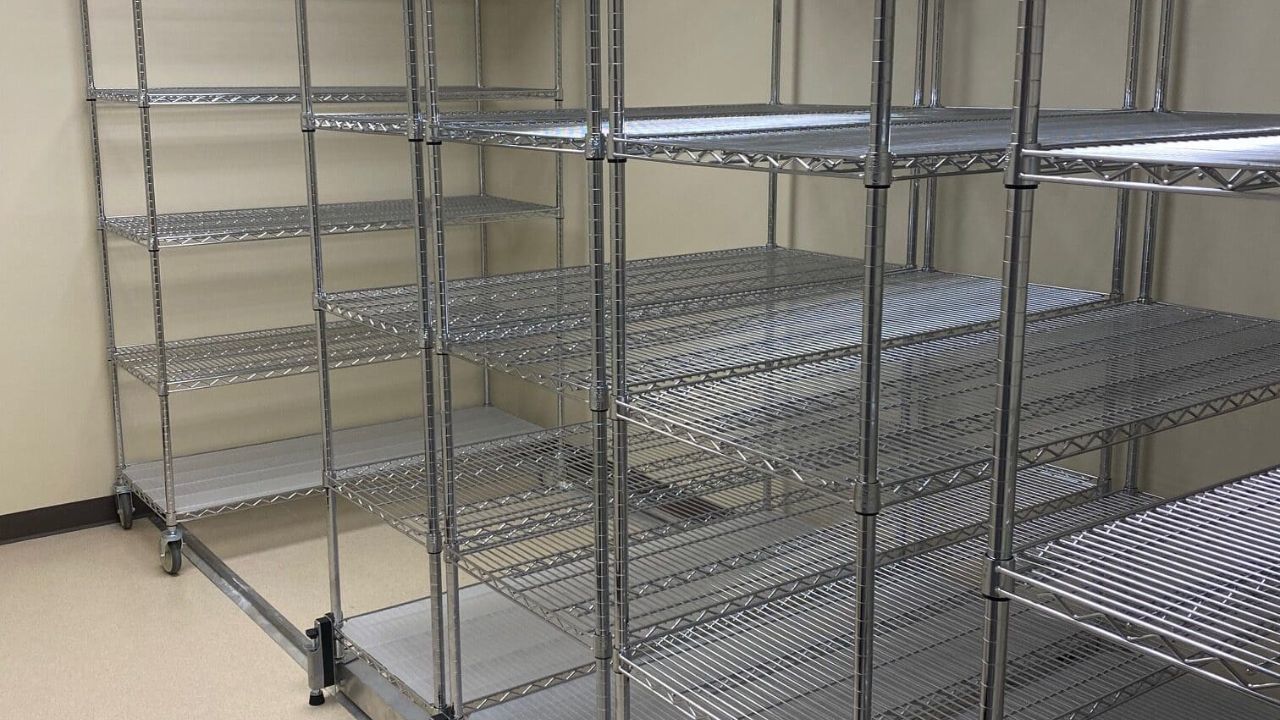
Storage shelving must be positioned at least 8 inches above the floor with solid bottom shelves to protect items from environmental cleaning and flooding. Shelving surfaces must be smooth and clean to prevent snagging or tearing sterile packaging, maintaining the sterile barrier for medical supply storage.
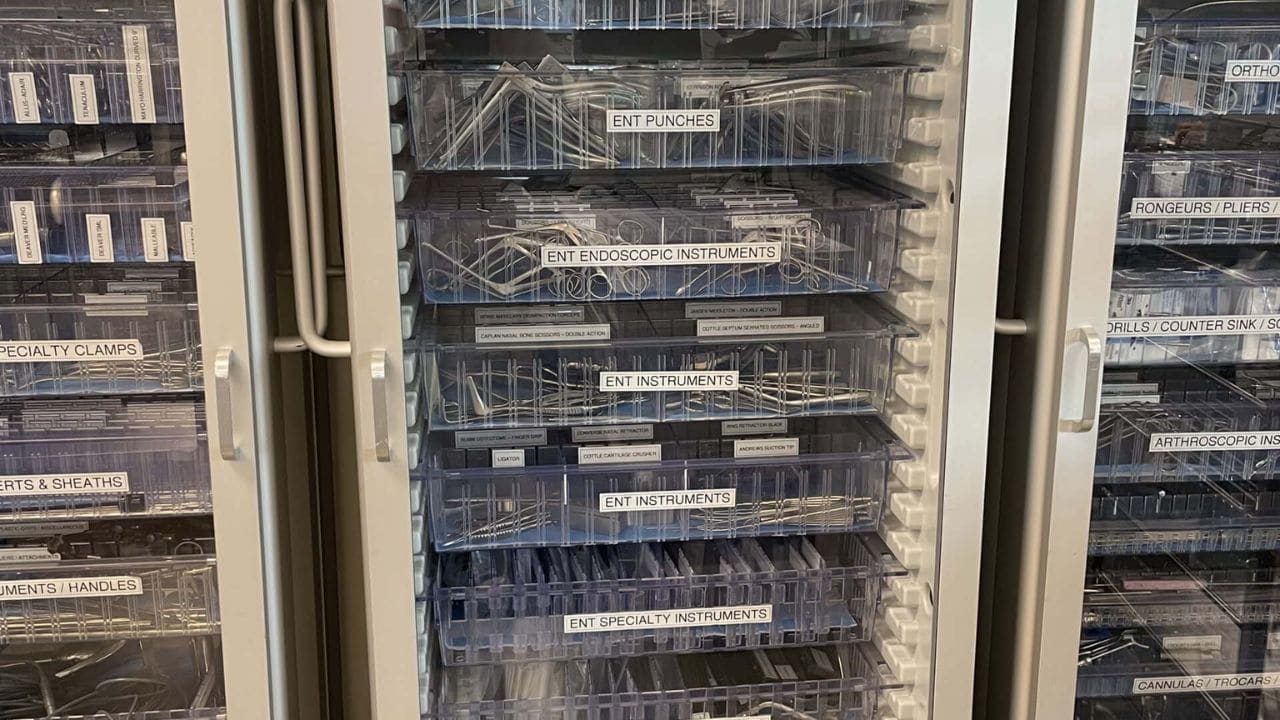
Color-coding systems can be implemented hospital-wide, with each color corresponding to specific surgical services—such as green for General Surgery or blue for Urology/Robotics. This visual organization system accelerates instrument identification and reduces selection errors in future of robotic surgery storage.
Enclosed, secure storage solutions like LogiCell carts protect delicate robotic instruments from damage and contamination during transport and storage. These advanced storage solutions provide dedicated protection for high-value, sensitive instruments throughout the reprocessing cycle.
Advanced storage solutions ensure regulatory compliance through strict adherence to manufacturer guidelines, environmental controls, and standardized workflows. These systems balance accessibility with sterility requirements while protecting instruments from contamination and damage.
Strict adherence to manufacturer's Instructions for Use (IFU) serves as the primary standard for patient safety, regulatory compliance, and asset longevity in sterile instrument storage. IFU compliance is non-negotiable for maintaining certification and preventing adverse events.
Modern sterilization technology accelerates workflows while maintaining safety standards. V-PRO™ maX 2 Low Temperature Sterilizer reduces sterilization time for two da Vinci endoscopes to 28 minutes compared to 60 minutes with other systems, improving instrument availability without compromising sterility.
Regulatory compliance drives the selection of advanced storage solutions that protect instruments from physical damage and environmental contamination. Future-proof storage systems must meet or exceed standards set by regulatory bodies and equipment manufacturers.
Specialized, protective transport cases are essential for robotic arms and instruments moving between the OR and Sterile Processing Department. These dedicated containers prevent damage during transport and final storage, ensuring instruments remain functional and sterile for next-gen robotic surgery.
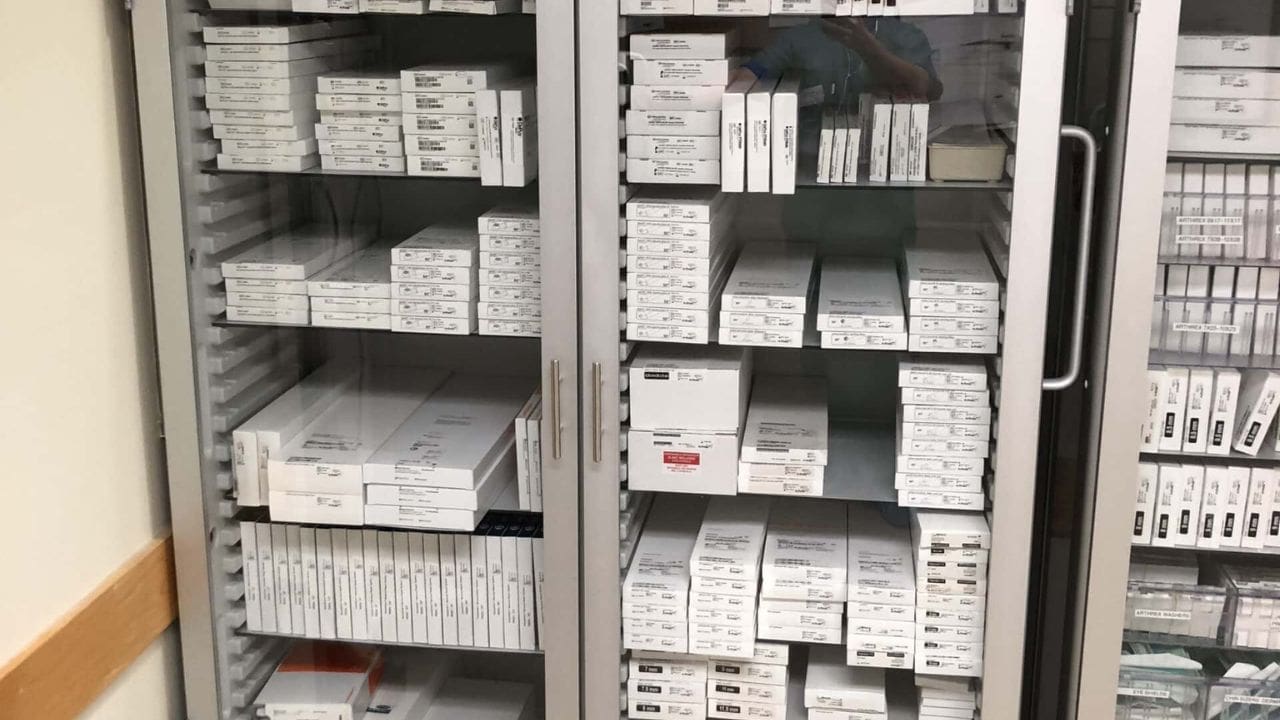
Instruments must be stored flat without folding the sterile barrier to prevent packaging damage and maintain sterility. Proper storage positioning in medical supply storage areas protects both the instruments and their sterile packaging integrity.
The interdisciplinary team should standardize robotic equipment placement and instrument table setup per AORN recommendations. This standardization in future of robotic surgery storage reduces flow disruptions and optimizes surgical team workflow through consistent, ergonomic design for storage systems.
Investing in future-proof storage systems delivers substantial cost savings through labor reduction, error prevention, and optimized instrument lifecycles. Advanced storage solutions provide measurable ROI through improved efficiency and reduced waste in next-gen robotic surgery programs.
Automated washing and disinfection systems provide direct labor savings of 66 minutes per set of four instruments, with overall time savings of 142 minutes in the robotic instrument reprocessing workflow. These efficiencies compound across high-volume robotic surgery programs.
Hospitals can incur up to $425,000 in annual costs for unnecessary instrument purchases when unreliable manual reprocessing requires a 50% increase in instrument inventory. Future-proof storage systems with integrated automation eliminate this costly redundancy in medical supply storage.
Validated automated cleaning cycles achieve a 25% reduction in manual cleaning steps for commonly used robotic instruments. This reduction in labor-intensive processes allows sterile processing staff to focus on quality control rather than repetitive manual tasks.
Virginia Mason Medical Center reduced its sterile processing error rate from 3% to 1.5% over 37 months using quality improvement tactics including color-coding and mistake-proofing. These advanced storage solutions demonstrate that quality improvements and cost reductions are achievable simultaneously.
Implementation of a "motor-racing pit-stop model" for robotic surgery turnover reduced average total OR turnover time from 99.2 minutes to 53.2 minutes—a 46.4% reduction. This efficiency gain translates directly to increased case volume and revenue generation in the future of robotic surgery storage.
Automated reprocessing systems ensure instruments reach maximum use-life, maximizing ROI by preventing premature disposal of expensive robotic instruments. This lifecycle optimization protects the substantial investment in next-gen robotic surgery equipment while maintaining sterile instrument storage standards.
Emerging trends in robotic surgery innovation focus on smart tracking technologies, automated retrieval systems, and scalable designs that adapt to evolving surgical needs. These advanced storage solutions integrate IoT capabilities and sustainability principles to support the future of robotic surgery storage.
Barcode-based systems for instrument life-cycle management significantly increase accuracy of use documentation while decreasing untraceable sterilization records. These smart tracking systems provide real-time visibility into instrument location, use count, and sterilization status throughout medical supply storage facilities.
Automated instrument tracking and management solutions utilizing visual cues like color-coding reduce tray assembly time by over 50%. This integration of digital tracking with ergonomic design for storage systems accelerates workflows while minimizing human error in next-gen robotic surgery environments.
Sengkang General Hospital in Singapore implemented an Automated Storage and Retrieval System (ASRS) utilizing robots and conveyor belts to store, retrieve, and transport surgical instruments. This system functions as a nerve center for instrument logistics, demonstrating full automation potential in future-proof storage systems.
Next-gen robots operate as data-driven platforms requiring cloud-based or IT-integrated storage solutions for surgical video, performance metrics, and AI model data. This digital infrastructure integration transforms sterile instrument storage into a comprehensive data management ecosystem supporting robotic surgery innovation.
Surgical instrument tray optimization reduces setup times by as much as 35% in certain procedures by removing redundant instruments. This lean approach to medical supply storage minimizes waste while improving efficiency and sustainability in the future of robotic surgery storage.
Initial clinical experiences with modular robotic platforms like Versius and Carina systems demonstrate operational benefits of cart-based storage design. These scalable advanced storage solutions facilitate easier integration into existing surgical environments, supporting phased adoption of next-gen robotic surgery technology.
Healthcare administrators must evaluate scalability, customization options, and ergonomic design when selecting advanced storage solutions for robotic surgery programs. Strategic selection requires data-driven assessment of facility-specific needs and workflow optimization potential.
Continuously monitor key performance indicators including case volume, utilization, procedure times, complication rates, and OR turnover time for data-driven management of future-proof storage systems. These metrics reveal bottlenecks and guide expansion decisions for next-gen robotic surgery programs.
Utilize barcode or Radio Frequency Identification (RFID) technology to establish comprehensive, whole-life cycle management for robotic instruments. This technology ensures accurate tracking of instrument use, reprocessing, and remaining life across medical supply storage operations, supporting scalable growth.
Hospitals have adopted comprehensive color-coding systems to manage case carts and instrument sets across entire surgical departments, organizing by service line to improve management and tracking. This customization in sterile instrument storage aligns with specific procedural needs and surgical specialties.
Integration of color-coded tags on instrument trays with barcode or RFID tracking systems automates tray assembly, verifies contents, and ensures correct instruments are present for each case. This dual-layer approach to advanced storage solutions combines visual management with digital verification for the future of robotic surgery storage.
Room ready time—from patient exit to surgical technician readiness—was reduced from 42.2 minutes to 27.2 minutes through formalized instrument logistics using the pit-stop model. This dramatic improvement demonstrates how ergonomic design for storage systems directly impacts OR efficiency in robotic surgery innovation.
Errors were detected 1.9 seconds faster in color-coded compartmentalized trays (11.1 seconds) compared to conventional trays (13.0 seconds). This measurable improvement in error detection speed proves that ergonomic design principles in future-proof storage systems enhance both safety and efficiency in next-gen robotic surgery environments.
Distribution Systems International specializes in advanced storage solutions designed for the evolving demands of next-gen robotic surgery programs. Our team understands the complex requirements of modular robotic platforms, from environmental controls for sterile instrument storage to scalable designs that accommodate expanding surgical capabilities.
We deliver future-proof storage systems that integrate seamlessly with your existing infrastructure while supporting the latest robotic surgery innovation. Whether you're implementing your first robotic program or expanding current capabilities, DSI provides customized medical supply storage solutions that optimize workflow, ensure regulatory compliance, and maximize ROI.
Contact Distribution Systems International today to discover how our ergonomic design expertise can transform your robotic surgery storage infrastructure and position your facility for long-term success.

With 21 years of sales management, marketing, P&L responsibility, business development, national account, and channel management responsibilities under his belt, Ian has established himself as a high achiever across multiple business functions. Ian was part of a small team who started a new business unit for Stanley Black & Decker in Asia from Y10’ to Y14’. He lived in Shanghai, China for two years, then continued to commercialize and scale the business throughout the Asia Pacific and Middle East regions for another two years (4 years of International experience). Ian played college football at the University of Colorado from 96’ to 00’. His core skills sets include; drive, strong work ethic, team player, a builder mentality with high energy, motivator with the passion, purpose, and a track record to prove it.