Key Takeaways
Your shelving looks fine. It has looked fine for months. Then a shelf cracks under load, or flaking material lands in a sterile zone, or an environmental sample flags bacterial contamination at a surface you cleaned yesterday. These failures are not random. They follow predictable patterns driven by the chemicals your facility uses every day.
Chemical resistance measures a material's ability to maintain structural and surface integrity when exposed to a specific chemical under defined conditions. It is not binary. Performance depends on the chemical, concentration, temperature, duration, and number of exposures. A material rated "resistant" under one set of conditions may fail under another. Generic resistance claims miss this entirely.
| Term | What It Means | What It Predicts | What It Doesn't Predict | Example in Shelving |
| Chemical resistance | Demonstrated ability to withstand a specific chemical without property loss under defined test conditions | Performance at matched concentration and exposure time | Performance at higher concentrations, longer dwell, or under combined mechanical stress | A polymer rated "resistant" to 3% H₂O₂ may still crack when stress-loaded and exposed repeatedly |
| Chemical compatibility | Broader assessment of whether a material and chemical can coexist without adverse reaction under real-world conditions | General suitability for routine pairing | Long-term durability under cumulative or accelerated conditions | Stainless steel is "compatible" with peracetic acid, but compatibility doesn't account for chloride contamination in rinse water |
| Cleanability | How effectively a surface returns to hygienic state after soiling and disinfection | Ease of bacterial removal under standard protocol | Chemical durability or coating survival | A smooth polymer shelf scores high on cleanability but may still soften under repeated alkaline detergent exposure |
| Non-porous | Surface does not absorb or trap liquids or microorganisms at the macro level | Resistance to microbial harboring in new condition | Resistance after surface degradation introduces micro-cracks or pitting | New polycarbonate is non-porous, but after ESC develops, micro-fractures create harbor sites |
Every medical supply storage system faces this same set of variables, regardless of material type.
Environmental stress cracking (ESC) is a slow, often invisible failure that occurs when stress + chemical exposure + time overlap. Even normal loads can create enough stress. Chemicals weaken the material at stress points, cracks grow over many cycles, and then failure happens suddenly—after damage has been accumulating the whole time.
Testing shows the effect clearly: traditional polycarbonate reached 0% impact retention after 24 hours in a QAC disinfectant (“all broke on jig”), while Tritan copolyesters retained roughly 65–75%. The key variable isn’t the chemical—it’s ESC susceptibility.
SPD shelving is routinely exposed to five chemical categories, and residues often remain between cleanings—so exposure is effectively continuous:
Most EPA-registered hospital disinfectants require ~10 minutes wet contact time, so shelving sees full-strength exposure for at least 10 minutes per cycle.
Cumulative chemical stress builds with each cleaning cycle, even at proper dilution. A single cycle at correct concentration causes zero measurable damage. One thousand cleaning cycles produce structural and surface degradation that single-exposure testing never captures. Each cycle deposits trace residue that remains chemically active on the surface indefinitely.
SPD sterile storage in high-traffic areas is cleaned 2–4 times per day. At that rate, shelving reaches 1,000 cleaning cycles within the first year.
| Cleanings Per Day | Days to 1,000 Cycles | Months (Approx.) | Typical Environment |
| 1 | 1,000 | 33 | Low-traffic storage |
| 2 | 500 | 16.5 | Standard sterile storage |
| 3 | 333 | 11 | Active SPD sterile storage |
| 5 | 200 | 6.5 | High-traffic SPD, heightened protocol |
| 10 | 100 | 3.3 | High-acuity unit, outbreak-level frequency |
Why "Wipe and Air-Dry" Is Longer Exposure Than It Appears. Dwell time runs from chemical contact until removal or neutralization, not until the surface visibly dries. For once-daily cleaning, effective contact can exceed 20 hours per cycle.
Each exposure variable compounds the others. Most facilities control none of them intentionally.
| Variable | What Higher Values Do | Typical Real-World Mistake | What to Control | Quick Mitigation |
| Concentration | Increases rate of surface attack, coating softening, and ESC | Dispensing undiluted or over-concentrated solution | Mandate dilution ratios per product label | Install dilution-control dispensers |
| pH | Strongly alkaline (>11) or acidic (<3) attacks coatings, passivation layers, and polymer chains | Using full-strength alkaline degreaser without rinsing | Match pH to material compatibility data | Add neutral rinse step after alkaline cleaning |
| Dwell time | Allows deeper chemical penetration and greater crack propagation | Applying disinfectant and forgetting to wipe or rinse | Set dwell timers | Wipe or rinse at end of contact window |
| Frequency | Compounds all other variables | Adding extra cleaning cycles during outbreaks without adjusting chemistry | Balance frequency with material durability data | Use least aggressive chemistry that achieves required outcome |
Why Abrasion Makes Chemical Attack Worse. Scrubbing and wiping create micro-scratches that increase the effective surface area exposed to disinfectant. On coated metals, scratches break the protective barrier. On polymers, scratches create stress concentration points where ESC initiates. Abrasion plus chemical exposure plus mechanical load is the accelerated-failure triad.
Each material category has a predictable failure sequence. Long-term durability requires matching material to the specific chemical environment of your department.
| Polymer Family | Vulnerable Chemistries | Early Signs | Late-Stage Failure | Notes |
| Polycarbonate (PC) | QACs, alkaline cleaners, solvents | Surface hazing, micro-crazing at stressed edges | Complete fracture under load (ESC) | 0% impact energy retention after 24h QAC exposure |
| Polypropylene (PP) | Oxidizers, alkaline at elevated temperature | Whitening, surface roughening | Brittleness and strength loss after ~100 autoclave cycles | Max continuous service temp only 82–130°C. Unsuitable for high-cycle zones |
| Polysulfone (PSU) | Oxidizing disinfectants, repeated steam | Yellowing, gradual softening | ~50% tensile strength loss after 1,000 cycles | Functionally compromised for structural use |
| Tritan copolyester | Minimal vulnerability to standard hospital disinfectant spectrum | Slight surface dulling over extended cycles | Retains structural integrity through 1,000+ cycles | Superior ESC resistance. Preferred for high-frequency cleaning zones |
Coating Failure; Key Points. Standard epoxy coatings have a glass transition temperature (Tg) of 50–150°C. Above Tg, the coating softens, loses hardness, and chemical resistance drops simultaneously. Epoxy-coated shelving in high-stress SPD environments has a documented lifespan of 3–5 years. Undercutting is the most common hidden failure: a chip exposes bare metal, and corrosion spreads laterally beneath intact coating, invisible until advanced. One documented case showed chips at 6 months, rust at 12, bacterial contamination at 15, and emergency replacement at 18 months, $175,000 total loss.
Stainless Steel Under Chlorine and Chlorides; Red Flags. Pitting is localized dissolution of the passive oxide layer. SS 304 becomes only marginally satisfactory when chloride concentration reaches 200–1,000 ppm, a range easily achieved with standard bleach. Crevice corrosion develops at joints where chloride-rich solution is trapped in tight gaps and the passive layer cannot reform. Discoloration after air-drying is a missed warning sign: chloride residue concentrates as water evaporates, creating a high-concentration contact event at the end of every cycle.
Five symptoms appear before structural failure. All are detectable during routine cleaning. Catching these early determines whether the problem is a protocol adjustment or a replacement decision.
| Symptom | Likely Mechanism | Common Chemical Triggers | Confirmation Check | Immediate Action |
| Whitening | Filler particle release from degrading polymer or coating | Alkaline cleaners, oxidizers at elevated temp | Wipe with clean cloth, if white residue transfers, degradation is active | Switch to neutral-pH cleaner. Assess replacement timeline |
| Hazing | Surface micro-crazing or chemical etching | QACs, solvents, repeated alkaline exposure | View at 45° angle under strong light to confirm crack network | Reduce dwell time. Add rinse step |
| Gloss loss | Surface erosion removing polished layer | Abrasive pads, repeated alkaline scrubbing | Compare to unexposed section of same material | Switch to non-abrasive wipes |
Two additional symptoms to watch for: tackiness (surface sticky after drying, indicates softening) and residue transfer (chemical transfers to a clean cloth, indicates surface chemistry has changed). Both signal degradation is underway.
Three failure patterns account for the majority of shelving losses in SPD environments. Understanding the mechanism determines whether the root cause is material, chemistry, or protocol.
Cracking That Appears "Sudden." ESC damage accumulates invisibly at stress points, loaded shelf spans, corners, holes, for hundreds of cycles. Final fracture is fast once the crack reaches critical length. Failure concentrates where mechanical stress and chemical exposure overlap: front lip, corners, bolt holes.
Sagging and Creep. Polypropylene's coefficient of thermal expansion (CTE) is 100–180 × 10⁻⁶ /°C, 6 to 11 times greater than stainless steel (SS 304: 17.3; SS 316: 16.0). This extreme differential causes progressive dimensional mismatch during thermal cycling. Combined with chemical softening from repeated detergent and disinfectant exposure, shelving creeps under load over hundreds of cycles.
Coating Breakdown, Where It Starts and How It Spreads.
Shelf wear does not distribute evenly. Mechanical stress, chemical exposure, and abrasion concentrate at specific locations on every shelf unit. These zones fail first, every time.
First-Failure Zones to Inspect:
Where Damage Concentrates. Pooling occurs under mats or liners, inside raised lips, around vertical posts, and on any textured surface; each creating a localized high-concentration zone. Front edges take the worst of it: staff grab them when retrieving items, bins drag across them, and front-to-back wipe direction delivers maximum chemical load and abrasion at the starting edge.
Active ingredient, pH, co-ingredients, and polymer type determine whether a cleaning program accelerates failure or maintains it.
| Active Family | Typical pH Range | Common Co-Ingredients (Risk) | Plastics Most at Risk | Practical Caution |
| QACs | 6.5–8.5 | Surfactants, glycol ethers, solvents | Polycarbonate (catastrophic ESC), polysulfone | PC is incompatible with any QAC-cleaned zone. Confirm Tritan or equivalent before specifying polymer |
| Bleach / hypochlorite | 8.5–12.0 | Sodium hydroxide (concentrated form) | Polycarbonate, polypropylene at higher concentrations | Limit dwell. Rinse promptly at 500–5,000 ppm working range. Avoid on PC |
| H₂O₂ / AHP | 3.0–5.0 | Peracids, surfactants | Most polymers tolerate 3% well | Tritan retains 95 ± 3% impact energy after 24h at 3% H₂O₂. H₂O₂ affects stainless only above 10%, well above disinfectant use levels |
| Peracetic acid (PAA) | 2.0–4.0 | Acetic acid, H₂O₂ | Most polymers and stainless tolerate well | Tritan retains 97 ± 4% after 24h PAA exposure. SS 316 corrosion in PAA: < 0.1 mm/year |
High-pH Risk. pH above 11 dissolves stainless steel passivation and attacks ester-linkage polymers (polyesters, polycarbonates) through alkaline hydrolysis. Prolonged dwell, foaming residue trapped in seams, and heat all compound the damage.
Compatibility is not a single data point. It is the intersection of chemistry, application method, material, and frequency. Most facilities have never documented all four.
What to Document and Verify:
Supplier Proof Points to Request:
Protocol changes move faster than capital replacement.
Highest-Impact Changes (Lowest Disruption First):
| Situation | Risk If Unchanged | Best Lever | Example Fix |
| ESC signs on plastics | Sudden structural failure; sterile product contamination | Change chemistry | Switch from QAC to a non-ESC-inducing disinfectant. Confirm compatibility with current polymer |
| Coating flake on steel shelving | Flake contamination of sterile zones; accelerating corrosion | Plan shelving upgrade; reduce alkaline dwell short-term | Add rinse step now. Replace with bare SS or polymer on next cycle |
| Stainless pitting from chlorides | Progressive weakening; bacterial harbor at pit sites | Change chemistry + upgrade grade | Switch to non-chloride disinfectant where permitted. Upgrade to SS 316 if chloride exposure is unavoidable |
Patching buys time. It does not restore hygiene. The indicators below mark the line between maintenance and replacement.
Replace-Now Indicators:
The Threshold. Surfaces with mean roughness (Ra) greater than 0.8 µm cannot be reliably cleaned to hygienic standards. On degraded surfaces past this point, up to 90.3% of bacterial load can remain after standard cleaning. No cleaning protocol intensity will restore hygiene once a surface crosses this threshold.
Immediate Containment Steps:
Design determines how much chemical stays on the surface after cleaning. Sealed joints, smooth geometry, and low-profile edges reduce pooling, dwell, and infiltration. Textured finishes and overlapping seams do the opposite.
| Feature | Cleaning Ease | Chemical Trap Risk | Best Environments |
| Welded joints | High; continuous surface | Low; no seam for infiltration | High-chemical-exposure zones |
| Smooth finish | High; wipes release cleanly | Low | All environments |
| Sealed seams | High; no entry point | Low | High-chemical-exposure zones |
| Textured finish | Low; texture traps residue | High | Not recommended for chemical-contact zones |
| Overlapping seams | Low; overlap traps liquid | High | Avoid in chemical-contact zones |
In high-density storage systems, these design features become even more critical. Less open space means reduced airflow and more surface contact per cleaning cycle.
Accessories That Help. Removable liners protect shelf surfaces from direct chemical contact. Edge guards cover the highest-wear front lip. Drip trays under shelves near autoclaves prevent runoff from contacting lower tiers. Note: mats or liners left in place during cleaning trap moisture and accelerate the very degradation they are meant to prevent.
At 2–4 cleanings per day, most shelving hits 1,000 cycles within the first year—so treat compatibility as an immediate operational priority.
Before you reach that threshold:
Whether you’re specifying new shelving or designing a custom storage system for your department, let compatibility data—not cost—drive the decision.
Buying checklist for high-cleaning zones:
Your shelving contacts cleaning chemicals daily—compatibility determines whether you replace in 3 years or 15. Contact our team to request a chemical-compatibility review for your facility.
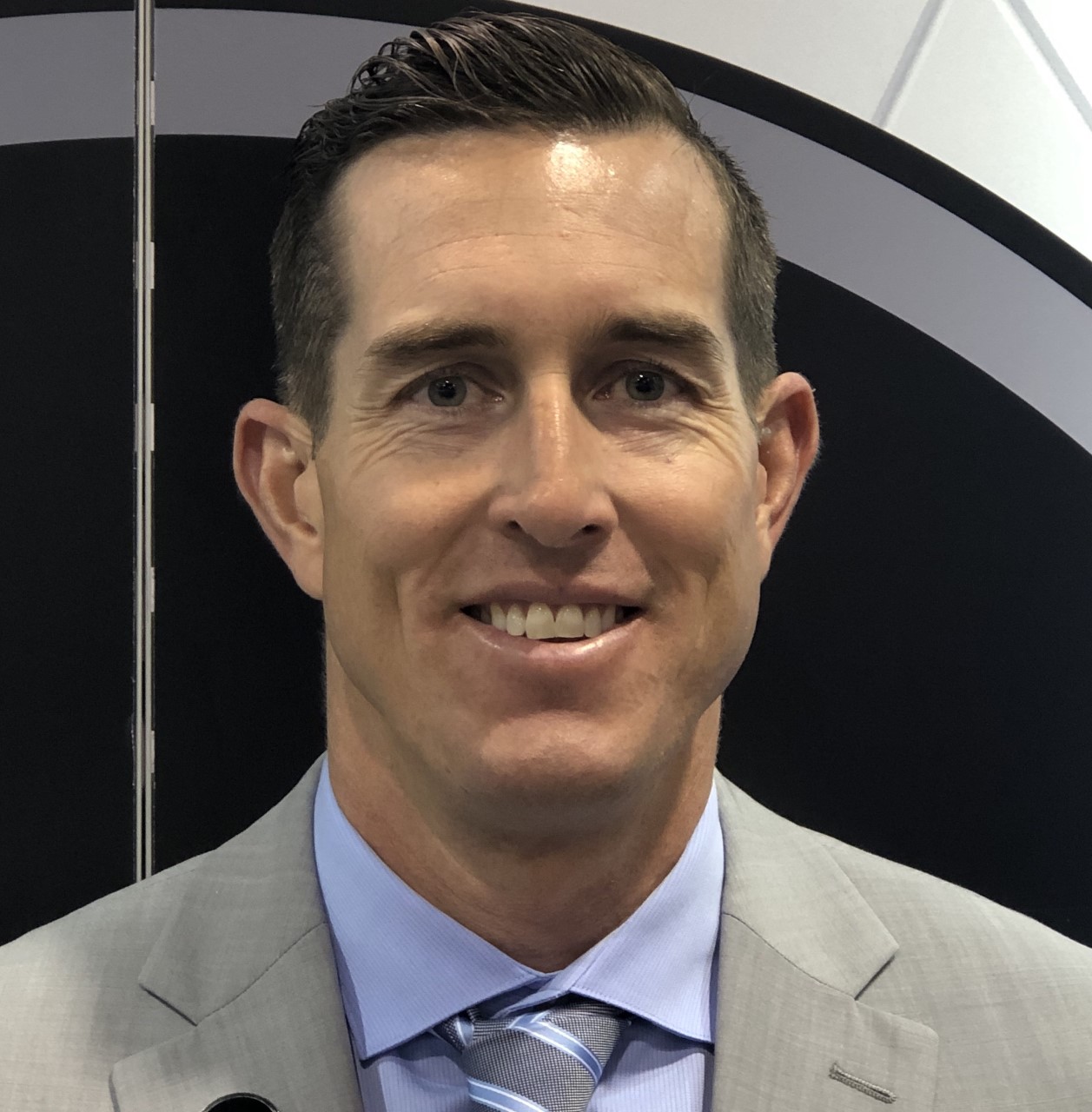
With 21 years of sales management, marketing, P&L responsibility, business development, national account, and channel management responsibilities under his belt, Ian has established himself as a high achiever across multiple business functions. Ian was part of a small team who started a new business unit for Stanley Black & Decker in Asia from Y10’ to Y14’. He lived in Shanghai, China for two years, then continued to commercialize and scale the business throughout the Asia Pacific and Middle East regions for another two years (4 years of International experience). Ian played college football at the University of Colorado from 96’ to 00’. His core skills sets include; drive, strong work ethic, team player, a builder mentality with high energy, motivator with the passion, purpose, and a track record to prove it.