Key Takeaways
Medical storage contamination costs healthcare facilities hundreds of thousands annually through infection treatment, compliance violations, and premature equipment replacement. Chrome wire shelving—despite widespread use—generates 85% contamination risk while failing to meet fundamental regulatory standards. Sterile instrument storage systems like SterileShelf™ reduce contamination by 86%, deliver 41% lower total ownership costs, and achieve 95%+ compliance across FDA, OSHA, and AAMI requirements.
This evidence-based comparison examines true contamination costs, material performance differences, regulatory implications, and financial returns. Facilities spend significantly on storage infrastructure—understanding which systems offer superior storage contamination prevention while reducing long-term costs determines both clinical outcomes and budget performance. The data reveal a clear winner in contamination prevention and cost-effectiveness.
Contamination in medical storage directly threatens patient safety and facility finances. Understanding contamination sources and their impact is essential for healthcare facilities seeking to minimize infection risk and reduce operational costs.
Healthcare storage contamination occurs when medical supplies, instruments, or equipment contact bacteria, viruses, fungi, or chemical residues. Sources include moisture accumulation, rust particles, biofilm formation on porous surfaces, and cross-contamination from inadequate cleaning protocols. Contaminated storage systems compromise sterile supplies before they reach patients, creating infection pathways that bypass standard sterilization procedures.
Contaminated storage systems drive hospital-acquired infections (HAIs), which affect patient outcomes and facility profitability. Proper storage systems reduce contamination by 55.7%, directly lowering HAI rates and associated treatment costs. The financial impact is substantial: facilities implementing contamination-resistant storage save an average of $278,500 annually through HAI prevention alone. These savings stem from reduced infection treatment costs, shorter patient stays, and fewer readmissions. Beyond financial metrics, contamination prevention protects vulnerable patient populations and maintains facility compliance with infection control standards.
Chrome wire shelving appears economical initially but generates substantial long-term costs through maintenance, replacement, and contamination-related expenses. SterileShelf™ systems deliver superior financial performance across total ownership lifecycle.
Ten-year total cost of ownership reveals the true financial gap between storage systems. Chrome wire shelving costs $14,500 per unit over a decade, while SterileShelf™ systems cost $8,500—a $6,000 savings representing 41% cost reduction. This difference stems from reduced replacement frequency, lower maintenance demands, and minimized contamination incidents. Facilities replacing chrome wire with SterileShelf™ systems recoup initial investment through operational savings within 3-4 years.
Annual maintenance costs separate efficient storage from financial drains. Chrome wire requires $850 yearly per unit for cleaning, rust removal, repair, and decontamination. SterileShelf™ systems require only $150 annually due to non-porous surfaces and corrosion resistance. The $700 annual savings per unit compounds across facilities with hundreds of storage units, creating substantial budget relief for materials management departments.
Comprehensive contamination prevention programs deliver exceptional financial returns beyond basic storage costs. Facilities implementing integrated prevention strategies—including proper storage systems, protocols, and staff training—achieve 765% ROI through reduced HAI rates, shorter patient stays, and fewer readmissions. These returns transform infection control from cost center to value generator.
Replacement cycles reveal concealed expenses in storage decisions. Chrome wire shelving lasts 3-5 years before rust, structural failure, or compliance concerns force replacement. SterileShelf™ systems function effectively for 15+ years, delivering 3-5x longer service life. This durability eliminates repeated capital expenditures, reduces storage downtime during replacements, and maintains consistent contamination control without performance degradation over time.
SterileShelf™ systems employ advanced materials and design principles that actively prevent contamination rather than simply resisting it. These purpose-built features address the primary failure points of traditional storage systems.
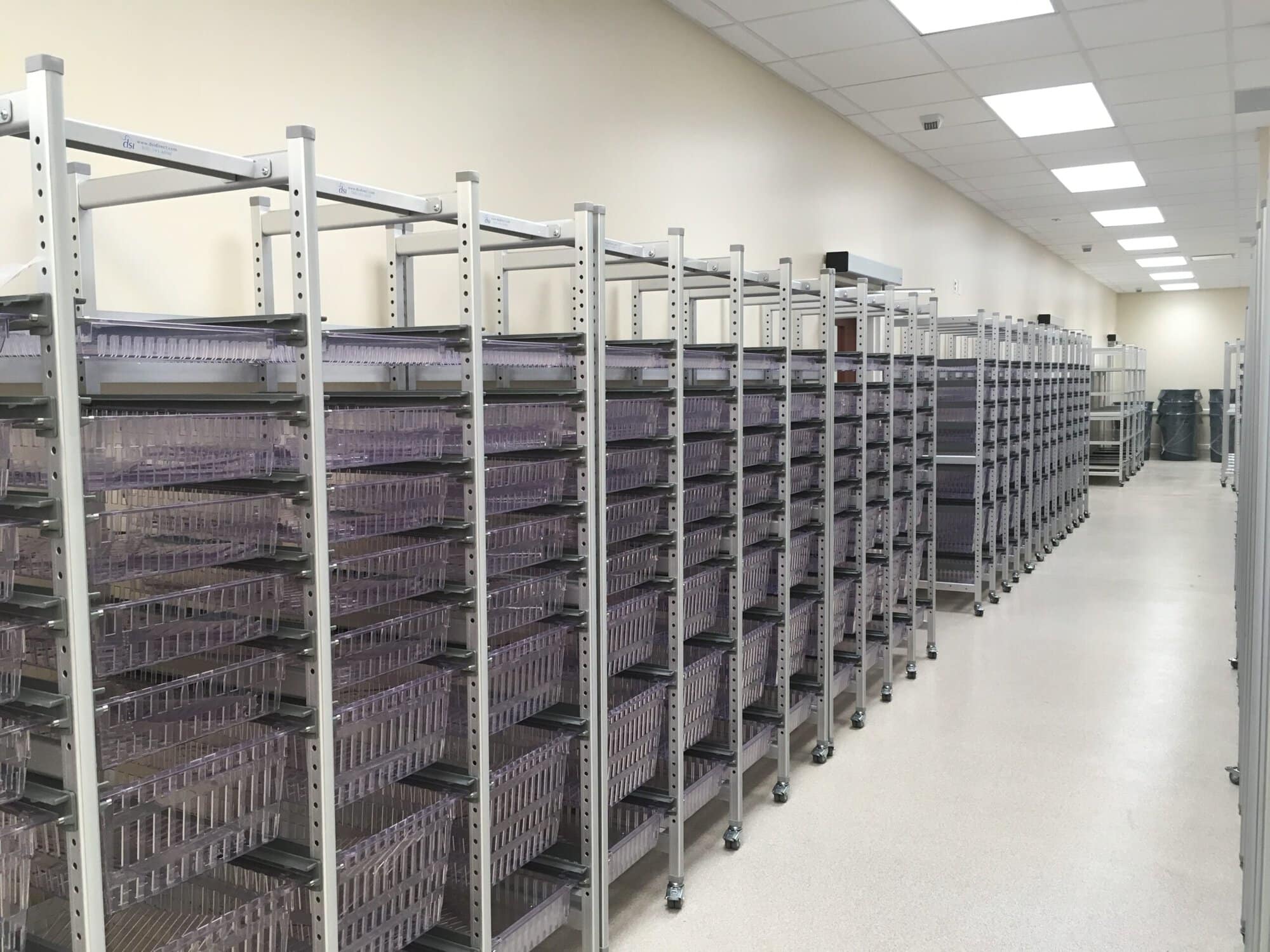
SterileShelf™ achieves 12% contamination risk compared to chrome wire's 85%—a 73 percentage point reduction representing 86% improvement. This dramatic difference results from integrated contamination barriers: seamless construction eliminates particle traps, polymer composition prevents rust formation, and antimicrobial surfaces inhibit microbial colonization. The system's design prevents contamination at the source rather than requiring constant remediation.
SterileShelf™ addresses six critical contamination vectors chrome wire cannot. The system is rust-free through corrosion-resistant polymer construction, features no sharp edges that tear packaging or harbor biofilm, and resists bacterial colonization through surface chemistry. Stain resistance prevents discoloration that signals material degradation, while moisture-proof construction eliminates the humidity exposure that drives mold growth. Complete corrosion resistance ensures structural integrity and surface cleanliness throughout the system's extended lifespan.
Silver-ion antimicrobial technology embedded in SterileShelf™ materials provides continuous contamination defense. Silver ions disrupt bacterial cell membranes, denature viral proteins, and prevent fungal spore germination on contact. This non-reactive technology remains effective without degrading over time or requiring reapplication. Unlike surface coatings that wear away, the antimicrobial properties exist throughout the material, maintaining protection even if surfaces become scratched during normal use.
Non-porous surfaces make SterileShelf™ systems inherently easier to clean and maintain than porous alternatives. Standard disinfectants remove contaminants completely without penetrating surface structure or leaving residues in microscopic crevices. This characteristic is critical for infection control in hospital applications, where incomplete cleaning creates reservoirs for pathogen transmission. Single-pass cleaning protocols achieve sterility that would require multiple cleaning cycles with traditional shelving materials.
Chrome wire shelving creates multiple contamination pathways through material deficiencies and design flaws. Understanding these failure points explains why traditional wire systems generate 85% contamination risk in medical environments.
Chrome wire shelving carries 85% contamination risk due to fundamental design weaknesses. The chrome plating corrodes over time, exposing base metal to oxidation and creating rust particles that contaminate stored supplies. Wire construction produces sharp edges at intersections and cut points—these edges tear sterile packaging, trap organic matter, and create biofilm havens resistant to standard cleaning. Scratch resistance is chrome wire's only shared attribute with SterileShelf™, but this single advantage cannot compensate for systemic contamination vulnerabilities.
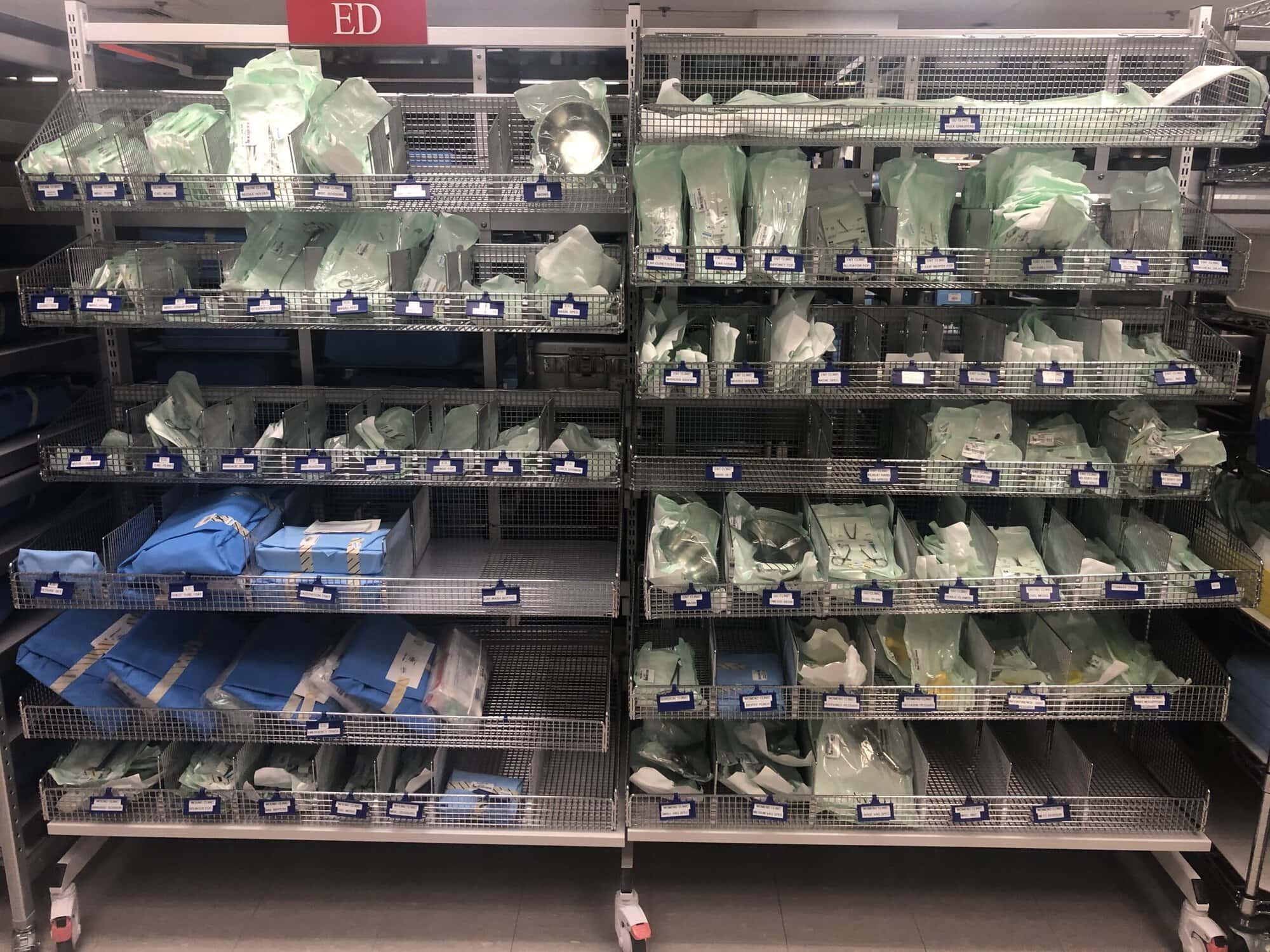
Chrome wire fails three critical hygiene requirements. The material offers no bacterial resistance, allowing pathogen colonization across surface areas between cleaning cycles. Porous surfaces and wire intersections stain easily, signaling material degradation and making visual contamination assessment difficult. Wire construction is inherently difficult to clean—disinfectants cannot reach sheltered areas where wires cross, and textured surfaces retain cleaning residues that become contamination sources themselves. These maintenance challenges compound over time as rust and corrosion increase surface irregularities.
Chrome wire lacks five essential properties for sterile medical storage. Without antimicrobial properties, surfaces support continuous microbial growth. Moisture penetrates wire junctions and corroded areas, creating humidity pockets that foster mold and bacterial proliferation. The chrome plating reacts with cleaning chemicals and bodily fluids, degrading protective coatings and accelerating corrosion. Poor corrosion resistance means contamination risk increases throughout the system's shortened lifespan. Finally, chrome wire cannot withstand 350° heat exposure required for certain sterilization protocols, limiting decontamination options and forcing premature replacement when contamination occurs.
Direct attribute comparison reveals performance gaps between storage systems across critical operational parameters. Material properties determine real-world functionality in demanding healthcare environments.
SterileShelf™ withstands high-volume usage patterns without structural degradation or performance decline. The polymer construction resists impact damage, maintains dimensional stability under load, and retains surface integrity through thousands of loading cycles. Heavy-duty applications—including crash cart storage, surgical supply rooms, and central sterile processing—benefit from this durability, which eliminates mid-lifecycle replacements and maintains contamination control throughout extended service periods. Chrome wire systems, by contrast, develop stress fractures at weld points and lose structural integrity as corrosion compromises wire diameter.
SterileShelf™ material withstands the harsh exposures common in medical environments. Chemical resistance allows repeated contact with disinfectants, solvents, and corrosive cleaning agents without surface degradation or structural weakening. Moisture impermeability prevents water absorption, humidity damage, and the warping or swelling that compromises dimensional tolerances and creates contamination traps. Heat resistance to 350° supports autoclave sterilization, accommodates heated supply storage, and allows use in high-temperature processing areas. Chrome wire fails across these parameters—chemical cleaners accelerate corrosion, moisture penetrates wire junctions, and heat exposure degrades protective plating.
Non-porous surfaces separate effective infection control from contamination risk. SterileShelf™ systems feature completely non-porous construction that prevents microbial penetration, eliminates cleaning residue absorption, and allows complete surface sterilization with single-pass protocols. This characteristic is critical for infection control in hospital applications where incomplete decontamination creates pathogen reservoirs. Chrome wire's porous construction—particularly at corroded areas and wire intersections—traps contaminants beneath surfaces where cleaning agents cannot reach, requiring repeated cleaning attempts that still fail to achieve sterility.
Medical storage systems must comply with federal regulations and industry standards governing device manufacturing, workplace safety, and infection control. Compliance protects facilities from liability while ensuring patient safety and operational integrity.
SterileShelf™ achieves near-complete regulatory alignment across major healthcare standards. FDA 21 CFR 820 compliance reaches 98%, meeting quality system requirements for medical device manufacturing and handling. OSHA standards compliance hits 96%, satisfying workplace safety mandates including bloodborne pathogen protection and chemical exposure limits. AAMI standards compliance achieves 95%, aligning with Association for the Advancement of Medical Instrumentation guidelines for sterile processing and storage. These compliance rates demonstrate SterileShelf™ systems meet regulatory intent, not just minimum requirements, reducing audit risk and supporting accreditation efforts.
Chrome wire shelving fails to meet majority compliance thresholds across critical standards. FDA 21 CFR 820 compliance reaches only 60%, creating exposure to quality system violations during inspections. OSHA standards compliance of 65% indicates workplace safety gaps, particularly regarding contamination control and employee exposure to corroded materials. AAMI standards compliance at 55% signals fundamental incompatibility with sterile processing requirements. These deficiencies force facilities to implement compensating controls, increase monitoring frequency, and accept elevated audit risk. Compliance gaps also complicate Joint Commission accreditation and CMS certification surveys, where storage system deficiencies trigger broader facility reviews.
SterileShelf™ systems optimize healthcare operations beyond contamination control. Design efficiency, workflow integration, and financial performance create measurable operational advantages.
SterileShelf™ systems maximize vertical storage capacity through consistent dimensional stability and stackable configurations. Unlike chrome wire shelving that requires clearance for corrosion inspection and maintenance access, SterileShelf™ units can be installed in higher densities without compromising cleanability or material integrity. Modular design allows custom configurations that adapt to room geometry, eliminating dead space common in standard shelving layouts. This space efficiency reduces square footage requirements for storage areas, freeing valuable floor space for patient care activities.
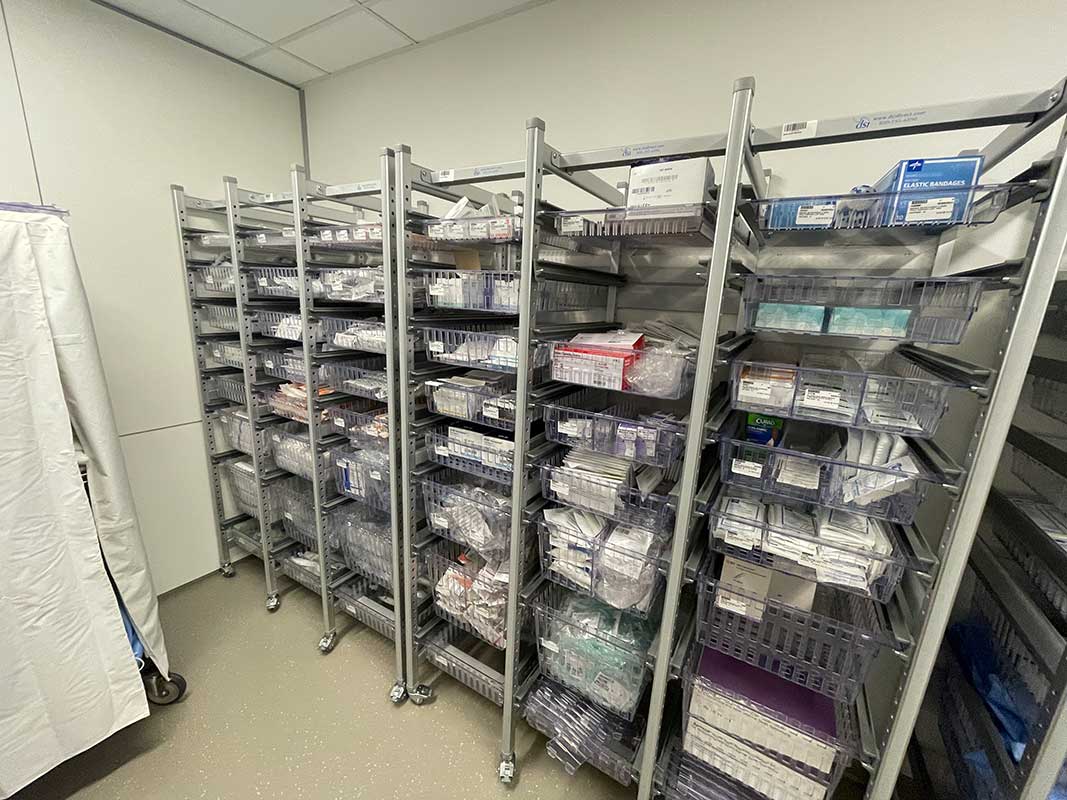
Organized sterile instrument storage reduces retrieval time and minimizes contamination events during material handling. SterileShelf™ systems support clear visual inventory management through open designs that don't obstruct sight lines. Smooth, non-porous surfaces allow labels and identification systems to adhere reliably without peeling or degradation from cleaning chemicals. Easy access from all sides eliminates the reaching and searching that increases contamination risk when staff contact multiple surfaces. Consistent cleaning protocols—enabled by uniform surface properties—reduce training complexity and support standardized workflows across departments.
SterileShelf™ financial advantages compound across operational lifecycles. The 10-year total cost of ownership ($8,500 vs. $14,500 for chrome wire) and annual maintenance savings ($700 per unit) create immediate budget relief while eliminating replacement expenditures during the system's 15+ year lifespan. These direct savings combine with indirect cost reductions: decreased labor hours for cleaning and maintenance, eliminated rush equipment replacements when compliance issues arise, and avoided costs from contamination incidents. Facilities operating at scale multiply per-unit savings across hundreds of storage units, transforming storage infrastructure from recurring expense to long-term asset.
Antimicrobial storage provides continuous contamination defense between cleaning cycles. This passive protection layer addresses the gaps in periodic disinfection protocols.
Cross-contamination occurs when pathogens transfer from surfaces to hands, supplies, or equipment during routine handling. Standard cleaning protocols create vulnerability windows—the hours or days between disinfection cycles when bacterial colonization rebuilds on surfaces. Antimicrobial storage materials actively inhibit microbial growth during these intervals, preventing pathogen accumulation that would otherwise require increasingly aggressive cleaning. This continuous protection is especially critical in high-touch areas like medication rooms, procedure prep stations, and emergency supply storage where staff access materials multiple times per shift. Reducing surface bioburden between cleanings decreases the total pathogen exposure staff encounter daily.
SterileShelf™ embeds antimicrobial protection throughout material composition rather than applying surface treatments. This integration ensures protection persists across the system's entire lifespan without reapplication requirements or performance degradation from wear. The technology activates on contact—no special procedures or waiting periods required—making protection automatic during normal use. Unlike add-on antimicrobial products that require separate application and monitoring, SterileShelf™ antimicrobial properties function as inherent material characteristics requiring zero additional staff action. This passive protection complements active cleaning protocols, creating layered contamination defense that reduces overall facility infection risk without increasing staff workload.
Medical supply storage directly impacts clinical outcomes through material availability and contamination control. SterileShelf™ design addresses both accessibility and protection requirements.
Critical supply accessibility requires immediate visibility and contamination-free retrieval. SterileShelf™ open architecture provides unobstructed sight lines for rapid inventory assessment during emergencies, eliminating the searching that delays care and increases handling contamination. Smooth edges prevent packaging tears during retrieval—torn sterile packaging forces item disposal and creates supply shortages. Consistent shelf depths and heights support ergonomic access across staff height ranges, reducing awkward reaching that causes dropped items or back injuries. The combination of protected storage and immediate accessibility ensures critical supplies remain both sterile and available when clinical needs arise.
Storage efficiency extends beyond space utilization to encompass inventory turnover and waste reduction. SterileShelf™ systems support first-in-first-out rotation through clear depth visibility that allows staff to identify and retrieve older stock before expiration. Non-porous surfaces maintain barcode and label integrity through repeated cleaning cycles, supporting automated inventory systems that reduce manual counting labor. Visual stock assessment from multiple angles enables rapid par level verification without removing items, decreasing time spent on inventory management. These efficiency gains reduce expired supply waste, minimize emergency reorder costs, and free staff time for direct patient care activities.
Evidence confirms SterileShelf™ superiority across contamination control, financial performance, and regulatory compliance. Healthcare facilities face a clear choice between legacy systems and purpose-built solutions.
SterileShelf™ delivers 86% contamination improvement over chrome wire shelving through integrated antimicrobial technology and contamination-resistant design. The system's 3-5x longer lifespan eliminates repeated replacement cycles that drain capital budgets and disrupt operations. Financial advantages compound over time: 41% reduction in 10-year total cost of ownership translates to $6,000 savings per unit before factoring in avoided contamination incidents and compliance violations. These benefits aren't theoretical—they represent measurable improvements facilities achieve immediately upon implementation.
SterileShelf™ achieves superior regulatory compliance with 95%+ alignment across FDA, OSHA, and AAMI standards, reducing audit risk and supporting accreditation efforts. Facilities implementing proper storage systems save $278,500 annually through HAI prevention alone—savings that dwarf initial equipment investments. Comprehensive prevention programs incorporating SterileShelf™ technology deliver 765% ROI through reduced infection rates, shorter patient stays, and fewer readmissions. The decision framework is straightforward: chrome wire shelving represents outdated technology with escalating costs and compliance risks, while SterileShelf™ offers proven contamination control, regulatory alignment, and long-term financial returns. Healthcare facilities committed to patient safety and operational efficiency have a clear optimal choice.
Healthcare facilities cannot afford contamination risks from outdated storage systems. Distribution Systems International's SterileShelf™ delivers proven contamination reduction, regulatory compliance, and long-term cost savings your facility needs. Stop accepting 85% contamination rates and escalating maintenance costs—transition to purpose-built medical storage that protects patients and budgets.
Contact Distribution Systems International today for a facility assessment and customized SterileShelf™ implementation plan. Discover how leading healthcare organizations achieve $278,500 annual savings through HAI prevention while maintaining 95%+ regulatory compliance. Request your free consultation and cost-benefit analysis at dsidirect.com or call 800.393.6090. Your patients deserve contamination-free storage. Your budget deserves long-term value. SterileShelf™ delivers both.
With 21 years of sales management, marketing, P&L responsibility, business development, national account, and channel management responsibilities under his belt, Ian has established himself as a high achiever across multiple business functions. Ian was part of a small team who started a new business unit for Stanley Black & Decker in Asia from Y10’ to Y14’. He lived in Shanghai, China for two years, then continued to commercialize and scale the business throughout the Asia Pacific and Middle East regions for another two years (4 years of International experience). Ian played college football at the University of Colorado from 96’ to 00’. His core skills sets include; drive, strong work ethic, team player, a builder mentality with high energy, motivator with the passion, purpose, and a track record to prove it.