Key Takeaways
Medical shelf compliance determines patient safety, infection rates, and regulatory standing. Most healthcare facilities use legacy storage systems that fail current FDA regulations, creating contamination risks and compliance violations. FDA 21 CFR Part 820, OSHA bloodborne pathogen standards, and Joint Commission requirements establish specific criteria for healthcare storage systems—criteria many existing shelves don't meet.
This guide examines FDA-compliant storage requirements, contamination data comparing compliant versus non-compliant systems, and cost analysis proving compliance reduces long-term expenses. Understanding medical shelf compliance protects patients, prevents regulatory penalties, and delivers measurable ROI through infection prevention and reduced maintenance costs. Compliance isn't optional—it's patient safety infrastructure with financial benefits.
Medical shelf compliance centers on four regulatory frameworks: FDA 21 CFR Part 820, OSHA bloodborne pathogen standards, AAMI device handling protocols, and Joint Commission requirements. Facilities ensure compliance through systematic audits, validated storage systems, and documented protocols that meet these intersecting standards.
FDA-compliant storage follows FDA 21 CFR Part 820, the Medical Device Quality System Regulation governing device manufacturing and handling. This framework establishes material requirements, cleanability standards, and contamination control protocols for healthcare storage systems.
OSHA 1910.1030 addresses bloodborne pathogen exposure through proper medical supply storage. AAMI standards define device handling procedures, while The Joint Commission mandates sterile storage area specifications. Together, these regulations create the compliance baseline for medical shelf systems in healthcare facilities.
Regulatory compliance in healthcare directly reduces contamination and associated costs. Compliant systems cut contamination rates by 55.7% compared to non-compliant alternatives, preventing costly hospital-acquired infections.
Facilities implementing FDA-compliant storage and sterile instrument storage protocols save $278,500 annually through HAI prevention. Non-compliance risks regulatory penalties, increased infection rates, and compromised patient safety. Compliance isn't administrative burden—it's measurable cost reduction and patient protection.
FDA compliance prevents contamination, protects patients, and reduces infection-related costs. Non-compliant shelving systems create pathogen reservoirs that compromise sterile environments and increase hospital-acquired infection rates. Compliance transforms storage from liability to patient safety asset.
Non-compliant chrome wire shelving carries an 85% contamination risk, creating persistent bacterial reservoirs in healthcare storage systems. FDA-compliant storage like SterileShelf systems reduces contamination risk to 12%—a 73 percentage point improvement representing 86% risk reduction.
This contamination differential directly impacts patient outcomes. Every contaminated surface in medical supply storage creates pathogen transmission pathways. FDA-compliant storage eliminates these vectors through antimicrobial materials, sealed surfaces, and corrosion-resistant construction that meets regulatory compliance in healthcare standards.
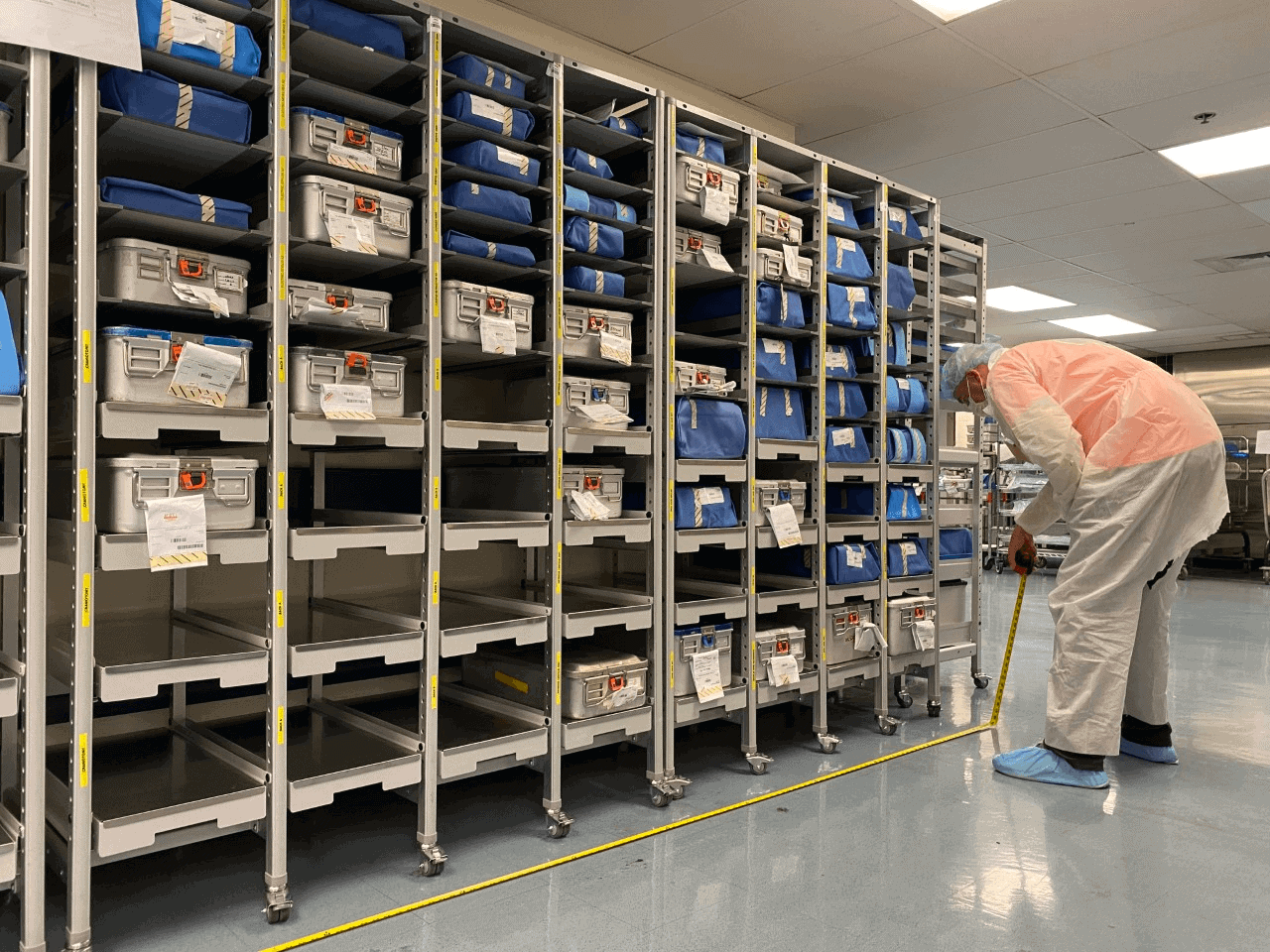
Sterile instrument storage demands the highest compliance standards under FDA regulations and Joint Commission requirements. These protocols mandate validated storage systems that maintain sterility from sterilization through point-of-use, preventing recontamination of surgical instruments and critical medical devices.
Compliance requires documented environmental controls: temperature, humidity, airflow, and surface integrity. Non-compliant shelving compromises sterile barriers through corrosion, surface degradation, and bacterial harboring. FDA-compliant storage maintains these barriers through sealed construction and materials that support sterile field integrity throughout the supply chain.
FDA-compliant storage requires specific material properties, design features, and performance validation. Compliance spans multiple regulatory frameworks—FDA, OSHA, and AAMI—each establishing distinct requirements for healthcare storage systems. Understanding these elements separates compliant systems from legacy solutions.
Compliance ratings reveal stark performance differences between storage systems. SterileShelf systems achieve 98% FDA 21 CFR 820 compliance compared to chrome wire's 60%. OSHA standards compliance follows similar patterns: SterileShelf 96% versus chrome wire 65%.
AAMI standards compliance shows the widest gap. SterileShelf systems meet 95% of medical device handling standards while chrome wire achieves only 55%. These compliance differentials reflect fundamental design and material differences—sealed polymer construction versus porous wire surfaces that harbor pathogens and corrode under cleaning protocols.
Compliance and regulatory requirements for healthcare storage mandate five core properties: antimicrobial surfaces, corrosion resistance, cleanability, moisture control, and documented validation. Each requirement addresses specific contamination pathways in medical supply storage.
Antimicrobial properties prevent bacterial colonization. Corrosion resistance maintains surface integrity under repeated chemical cleaning. Cleanability eliminates biofilm formation. Moisture control prevents mold growth and material degradation. ISO standards for medical device storage environments establish environmental thresholds these systems must maintain. FDA-compliant storage integrates all five requirements—legacy systems typically meet two or fewer.
Healthcare facilities face two primary compliance challenges: space constraints and maintenance burden. FDA-compliant storage must balance regulatory requirements with operational efficiency and limited square footage. These challenges often delay compliance adoption despite clear safety benefits.
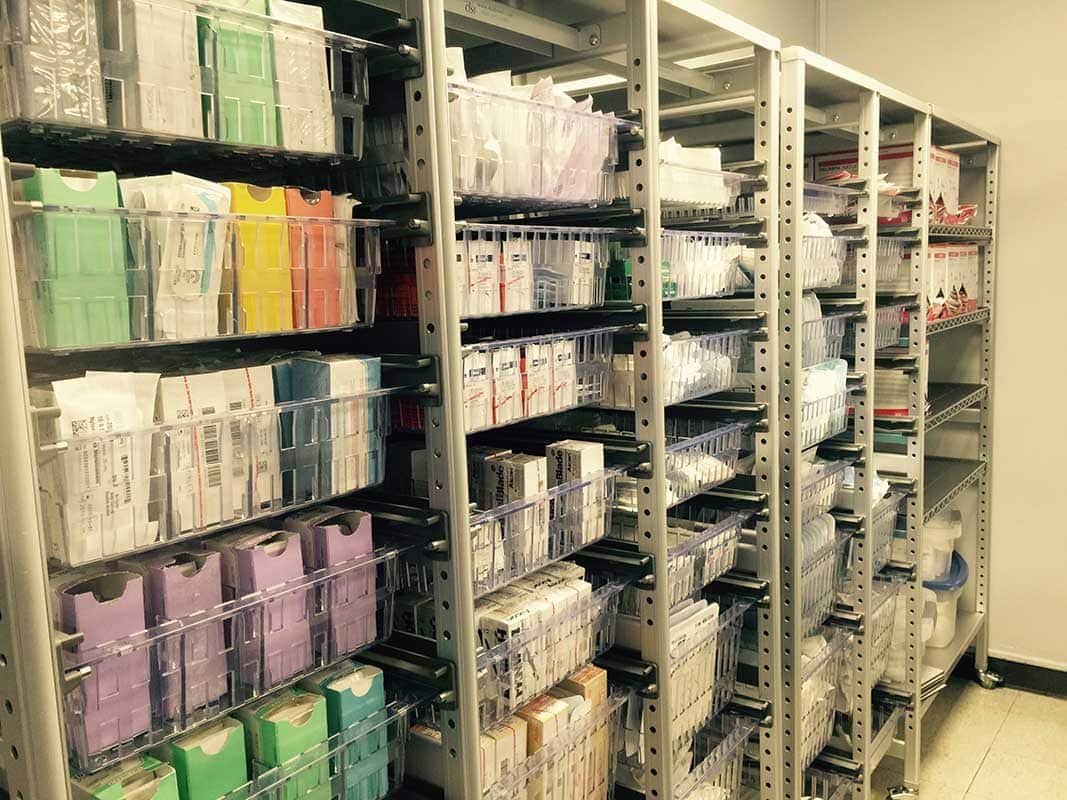
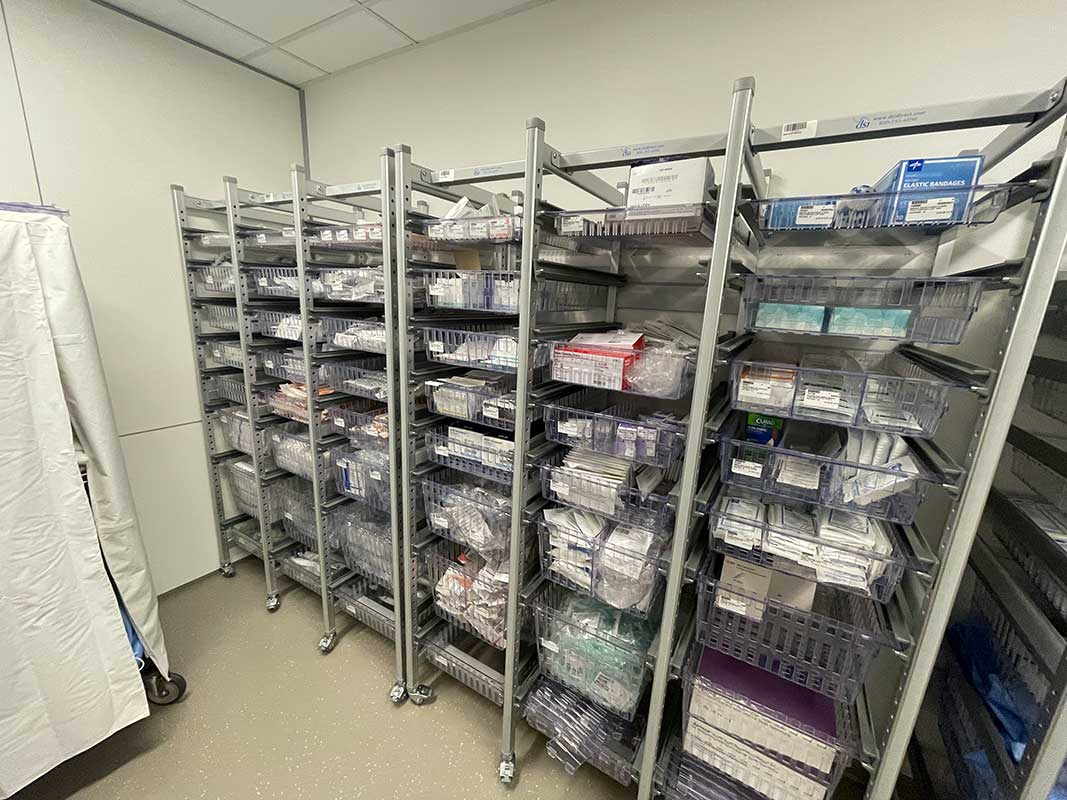
Space efficiency doesn't require compromising medical shelf compliance. FDA-compliant storage systems offer vertical optimization, modular configurations, and higher weight capacities than legacy shelving. Modern healthcare storage systems maximize density while maintaining required clearances for sterile instrument storage.
Workflow efficiency improves through compliant design. Sealed surfaces eliminate cleaning downtime. Antimicrobial properties reduce reprocessing frequency. Adjustable shelving accommodates varied supply sizes without custom modifications. FDA regulations don't restrict space utilization—they eliminate inefficient designs that require excessive maintenance and replacement cycles.
Maintenance costs reveal long-term compliance challenges. Chrome wire shelving requires $850 annually per unit for cleaning, repairs, and corrosion management. FDA-compliant storage like SterileShelf systems costs $150 annually—$700 savings per unit.
This cost differential stems from material durability and cleanability. Corrosion-resistant surfaces withstand chemical disinfectants without degradation. Sealed construction prevents biofilm formation in crevices. Antimicrobial properties reduce cleaning frequency while maintaining regulatory compliance in healthcare environments. Lower maintenance costs enable broader compliance adoption across medical supply storage areas without budget expansion.
FDA-compliant storage delivers measurable financial returns beyond regulatory adherence. Long-term cost analysis reveals significant savings through reduced maintenance, extended lifespan, and infection prevention. Compliance transforms from upfront expense to strategic investment with quantifiable ROI.
Ten-year total cost of ownership exposes true financial impact. Chrome wire shelving costs $14,500 per unit over ten years versus $8,500 for FDA-compliant storage like SterileShelf—$6,000 savings per unit representing 41% cost reduction.
This calculation includes purchase price, maintenance, replacement, and cleaning costs. Healthcare storage systems with higher initial costs deliver superior long-term value through durability and reduced upkeep. HAI prevention programs using FDA-compliant storage achieve 765% ROI through infection reduction and associated cost avoidance. Every dollar invested in medical shelf compliance returns seven dollars in savings and improved patient outcomes.
Regulatory penalties for non-compliant medical supply storage compound financial losses. FDA inspections, Joint Commission surveys, and CMS audits identify storage deficiencies that trigger citations, corrective action plans, and potential fines. Repeat violations escalate to Medicare reimbursement loss.
Liability risks extend beyond regulatory penalties. Patient harm from contaminated instruments stored on non-compliant shelving creates malpractice exposure. Documentation requirements under FDA regulations demand validated storage systems and maintenance records. Non-compliance creates liability evidence in litigation. FDA-compliant storage eliminates these legal and financial risks while ensuring regulatory compliance in healthcare operations meets defensible standards.
FDA regulations evolve as infection control research advances and technology improves. Healthcare facilities must maintain current knowledge of compliance requirements for medical shelf systems. Regular review of regulatory updates prevents compliance gaps and ensures healthcare storage systems meet latest standards.
Four primary resources maintain current FDA-compliant storage standards. FDA 21 CFR Part 820 Subpart L establishes device handling and storage requirements—review quarterly for regulatory updates. OSHA 1910.1030 Bloodborne Pathogens Standard defines exposure control protocols for medical supply storage.
AAMI standards documentation provides technical specifications for sterile instrument storage and device handling. CMS guidelines connect compliance to reimbursement requirements and survey protocols. Subscribe to regulatory agency notifications, attend industry compliance seminars, and establish internal audit schedules. Compliance isn't one-time achievement—it's ongoing commitment to patient safety through validated healthcare storage systems that meet current regulatory compliance in healthcare standards.
FDA-compliant storage protects patients and reduces costs, but only if implemented. Evaluate current shelving systems against FDA 21 CFR Part 820 requirements, OSHA standards, and AAMI protocols. Identify non-compliant units creating contamination risks in sterile instrument storage areas and medical supply storage facilities.
Distribution Systems International specializes in healthcare storage systems meeting all regulatory compliance requirements. Their FDA-compliant storage solutions eliminate the 85% contamination risk of legacy shelving while delivering $6,000 per-unit savings over ten years. Request a compliance audit to identify gaps in current medical shelf systems.
Calculate facility-specific ROI based on maintenance reduction, infection prevention, and regulatory risk elimination. Contact Distribution Systems International today to transition from non-compliant storage to validated, FDA-compliant systems that protect patients and improve operational efficiency.
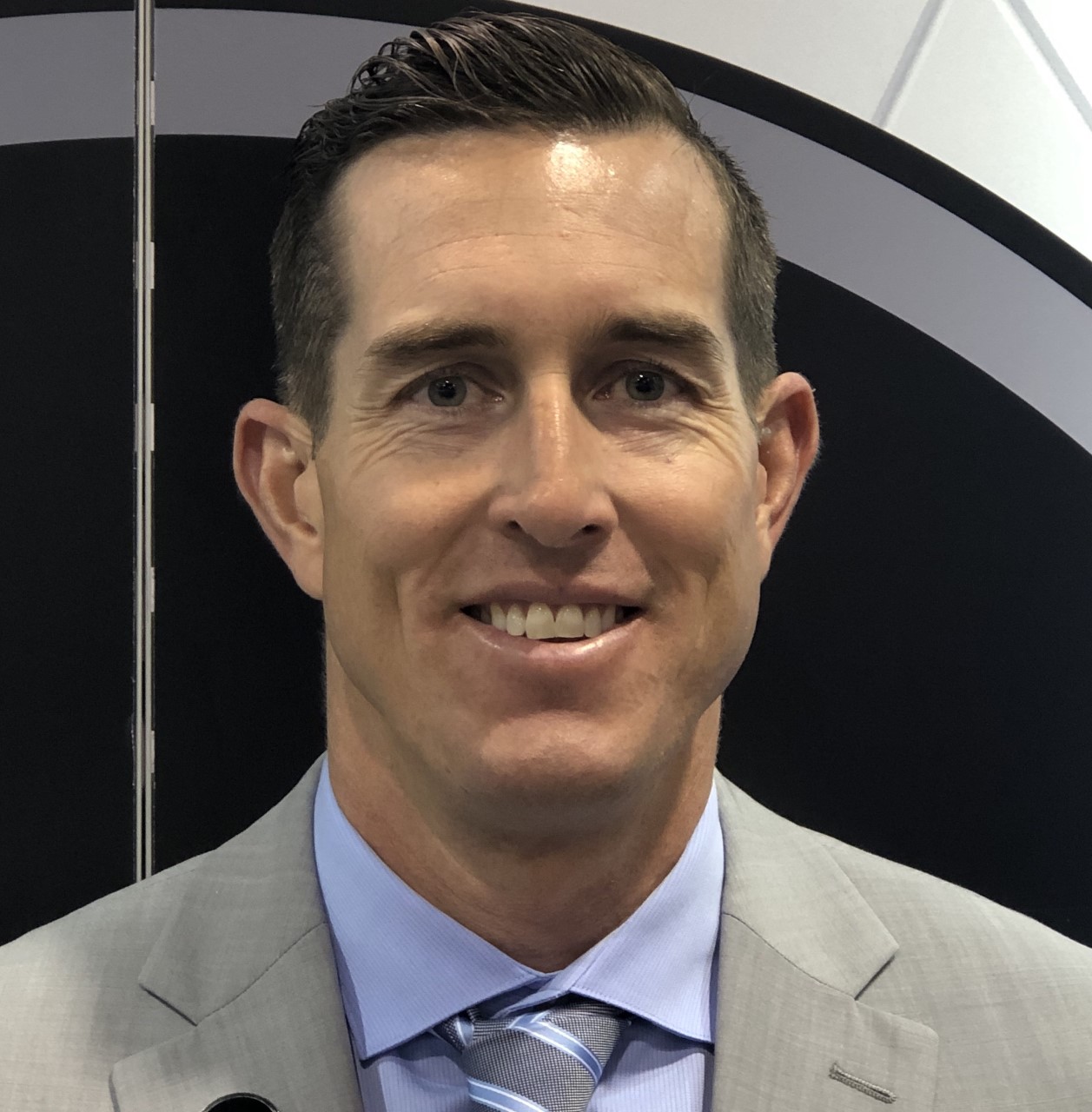
With 21 years of sales management, marketing, P&L responsibility, business development, national account, and channel management responsibilities under his belt, Ian has established himself as a high achiever across multiple business functions. Ian was part of a small team who started a new business unit for Stanley Black & Decker in Asia from Y10’ to Y14’. He lived in Shanghai, China for two years, then continued to commercialize and scale the business throughout the Asia Pacific and Middle East regions for another two years (4 years of International experience). Ian played college football at the University of Colorado from 96’ to 00’. His core skills sets include; drive, strong work ethic, team player, a builder mentality with high energy, motivator with the passion, purpose, and a track record to prove it.