Key Takeaways
AAMI ST79 establishes essential standards for sterile processing and storage in healthcare facilities. These guidelines protect patients by reducing healthcare-associated infections and ensuring surgical instruments remain sterile until use. Healthcare facilities face increasing pressure to maintain strict environmental controls, proper equipment selection, and staff competency in 2026. Understanding and implementing these best practices helps organizations balance regulatory compliance with operational efficiency and cost management.
AAMI ST79 provides comprehensive standards for sterilization and sterility assurance in healthcare facilities worldwide. These requirements define environmental conditions, storage clearances, and procedural protocols that prevent contamination throughout the sterile processing cycle.
Compliance protects both patients and healthcare organizations from serious financial and legal consequences. Facilities that follow AAMI ST79 guidelines demonstrate commitment to patient safety and infection prevention standards.
AAMI ST79 compliant sterile storage requires a temperature between 68°F-73°F and humidity between 30%-60%. These environmental controls prevent moisture damage and maintain packaging integrity over extended storage periods.
Storage clearances require items 8 inches off the ground, 18 inches below sprinkler heads, and 2 inches from walls. Positive-pressure airflow with a minimum of 4 total air changes per hour prevents airborne contamination in storage areas.
Healthcare-associated infections (HAIs) are infections patients acquire during healthcare delivery in hospitals and surgical centers. Studies show that 1 in 31 hospital patients has at least one HAI on any given day.
SSIs affect between 1% and 20% of post-surgical patients, depending on procedure type and facility protocols. Each SSI increases hospitalization costs by USD 20,000 or more, with annual U.S. costs ranging between USD 3.3-10 billion.
Sterilization containers are rigid, reusable containers for packaging, sterilizing, transporting, and storing surgical instruments. These containers provide physical protection and maintain sterile barriers during transport from sterile processing departments to operating rooms.
Understanding terminology helps staff communicate effectively and implement compliant storage solutions across departments. Clear definitions reduce errors and improve adherence to established protocols throughout the facility.
Complete compliance requires integrating multiple components that work together to maintain sterility and environmental control. Equipment selection, monitoring systems, and procedural protocols form the foundation of effective sterile storage management.
Healthcare facilities must balance performance requirements with budget constraints when building compliant systems. Strategic investment in durable components reduces long-term costs while ensuring consistent patient safety outcomes.
Temperature and humidity-controlled cabinets with HEPA filtration maintain optimal environmental conditions for sterile instrument storage. These advanced storage systems provide automated monitoring and prevent fluctuations that compromise packaging integrity.
Scratch-resistant polymer shelving systems reduce contamination risk by 86% compared to traditional wire options. Scratched wire shelving presents 85% contamination risk because surface damage creates crevices that harbor bacteria and biofilm.
Anodized aluminum sterilization containers with tamper-evident locks provide secure instrument transport throughout healthcare facilities. These containers eliminate blue wrap dependency while offering superior physical protection during handling and storage.
Smart containers with tracking capabilities enable real-time location monitoring and automated inventory management systems. Basic containers cost USD 50-150 while smart containers range from USD 400-1,000+, depending on features.
Cloud-based tracking software with real-time data logging streamlines documentation and ensures audit-ready compliance records. These systems reduce human error by automating biological and chemical indicator tracking across multiple sterilization cycles.
AI-powered predictive analytics systems identify potential equipment failures before they compromise instrument sterility or patient safety. Basic software costs USD 500-2,000/month while premium solutions range from USD 5,000-15,000+/month for enterprise features.
Facility decision-makers evaluate multiple criteria when selecting sterile processing equipment and implementing compliance programs. Understanding these priorities helps vendors and consultants align solutions with organizational needs and budget realities.
Market research reveals clear patterns in how facilities of different sizes approach compliance investments. These patterns inform strategic planning and resource allocation across healthcare organizations.
Studies show 95% of facilities prioritize compliance importance when evaluating sterile storage options and equipment. Meeting AAMI ST79, Joint Commission, and FDA standards prevents operational shutdowns and protects accreditation status.
Safety effectiveness ranks second at 92%, followed by ease of use at 78% among decision-makers. Cost considerations influence 72% of purchasing decisions, while operational efficiency factors affect 68% of facility selections.
Large hospitals show 87% compliance rate due to greater capital investment capacity and dedicated sterile processing teams. Medium hospitals achieve 62% compliance while small clinics reach only 38% because of budget and space constraints.
Urban facilities achieve 84% compliance rate with better access to vendor support and training resources. Rural facilities struggle to 52% compliance due to infrastructure limitations and reduced access to specialized equipment.
High initial capital investment for premium systems prevents many small facilities from achieving full compliance. Budget constraints limit equipment upgrades even when existing systems fail to meet current AAMI ST79 standards.
Infrastructure limitations in rural settings make environmental control systems difficult to install and maintain properly. Limited vendor support in remote areas compounds these challenges by reducing access to technical assistance.
Environmental controls form the foundation of AAMI ST79-compliant sterile storage throughout healthcare facilities. Maintaining stable conditions requires integrated systems that monitor and adjust temperature, humidity, and airflow continuously.
Facilities must invest in reliable control systems and train staff to recognize and respond to deviations. Proper environmental management protects sterile items and prevents costly reprocessing or instrument replacement.
Facilities must maintain a temperature between 68°F-73°F to prevent thermal stress on sterile packaging materials. Temperature fluctuations outside this range compromise packaging integrity and increase contamination risk during storage periods.
Humidity control between 30%-60% prevents both moisture damage and static electricity that attracts airborne particles. Minimum 4 air changes per hour with positive-pressure airflow removes contaminants and maintains clean storage environments.
Proper clearances ensure adequate airflow around stored items while preventing contamination from environmental surfaces. Items stored 8 inches off the ground avoid floor-level dust and moisture that compromise sterile barriers.
Maintaining 18 inches of clearance below sprinkler heads prevents water damage during fire suppression system activation. The 2-inch clearance from outside walls protects against temperature fluctuations and pest intrusion.
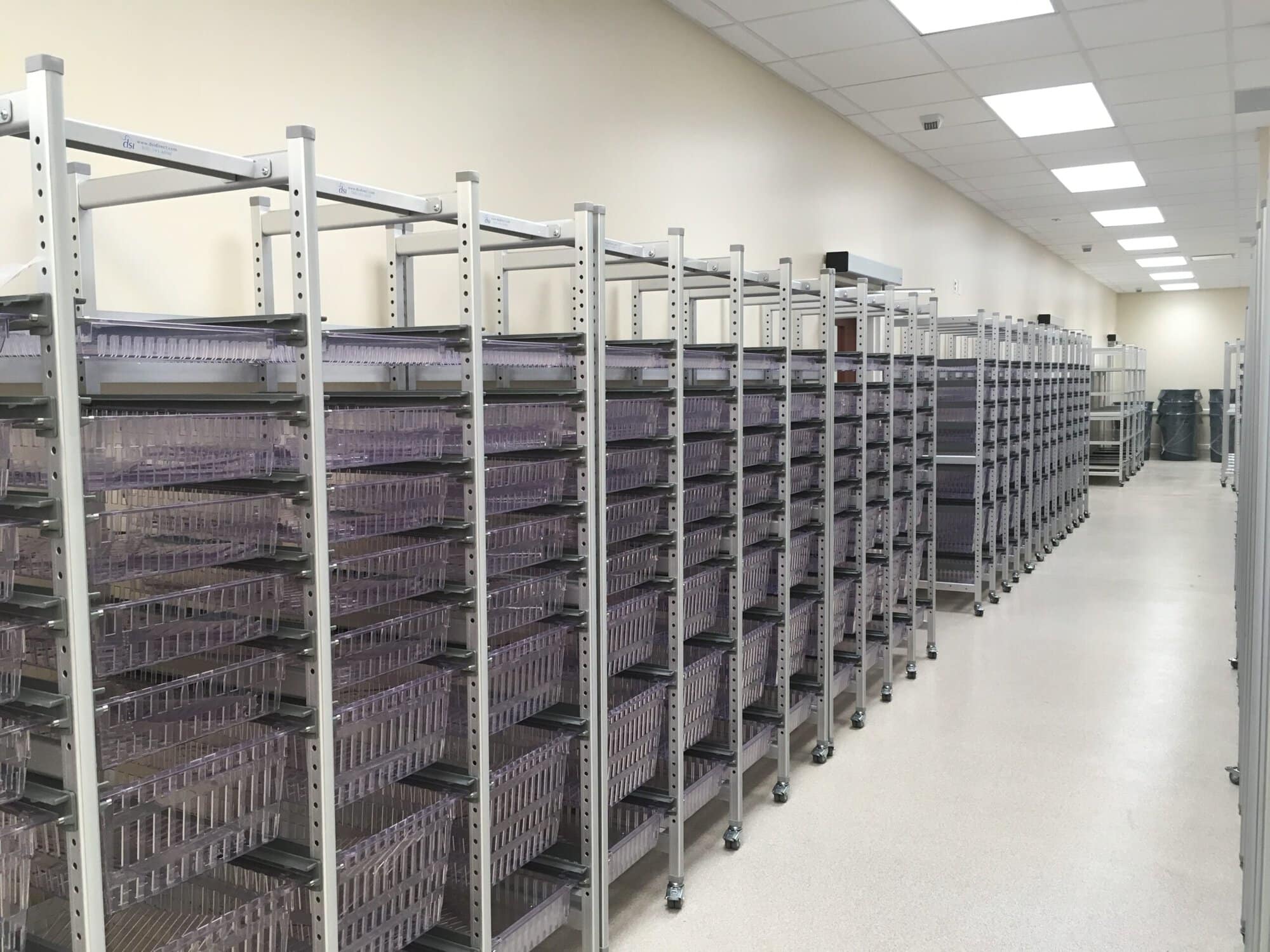
Temperature and humidity fluctuations degrade packaging integrity by causing expansion and contraction of barrier materials. Facilities using track-mounted storage systems improve airflow while maintaining proper clearances throughout storage areas.
Scratched equipment creates crevices that harbor bacteria and biofilm even after routine cleaning and disinfection. Overcrowding violates AAMI clearance requirements and restricts airflow needed to maintain environmental stability.
Staff competency determines whether compliant systems deliver expected patient safety and infection control outcomes. Training programs must address both technical skills and critical thinking needed to identify and prevent errors.
Sustained compliance requires ongoing education that adapts to staff turnover and evolving standards. Facilities that invest in comprehensive training reduce errors and improve operational efficiency across departments.
Insufficient staff training is the leading cause of processing errors that compromise instrument sterility before surgical procedures. Research shows 26.16% of surgical cases experience at least one instrument error related to inadequate training.
Effective training programs require time-intensive investment in both initial competency development and ongoing skill maintenance. Staff turnover in sterile processing departments necessitates continuous training cycles that strain departmental resources.
Document tracking and tracing of instruments enables rapid identification during recall procedures or quality investigations. Lack of documentation makes recall procedures impossible when sterilization failures or equipment malfunctions occur.
Automated tracking systems reduce documentation burden while improving the accuracy and completeness of compliance records. These systems integrate with inventory management solutions to provide real-time visibility across the supply chain.
Poor transportation practices contaminate sterile items during movement from sterile processing departments to operating rooms. Staff must inspect packages for compromised sterile barriers before releasing items for surgical use.
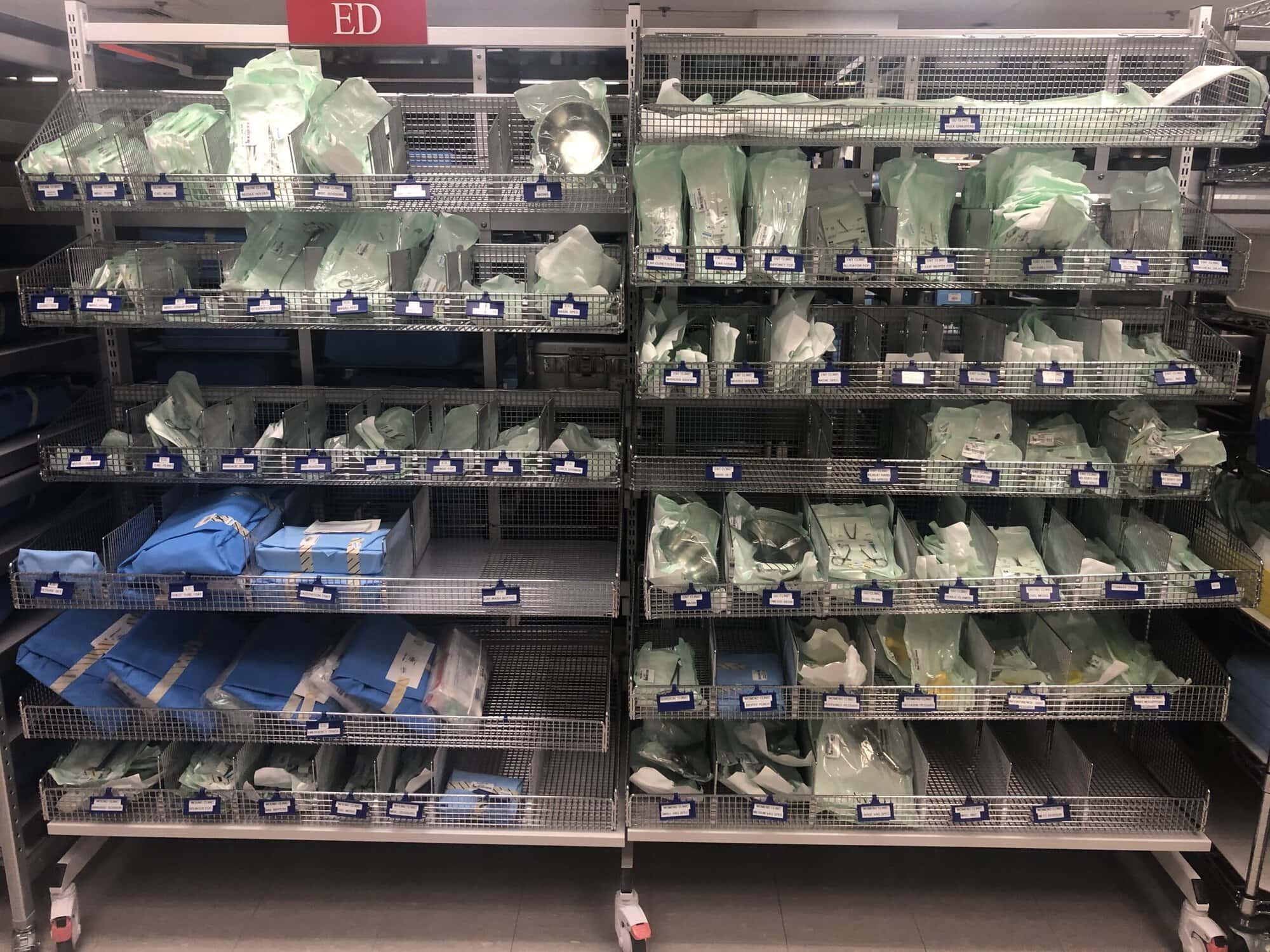
Proper transportation from SPD to OR requires dedicated carts with covers that protect against airborne contamination. Facilities using wire shelving systems must ensure surfaces remain free from scratches and damage.
Financial analysis guides equipment selection and helps justify compliance investments to hospital leadership and finance committees. Understanding total ownership costs reveals long-term savings that offset higher initial purchase prices.
ROI calculations must include both direct costs and avoided expenses from prevented infections and regulatory penalties. Strategic investments deliver measurable improvements in patient safety while reducing operational costs over equipment lifecycles.
Premium systems last 15+ years with minimal maintenance requirements and consistent performance throughout their service life. Standard wire shelving lasts 3-5 years with USD 850 annual maintenance costs for repairs and replacements.
Polymer shelving lasts 15+ years with USD 150 annual maintenance, creating significant long-term value for facilities. This represents a 41% reduction in total ownership costs over 10 years compared to wire shelving.
Budget storage cabinets cost USD 1,500-5,000 but require frequent replacement and offer limited environmental control. Premium systems ranging from USD 15,000-100,000+ provide automated monitoring and superior contamination prevention throughout their lifespan.
Preventing even one SSI saves USD 20,000 or more in additional hospitalization costs and liability exposure. Compliant heavy-duty storage systems reduce infection risk while improving workflow efficiency in sterile processing departments.
Training services hold 15% market share in the sterile storage compliance solutions industry worldwide. These services directly address the primary cause of processing errors while supporting accreditation and regulatory compliance.
Software solutions hold 16% market share and reduce documentation burden through automated data collection and reporting. Combined investments in training and software create synergistic improvements that exceed individual component benefits.
Emerging technologies transform sterile storage management through automation, real-time monitoring, and predictive analytics capabilities. Innovation reduces human error while improving efficiency and compliance across healthcare facilities of all sizes.
Technology adoption accelerates as costs decrease and integration challenges diminish through improved software architectures. Forward-thinking facilities gain competitive advantages through early adoption of proven technologies.
Smart containers with tracking capabilities provide real-time location data and automated inventory counts throughout healthcare facilities. These systems eliminate manual counting errors and reduce the time spent searching for missing instruments.
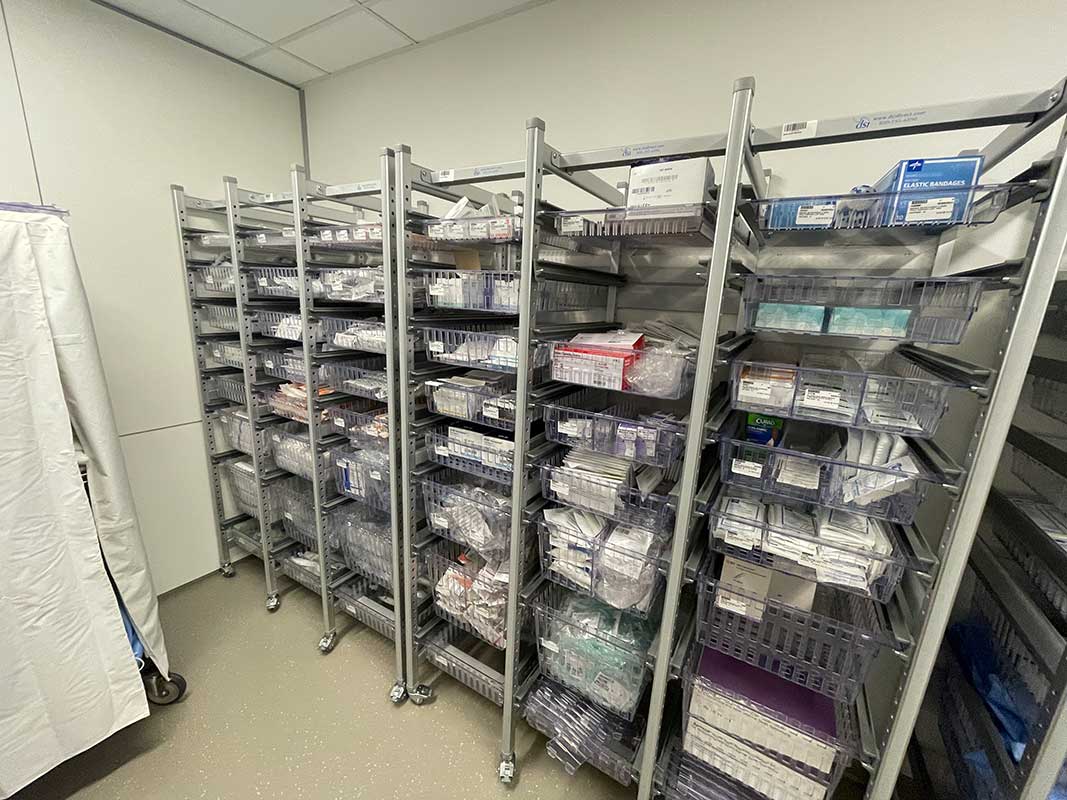
Automated multi-compartment storage systems optimize space utilization while maintaining strict environmental controls for different instrument types. Integration with hospital information systems enables seamless data exchange and improved workflow coordination.
Cloud-based tracking software with real-time data logging eliminates transcription errors associated with manual documentation processes. Automated alerts notify staff immediately when deviations occur, enabling rapid corrective action before contamination risks.
Audit-ready reports generate automatically, reducing preparation time from weeks to minutes during regulatory inspections. Software systems maintain complete historical records that demonstrate sustained compliance patterns over multiple years.
The global sterilization equipment market, valued at USD 18.32 billion in 2025, reflects growing investment priorities. Market projections show growth to USD 27.60 billion by 2031 with 7.3% CAGR driven by compliance requirements.
North American market growth from USD 5.66 billion in 2024 to USD 12.17 billion by 2034 demonstrates regional commitment. Sterilization consumables projected 10.6% CAGR from 2026 to 2031 indicates sustained demand for compliant storage solutions.
Successful implementation requires systematic planning that addresses equipment, environmental controls, staff training, and ongoing monitoring. Facilities must assess current capabilities honestly and develop realistic timelines for achieving full compliance with AAMI ST79 standards.
Sustained compliance depends on creating organizational cultures that prioritize patient safety over convenience or short-term cost savings. Regular audits and continuous improvement processes identify gaps before they compromise instrument sterility or patient outcomes. Healthcare organizations that commit to excellence in sterile processing protect patients while reducing long-term operational costs and liability exposure.
DSIDirect partners with healthcare facilities to design and implement comprehensive storage solutions that meet evolving compliance requirements. Their turnkey approach includes on-site analysis, custom engineering, and full implementation support that minimizes disruption to clinical operations.
Achieving and sustaining AAMI ST79 compliance starts with the right storage infrastructure. Distribution Systems International designs and implements sterile storage systems built to meet current environmental controls, clearance requirements, and shelving standards — in SPDs of all sizes.
Our team conducts a complimentary on-site analysis to assess your current setup, identify compliance gaps, and recommend storage solutions engineered for patient safety. From scratch-resistant polymer shelving to high-density modular configurations, DSI provides turnkey implementation with no disruption to your operations.
Contact DSI today to schedule your free storage compliance consultation.
With 21 years of sales management, marketing, P&L responsibility, business development, national account, and channel management responsibilities under his belt, Ian has established himself as a high achiever across multiple business functions. Ian was part of a small team who started a new business unit for Stanley Black & Decker in Asia from Y10’ to Y14’. He lived in Shanghai, China for two years, then continued to commercialize and scale the business throughout the Asia Pacific and Middle East regions for another two years (4 years of International experience). Ian played college football at the University of Colorado from 96’ to 00’. His core skills sets include; drive, strong work ethic, team player, a builder mentality with high energy, motivator with the passion, purpose, and a track record to prove it.