Surgical case carts directly impact operating room efficiency and financial performance. Well-designed cart programs reduce turnover time, improve supply readiness, and support measurable cost savings from custom carts through better sterile processing flow. The global surgical case cart market reached USD 446 million in 2025. Implementation studies show facilities using staged cart systems achieve 95% first-case on-time starts and reduce median turnover time from 37 minutes while generating estimated ROI exceeding USD 19,500 per day.
Custom case carts are specialized transport systems designed to stage surgical supplies and instruments for specific procedures. These carts support entire workflows by enabling night-before preparation, reducing search time, and standardizing supply placement. Facilities typically maintain three carts per operating room: one in use during surgery, one being prepared for the next case, and one returning to sterile processing. This rotation eliminates gaps between case completion and next-case readiness that extend turnover time.
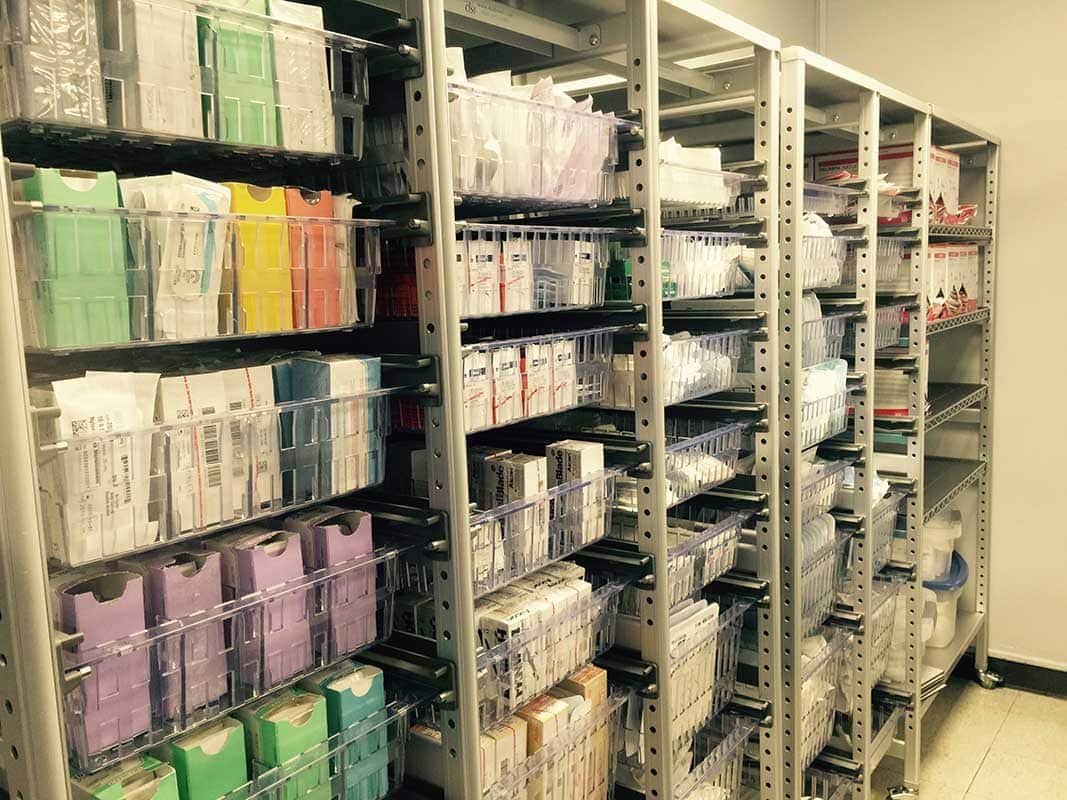
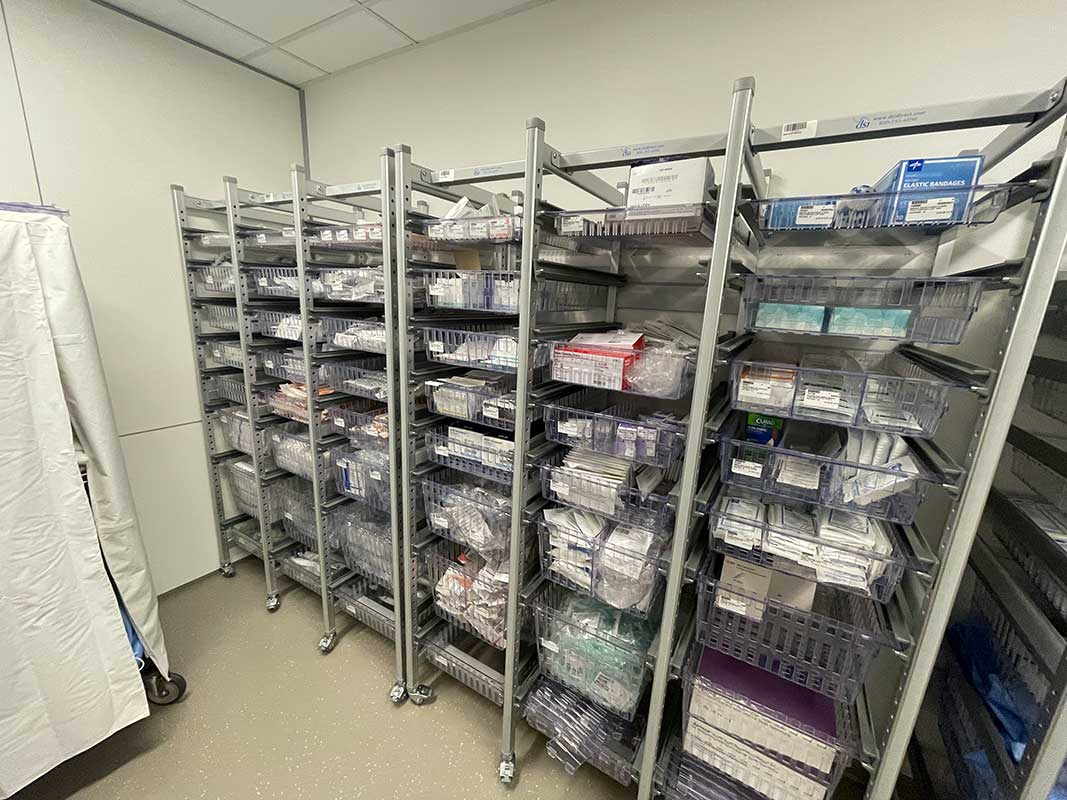
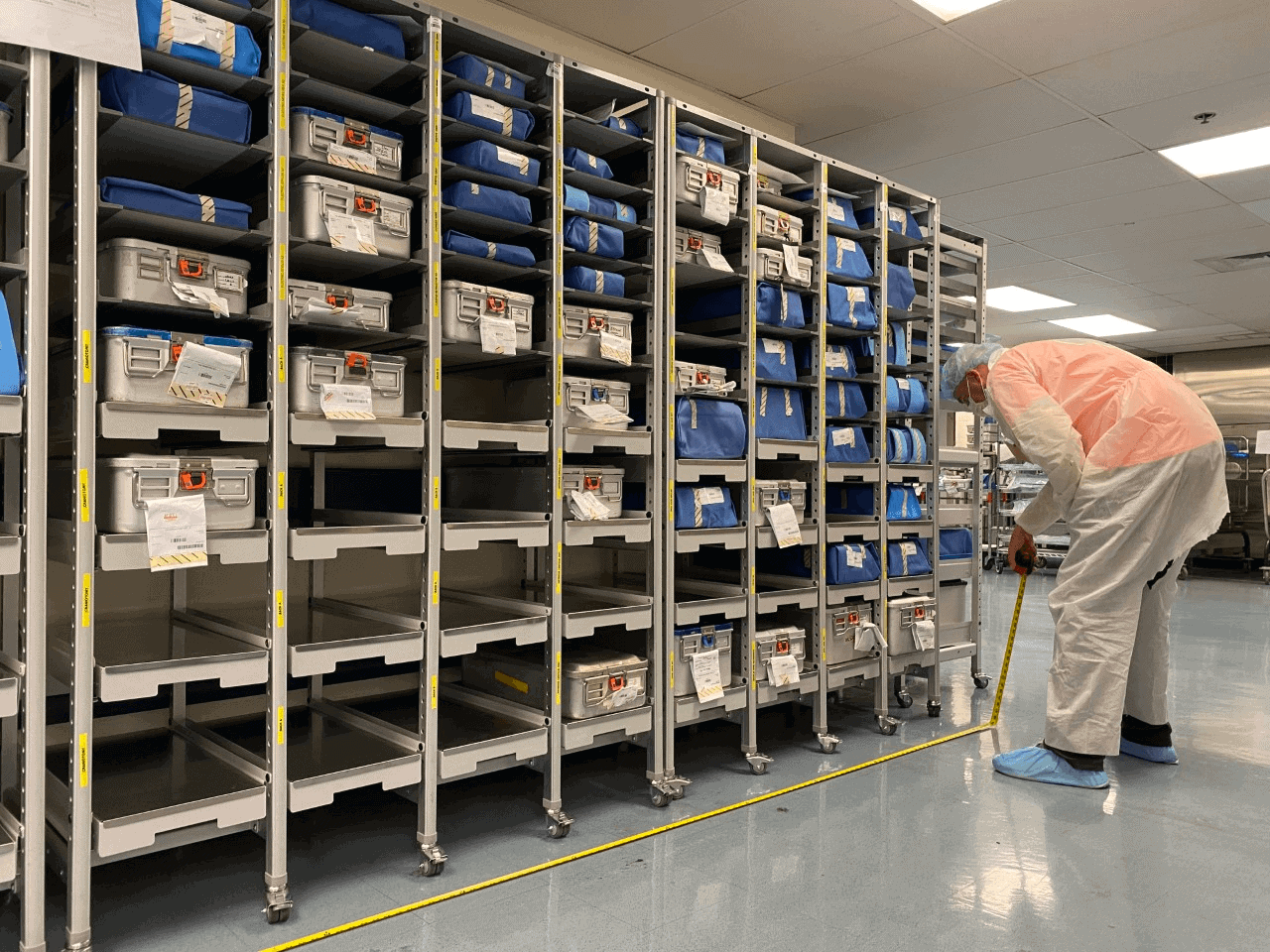
Standard carts are multipurpose platforms with fixed shelving and basic mobility. Premium custom case carts include upgraded casters, numbering systems, tote integration, and specialty shelving for specific instrument trays. Modular case cart systems allow facilities to configure shelf heights, drawer counts, and accessory mounts based on procedural volume and instrumentation complexity. Space-saver and mini carts offer narrower footprints for constrained corridors.
Over-the-road and off-site transport carts feature secure enclosures and transport-resilient construction. The market divides roughly 72% standardized volume versus 28% custom-configured premium tier. Custom configurations address workflow intensity, contamination risk, and specialty instrumentation requirements. Accessories such as caster upgrades cost USD 300 to USD 593, while specialized shelving adds USD 372 or more.
Open case carts use open shelving, allowing quick visual inventory checks and faster loading. Closed case carts feature double doors and an enclosed design protecting supplies from airborne contaminants during transport. Open carts cost less and weigh less but offer minimal contamination protection. Closed carts provide better contamination control and safer enclosed transport, but carry higher weight and a larger footprint.
Closed case carts held approximately 73% market share in 2024, driven by infection-control priorities and shared-corridor workflows. Facilities transporting carts through public hallways, elevators, or off-site pathways favor closed designs to reduce contamination risk. Open carts remain viable in dedicated surgical corridors where transport paths are short.
Stainless steel dominates cart construction because it supports sterility, washer compatibility, and long-term durability under repeated cleaning cycles. Polymer materials serve specialty applications such as MRI environments where ferrous metals are prohibited. Most surgical case carts use 304-grade stainless steel frames with mixed polymer bumpers to balance washability with impact protection. Stainless carts withstand years of autoclave exposure and chemical cleaning without structural degradation.
Heavy loads create staff push and pull strain problems, making mobility features critical for ergonomics and safety. Six-inch casters with directional locks, polyurethane wheels, and low-force steering reduce musculoskeletal injury risk and improve maneuverability in tight spaces. Heavy-duty storage cart systems incorporate reinforced frames and premium mobility hardware to handle instrument sets exceeding 200 pounds. Facilities should test carts under real load conditions to verify that staff can safely navigate corridors and doorways without excessive force.
OR turnover efficiency determines how many cases a facility can complete daily without adding rooms or staff. Faster turnover directly increases revenue by enabling more billable procedures from existing infrastructure. One workflow improvement study targeting turnover times below 28 minutes achieved 95% first-case on-time starts. Another study documented a reduction in median OR turnover time from 37 minutes, contributing to estimated daily savings of USD 19,500.
First-case on-time starts prevent schedule cascades where initial delays compound throughout the day, reducing total case volume. Facilities using night-before cart staging achieved 95% first-case on-time starts by eliminating morning supply retrieval and instrument search time. Case carts allow materials management teams to complete setup outside peak surgical hours. A single late first case can delay subsequent procedures by 15 to 30 minutes each, eroding throughput and revenue.
Turnover times below 28 minutes require coordinated workflows across surgery, sterile processing, and materials management. Staged carts reduce variability by standardizing supply placement and eliminating last-minute item retrieval.
Supply-related disruption occurs without proper cart systems when staff must retrieve missing items during case preparation. Missing supplies delays workflow and extends turnover time by forcing personnel to search for instruments or disposables. These delays create unpredictable gaps that make scheduling unreliable and reduce daily case volume.
Contamination risk in shared-path environments increases when supplies move through public corridors without protective enclosures. Open transport exposes sterile packages to airborne particulates and physical damage. Facilities using closed carts reduce contamination risk by isolating supplies during transit. Sterility challenges also arise when carts lack clear, clean-versus-dirty status indicators. Modern cart designs include visual status systems such as color-coded tags or indicator windows.
Surgical department efficiency improves by maintaining three carts per operating room: one in use, one being prepared, and one being returned for processing. This rotation ensures continuous case readiness. Advanced cart storage systems support this workflow by providing dedicated staging areas where completed carts await next-day use. Staging completed carts the night before surgery allows materials management to verify supply completeness and correct missing items before the surgical schedule begins.
Stocking supplies in a case cart the night before surgery eliminates morning setup bottlenecks and reduces staff workload during peak hours. Sterile processing departments benefit from predictable cart flow because they can clean and restock carts during off-peak periods, spreading workload across shifts and reducing overtime costs. Facilities using structured cart programs report fewer missing-supply incidents and better inventory control.
The global surgical case cart market in 2025 is expected to cluster around USD 446 million to USD 455 million, with growth driven by increasing surgical volumes and efficiency demands. Long-range forecasts project market expansion ranging from USD 611 million by 2033 to USD 781 million by 2032, representing a growth of roughly 3.8% to 8.3% CAGR. North America accounts for 41.2% of the global share, with the U.S. representing approximately 90% of North American revenue. Urban ambulatory surgical centers show the fastest growth, reflecting outpatient procedure migration and value-based care incentives.
Market analysts place the current surgical case cart market between USD 446 million and USD 455 million in 2025. Five-year projections using mid-range scenarios estimate growth to approximately USD 634 million by 2030, reflecting 7.29% CAGR.
North America's 41.2% global share and the U.S. accounting for roughly 90% of North American revenue position American facilities as primary drivers of premium cart adoption. Urban concentration matters because 93.7% of Medicare-certified ASCs were urban in 2024, compared with only 6.3% rural locations. Urban hospitals comprise 64.9% of U.S. community hospitals versus 35.1% rural facilities, creating a market where high-throughput environments dominate purchasing decisions. This geographic distribution favors custom case carts' ROI because dense urban facilities process higher case volumes that amplify efficiency gains.
Leading manufacturers differentiate through accessory ecosystems, material quality, mobility features, and workflow integration. The Pedigo Revolution closed cart offers modular accessories and door security options. Tiger Medical's Blickman open cart emphasizes cost efficiency and lifetime warranty coverage. Medical cart solutions from Custom Comfort focus on supply and procedure cart applications outside sterile surgical use.
STERIS AMSCO surgical case carts integrate sterile processing workflow through deep shelves, clean-dirty indicators, directional locking, and six size options. Innerspace Healthcare closed case carts provide 304 stainless steel construction with a washer-safe design and configurable shelf arrangements. Vendor selection increasingly depends on total cost of ownership, including caster durability, shelving adjustability, and compatibility with automated cleaning systems.
Case cart selection is a multi-stakeholder operational decision. Committees typically include CEOs, CFOs, physicians, materials management leaders, OR directors, nursing managers, purchasing directors, and perioperative service leaders who evaluate carts based on workflow impact. This collaborative structure means vendors must demonstrate measurable value across financial, clinical, and operational dimensions.
Urban ASC concentration at 93.7% versus 6.3% rural creates distinct purchasing patterns where outpatient facilities prioritize fast turnover and standardization. Community hospitals show more balanced distribution with 64.9% urban and 35.1% rural locations, requiring vendors to offer both premium custom configurations and standardized platforms. Urban surgical centers processing higher daily case volumes justify a custom cart investment through greater OR turnover reduction and throughput gains.
Facilities initiate cart purchases primarily to replace outdated technology, with 71% of healthcare decision-makers citing this reason. User requests drive 42% of procurement decisions when clinical staff experience workflow friction. Three out of five buyers aim to improve clinical outcomes, while nearly half seek to lower costs through efficiency gains. Custom case carts ROI emerges from combining these drivers: replacing aging carts while simultaneously improving throughput and reducing labor waste.
Seventy-one percent of healthcare facilities initiate purchases to replace outdated technology when older carts create mobility, maintenance, and infection-control problems. Worn casters cause difficult steering and increase musculoskeletal injury risk. Deteriorating frames lose structural integrity and fail to survive repeated autoclave cycles. Replacement cycles typically run 7 to 10 years for standard carts, but can extend longer for premium stainless models with proper maintenance.
User requests account for 42% of procurement drivers when OR teams, sterile processing departments, or materials management staff identify workflow bottlenecks. These requests often highlight specific pain points such as insufficient shelf space, missing mobility features, or incompatible tray dimensions.
Older carts create mobility, maintenance, and infection-control problems extending beyond purchase price. Facilities must calculate the total cost of ownership by including labor costs for repairs, downtime from broken equipment, and efficiency losses from poor ergonomics. Maintenance burden increases as casters degrade, welds crack, and protective coatings fail. Comprehensive storage solutions incorporate lifecycle economics by comparing upfront investment against multi-year operational costs.
Infection-control costs arise when carts cannot withstand chemical cleaning or develop surface damage that harbors biofilm. Washer compatibility matters because carts requiring manual cleaning consume more labor time and deliver less consistent disinfection. Premium carts with superior materials may cost 40% to 60% more initially but deliver lower total cost over 10-year lifecycles.
Sixty percent of healthcare buyers pursue equipment upgrades to improve clinical outcomes by reducing delays and standardizing workflows. Approximately 49% seek to lower costs through operational efficiency. Custom case carts ROI calculation must balance higher acquisition costs against measurable savings from faster turnover, reduced labor, and fewer supply errors. A facility moving from USD 3,000 open carts to USD 4,916 premium closed carts invests an incremental USD 1,916 per unit but may recover that premium within weeks through improved throughput.
One implementation study estimated 38% improvement in maximum patient throughput within six months of deploying properly sized cart systems. Another workflow study reported USD 19,500 per day in ROI from Lean operating room improvements that included night-before cart staging. These returns dwarf typical cart price differentials, making customization economically rational for high-volume surgical departments.
Custom case carts improve OR throughput by eliminating supply retrieval delays and standardizing case preparation workflows. Staged carts allow materials management to complete setup during off-peak hours. One ProModel implementation study showed that case cart systems increased maximum patient throughput by 38% within six months, with no patient-flow delays attributable to cart-related issues. These gains reflect reduced search time, fewer missing-supply incidents, and better coordination between sterile processing and surgical departments.
Thirty-eight percent improvement in maximum patient throughput within six months represents substantial surgical department efficiency gains. This increase means a facility completing 100 weekly cases could potentially reach 138 cases using the same infrastructure and staff. Throughput improvements stem from eliminating the gap between case completion and next-case readiness. Turnkey implementation services support these gains by helping facilities design staging workflows and train staff on proper cart utilization.
Operational benefits extend beyond raw throughput to include better schedule predictability and reduced staff stress. When supplies arrive pre-staged in labeled carts, surgical teams spend less time verifying completeness.
Staging completed carts the night before surgery eliminates morning bottlenecks when multiple ORs compete for materials management attention simultaneously. Night-before preparation allows staff to verify supply completeness, correct missing items, and ensure instrument availability before the surgical schedule begins. This approach removes time pressure from case preparation and reduces the likelihood of discovering shortages after patients enter the OR.
Supply readiness reduces delays by standardizing item placement within carts so surgical teams can locate instruments without searching. Consistent organization also simplifies training because new staff learn one cart configuration applicable across multiple procedure types. These staging practices support OR turnover reduction by minimizing variance in setup time between cases.
USD 19,500 per day in ROI emerged from a Lean operating room study published in The Annals of Thoracic Surgery that reduced median turnover time from 37 minutes. The Novant facilitation and staging project sustained 95% first-case on-time starts through structured cart workflows targeting turnover times below 28 minutes. The ProModel case cart implementation study quantified 38% maximum throughput improvement within six months.
These studies demonstrate that surgical department efficiency gains depend on system design rather than equipment selection alone. Facilities must combine appropriate cart types with staging processes, clear accountability, and cross-departmental coordination to achieve maximum ROI. Customizable product gallery options allow facilities to match cart features to specific workflow requirements. Evidence suggests that ROI scales with surgical volume, making premium custom carts most attractive for high-throughput urban facilities and ambulatory surgical centers.
Surgical departments should evaluate case carts across four dimensions: throughput impact, route and sterility fit, ergonomics, and lifecycle economics. Throughput impact measures whether staged carts will improve first-case on-time starts, reduce missing-supply delays, or enable more cases per room. Route and sterility fit examines whether carts travel through shared hallways, elevators, or off-site pathways requiring contamination protection. Ergonomic considerations address staff push and pull strain, especially when loads exceed 150 pounds.
High-volume ORs and ASCs should weigh throughput impact most heavily because efficiency gains multiply across many daily cases. Facilities completing 15 to 20 cases daily generate higher ROI from turnover improvements than low-volume rural hospitals, averaging 3 to 5 cases. Ergonomic factors deserve higher weight when staff report musculoskeletal complaints, carts travel long distances, or facility design includes tight corners and ramps. Contamination control becomes paramount in shared-path systems where carts move through public corridors or off-site locations.
Lifecycle economics should guide custom versus standard cart decisions by comparing upfront investment against maintenance costs, replacement frequency, and operational savings. Premium carts costing USD 4,916 justify higher prices when superior casters reduce repair frequency, better materials extend usable life beyond 10 years, and improved mobility lowers injury-related workers' compensation claims. Decision frameworks must reflect institutional priorities because no single cart configuration optimizes all dimensions simultaneously.
Large urban hospital OR complexes benefit from closed standard or premium custom carts because higher throughput, shared paths, and complex instrumentation justify premium investment. Urban ASC networks should prioritize standard closed or specialty compact carts that support fast repeatable turnover in outpatient standardization environments. Rural hospitals typically favor standardized multipurpose or mixed open-and-closed configurations due to tighter budgets, lower specialty density, and the need for versatility.
Off-site or shared-corridor transport environments require over-the-road or enclosed transport carts offering better contamination protection. Specialty high-instrument service lines such as orthopedics or cardiac surgery demand premium custom or accessory-rich closed carts accommodating more trays, specialized labeling, and enhanced mobility control. Facilities should map cart types to specific service lines rather than standardize across entire surgical departments.
Lifecycle economics compare purchase price against labor savings, maintenance burden, replacement timing, and avoided delays over multi-year periods. Standard carts costing approximately USD 3,000 serve facilities where budget constraints dominate, and case volumes are insufficient to justify premium features. Premium custom carts at USD 4,916 to USD 5,735 deliver superior value when improved mobility reduces staff injury costs, better materials extend replacement cycles, and enhanced staging capabilities generate measurable OR turnover reduction.
Facilities should evaluate whether accessory upgrades, such as USD 300 to USD 593 caster improvements or USD 372 shelving enhancements, deliver proportional operational benefits. Heavy-use environments justify premium mobility hardware because caster failures create downtime and safety risks that exceed repair costs. Total cost modeling should include hidden factors such as staff overtime from extended turnover, revenue loss from canceled cases, and infection control costs from inadequate supply protection.
Pricing tiers divide the market into budget supply carts at USD 1,199 to USD 2,009, mid-range open surgical case carts near USD 3,000, and premium closed surgical case carts from USD 4,916 to USD 5,735 MSRP. These bands reflect fundamental differences in materials, enclosure, mobility features, and accessory ecosystems. Budget carts serve non-sterile clinical applications but lack the durability and washability required for surgical environments. Mid-range carts provide basic functionality for facilities with straightforward workflows and limited customization needs.
USD 3,000 represents the current price for a representative open cart with stainless steel construction and standard mobility features. USD 4,916 current pricing and USD 5,735 MSRP characterize premium closed carts before accessory additions or volume discounts. USD 1,199 to USD 2,009 covers budget supply carts suitable for general clinical use but lacking surgical-grade materials and sterile processing compatibility.
Price transparency varies significantly by channel, with commodity-like lower-end carts showing public pricing while mid-tier and premium surgical case carts increasingly use quote-gated or discount models. Facilities should request detailed quotes, including accessories, delivery, installation, and warranty terms, to enable accurate total cost comparison.
Paying a premium yields financial benefits when improved cart features deliver measurable labor savings, faster turnover, or reduced injury costs exceeding the price differential. A USD 1,916 incremental investment moving from USD 3,000 open carts to USD 4,916 premium closed carts pays back quickly if better contamination control reduces infection-related case cancellations or enhanced mobility cuts staff injury claims. Facilities documenting USD 19,500 daily ROI from Lean OR improvements find cart premiums trivial compared to total efficiency gains.
Conversely, low-volume facilities completing fewer than 5 weekly cases struggle to justify premium features unless infection control, route complexity, or specialty instrumentation specifically requires them. Cost savings from custom carts depend on baseline inefficiency: facilities already achieving 28-minute turnover times gain less from cart upgrades than those averaging 45-minute turnovers.
Mobility and accessory upgrades influence ROI by reducing staff effort, improving maneuverability, and supporting specialty instrumentation requirements. Premium caster systems costing USD 300 to USD 593 deliver value when they reduce push force, improve steering precision, or extend replacement intervals. Heavy loads exceeding 200 pounds particularly benefit from directional locks and polyurethane wheels that distribute weight evenly and minimize floor damage.
Specialty shelving accessories priced at USD 372 and above justify costs when they eliminate the need for secondary organization systems or reduce setup time through better instrument visibility. Custom tray configurations, labeling systems, and modular dividers support specialty service lines where standard shelf spacing cannot accommodate unique instrumentation. Accessory ROI calculation must compare upgrade costs against labor time saved during cart loading, instrument retrieval, and inventory verification.
Custom case carts deliver operational and financial impact by reducing turnover delays, improving supply readiness, and supporting measurable throughput gains. Facilities implementing structured cart programs report 95% first-case on-time starts, median turnover reductions from 37 minutes, and estimated daily ROI reaching USD 19,500 in high-efficiency surgical departments. These outcomes depend on combining appropriate cart selection with staging processes, cross-departmental coordination, and clear accountability for cart preparation and transport.
Practical purchasing decisions should evaluate carts across throughput impact, contamination control, ergonomics, and lifecycle economics rather than purchase price alone. Closed carts dominate the market at 73% share because they provide superior contamination protection during transport through shared corridors and off-site pathways. Stainless steel construction remains the material standard for surgical applications due to sterility requirements, washer compatibility, and multi-year durability under repeated cleaning cycles.
Organizations seeking to maximize custom case carts ROI should adopt the three-cart-per-OR model: one in use during surgery, one being prepared for the next case, and one returning to sterile processing. Night-before staging eliminates morning bottlenecks, reduces missing-supply incidents, and standardizes case readiness across surgical schedules. This workflow structure enables surgical department efficiency improvements that extend beyond cart hardware to encompass materials management, sterile processing, and perioperative coordination. DSIDirect supports these outcomes through consultative analysis, custom design, and turnkey implementation that addresses workflow requirements.
Custom case cart programs deliver measurable savings only when paired with the right staging workflow and lifecycle planning. Distribution Systems International has helped acute care facilities reduce turnover delays, improve first-case on-time starts, and standardize sterile processing flow since 1990. Trust our team to assess your current OR operations, design a three-cart-per-room model sized to your case volume, and deliver a turnkey installation backed by ongoing service. Schedule a complimentary storage analysis with Distribution Systems International today.

With 21 years of sales management, marketing, P&L responsibility, business development, national account, and channel management responsibilities under his belt, Ian has established himself as a high achiever across multiple business functions. Ian was part of a small team who started a new business unit for Stanley Black & Decker in Asia from Y10’ to Y14’. He lived in Shanghai, China for two years, then continued to commercialize and scale the business throughout the Asia Pacific and Middle East regions for another two years (4 years of International experience). Ian played college football at the University of Colorado from 96’ to 00’. His core skills sets include; drive, strong work ethic, team player, a builder mentality with high energy, motivator with the passion, purpose, and a track record to prove it.