Operating room efficiency depends on more than surgical skill and advanced technology. Storage design directly influences case start times, staff productivity, and revenue preservation across perioperative departments. When supplies are disorganized or equipment is missing, surgical schedules collapse, and labor costs escalate.
Equipment failure remains the largest single contributor to surgical delay causes, accounting for 55.2%–57.9% of interruptions. Insufficient or malfunctioning instruments add another 18.8% of delays, while nearly 16% of scheduled surgeries experience postponement due to faulty or missing equipment. These failures trace back to preventable OR storage mistakes that affect workflow, inventory visibility, and case readiness.
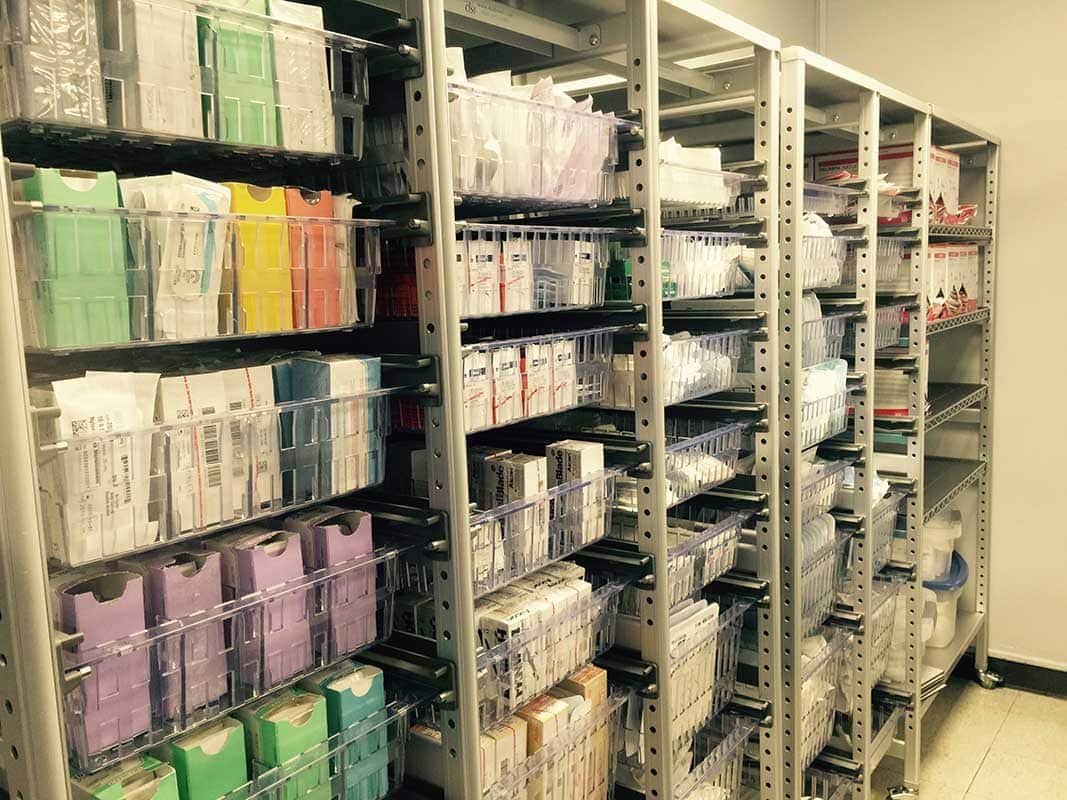
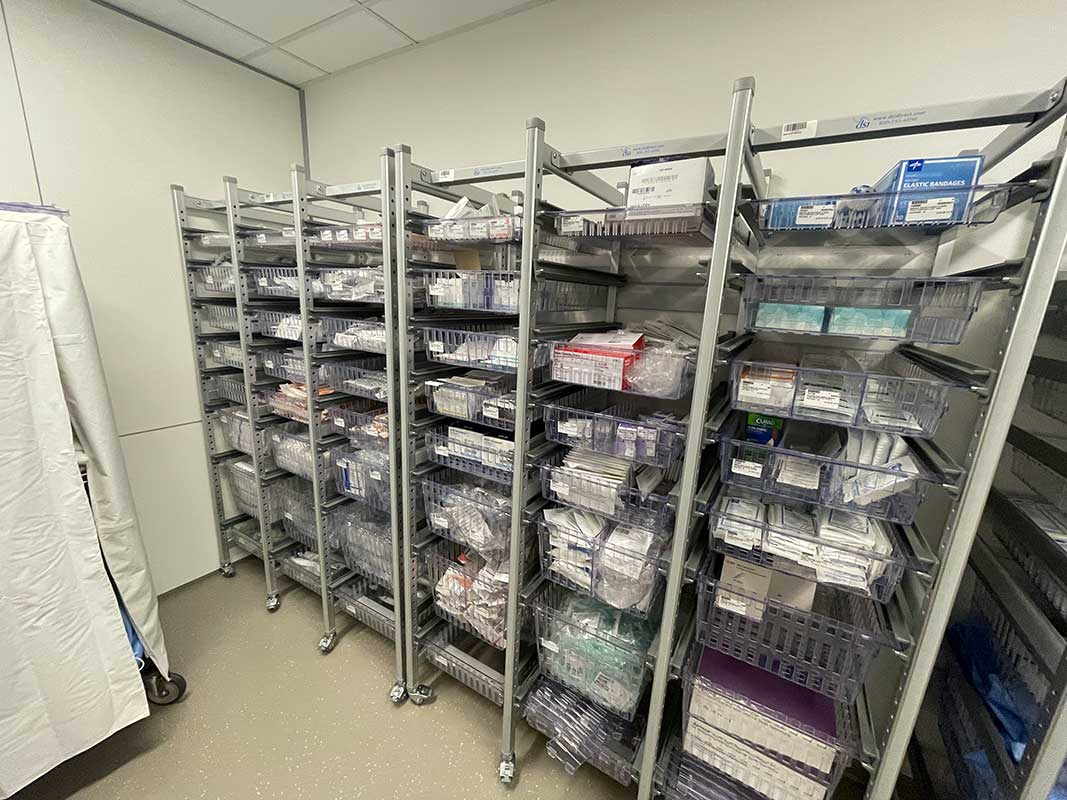
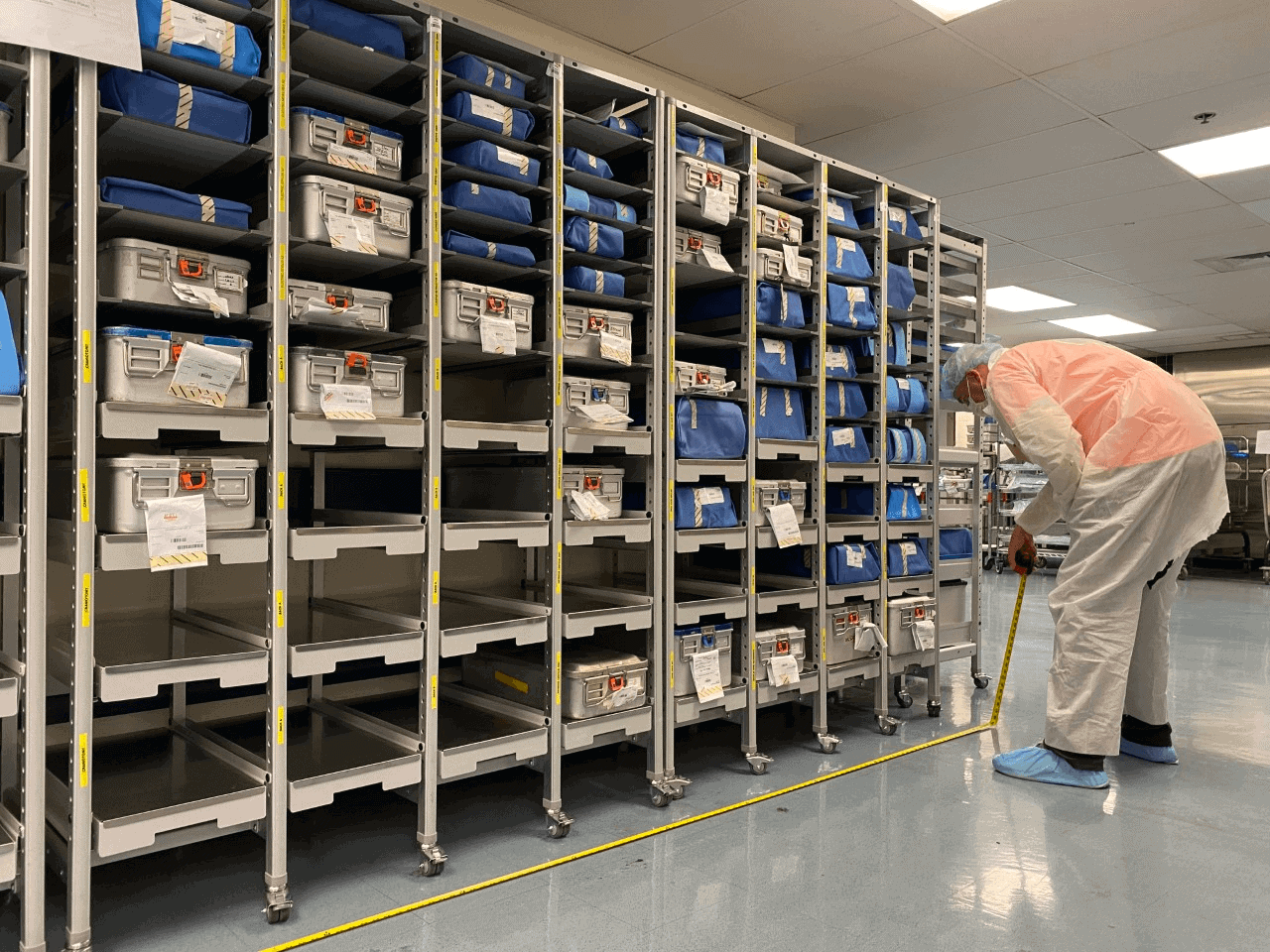
OR storage encompasses all cabinetry, shelving, pass-through systems, and automated solutions that house surgical instruments, consumables, implants, and equipment. Proper storage design ensures supplies are accessible, organized, and secure while maintaining infection control standards. Poor storage creates bottlenecks that delay first-case starts and reduce daily case volume.
Storage decisions influence operating room workflow issues by controlling how quickly staff locate items and prepare case carts. When supplies are hidden behind closed doors or mixed across zones, clinicians waste time searching instead of caring for patients. A well-designed storage system reduces labor costs, prevents cancellations, and improves staff satisfaction.
Insufficient or malfunctioning instruments account for 18.8% of surgery interruptions and delays. Equipment failure causes 55.2%–57.9% of all operating room delays. These delays stem from poor storage visibility, weak organization, and failure to maintain adequate par levels at point-of-use locations.
Faulty or missing equipment delayed nearly 16% of scheduled surgeries in a teaching hospital study. When storage systems lack tracking capabilities or visual controls, staff cannot quickly verify item availability. This gap transforms storage design from a facilities issue into a throughput and revenue problem.
Traditional cabinetry and fixed casework hold 66.2% triangulated market share. These systems use welded stainless-steel construction with lockable doors, shelving, and pass-through configurations. They remain dominant due to low initial cost and proven durability.
Modular storage systems represent 10.5% triangulated share. Integrated and robotic-enabled storage accounts for 15.6% triangulated share, while smart or automated storage holds 7.7% triangulated share. The faster-growing categories address renovation timelines, digital integration, and labor efficiency demands.
Weak visibility, poor zoning, and disorganized point-of-use storage are primary failure drivers. Equipment failure remains the single largest delay cause at roughly 55.2%–57.9% of OR delays. When supplies are stored behind opaque doors or mixed across unrelated categories, staff spend valuable minutes searching.
Smart RFID cabinets address visibility gaps with automatic tracking and replenishment alerts. The market for these systems reached USD 1.192 billion in 2024 and is projected to reach USD 2.212 billion by 2030 at 10.8% CAGR. Facilities implementing track systems with visual controls reduce search time and improve case cart organization errors.
Failure to zone supplies by case criticality and frequency of use creates bottlenecks. Auditing missing-item causes, pass-through bottlenecks, and equipment search time before locking layout decisions is a critical step most facilities skip. Without this upfront analysis, storage renovations repeat existing inefficiencies.
Coordination across perioperative, supply chain, facilities, IT, and security teams must happen at the concept stage. Waiting until construction begins forces costly change orders and workflow compromises. Proper zoning places high-use items near procedure flow while preserving sterile separation and replenishment access.
Insufficient or malfunctioning instruments and devices account for 18.8% of interruptions in observed surgeries. Faulty or missing equipment delayed nearly 16% of scheduled surgeries. These failures often result from overstocking, poor par-level management, and a lack of visibility into inventory status.
Facilities using LEAN inventory management achieved a 37.7% inventory reduction in perioperative settings. Case cancellations dropped from 3.9% to 0.2% using systematic replenishment workflows. Systems like MODU-STOR support KANBAN principles by creating visual triggers for restocking high-turnover items.
Traditional cabinetry is durable and cost-effective, but harder to reconfigure. These systems offer lower data visibility, limited automation, and longer renovation disruption. The category grows at 4.7% CAGR and remains appropriate for budget-constrained facilities with low digital maturity.
Modular systems offer lower installation costs and flexible forms, including base, tall, and upper cabinets. They depreciate over seven years versus 31 years for fixed casework and reach USD 3.20 billion by 2032 at 8.2% CAGR. Smart and automated storage provides RFID-enabled cabinets with software dashboards but carries integration costs and workflow-change requirements.
Robotic-assisted storage supports specialized closed-loop transport between sterile processing and OR. Cost ranges from USD 100,000 to USD 500,000 per hospital. Facilities with low robotic case volume experience weak ROI compared to those running high-volume robotics programs.
New healthcare construction costs approximately USD 700–730 per square foot. Moderate renovation runs USD 245–256 per square foot. Gut-and-rebuild renovation reaches USD 385–402 per square foot.
Limited cabinet refresh projects range from USD 15,000 to USD 75,000. Full storage-led room renovations often reach six figures and can exceed USD 250,000. Failing to account for the right tier leads to mid-project scope expansion and operational disruption.
Large hospitals with more than 400 beds show 96% digital readiness proxy. These facilities suit smart and modular systems that integrate with enterprise inventory platforms. Urban hospitals demonstrate 81% digital readiness proxy, supporting advanced tracking and automation.
Rural hospitals show 56% digital readiness proxy, while small hospitals under 100 beds reach 59%. Independent hospitals achieve only 37% digital readiness proxy, making traditional cabinetry typically more appropriate. Workstations and MODU-CASE configurations bridge the gap for mid-sized facilities.
Traditional cabinetry ranges from USD 3,000–4,500 for budget systems to USD 7,000–9,000+ for premium cabinets. Mid-market options run USD 4,500–7,000 per cabinet. These systems deliver durability without software integration costs.
Modular systems start around USD 5,000 for budget configurations. Mid-market modular installations reach USD 9,000 while premium complex configurations exceed USD 15,000. Smart storage standalone hardware runs USD 3,500–4,500, but enterprise systems commonly reach mid-five-figure ranges after software and implementation.
DSIDirect takes a consultative approach that begins with on-site workflow analysis before recommending storage configurations. The process examines case cart organization errors, inventory flow patterns, and space constraints. CAD design ensures storage layouts match actual clinical workflows instead of generic templates.
Implementation follows a turnkey model that minimizes operational disruption. DSIDirect coordinates with perioperative, supply chain, and facilities teams to sequence installations around case schedules. After-sales support includes workflow optimization and ongoing adjustment as case volumes evolve.
Choose DSIDirect when you need proven LEAN methodology combined with engineered storage systems. Facilities facing high inventory carrying costs, compliance pressure, or OR turnover delays benefit from the consultative process. Systems like MODU-CELL and MODU-MAX support KANBAN replenishment while maximizing vertical space.
Organizations implementing infrastructure improvements gain the most value when storage decisions align with broader process optimization initiatives. DSIDirect provides the analysis, design, and implementation resources needed to eliminate OR storage mistakes. The result is measurable improvement in case readiness, staff productivity, and inventory control.
Addressing operating room workflow issues requires a systems approach that treats storage as a workflow-control tool. DSIDirect's three-decade focus on acute care facilities ensures storage solutions match the operational realities of modern perioperative departments. Browse the full product gallery to see how modular, traditional, and smart storage systems integrate with LEAN workflows.
Are equipment failures, missing instruments, or poor zoning slowing down your operating rooms? Distribution Systems International helps acute care facilities turn cluttered OR storage into LEAN, workflow-driven systems that protect case schedules and reduce labor costs. Our team conducts an on-site analysis, builds CAD-designed layouts around your actual case flow, and manages turnkey installation from start to finish. Schedule a complimentary OR storage analysis today and see exactly which mistakes are costing your facility time and revenue. Contact Distribution Systems International today and request a complimentary storage analysis to identify which OR storage mistakes are affecting your facility's efficiency.

With 21 years of sales management, marketing, P&L responsibility, business development, national account, and channel management responsibilities under his belt, Ian has established himself as a high achiever across multiple business functions. Ian was part of a small team who started a new business unit for Stanley Black & Decker in Asia from Y10’ to Y14’. He lived in Shanghai, China for two years, then continued to commercialize and scale the business throughout the Asia Pacific and Middle East regions for another two years (4 years of International experience). Ian played college football at the University of Colorado from 96’ to 00’. His core skills sets include; drive, strong work ethic, team player, a builder mentality with high energy, motivator with the passion, purpose, and a track record to prove it.