The surgical case carts market reached USD 445.64 million in 2025 and is projected to grow at 7.29% annually through 2030. Facility decision-makers face increasing pressure to balance infection control, workflow efficiency, and cost containment when selecting transport systems for sterile surgical equipment.
This buyer's guide examines how custom and standard surgical carts differ in construction, usability, pricing, and compliance requirements. Understanding the trade-offs between closed, open, and hybrid systems helps supply chain leaders match cart capabilities to specific perioperative workflows and end-user environments.
Custom and standard surgical carts are specialized transport systems designed to move sterile surgical instruments and supplies between sterile processing departments and operating rooms. Cart selection depends on facility sterile pathways, contamination control requirements, storage capacity needs, and budget constraints facing materials management teams.
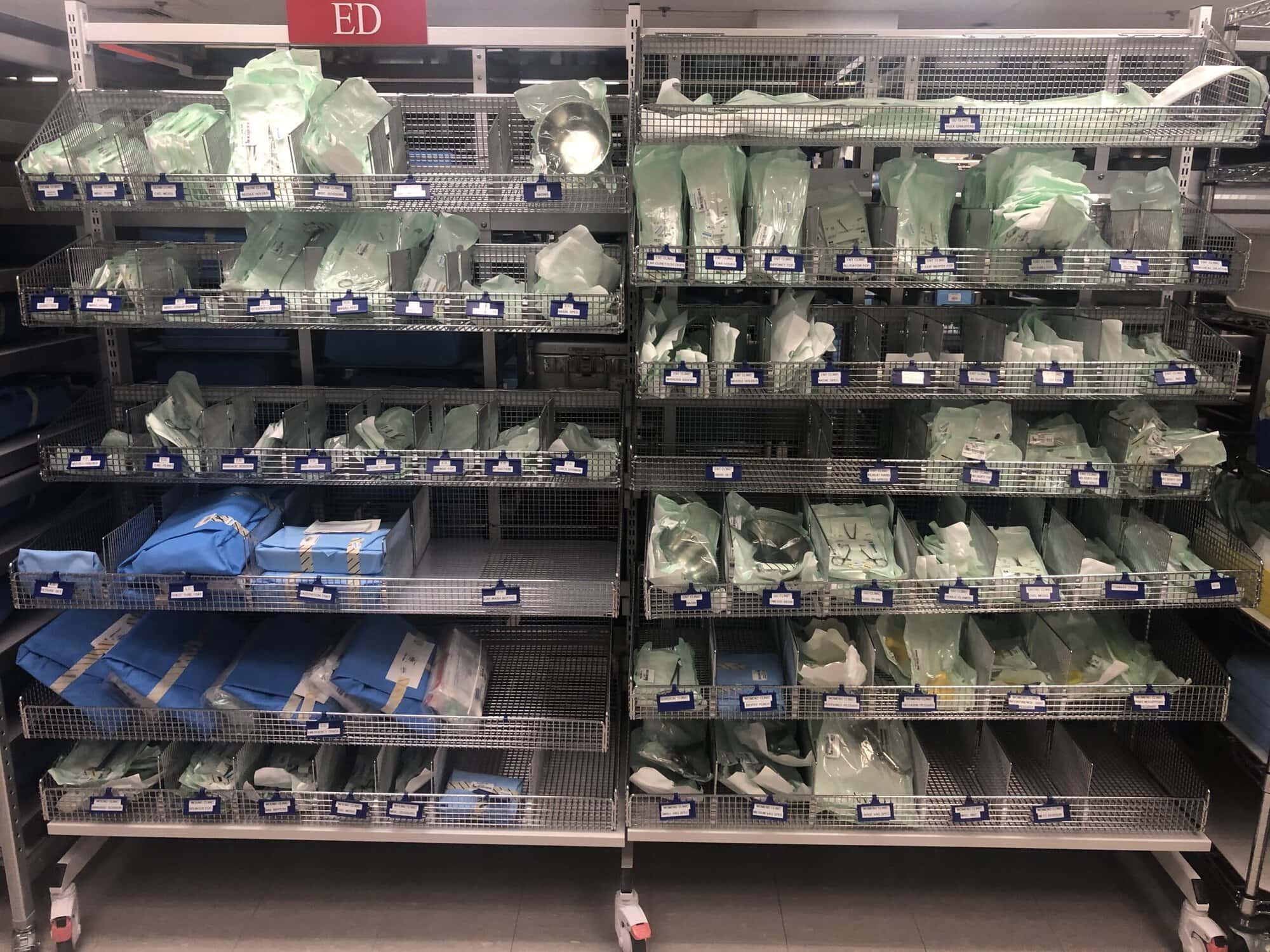
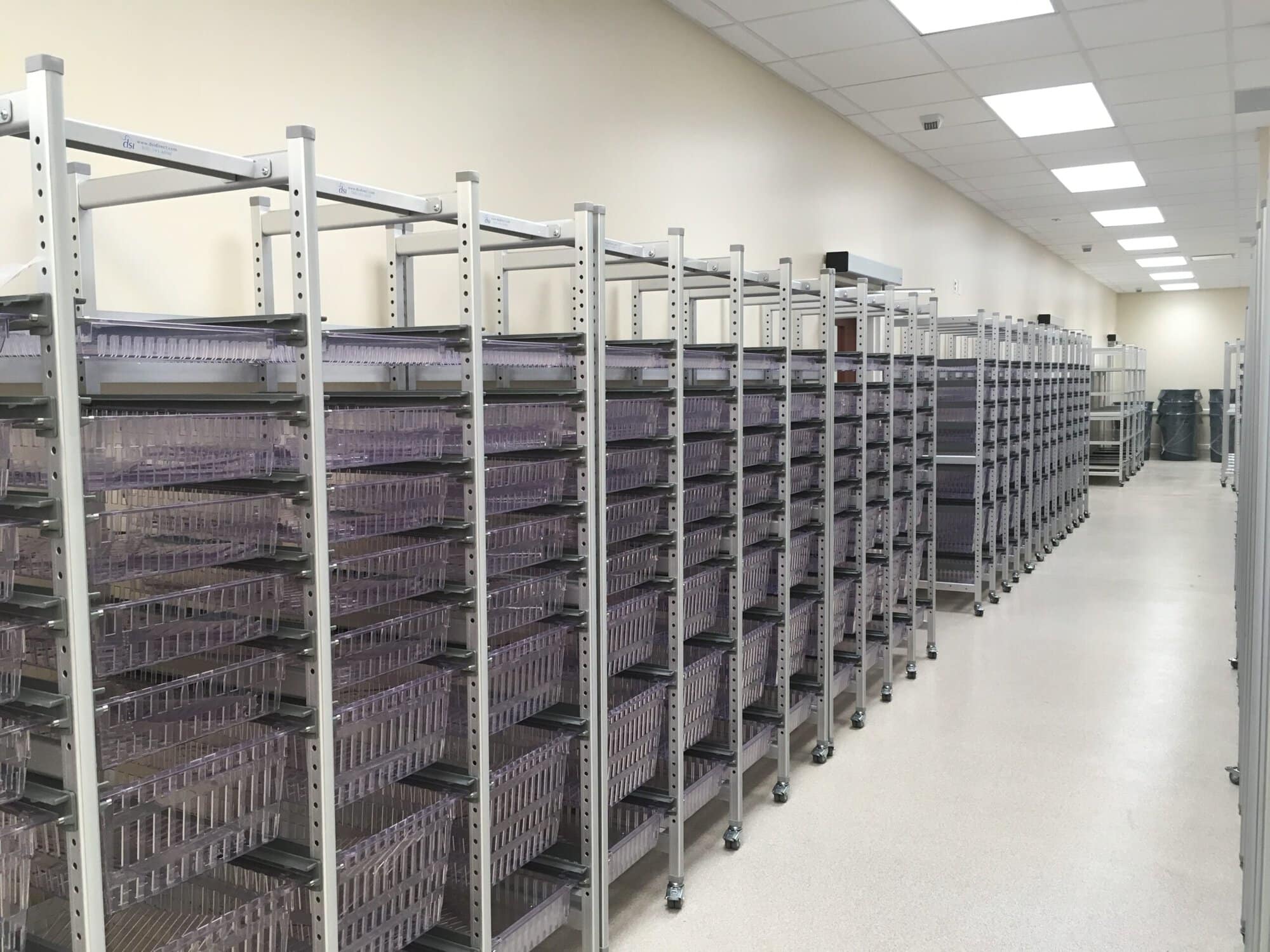
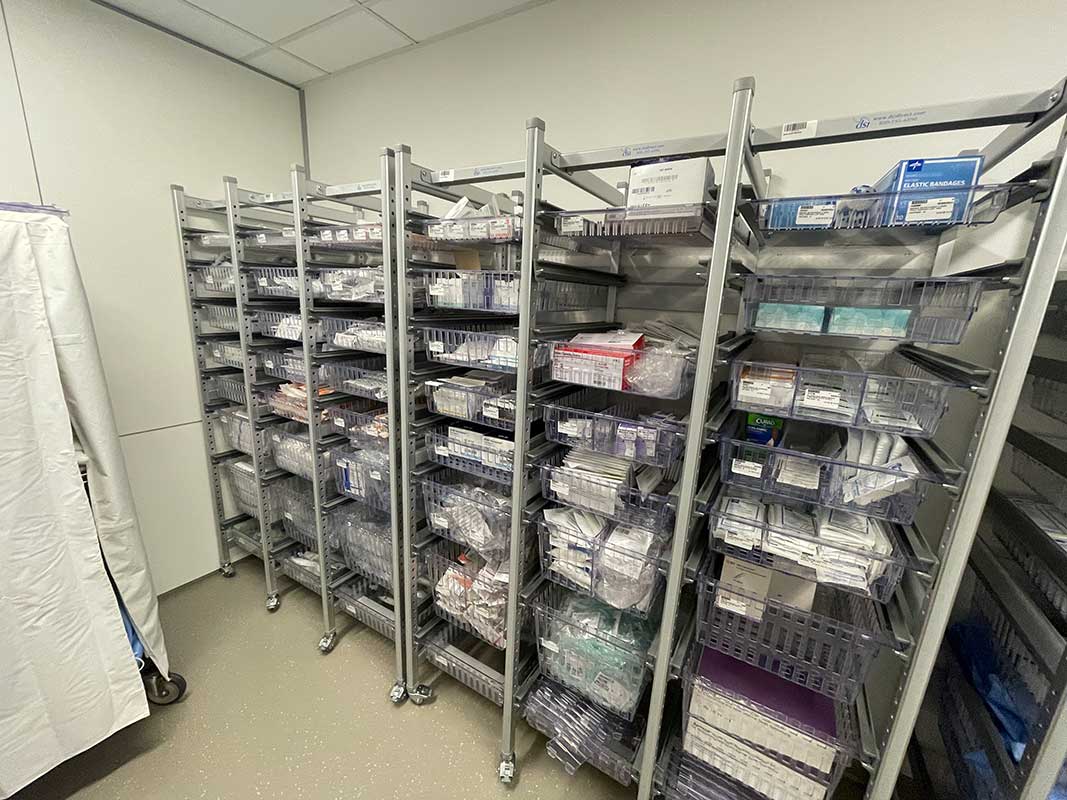
Closed case carts feature solid or clear doors with enclosed panels that protect contents from airborne contamination during transport through non-sterile corridors. Open case carts utilize exposed wire or solid shelving that allows quick visual inventory checks but requires additional covers when moving through areas with contamination risk.
Sealed carts include specialized gaskets and locking mechanisms designed for off-site sterile transport where contamination control becomes critical. Surgical case carts function as mobile storage units with heavy-duty casters, corrosion-resistant frames, and configurations ranging from single-shelf autoclave carriers to multi-door enclosed systems.
Closed cart systems suit facilities lacking fully separated clean and dirty pathways, where airborne particulate protection matters most. Open cart configurations work best in environments with dedicated sterile corridors or sterile core designs where maneuverability and quick access outweigh enclosure benefits.
Sealed transport units serve multi-facility health systems that move sterilized instrument sets between centralized processing centers and satellite surgical locations. Hybrid container-based systems increasingly support ambulatory surgery centers, prioritizing throughput efficiency and compact footprints over traditional full case-cart programs.
Hospitals and clinics held 63% of the surgical case carts market share in 2024, representing the dominant institutional buyer segment. These organizations typically deploy closed case carts, which captured 73% market share, reflecting a preference for contamination protection and flexible storage configurations.
Ambulatory surgery centers comprise the fastest-growing end-user segment at approximately 9% annual growth from 2024 to 2029. ASCs increasingly adopt compact closed carts and container transport systems that fit smaller sterile processing footprints while maintaining AAMI compliance for instrument handling.
Case carts directly impact perioperative efficiency by reducing instrument search time, minimizing turnover delays, and standardizing supply organization across multiple operating rooms. Proper cart selection influences staff productivity, inventory accuracy, and infection control protocol adherence throughout the surgical supply chain.
Quality and durability serve as primary considerations because medical carts must withstand repeated cart-washer heat exposure and years of heavy transport use. Supply costs represent approximately 20% of total expenses per surgical case, making efficient storage and retrieval systems financially material.
Case carts provide compliant containment for contaminated instruments during post-procedure transport from operating rooms back to sterile processing departments. ANSI/AAMI ST79 standards require that contaminated items be contained and clearly marked with biohazard indicators to prevent cross-contamination exposure during transport.
Sterile case carts enable pre-assembled instrument sets to move from processing areas to ORs while maintaining sterility throughout transport. Enclosed cart designs protect sterilized contents from corridor traffic, HVAC-generated particulate matter, and accidental contact during multi-floor transport scenarios.
Standardized case cart systems yielded 20% improvement in case-cart accuracy within 30 days of implementation in documented workflow redesign studies. The same intervention produced 60% reduction in average supply-selection errors per day by organizing instruments consistently across multiple operating suites.
Enclosed cart panels reduce airborne contamination exposure during transport through non-sterile hospital corridors connecting processing and surgical areas. Visual flags, color-coded handles, and transparent door options improve inventory visibility while maintaining barrier protection against environmental particulates.
Ergonomic push handles reduce musculoskeletal strain during repeated transport cycles across long hospital corridors and between multiple floor levels. Fifth-wheel steering mechanisms improve maneuverability in tight perioperative spaces where workstations and equipment create narrow navigation paths.
Biohazard indicators and color-coded flags provide immediate visual cues distinguishing contaminated, clean, and sterile cart status throughout processing cycles. Heavy-duty casters rated for cart washer compatibility ensure mobility systems withstand high-heat disinfection without mechanical failure.
Construction quality determines cart longevity, maintenance burden, and total cost of ownership across multi-year service lifecycles in demanding hospital environments. Material selection impacts both initial pricing and long-term durability when carts undergo daily transport cycles and repeated washer exposure.
This case cart comparison reveals that stainless steel products dominate premium segments while hybrid polymer-metal designs serve budget-conscious buyers. Welded frame construction provides superior structural integrity compared to bolted assemblies that loosen over time.
Stainless steel construction offers maximum corrosion resistance and withstands repeated high-temperature cart washer cycles without frame degradation or surface oxidation. Hybrid polymer-metal frames reduce weight and lower manufacturing costs but require careful material selection to prevent thermal deformation during disinfection.
Premium Modu-Case systems feature all-welded stainless frames designed for decades of heavy institutional use. Budget-tier units may incorporate painted steel components that require more frequent refinishing after washer exposure damages protective coatings.
Configurable shelving allows facilities to adjust internal layouts, matching specific instrument tray dimensions and procedural specialty requirements across orthopedic, cardiovascular, and general surgery programs. Drop-leaf work surfaces, integrated drawer modules, and adjustable shelf spacing provide flexibility as case mixes evolve.
Ergonomic handle designs, procedure-specific color flags, and integrated biohazard indicators customize workflow signaling for contaminated versus sterile transport cycles. Some organizations implement three-cart rotation models where one cart remains in use, one undergoes preparation, and one completes reprocessing simultaneously.
Closed carts provide superior contamination protection through solid or transparent panels that shield contents from corridor traffic and airborne particulates. However, enclosed designs increase weight, require larger storage footprints, and demand more thorough internal cleaning than open wire-shelf alternatives.
Open carts allow faster visual inventory verification and simpler wipe-down cleaning, but necessitate disposable covers when transporting through non-sterile areas. Custom carts command higher acquisition costs while standard carts sacrifice some storage flexibility and contamination control for improved maneuverability.
Cart evaluation should start with quality and durability considerations because replacement costs and downtime exceed initial savings from budget-tier purchases. Buyers must balance technical specifications, financial constraints, safety requirements, and clinical workflow needs when comparing competing systems.
Successful procurement teams assess workflow environment characteristics, including sterile pathway design, transport distance, floor-plan constraints, and existing washer infrastructure. Contamination control requirements drive enclosed-cart adoption, while facilities with dedicated clean corridors can leverage open-cart cost advantages.
Cost containment and total cost of ownership rank as top priorities among hospital supply chain decision-makers balancing capital budgets against operational needs. Durability directly impacts long-term ownership costs because premature cart replacement disrupts workflow and forces unplanned capital expenditures.
Standardization across multi-site health systems reduces training complexity, simplifies inventory management, and enables bulk purchasing leverage with preferred vendors. Usability features, including maneuverability, footprint efficiency, and staff ergonomics, directly affect perioperative productivity and staff satisfaction metrics.
Initial purchase price represents only one component of total ownership cost alongside maintenance, replacement parts, and eventual disposal expenses. Lower-cost units may require more frequent refinishing, caster replacement, and premature retirement compared to premium Modu-Stor CTS alternatives.
Supply organization inefficiencies cost approximately 20% per surgical case when instruments arrive late, incomplete, or incorrectly assembled for scheduled procedures. Investing in durable, well-designed cart systems reduces supply waste and improves OR utilization by minimizing turnover delays.
Multi-facility health systems prioritize standardized cart platforms that enable centralized purchasing, simplified staff cross-training, and interchangeable equipment sharing across network locations. Standardization also streamlines sterile processing workflows when carts move between satellite facilities and central reprocessing hubs.
Purchasing volume leverage from single-vendor agreements can offset higher per-unit costs for premium standard carts versus fragmented budget purchases. Contract compliance and vendor management overhead decrease when supply chain teams consolidate cart procurement under preferred supplier relationships.
Ambulatory surgery centers represent the fastest-growing end-user segment in the surgical case carts market at approximately 9% annual growth. ASC expansion from 41% hospital ownership in 2019 to 82% in 2024 drives demand for compact, efficient cart systems matching outpatient facility constraints.
Procedure migration toward outpatient settings reduces per-case costs by 35%-50% compared to hospital-based surgery, creating pressure for lean capital equipment investments. ASCs prioritize equipment that maximizes throughput, minimizes footprint, and integrates with container-based sterile processing workflows increasingly common in ambulatory environments.
ASCs require compact cart designs that navigate smaller procedure rooms, narrower corridors, and limited sterile storage areas compared to hospital surgical suites. Container handling capabilities matter because many ambulatory centers adopt rigid container systems rather than traditional wrapped instrument trays.
Urban ASC concentration at 94% of facilities in 2023 reflects proximity advantages for patient access and physician convenience in metropolitan markets. The 88.6% Medicare beneficiary age concentration between 65-84 years drives high-volume joint, ophthalmology, and GI procedure growth, requiring efficient supply turnover.
Container-compatible transport carts accommodate standardized rigid sterilization containers that streamline instrument washing, sterilization, and transport compared to flexible wrap systems. Hybrid cart designs combine open shelf areas for disposable supply storage with enclosed compartments protecting sterile containers during transport.
Many ASCs implement lean inventory models where carts double as point-of-use storage and transport systems, reducing handling steps between processing and procedure locations. Throughput-focused solutions emphasize quick cart turnaround through washer-compatible construction and simplified cleaning protocols.
Hospital and health system ASC ownership increased from 48% in 2023 to 82% in 2024, accelerating integrated delivery network expansion. This ownership consolidation drives standardization pressure as health systems seek equipment compatibility between hospital and ambulatory locations.
ASC caseload growth of 6%-7% per year exceeds hospital surgical volume growth, shifting equipment demand toward outpatient-optimized systems. Procedure complexity increases in ambulatory settings as total joints, spine procedures, and complex GI cases migrate from hospitals, requiring a more sophisticated supply organization.
Budget-tier surgical carts typically range from USD 1,500 to USD 2,999 and include basic autoclave transport carts and simple open sterile carts. Mid-range options span USD 3,000 to USD 4,999, covering standard enclosed case carts with single doors and moderate customization capabilities.
Premium systems command USD 5,000 to USD 7,500 or more for large-format double-door enclosed carts and specialized over-the-road transport units. Price differences reflect construction quality, feature complexity, customization depth, and expected service life under intensive institutional use.
Budget carts sacrifice durability, customization flexibility, and contamination protection to minimize upfront acquisition costs for price-sensitive buyers. Mid-range platforms balance construction quality, feature sets, and pricing to serve mainstream hospital and ASC workflows without premium positioning.
Premium cart systems deliver maximum durability, extensive customization, superior contamination control, and the longest service life for facilities prioritizing total ownership value. Feature additions, including ergonomic handles, fifth-wheel steering, transparent doors, and specialty drawer configurations, justify higher price positioning.
Standard carts start at approximately USD 1,508 for basic Pedigo stainless steel autoclave units designed for simple sterile transport. Belintra's open Stericart systems reach USD 2,246, offering container-compatible workflows at entry-level pricing for ambulatory settings.
Custom carts range from USD 3,525 for Blickman mini case carts to USD 5,312 for Lakeside single-door enclosed systems. Specialized transport units like Blickman over-the-road carts command USD 7,301, reflecting reinforced construction for inter-facility sterile transport requirements.
Ergonomic push handles, integrated procedure flags, and biohazard labeling systems add USD 200-500 to base cart pricing, depending on manufacturer. Transparent polycarbonate door panels increase cost by USD 300-800 compared to solid stainless panels while improving inventory visibility.
Fifth-wheel steering mechanisms and heavy-duty cart-washer-compatible casters contribute USD 400-600 to premium cart pricing but reduce staff effort during transport. Multi-shelf configurations with adjustable spacing and removable dividers command incremental pricing reflecting added manufacturing complexity and versatility.
Successful cart implementation begins with workflow analysis, mapping sterile processing pathways, transport distances, storage constraints, and procedure-specific instrument requirements. Cross-functional teams, including SPD managers, OR directors, materials management, and infection control, should participate in cart evaluation and selection.
Pilot testing preferred cart configurations in representative workflows identifies usability issues before full-scale deployment across multiple departments. Standardization decisions should account for multi-site compatibility, vendor support capabilities, and alignment with existing product gallery infrastructure.
Matching cart capacity and shelf configuration to actual procedure instrument volumes eliminates wasted transport capacity and excess cart inventory. Right-sizing cart fleets prevents bottlenecks where insufficient carts delay case starts while reducing excess inventory carrying costs.
Ergonomic design features reduce staff fatigue during repeated transport cycles across long hospital corridors connecting distant processing and surgical areas. Color-coded cart identification systems accelerate correct cart routing to designated ORs, reducing misdirection errors that delay case start times.
AAMI/IFU compliance requirements mandate proper containment and labeling for contaminated instrument transport from procedure areas back to processing departments. Cart selection must accommodate biohazard marking systems meeting institutional infection control policies and regulatory inspection standards.
Washer disinfector compatibility ensures selected carts withstand high-temperature cleaning cycles without mechanical failure or material degradation over expected service life. Verifying cart dimensions fit existing washer chambers prevents costly retrofits or equipment replacement after cart procurement.
Three-cart rotation models allocate dedicated units for in-use, preparation, and reprocessing phases, eliminating cart availability bottlenecks during peak surgical schedules. Centralized cart tracking systems monitor location, contamination status, and maintenance schedules, preventing lost or overdue units.
Par-level optimization balances cart inventory investment against peak demand requirements, reducing excess capital tied up in underutilized equipment. Regular cart audits identify damaged units requiring repair or retirement before mechanical failures disrupt surgical workflows.
The surgical case carts market is projected to reach USD 633.55 million by 2030, growing at 7.29% annually from the 2025 baseline. Closed cart dominance at 73% market share reflects institutional preference for contamination protection despite higher costs compared to open alternatives.
Buyer strategy increasingly emphasizes total cost of ownership over initial purchase price as durability directly impacts replacement frequency and workflow disruption. Standardization across hospital networks and ambulatory locations reduces training complexity while enabling volume purchasing leverage with preferred suppliers.
Successful buyers align cart selection with facility sterile pathway design, washer infrastructure, footprint constraints, and procedure-specific instrument requirements. Organizations like DSIDirect support materials management teams through consultative assessment, custom design with ROI analysis, and turnkey implementation, minimizing operational disruption.
Decision-makers should prioritize quality construction, contamination control capabilities, and vendor support depth when comparing competing cart platforms. Investing in durable, workflow-optimized systems reduces long-term ownership costs while improving surgical efficiency and infection control protocol compliance.
Healthcare facilities that invest in the right case cart system gain measurable returns in OR readiness, infection control compliance, and staff efficiency. Distribution Systems International delivers custom-configured surgical case carts built for the specific demands of your sterile processing and perioperative workflows.
DSI's consultative process begins with an on-site analysis of your current sterile pathways, cart washer compatibility, and storage footprint. From there, DSI engineers a purpose-built solution — not a catalog pick — and manages full turnkey implementation from delivery to inventory transfer.
Contact Distribution Systems International today to schedule a complimentary storage consultation and find the right case cart configuration for your facility.

With 21 years of sales management, marketing, P&L responsibility, business development, national account, and channel management responsibilities under his belt, Ian has established himself as a high achiever across multiple business functions. Ian was part of a small team who started a new business unit for Stanley Black & Decker in Asia from Y10’ to Y14’. He lived in Shanghai, China for two years, then continued to commercialize and scale the business throughout the Asia Pacific and Middle East regions for another two years (4 years of International experience). Ian played college football at the University of Colorado from 96’ to 00’. His core skills sets include; drive, strong work ethic, team player, a builder mentality with high energy, motivator with the passion, purpose, and a track record to prove it.