High-density storage mistakes cost healthcare facilities millions in wasted space and operational inefficiency. Correctly specified high-density storage solutions can double or triple capacity in the same footprint, but most failed projects trace back to five planning and selection errors.
These errors appear consistently across acute care hospitals, long-term care facilities, and surgical centers nationwide. Understanding each mistake and its underlying causes enables facility managers and healthcare providers to build a decision framework that prevents costly missteps.
High-density storage systems use various mechanisms to reduce floor space requirements while increasing total storage capacity. These systems eliminate fixed aisles between shelving units or utilize vertical space more efficiently than traditional static shelving.
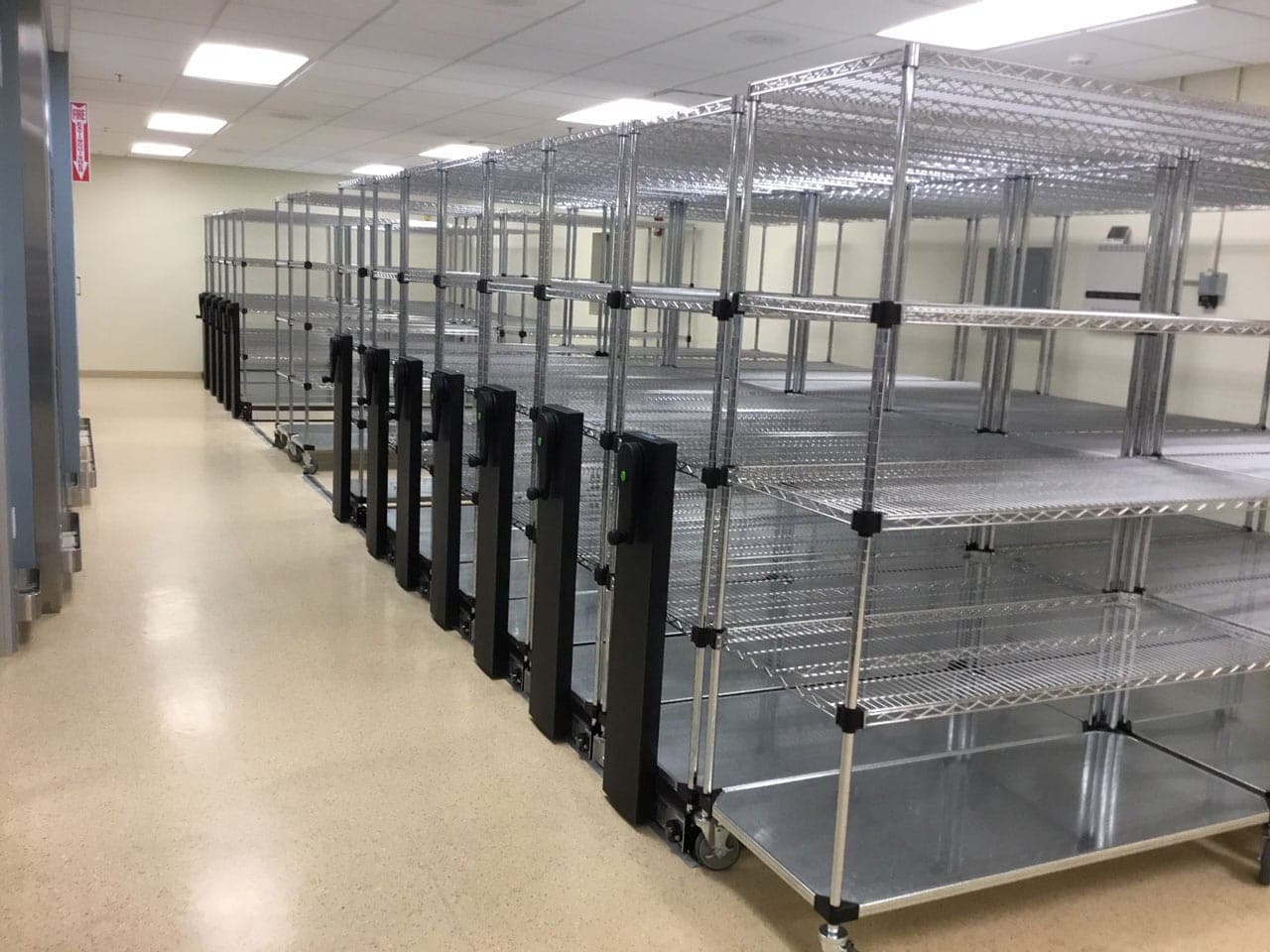
Mobile shelving system mounts standard shelving units on wheeled carriages that roll along floor tracks to create a single movable aisle. Vertical Carousels rotate storage shelves in a continuous loop to bring items directly to the operator at an ergonomic height.
VLM systems operate like an internal elevator, extracting trays from two vertical columns and using full ceiling height for maximum density. ASRS employs robotics and software to automatically place and retrieve medical items without manual intervention.
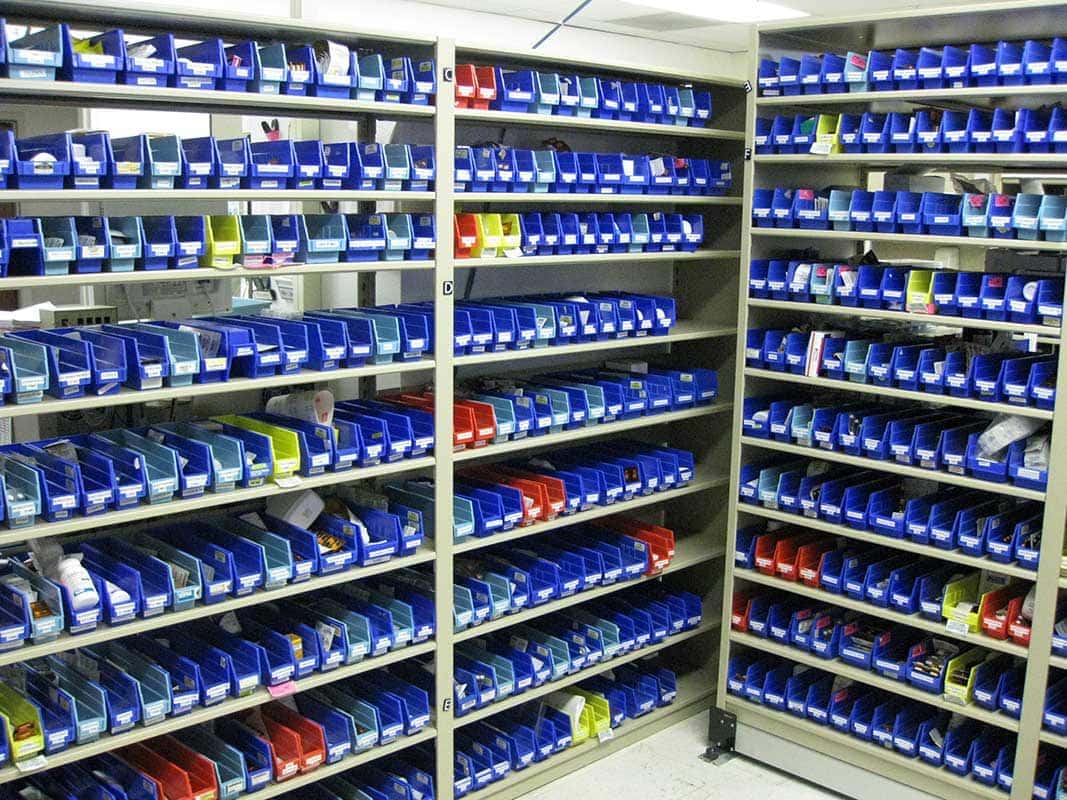
Mini Load ASRS represents a subtype particularly well-suited for pharmaceutical and medical supply storage in hospital pharmacies. Compactus systems provide high-density mobile shelving designed specifically for space-constrained areas with low ceilings.
Powered mobile systems add electronic locking and programmable access controls to mechanical mobile shelving. These controls support HIPAA compliance by restricting access to sensitive materials and creating audit trails.
Mobile high-density shelving delivers 2-3x density increase versus static systems with 50% to 100% capacity gains that reduce required floor space by nearly half. Vertical Carousels achieve 3-4x density increases in the same footprint.
VLM and ASRS systems both provide 4-6x density increases by utilizing the full ceiling height. Cost per cubic foot ranges from $35-$40 for mechanical mobile systems versus $15-$30 for static shelving.
Large acute care hospitals typically run ASRS in central supply, OR cores, and pharmacies, where high transaction volumes justify automation. Medium hospitals usually favor mechanical mobile shelving as it balances capacity gains with more manageable capital costs.
Space planning errors begin with underestimating future growth and locking facilities into systems they quickly outgrow. Overlooking workflow integration and staff adoption creates systems that fight the way clinical staff work.
Choosing the purchase price instead of the total cost of ownership ignores substantial long-term labor inefficiency costs. Selecting the wrong system type for the facility prevents compliance with regulatory and infection-control requirements.
Skipping staff training, installation planning, and maintenance turns correctly chosen systems into operational failures. Each mistake compounds the others when multiple errors occur in the same project.
Sizing a system to today's volume locks healthcare facilities into infrastructure they outgrow within three to five years. This mistake forces expensive retrofits or premature replacement that negates the original investment.
Inadequate space assessment leads to premature system obsolescence when planners fail to account for 5-10 year growth projections. Best practice requires building these projections into the initial space assessment rather than designing for current capacity.
Budget pressures often drive facilities to minimize initial investment without calculating replacement costs. This short-term thinking creates long-term financial burdens that exceed the savings from undersizing.
Large acute care hospitals with 500+ beds show 75% adoption of high-density mobile or automated solutions for central supply and pharmacy. Medium hospitals, ranging from 200-500 beds, demonstrate 50% adoption rates.
Long-term care facilities maintain 40% adoption, while static shelving still holds 60-70% adoption across all facility types. Mechanical mobile shelving sits at 20-25% market share, with adoption rising proportionally to facility size and demand.
A system that fights the way clinical staff work gets underused, regardless of the density gains it could theoretically provide. Resistance from nurses and technicians undermines efficiency improvements when systems disrupt established workflows.
Implementing systems without consulting end-users leads to staff resistance and efficiency losses that persist for years after installation. Best practice requires consulting nurses and technicians before implementing any high-density system.
Ignoring existing workflows during implementation creates the same resistance even when the system type is technically appropriate. Staff will revert to workarounds rather than adopt systems that add physical effort or complexity.
Mechanical systems require physical effort to operate by manually rotating handles to move loaded carriages along tracks. Heavily loaded mechanical units can be a concern for staff in departments with high turnover or aging workforces.
Workflow fit and physical usability directly drive whether staff actually adopt the system or develop workarounds. Workstations and medical carts integrated with storage systems improve ergonomics and increase adoption rates.
The cheapest system to buy is often the most expensive system to run over its operational life. Facilities that select on purchase price alone ignore substantial long-term labor inefficiency costs.
Selecting systems on purchase price alone ignores the fact that static shelving requires significantly more staff time for retrieval. Static shelving's initial cost runs about $20,000, while annual labor costs reach about $15,000 per year.
Mechanical mobile shelving's initial cost doubles to about $40,000, but annual labor cost drops to about $8,000 per year. The labor savings compound annually while the capital cost remains a one-time expense.
Static shelving 10-year total cost for 1,000 square feet reaches $170,000 when combining capital and labor expenses. Mechanical mobile shelving 10-year total cost for the same footprint drops to $128,000.
This result shows that mechanical mobile shelving delivers roughly 25% savings over static shelving across 10 years despite the higher upfront price. Storage efficiency improvements also reduce the need for costly facility expansion.
The right density is not the right system if it cannot support the regulatory and infection-control requirements that healthcare facilities face. System selection must enable rather than block compliance practices.
Static shelving offers low storage density and requires fixed aisles between every row, which consume valuable floor space. These systems are more labor-intensive to retrieve from and offer less flexibility for future changes.
Poor system matches also compromise inventory management when tracking mechanisms for medical devices don't integrate with existing ERP or supply chain systems. Application-specific configurations prevent these integration failures.
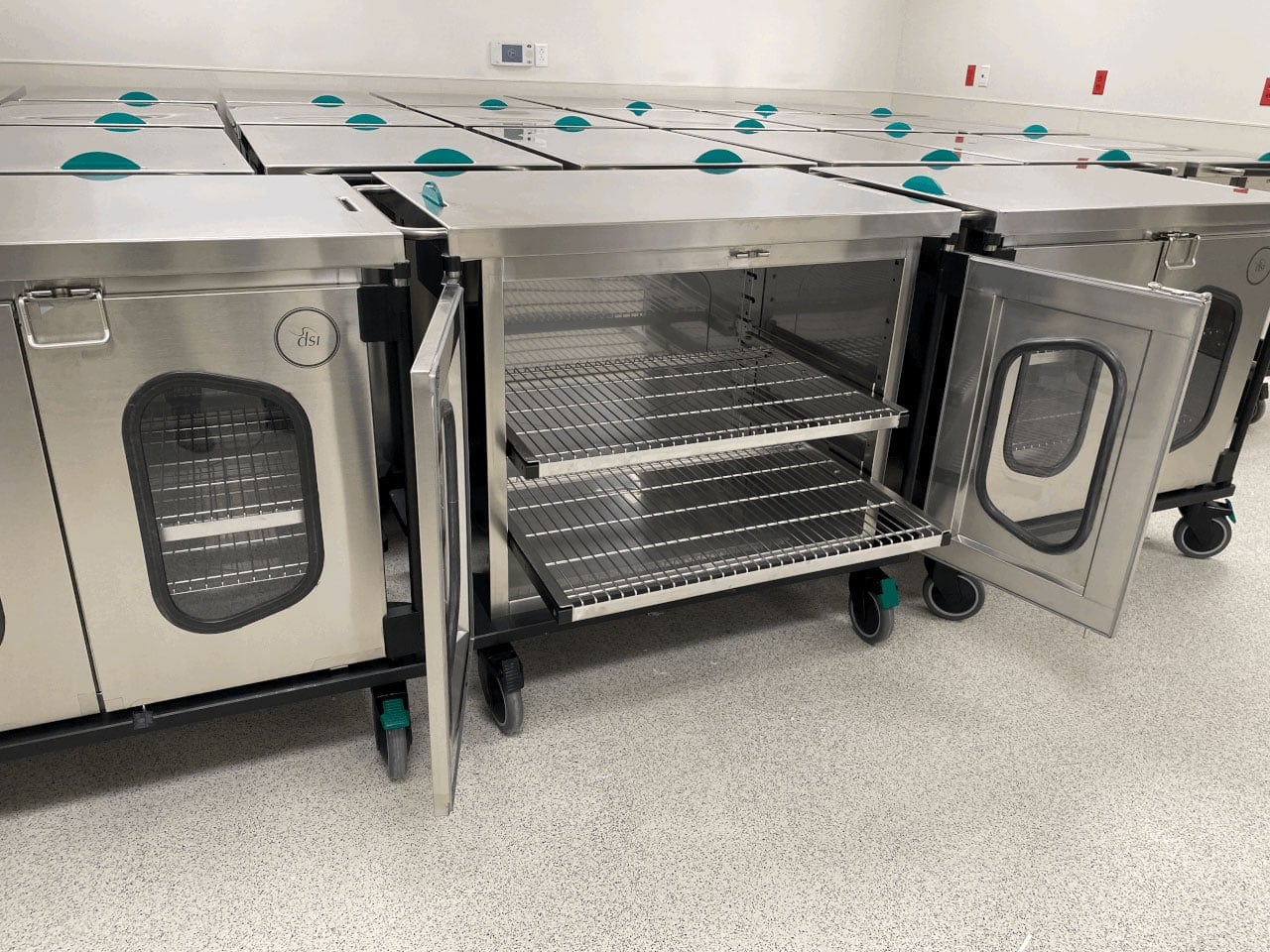
Antimicrobial surfaces support infection control and should be a selection criterion for storage cabinets, surgical case carts, and SPD supply storage. Temperature control capabilities matter for pharmaceutical storage, where regulatory requirements mandate specific environmental conditions.
Facilities must establish dedicated storage areas segregated by product type, expiration date, and usage frequency, as services that support regulatory compliance. Implementing FIFO rotation ensures proper rotation and minimizes expired items that represent both financial waste and compliance risk.
A correctly chosen system still fails if it is installed, taught, and maintained as an afterthought. Even optimal systems underperform when implementation receives insufficient resources.
Deploying complex systems without comprehensive training results in errors, underutilization, and safety risks that persist throughout the system's life. Best practice provides comprehensive training for any powered or automated system.
Training must address both operational procedures and troubleshooting common issues that staff will encounter. Modu-Max and similar powered systems require particularly thorough training protocols.
Powered systems require electrical infrastructure that must be planned and installed before the storage system arrives. ASRS requires dedicated electrical infrastructure and complex installation that can disrupt operations without proper scheduling.
Compactus systems may require custom engineering to accommodate low ceilings or existing structural elements. Modu-Stor CTS HD installations demonstrate the importance of thorough site assessment.
Powered systems carry ongoing maintenance needs that must be budgeted and scheduled to prevent failures during critical operations. ASRS requires specialized ongoing maintenance that facilities cannot perform with in-house staff alone.
Even mechanical systems need regular maintenance to ensure smooth operation and extend their operational life. Plastic bins and other components wear over time and require replacement schedules.
A structured process turns each mistake into a checkpoint that prevents costly errors. This framework guides facility managers through assessment, selection, and implementation phases.
Assess current state by evaluating current capacity, workflow bottlenecks, compliance gaps, and space constraints using quantitative metrics. Define future requirements by determining needed capacity increases, desired workflow improvements, and specific regulatory needs.
Implement and optimize by executing installation with minimal disruption, providing comprehensive staff training, and establishing performance metrics. This phase includes maintenance schedules that prevent system degradation.
Evaluate options by comparing systems on a weighted matrix that reflects organizational priorities. Develop the business case with a 10-year TCO analysis of the proposed system against the status quo.
Suggested weighting assigns space efficiency 25%, cost effectiveness 20%, and compliance requirements 20% of the total score. The remainder splits across workflow fit and growth headroom that accommodate future expansion.
High-density storage succeeds when facilities plan for growth, design around their people, and evaluate cost over the full lifecycle. The five mistakes share a single root cause: treating storage as an afterthought rather than a strategic asset.
Facilities must match systems to their compliance reality and resource the rollout properly with training and maintenance budgets. This integrated approach transforms storage from a space problem into a competitive advantage.
Directors of Materials Management and Supply Chain leaders at acute care facilities can eliminate these mistakes by partnering with specialists who understand LEAN inventory management. Distribution Systems International brings 30+ years of healthcare storage expertise to consultation, design, and turnkey implementation.
Strategic storage planning reduces operational costs while improving inventory visibility and clinical workflow efficiency. The result supports better patient care and medical services through reliable supply availability and infection control.
Distribution Systems International has optimized healthcare storage for acute care facilities since 1990. Our LEAN inventory management process begins with a complimentary on-site storage analysis, then CAD layouts that map every shelving system, storage cabinet, and case cart to your workflow and compliance needs. We finish with a turnkey installation, so your clinical team stays focused on patient care. Request your storage assessment from Distribution Systems International today.
With 21 years of sales management, marketing, P&L responsibility, business development, national account, and channel management responsibilities under his belt, Ian has established himself as a high achiever across multiple business functions. Ian was part of a small team who started a new business unit for Stanley Black & Decker in Asia from Y10’ to Y14’. He lived in Shanghai, China for two years, then continued to commercialize and scale the business throughout the Asia Pacific and Middle East regions for another two years (4 years of International experience). Ian played college football at the University of Colorado from 96’ to 00’. His core skills sets include; drive, strong work ethic, team player, a builder mentality with high energy, motivator with the passion, purpose, and a track record to prove it.