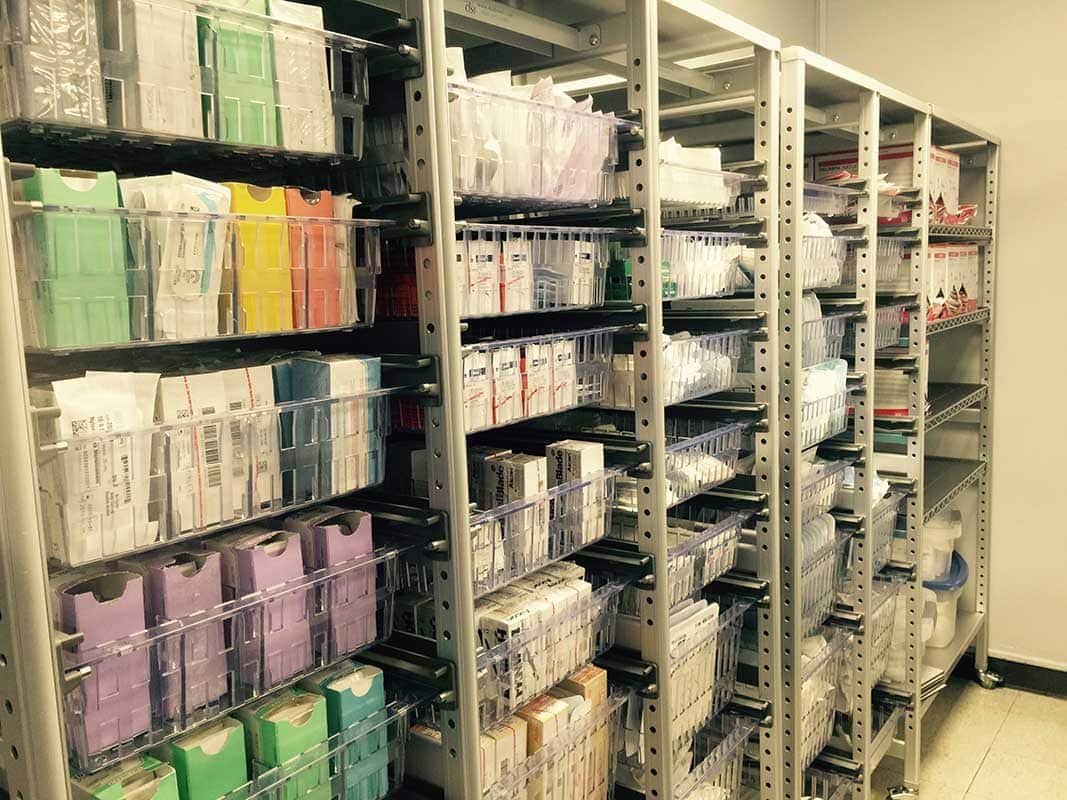
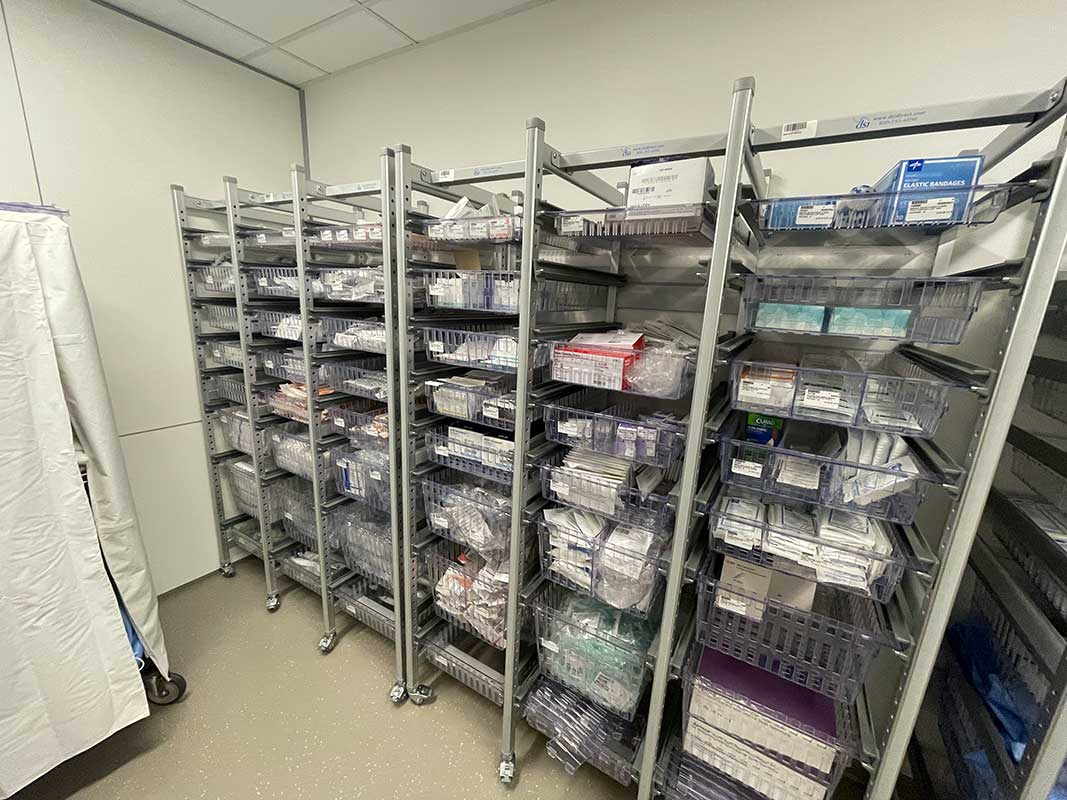
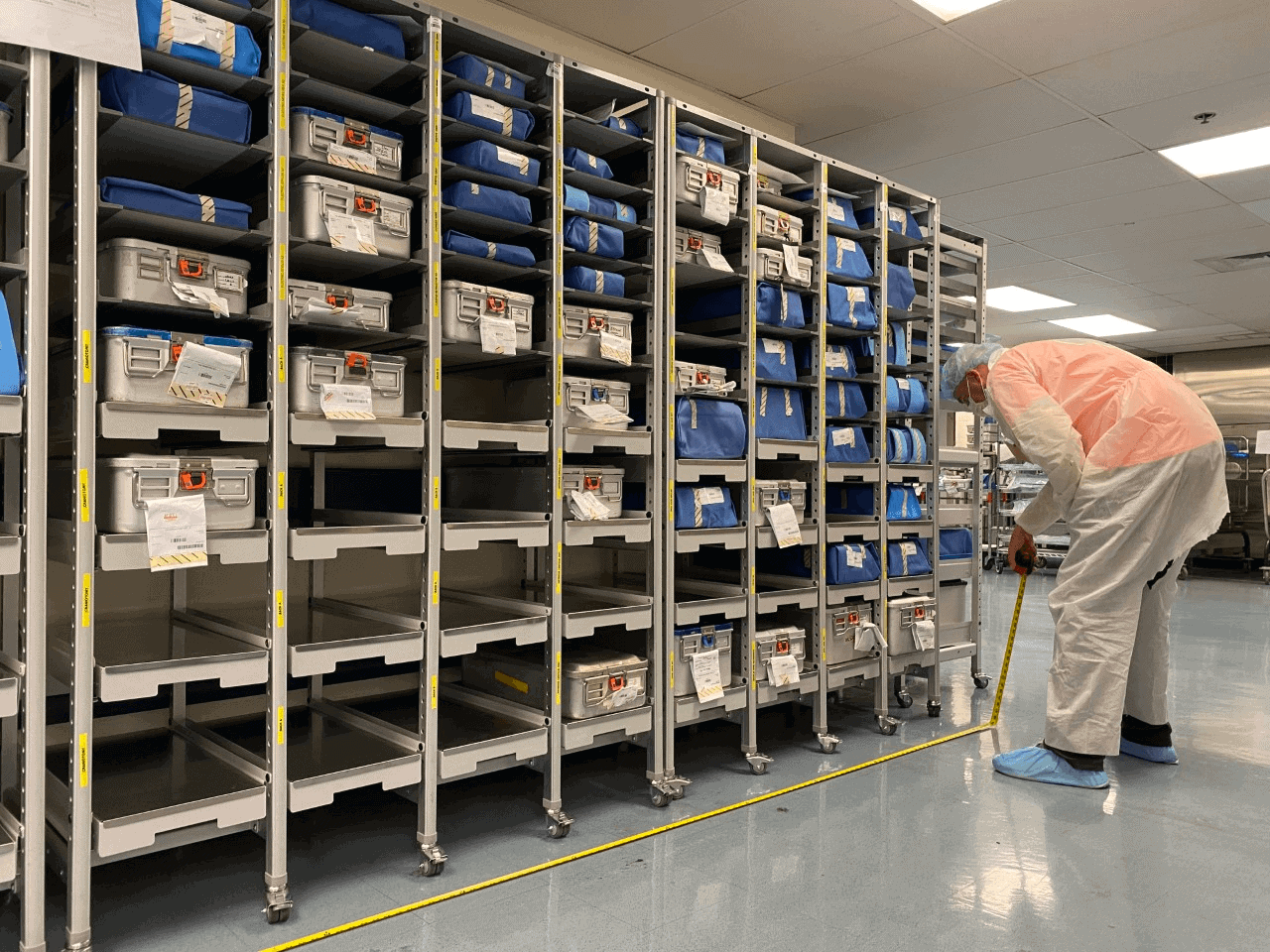
Medical cart organization directly influences two of the highest-cost risk categories in acute care: medication safety and infection control. Preventable medication-related adverse events contribute to more than 7,000 hospital deaths per year in the United States and generate approximately 21 billion USD in direct medical costs. A meaningful share of these events originates from how carts are organized, stocked, secured, and maintained.
Four patterns recur across patient safety literature and regulatory findings. Selection errors driven by look-alike storage and confusing drawer layouts involve approximately 25 percent of reported medication errors. Crash cart readiness failures appear persistently in accreditation surveys, with missing or expired supplies ranking among the top clinical problems. Security gaps enable drug diversion tied to about 183 million USD in lost doses annually. Infection transmission and ergonomic injury stem from inadequate cleaning and poor cart handling practices affecting the majority of nursing staff.
The most common medical cart organization mistakes include look-alike medication storage, crash cart readiness failures, security gaps enabling diversion, inadequate cleaning protocols, and manual inventory practices. These failures create measurable harm across medication errors, resuscitation outcomes, controlled substance loss, healthcare-associated infections, and occupational injuries. Regulatory bodies including The Joint Commission and CMS have identified cart-related gaps as persistent compliance risks requiring systematic intervention.
Each mistake category carries documented cost and clinical impact. Look-alike and sound-alike product confusion drives about 25 percent of medication errors reported to national systems. Missing or expired crash cart items appeared as a top-five clinical problem in Joint Commission surveys conducted in 2017 and 2022. Drug diversion from unsecured carts represents roughly 183 million USD in annual losses, while inadequate cart surface disinfection contributes to healthcare-associated infections affecting approximately one in 20 patients.
The table below summarizes the documented impact and primary consequence of each mistake category.
| Mistake Category | Documented Impact | Primary Consequence |
| Look-alike and sound-alike storage | About 25% of reported medication errors | Wrong-drug administration |
| Crash cart readiness failures | Top-five Joint Commission finding in 2017 and 2022 | About 10% drop in resuscitation success per minute of delay |
| Security gaps and diversion | About $183 million in lost controlled substances annually | Regulatory noncompliance and patient risk |
| Inadequate cart cleaning | About 43% of interactions touch both patient and cart | Contributes to 1 in 20 healthcare-associated infections |
| Manual inventory tracking | About 6.5 medication errors per 100 admissions | Stockouts, expired supplies, and reactive orders at 3 to 5 times standard cost |
Look-alike or sound-alike medicines are drugs with names that are visually or phonetically confusable. About 25 percent of reported medication errors involve look-alike or sound-alike drug names. In one automated dispensing cabinet study, 16 percent of identified look-alike or sound-alike medicines required placement correction because confusable products were stored too close together. More than 80 percent of look-alike groups were already stored safely apart, demonstrating that physical separation is both achievable and effective.
Documented incidents illustrate the clinical consequences of cart layout errors. Epinephrine and ephedrine stored in adjacent sections led to wrong-drug administration during labor per the ISMP Medication Error Reporting System. In one tertiary-care facility, approximately 91 percent of nurses who were interrupted during medication administration committed an error, showing how confusing drawer layouts amplify risk under time pressure. Physical separation of confusable products, tall-man lettering on bins and screens, and drawer geometry that supports visual differentiation are the recommended countermeasures.
Crash carts or code carts are emergency resuscitation supply carts. In Pennsylvania, 56 reports of missing or outdated emergency supplies or equipment were documented in a single year in 2008, and the problem has persisted across subsequent decades. Missing or expired items on crash or code carts ranked among the top five clinical problems found by Joint Commission surveyors in both 2017 and 2022.
A 1-minute delay caused by difficulty accessing resuscitation cart supplies is associated with roughly a 10 percent decrease in resuscitation success. The Joint Commission standard PC.02.01.11, EP 2 covers availability of resuscitation equipment and requires periodic checks to ensure readiness. Expired medications, drained defibrillator batteries, missing equipment, unsecured carts, and broken casters or drawers are common crash cart failure modes.
Drug diversion is the transfer of legally prescribed controlled substances to an unauthorized person. Drug diversion tied to about 183 million USD in lost doses in one reporting year represents both a patient safety risk and substantial financial burden. CMS considers carts in areas where staff are actively providing or preparing for patient care as secure and may remain unlocked during active use, but must be locked when not in a secure situation. This creates operational challenges for facilities balancing access speed against security protocols.
Injectable diphenhydramine removed via cancelled overrides is an example of non-controlled substance diversion flagged by ISMP. DEA requires chain-of-custody documentation for Schedule II to V controlled substances, making electronic tracking and secure storage functionally indispensable for compliance. Modern medical carts increasingly integrate biometric and electronic locking systems that create audit trails while maintaining rapid authorized access during patient care.
Infection control and ergonomics impact cart safety through surface contamination and musculoskeletal injury pathways. About 43 percent of patient interaction sequences involve touching both a patient and a mobile cart, making carts high-frequency transmission surfaces. Approximately 71.8 to 84 percent of nurses experience musculoskeletal disorders over 12 months, with cart pushing and pulling identified as a primary occupational risk factor alongside patient handling.
The dual impact creates both patient harm and workforce cost. Healthcare-associated infections affect approximately one in 20 patients and generate about 45 billion USD in annual costs, with contaminated equipment surfaces contributing to transmission. Overexertion injuries from lifting, pushing, pulling, and carrying produce about 50 lost-workday injuries per 10,000 full-time employees and more than 12 billion USD in direct costs annually.
About 43 percent of patient interaction sequences involve touching both a patient and a mobile cart. Over 3.5 million colony-forming units per square inch were measured on a typical computer or laptop keyboard in 2016, demonstrating the microbial burden on high-touch surfaces. About 1 in 20 patients acquire a healthcare-associated infection during their hospital stay, with contaminated portable equipment identified as a documented transmission pathway.
About 100,000 estimated HAI-related deaths occur per year in the United States. About 45 billion USD in estimated annual HAI cost burdens the US healthcare system, making infection control a top priority for patient safety and storage protocols. Between-use disinfection of portable equipment is not reliably incorporated into hospital practice despite strong evidence linking enhanced cleaning of shared medical equipment to reduced HAI transmission.
About 71.8 to 84 percent of the 12-month prevalence of nurse musculoskeletal disorders makes cart ergonomics a workforce-wide concern. About 35 percent of shift time, roughly 3.5 hours per shift, nurses spend entering data on EMR carts, creating prolonged exposure to poorly designed workstations. About 50 lost-workday injuries per 10,000 full-time employees result from overexertion. More than 12 billion USD in direct cost from overexertion injuries affects employers annually.
Pulling a nursing cart produced significantly higher muscle activation across trunk and forearm muscles than pushing in an EMG study. Loading heavier materials low, centered, and near the handle reduces measured physical load, while powered height-adjustable carts and ergonomic handle designs address prolonged static postures that contribute to injury. Organizations implementing comprehensive ergonomics programs report approximately 21 percent decreases in time lost to occupational injury.
Par level equals weekly inventory used plus safety stock divided by the number of weekly deliveries. Perpetual inventory systems use barcode and RFID data with IoT sensors to log every addition, subtraction, and adjustment as it happens, enabling just-in-time restocking triggered by actual usage. Non-pharmaceutical cart inventory is still largely tracked on pen and paper. About 6.5 medication errors per 100 hospital admissions occur in acute care settings.
About 1 estimated medication error per patient per day in hospital environments stems partly from stockouts and expired medications that result from manual tracking failures. Reactive emergency orders cost three to five times standard procurement prices when supplies run out unexpectedly. Implementing automated track systems with visual management reduces manual intervention by approximately 60 to 70 percent while improving accuracy and reducing waste by 20 to 30 percent.
CMS Conditions of Participation require that all controlled substances be locked. Automated units with logon, password, or biometric identification are considered locked because access is limited to authorized personnel. This regulatory framework drives technology adoption by establishing clear security thresholds that traditional key-and-lock systems struggle to meet consistently.
Physical separation of confusable products, tall-man lettering on bins and screens, and drawer geometry that supports separation are recommended countermeasures for look-alike storage. Periodic resuscitation cart checks are recommended to ensure readiness, with The Joint Commission standard PC.02.01.11, EP 2 covering availability of resuscitation equipment. Between-use disinfection of portable equipment must be incorporated into hospital practice, though implementation remains inconsistent.
Technological innovations improve medical cart organization and safety through RFID and barcode tracking, biometric access controls, automated dispensing integration, antimicrobial surfaces, powered ergonomic designs, and AI-driven inventory optimization. The medical cart market is projected to grow from 4.16 billion USD in 2025 to 15.75 billion USD by 2034 at a 16.03 percent compound annual growth rate. This growth concentrates in connected, intelligent cart platforms that actively prevent the organizational mistakes documented in patient safety literature.
Market adoption rates demonstrate the shift from passive storage to active safety devices. About 30 percent of eligible beds use decentralized automated dispensing cabinets in 2026, projected to reach 55 to 60 percent by 2035. Nearly 70 percent of hospitals are likely to adopt cloud-based supply chain management by 2026, while approximately 70 percent of large organizations are expected to adopt AI supply chain forecasting by 2030.
The comparison below groups each technology with its measured impact from the sources cited above.
| Technology | Measured Impact |
| RFID tracking | Up to 10 times faster medication checks with up to 100% accuracy |
| Biometric and electronic locking | Creates the audit trail DEA chain-of-custody rules require |
| AI-driven par-level optimization | About 60 to 70% less manual intervention and 20 to 30% less waste |
| Antimicrobial copper surfaces | About 50 to 58% reduction in healthcare-associated infections across the CuRE and ICHE studies |
| Automated dispensing cabinets | Projected to reach 55 to 60% of eligible beds by 2035 |
| IoT shelf sensors with two-bin KANBAN | Supports inventory accuracy of 99% or higher |
RFID reads many tagged items at once without line of sight. The 7.7 billion USD RFID healthcare market size in 2025 is growing to over 31 billion USD by 2034, reflecting rapid adoption across kit-and-tray management, crash cart tracking, and perpetual inventory applications. About a 70 percent time reduction in kit-and-tray management after switching from barcodes to RFID at Huntington Health in Pasadena translated to roughly 2.5 hours per week and about 130 pharmacist and technician hours saved annually.
RFID medication checks are up to 10 times faster than manual restocking. RFID systems achieve 100 percent accuracy with medication checks, up to 10 times faster than manual restocking. These systems flag products nearing expiration, support automated replenishment alerts, and create DEA-friendly chain-of-custody audit trails that directly address crash cart readiness failures and manual inventory gaps.
Biometric access controls use fingerprint, facial recognition, or other biometric authentication to verify users. Modern cabinets and carts grant access through biometric, card, or password identification, with some systems using facial recognition so staff does not need to remove gloves or touch screens during patient care. Individually secured, locked-lidded pockets in ADCs have steadily replaced open matrix drawers since 2008, improving both security and medication safety.
DEA requirements for chain-of-custody documentation make automated vaults with biometric locks functionally indispensable in the United States. These systems create comprehensive audit trails that deter diversion while maintaining the access speed clinical workflows demand. Integrating plastic bins with electronic tracking and secure access controls in standardized drawer configurations reduces selection errors while satisfying regulatory security requirements.
AI converts static par levels into dynamic, demand-driven thresholds by learning from historical usage, patient census, procedure volumes, and seasonality. About 70 percent of large organizations are expected to adopt AI supply chain forecasting by 2030 as the technology matures. About 60 to 70 percent reduction in manual intervention from dynamic reorder points frees clinical and supply chain staff from routine checking and ordering tasks.
About 20 to 30 percent waste reduction from AI expiry-versus-consumption tracking addresses persistent manual inventory failures. About 32 million USD in reported network savings from AI-driven distribution over the first two years in one health system demonstrates measurable return on investment. AI optimization targets the 25 to 40 percent of hospital operating expense represented by supply chain, potentially freeing 15 to 25 percent of supply spend through better demand prediction and waste reduction.
About 50 percent HAI reduction from copper-infused high-touch surfaces with 16 to 20 percent copper oxide in the 10-year CuRE HAI study provides strong evidence for antimicrobial material selection. About 58 percent HAI reduction from antimicrobial copper surfaces in an earlier ICHE study reinforces the clinical impact. Median microbial burden was about 97 percent lower on copper versus control surfaces in a medical intensive care unit trial, with 99.9 percent of microorganisms killed within about 2 hours on copper contact.
Copper alloys with at least 62 percent copper were registered by the EPA as the first solid antimicrobial material in 2008. These passive, continuous antimicrobial surfaces complement manual cleaning protocols by reducing pathogen survival between disinfection cycles. Combining antimicrobial stainless steel products with copper-infused high-touch points creates durable, cleanable surfaces that actively reduce instrument contamination risk without requiring behavior change or additional staff time.
Automated dispensing cabinets (ADCs) are decentralized secure medication storage units with electronic access control. About 30 percent of eligible beds using decentralized ADCs in 2026 is projected to reach 55 to 60 percent by 2035, indicating substantial remaining adoption runway. In the 2002 ASHP survey, 58 percent of hospitals with decentralized distribution had adopted ADCs, a figure that has grown steadily as technology improved and regulatory pressure increased.
The 4.4 billion USD ADC market size in 2025 will reach about 6.43 billion USD by 2030. BD Pyxis MedStation ES scored 80.6 overall in 2025 Best in KLAS for ADCs, representing current market leadership. ADCs improve nursing and pharmacy efficiency in clinical settings, reduce dispensing-phase errors, enable accurate tracking to deter diversion, and provide clinical decision support that alerts to allergies or dosing issues at the point of retrieval.
IoT shelf sensors are increasingly paired with two-bin KANBAN replenishment. KANBAN is a pull-based, demand-driven replenishment system often using two-bin logic that triggers reorder when the front bin empties. This visual management approach reduces stockouts while minimizing excess inventory and waste from expiration. IoT sensors automate the visual signal by logging bin status continuously and generating electronic replenishment alerts.
Inventory accuracy of 99 percent or higher is achievable with continuous camera and sensor monitoring. Nearly 70 percent of hospitals are likely to adopt cloud-based supply chain management by 2026, creating the infrastructure for real-time IoT monitoring at scale. Integrating IoT with workstations that support electronic documentation and automated ordering closes the loop between usage data and replenishment, enabling efficiency in clinical settings while reducing manual tracking burden.
Between 44,000 and 98,000 preventable adverse events result in hospital deaths per year in the United States. More than 7,000 deaths per year are attributable to medication errors, with more than 7 million patients affected by preventable medication errors annually. About 21 billion USD in direct medical costs of preventable medication errors per year occurs across all settings.
The medical carts market reflects the convergence of safety imperatives and technological capability, with a 2025 market size of 4.16 billion USD rising to 15.75 billion USD by 2034 at 16.03 percent CAGR. This growth concentrates in features that directly address documented safety gaps: RFID tracking that prevents crash cart expiry, biometric locking that deters diversion, antimicrobial surfaces that reduce infection transmission, powered ergonomic designs that prevent occupational injury, and AI-driven optimization that eliminates stockout and waste.
Healthcare organizations implementing comprehensive solutions that integrate these technologies with workflow analysis and staff training achieve measurable improvements in patient outcomes, regulatory compliance, and operational efficiency.
Medical cart organization mistakes are not inevitable operational noise but addressable system failures with documented countermeasures. Organizations that treat carts as active safety devices rather than passive storage objects position themselves to capture the dual benefits of improved clinical outcomes and reduced preventable cost. Distribution Systems International has supported acute care facilities in transforming storage and cart systems through consultative process design, evidence-based layout, and turnkey implementation that minimizes disruption while delivering measurable results.
Distribution Systems International has partnered with acute care facilities since 1990 to turn cart organization into a documented safety advantage. Our team studies current PAR levels, workflow, and drawer layouts, then designs a system specific to SPD, OR, and materials management needs. Every project includes architectural CAD drawings, a clear ROI calculation, and full turnkey implementation, so staff is supported from analysis through installation.
Call Distribution Systems International at (800) 393-6090 or request a complimentary storage consultation to start addressing the mistakes outlined above.
Look-alike and sound-alike medication storage is the most frequently documented mistake, contributing to about 25 percent of reported medication errors. Confusable products stored in adjacent drawer sections drive wrong-selection events, particularly when staff are interrupted during administration. Physical separation, tall-man lettering, and drawer geometry built around visual differentiation address this root cause directly.
The Joint Commission standard PC.02.01.11, EP 2 requires periodic checks to confirm resuscitation equipment is available and functional, and missing or expired items have ranked among the top five clinical problems found by surveyors in both 2017 and 2022. Because a 1-minute delay in accessing supplies is linked to roughly a 10 percent drop in resuscitation success, many facilities move to daily or shift-based checks supported by RFID tracking rather than relying on periodic manual review alone.
Separating confusable products physically within the cart, applying tall-man lettering on bins and screens, and choosing drawer geometry that supports visual differentiation are the documented countermeasures. More than 80 percent of look-alike medication groups are already stored safely apart in facilities that apply these practices, which shows the approach is both achievable and effective. RFID and barcode systems add a technology layer that flags misplaced items before they reach a patient.
CMS Conditions of Participation require that controlled substances remain locked, and automated units with logon, password, or biometric identification meet that requirement because access is limited to authorized personnel. DEA rules also require chain-of-custody documentation for Schedule II through V substances, which makes electronic tracking functionally necessary for compliance rather than optional. Carts and cabinets with biometric or electronic locking create the audit trail regulators expect while keeping access fast enough for active patient care.
RFID systems achieve up to 100 percent accuracy on medication checks and complete them up to 10 times faster than manual restocking. AI-driven par-level optimization reduces manual inventory intervention by about 60 to 70 percent and cuts waste from expired or overstocked items by 20 to 30 percent. Combined with IoT shelf sensors and two-bin KANBAN replenishment, these technologies can push inventory accuracy to 99 percent or higher.
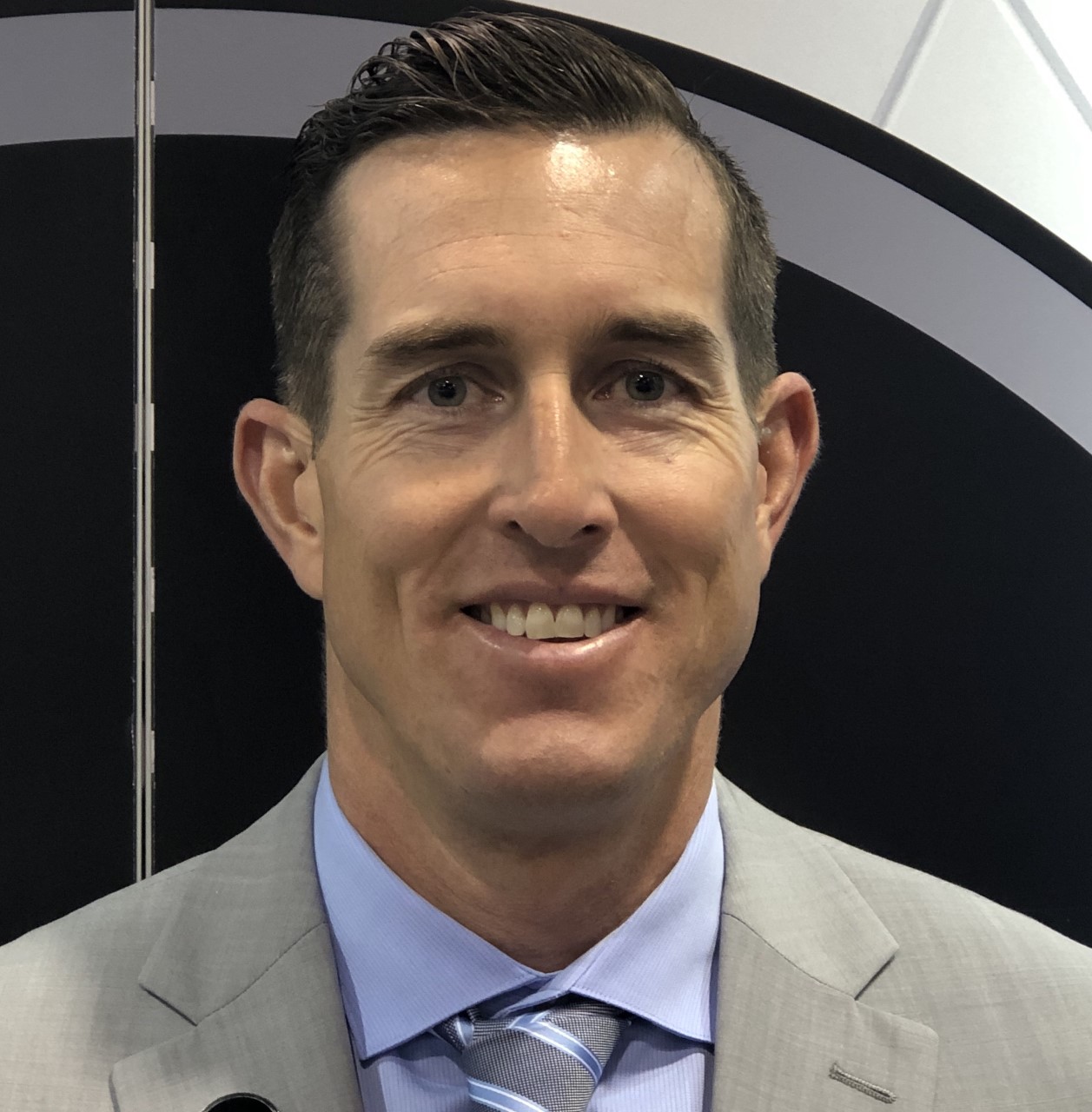
With 21 years of sales management, marketing, P&L responsibility, business development, national account, and channel management responsibilities under his belt, Ian has established himself as a high achiever across multiple business functions. Ian was part of a small team who started a new business unit for Stanley Black & Decker in Asia from Y10’ to Y14’. He lived in Shanghai, China for two years, then continued to commercialize and scale the business throughout the Asia Pacific and Middle East regions for another two years (4 years of International experience). Ian played college football at the University of Colorado from 96’ to 00’. His core skills sets include; drive, strong work ethic, team player, a builder mentality with high energy, motivator with the passion, purpose, and a track record to prove it.