Surgical case cart systems are mobile storage units designed to transport sterile instruments and supplies between operating rooms and sterile processing departments. The global market reached USD 415.36 million in 2024 and is projected to grow at a 7.29% CAGR through 2030. Ambulatory surgery centers now drive the fastest segment growth at approximately 9% annually as healthcare systems prioritize outpatient efficiency and cost reduction.
Surgical case carts organize and transport instruments, implants, and disposable supplies required for specific surgical procedures. These specialized carts maintain sterility during transport while supporting standardized inventory management and turnover protocols. The three-cart rotation model allocates one cart to active surgical use, one to sterile processing preparation, and one to reprocessing and restocking cycles.
Custom closed case carts feature solid or transparent enclosed doors with pull-out shelves and configurable compartments. These systems dominated 73% of the global case cart market in 2024 due to superior contamination barriers. Standard open surgical carts utilize visible shelving without enclosures, providing faster visual access to stored instruments. Open configurations represent the remaining 27% market share and appeal to facilities with dedicated clean pathways.
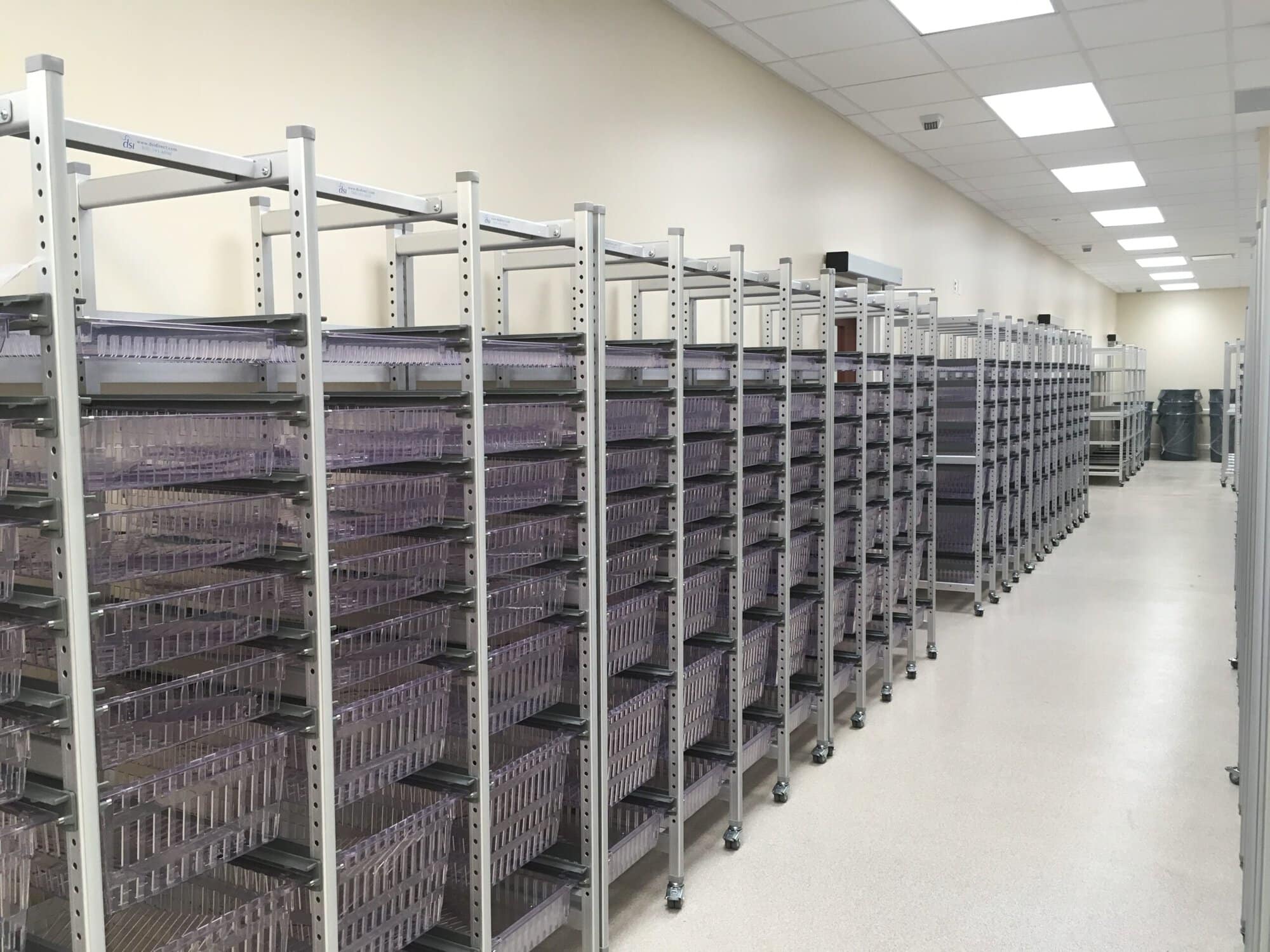
Closed systems incorporate ergonomic handles, biohazard indicators, and contamination flags for infection control compliance. A modular case cart system allows facilities to customize shelf count, drawer depth, and door configurations based on procedure requirements. Open carts sacrifice protection for lighter weight and easier maneuverability in controlled sterile environments. Custom enclosed models carry higher acquisition costs but deliver a stronger regulatory compliance fit for multi-site sterile transport.
Sealed cart designs enable off-site sterile transport by maintaining contamination barriers between clean and dirty processing zones. ANSI/AAMI ST79 standards require contaminated items to be contained and clearly marked with biohazard labels during transport. The three-cart system prevents bottlenecks by ensuring continuous instrument availability while one cart undergoes washing and sterilization. This rotation structure reduces OR turnover delays and reallocates clinical staff time toward direct patient care activities.
Hospitals and clinics held 63% end-user market share in 2024, while ambulatory surgery centers emerged as the fastest-growing segment. ASC procedure volumes increased 6%-7% annually as outpatient costs run 35%-50% below equivalent hospital-based surgical care. In 2024, 82% of hospitals and health systems operated at least one ASC partnership compared to 48% in 2023. This expansion drives demand for compact, throughput-oriented case cart systems that fit smaller surgical footprints.
Ambulatory surgery centers provide same-day surgical procedures without overnight hospital admission for patients requiring moderate anesthesia. These outpatient facilities handle orthopedic, ophthalmologic, gastrointestinal, and pain management procedures previously reserved for inpatient operating rooms. ASC market share is expanding at 9% annually from 2024 to 2029, outpacing hospital segment growth. Cost containment pressure and patient preference for convenient outpatient care fuel this migration toward ambulatory surgery environments.
Urban markets contained 94% of all ASCs in 2023, while rural areas accounted for only 6% of facilities. ASC beneficiaries skew heavily toward ages 65-84, representing 88.6% of the patient population receiving outpatient surgical services. A national study of 456,954 patients found 72.3% received treatment in outpatient settings rather than inpatient hospital beds. ASC volume growth reached 10.8% annually in the most advantaged counties compared to 9.4% in less advantaged regions.
Procurement decision frameworks balance cost containment, durability, standardization, workflow usability, regulatory compliance, and customization capabilities. Survey evidence from 29 hospital executives and 40 orthopedic surgeons identified cost management and quality of care as the two most important purchasing attributes. A separate L.E.K. Consulting study of 89 supply chain leaders emphasized standardization and inventory optimization across multi-site health systems. Real-world workflow redesign tied to case cart optimization delivered 20% accuracy improvement and 60% fewer supply-selection errors within 30 days.
Quality and durability represent the first evaluation criteria because carts must withstand repeated washer exposure and years of heavy transport. Stainless steel construction with reinforced welded frames ensures corrosion resistance and structural integrity under autoclave heat cycles. Supply costs constitute approximately 20% of total per-case surgical expenses, making inventory accuracy and turnover efficiency critical. Total cost of ownership extends beyond initial purchase price to include maintenance, replacement parts, and workflow labor savings.
Standardized cart configurations reduce training burden and eliminate supply-location variability across multiple operating rooms and surgical sites. Health systems prioritize inventory management solutions that optimize spending and minimize expired stock through consistent two-bin replenishment protocols. Ergonomic design features such as fifth-wheel steering and accessible handle positioning reduce staff injury risk during frequent transport. Usability improvements directly translate to faster case preparation, shorter OR turnover intervals, and improved on-time first-case starts.
Regulatory compliance with ANSI/AAMI ST79 contamination transport requirements remains non-negotiable for sterile processing departments handling off-site workflows. Customization options, including adjustable shelf heights, specialized drawer inserts, and transparent door panels, address procedure-specific instrument storage needs. Facilities performing high-volume orthopedic or spine procedures require deeper shelving and heavier load capacities than general surgery environments. A modular storage solution enables department-specific configurations while maintaining standardized footprints for efficient space utilization.
Custom closed case carts, standard open surgical carts, hybrid ASC transport systems, and specialized sealed units each serve distinct workflow requirements. Closed systems with solid or clear doors held 73% market share in 2024 due to superior contamination protection. Open shelving models sacrifice enclosure for lighter weight, lower cost, and faster visual inventory access in controlled environments. Hybrid systems designed for ambulatory surgery center throughput emphasize compact footprints and container-processing compatibility rather than traditional full-cart approaches.
Enclosed case carts provide the strongest contamination barriers for facilities lacking fully separated clean and dirty processing pathways. Heavy-duty construction and customizable interior configurations support specialized instrument sets and implant storage requirements across diverse surgical specialties. However, closed systems impose higher acquisition costs ranging from USD 3,525 to USD 5,800 for mid-range to premium models. Larger footprints and increased weight create maneuverability challenges in compact operating rooms and narrow corridor environments.
Enclosed panels require more thorough cleaning protocols than open wire shelving to prevent biofilm accumulation in door tracks and hinges. A high-capacity storage system addresses space constraints by maximizing vertical storage density within enclosed cart frameworks. Custom configurations allow buyers to specify exact shelf counts, drawer depths, pull-out tray positions, and door styles. Premium models incorporate ergonomic handles, integrated flags for contamination status, and heavy-duty casters rated for repeated autoclave exposure.
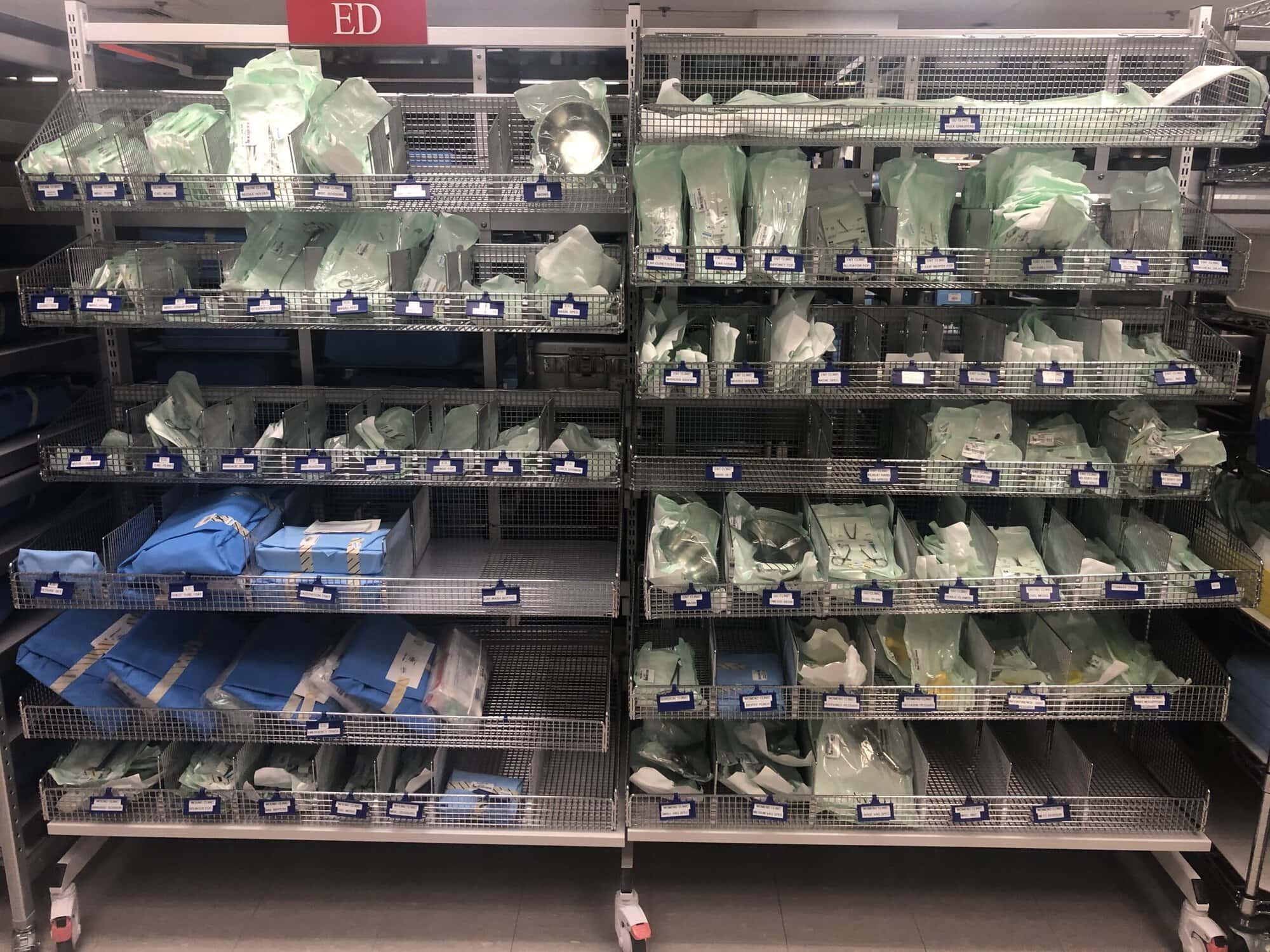
Open case carts perform best in facilities with dedicated sterile cores and well-defined clean transport pathways separating contaminated workflows. Wire or solid open shelving enables immediate visual inventory verification without opening enclosed doors or drawers during time-sensitive case preparation. Budget-tier open carts start at USD 1,508 for basic autoclave transport units, delivering 50% cost savings versus comparable enclosed models. Lighter tubular stainless steel frames improve maneuverability and reduce staff physical strain during frequent inter-departmental transport.
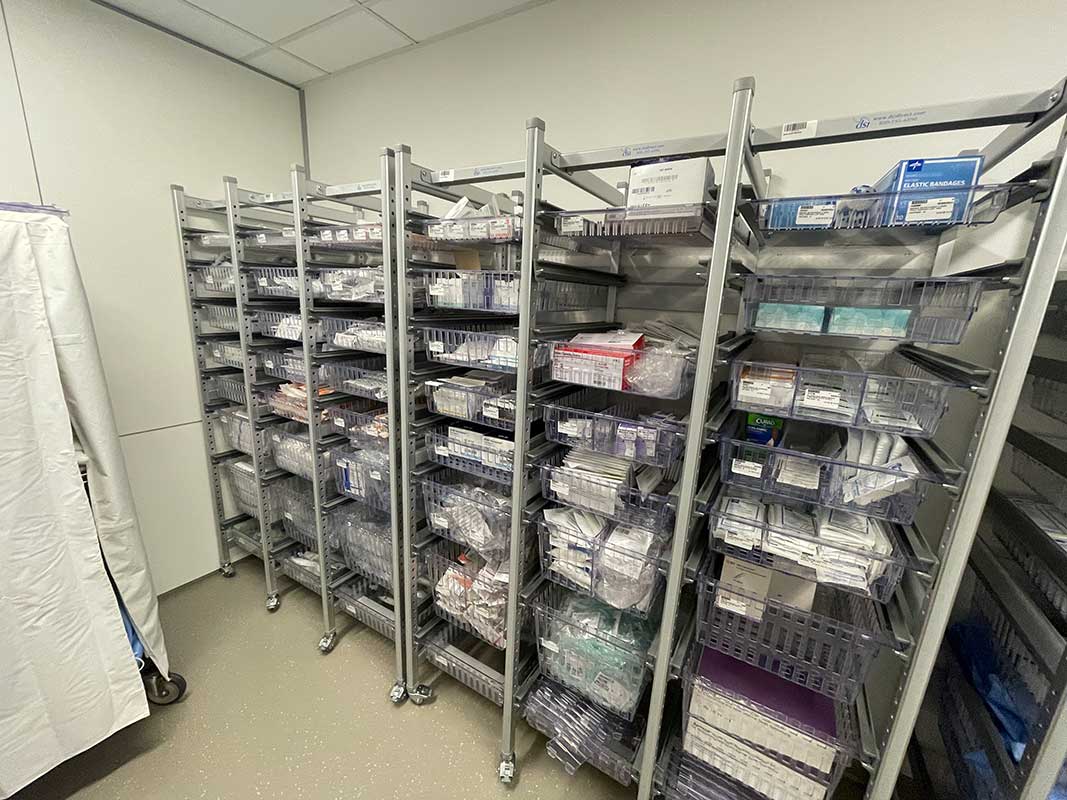
Lower contamination protection requires supplemental cart covers or additional environmental controls to maintain sterility during open-shelf transport. Modular cell storage configurations integrate open shelving with enclosed drawer modules for hybrid contamination control approaches. Open designs simplify cleaning and maintenance by eliminating enclosed panel surfaces that trap moisture and contaminants. Facilities prioritizing cost efficiency and patient flow over maximum sterility barriers favor standard open configurations for high-volume general surgery procedures.
Many ambulatory surgery centers rely on sterile container systems rather than traditional full case carts to optimize throughput efficiency. Container-based workflows utilize smaller transport frames compatible with high-capacity washer-disinfectors and compact sterile storage footprints characteristic of outpatient facilities. A cart transport system bridges container handling and traditional case cart functionality for ASCs managing mixed procedural complexity. Specialized sealed carts designed for over-the-road transport between off-site sterile processing facilities and surgical centers range from USD 5,000 to USD 7,301.
Hybrid systems sacrifice full case capacity for faster reprocessing cycles and reduced storage square footage requirements in space-constrained ASC environments. Mobile track systems enhance transport efficiency by guiding carts through standardized pathways and reducing hallway congestion during multi-case turnover periods. Specialized autoclave carts and Stericart models priced at USD 1,508 to USD 2,246 serve niche applications, including instrument sterilization transport. These focused-use products carry higher justification requirements because they address specific workflow pain points rather than universal surgical storage needs.
The surgical case carts market is projected to grow from USD 445.64 million in 2025 to USD 633.55 million by 2030. This 7.29% CAGR reflects continued outpatient migration and surgical volume growth driven by aging demographics and minimally invasive procedure adoption. The broader medical carts market reached USD 2.60 billion in 2024 and is forecast to reach USD 6.63 billion by 2030. Smart cart integration, RFID inventory tracking, and digital workflow platforms represent emerging 2026 trends reshaping traditional mechanical storage systems.
Outpatient surgery represented 72.3% of 456,954 patients in a national procedural study, demonstrating sustained preference for same-day discharge models. ASC ownership among hospitals increased from 41% in 2019 to 82% in 2024, accelerating demand for compact sterile transport solutions. Regional variations show Middle Atlantic hospitals maintaining lower outpatient rates while East South Central facilities lead in outpatient procedure adoption. Metropolitan areas demonstrate higher outpatient surgery odds compared to small-town settings, reinforcing urban ASC concentration patterns where 94% of facilities operate.
Budget-tier options span USD 1,500 to USD 2,999 for basic autoclave carts and open stericart transport units. Mid-range enclosed carts with single-door configurations range from USD 3,000 to USD 4,999, including models from Blickman and Pedigo. Premium large-format double-door systems and over-the-road specialty transport carts command USD 5,000 to USD 7,500 or higher pricing. Specific observed pricing includes Pedigo stainless steel autoclave carts at USD 1,508, Belintra open stericarts at USD 2,246, and Lakeside one-door enclosed units at USD 5,312.
Process optimization initiatives focused on case cart preparation and inventory standardization deliver measurable operational improvements within short timeframes. A documented healthcare facility workflow redesign achieved 20% improvement in case-cart accuracy within the first 30 days of implementation. The same initiative reduced average daily supply-selection errors by 60%, directly impacting OR start-time reliability and staff productivity. These results emphasize that cart system effectiveness depends equally on procedural discipline and equipment specifications rather than hardware selection alone.
Centralized case cart preparation eliminates duplicate instrument storage across multiple decentralized locations, reclaiming wasted square footage for clinical use. Standardized inventory management through two-bin KANBAN systems reduces expired supply waste and lowers overall carrying costs by 15%-20% in documented implementations. Supply costs represent approximately 20% of total per-case surgical expenses, making accuracy improvements directly attributable to bottom-line savings. Workflow efficiency gains reallocate nursing and surgical technician time from inventory searching toward direct patient care and safety protocols.
Container processing systems designed for ambulatory surgery workflows reduce sterilization cycle times and improve instrument turnover compared to traditional full-cart approaches. ASC procedure costs run 35%-50% below hospital equivalents, partly due to streamlined sterile processing and inventory management efficiency. Integrated transport solutions combine carts, containers, washer-disinfectors, and sterile storage systems into cohesive departmental workflows rather than isolated equipment purchases. These ecosystem approaches address the reality that many ASCs handle increasing caseload complexity with limited square footage and staffing resources.
Lakeside Manufacturing, MAC Medical, Pedigo Products, Capsa Healthcare, and Bailida Medical represent established leaders in the global surgical case carts market. Metro, Blickman, Belintra, and STERIS provide differentiated offerings spanning ergonomic workflow design, premium stainless construction, sterile transport specialization, and broader ecosystem integration. Competitive differentiation centers on durability, infection control performance, customization flexibility, and integration with automated inventory tracking and sterile processing systems. Premium brands command price premiums through heavier-gauge stainless steel, advanced ergonomic features, and compliance-focused sealed transport capabilities.
Metro positions through feature-rich workflow design, including ergonomic handles, fifth-wheel steering, contamination flags, and biohazard indicators across open and closed product lines. Pedigo emphasizes compliance-aware sterile transport guidance and offers closed, sealed, and open cart taxonomies addressing distinct regulatory requirements. Blickman commands premium positioning with mini, maxi, multi-purpose, and over-the-road enclosed variants priced from USD 3,525 to USD 7,301. Lakeside delivers premium large-format enclosed carts with durable stainless steel construction priced around USD 5,312 for single-door configurations.
Belintra specializes in sterile transport and sterile cart systems optimized for container-friendly workflows and hybrid ASC applications. Budget brands focus on basic open autoclave carts and simple transport frames, starting at USD 1,508 for Pedigo entry models. Mid-range options from Pedigo Revolution and Blickman mini series deliver single-door enclosed functionality at USD 3,525 to USD 3,614 price points. Premium double-door and specialty transport units justify higher costs through heavier load capacities, reinforced construction, and specialized compliance features for off-site sterile transport.
STERIS competes through broader sterile processing ecosystem integration rather than standalone cart SKU breadth alone, offering container processing systems for ASC workflows. Capsa Healthcare pursues platform-oriented healthcare workflow strategies through medical storage acquisitions and comprehensive departmental solutions beyond individual cart products. These ecosystem approaches recognize that effective surgical supply management requires coordinated washer-disinfectors, sterile storage, inventory tracking software, and transport systems rather than isolated equipment purchases. Vendors providing turnkey implementation, including CAD-based space analysis, custom configuration design, and post-installation support, differentiate against transactional cart suppliers.
The surgical case cart market continues evolving toward compact, efficient, compliance-focused systems that support outpatient migration and cost containment priorities. Ambulatory surgery centers represent the fastest-growing segment as healthcare delivery shifts toward same-day procedures and distributed surgical sites. DSIDirect has supported acute care facilities and ambulatory surgery centers with LEAN inventory management methodology and department-specific storage solutions since 1990.
Distribution Systems International has supported ambulatory surgery centers and acute care facilities with LEAN-based case carts and sterile storage solutions since 1990. From complimentary on-site analysis and CAD-based space design to full turnkey implementation, DSI manages every step of your storage optimization project. Contact Distribution Systems International today to request your free storage analysis and see how the right case cart system reduces supply costs and improves OR start-time reliability.

With 21 years of sales management, marketing, P&L responsibility, business development, national account, and channel management responsibilities under his belt, Ian has established himself as a high achiever across multiple business functions. Ian was part of a small team who started a new business unit for Stanley Black & Decker in Asia from Y10’ to Y14’. He lived in Shanghai, China for two years, then continued to commercialize and scale the business throughout the Asia Pacific and Middle East regions for another two years (4 years of International experience). Ian played college football at the University of Colorado from 96’ to 00’. His core skills sets include; drive, strong work ethic, team player, a builder mentality with high energy, motivator with the passion, purpose, and a track record to prove it.