The global healthcare supply chain management market reached USD 3.93 billion in 2025 and will grow to USD 4.52 billion in 2026. Healthcare facilities allocate 20-45% of supply chain budgets to storage and logistics infrastructure as real estate costs and operational efficiency demands intensify.
Storage system selection directly impacts labor productivity, space utilization, inventory accuracy, and patient safety outcomes. Understanding high-density shelving costs and ROI becomes essential for directors of materials management and supply chain leaders facing margin pressures.
Healthcare storage solutions span four distinct categories based on automation level, space efficiency, and operational complexity. Each system type addresses specific facility needs, with adoption patterns varying by hospital size, budget constraints, and inventory velocity requirements.
The healthcare storage market continues shifting from manual static configurations toward automated solutions. Over 850 hospitals adopted high-density mobile shelving systems, representing 55% of the market demand for open mobile shelving.
Static shelving, also called static racking, consists of fixed units constructed from stainless steel or aluminum, mounted directly to walls or floors. These materials prevent biofilm buildup and facilitate cleaning protocols required in healthcare environments.
Static shelving requires up to 50% of the storage footprint as dead space for permanent aisles. This configuration has the lowest upfront cost but the highest space inefficiency, with adoption declining in larger facilities.
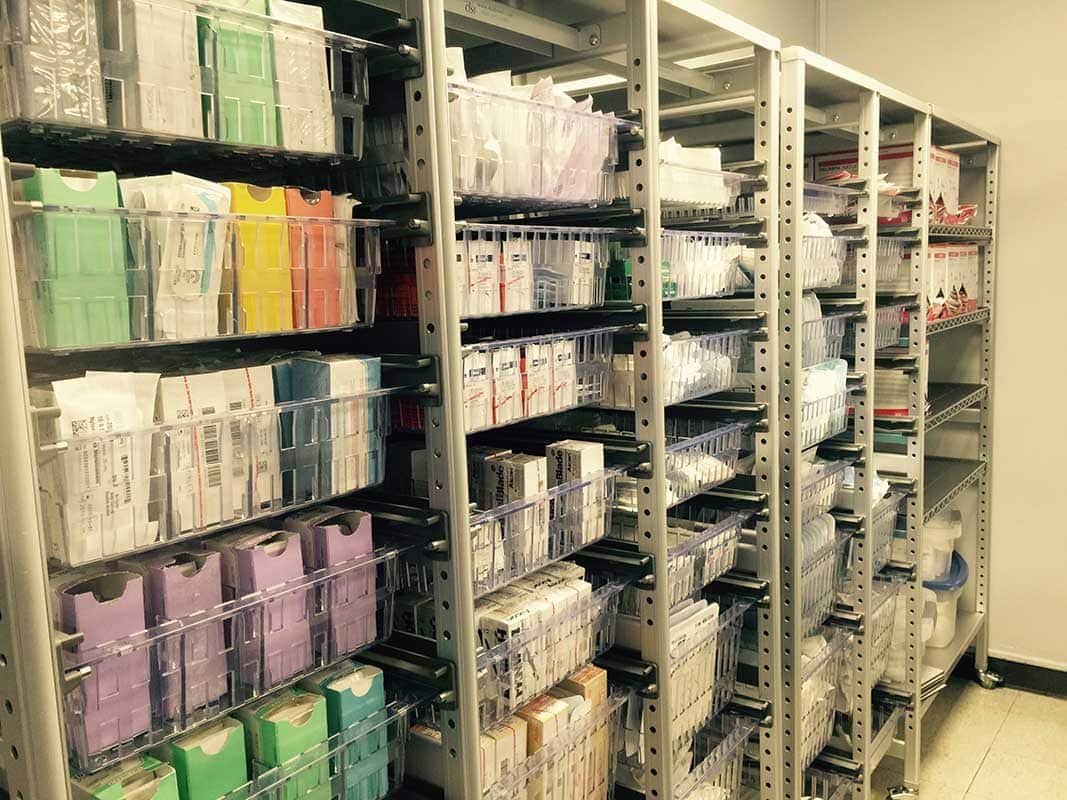
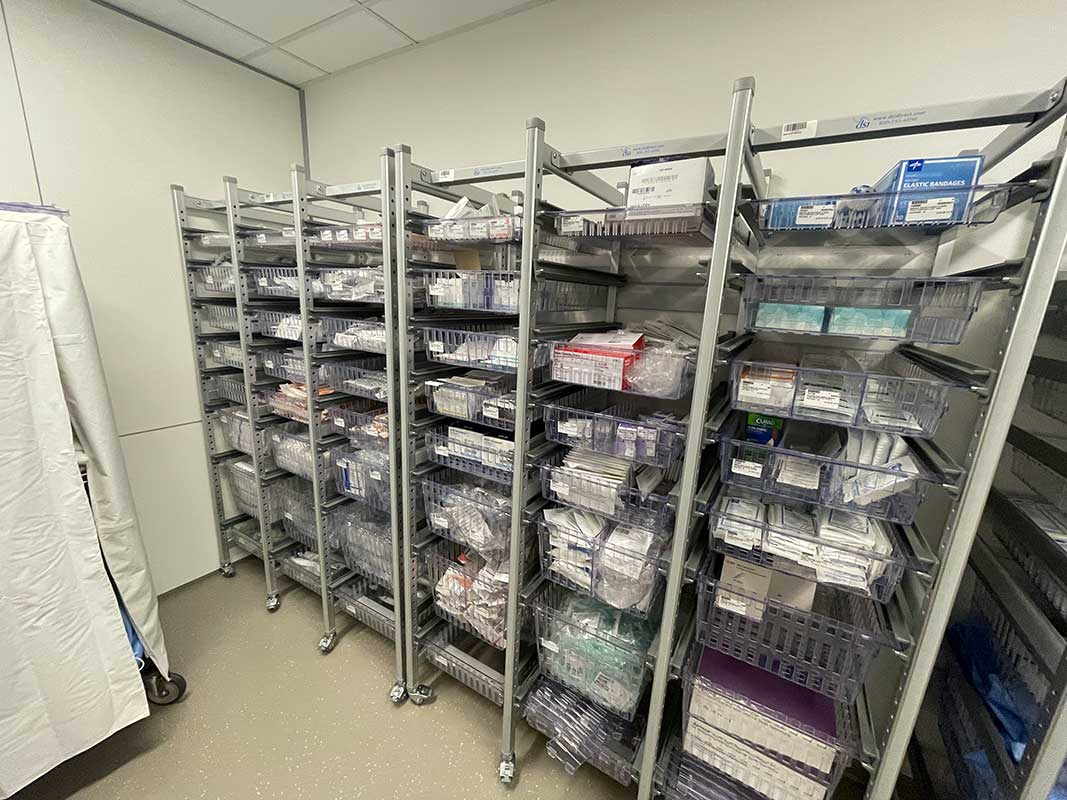
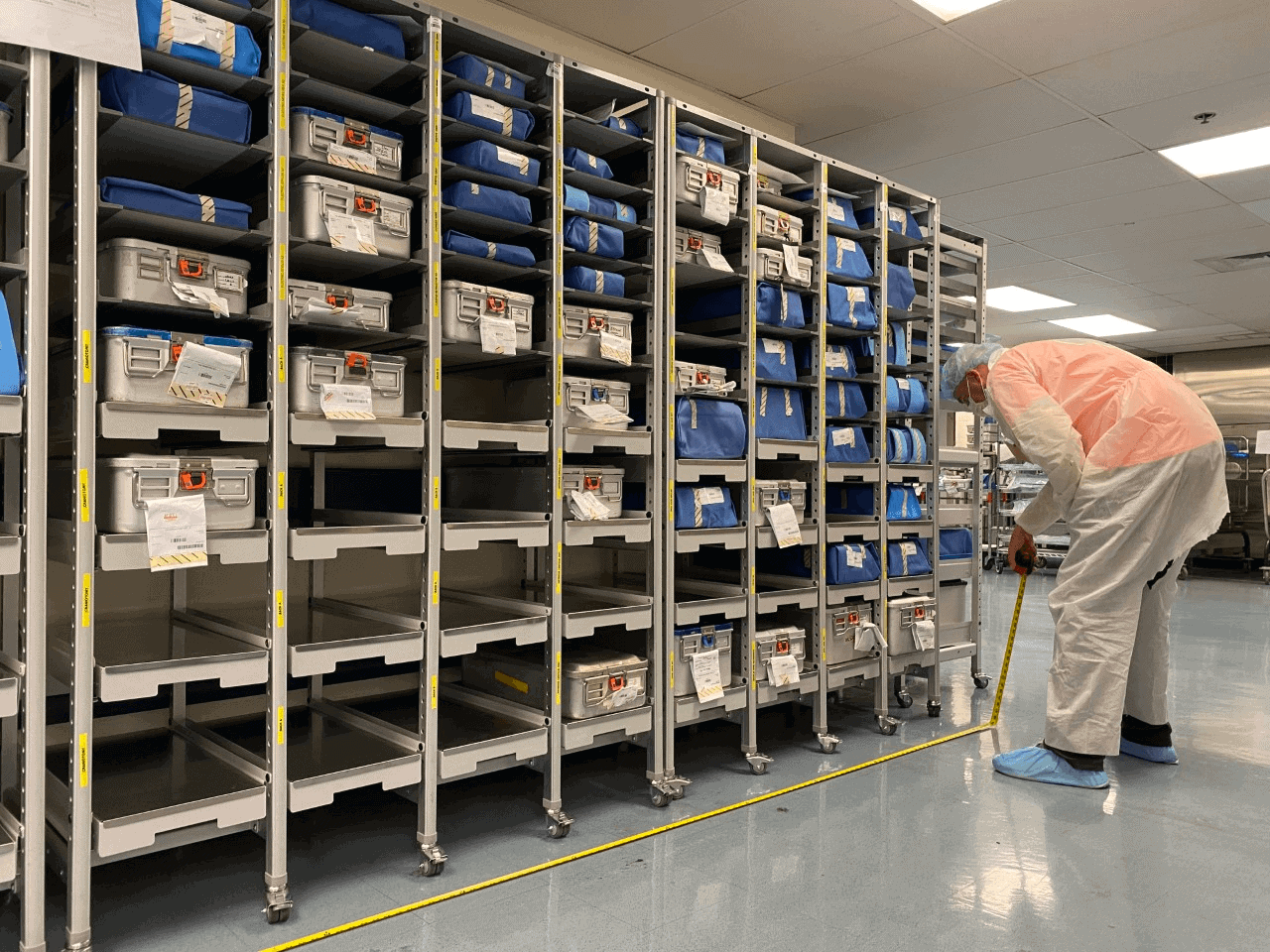
High-density mobile shelving features track-mounted shelving units on wheeled carriages that eliminate fixed aisles. These systems compress storage into half the footprint or double the capacity in the same space.
Mobile shelving provides 50-66% floor space savings versus static configurations. The track systems enable facilities to create a single movable access aisle instead of multiple permanent corridors.
Automated Dispensing Cabinets are specialized, secure storage units designed for medication management with barcode or RFID tracking. Vertical Lift Modules are enclosed, elevator-like systems utilizing ceiling height with central extractors retrieving trays. These heavy-duty vertical storage systems handle dense loads while reclaiming floor space for clinical use.
VLMs achieve picking speeds of 300+ lines per hour with 99%+ accuracy. Advanced wire shelvings within VLMs maximize air circulation and visibility for inventory management.
Robotic storage represents the most advanced automation tier available in healthcare logistics. These systems utilize autonomous units to retrieve items at speeds exceeding manual and semi-automated alternatives by significant margins.
Implementation complexity and capital requirements limit adoption to massive distribution centers and the largest urban research hospitals. Smaller facilities typically achieve sufficient efficiency gains from mid-range automated solutions without robotic infrastructure investment.
Robotic shuttle systems and robotic cube storage utilize independent robotic units to retrieve items on demand. These systems operate continuously with minimal human intervention once inventory placement is complete.
Robotic configurations can retrieve up to 1,000 lines per hour. Scalability allows facilities to add robots as demand increases without a complete system redesign.
Robotic systems are reserved for massive distribution centers and the largest urban research hospitals due to high cost and complexity. These installations typically serve multi-facility health systems with centralized distribution models.
Scalability becomes economically viable only at significant throughput volumes. Mid-sized hospitals rarely justify the capital expenditure against operational savings potential.
Robotic systems deliver unmatched retrieval speed and scalability for high-volume operations. High cost and complex implementation limit adoption outside major health systems and regional distribution hubs.
Installation requires specialized infrastructure, including reinforced flooring, climate control, and dedicated IT integration. Maintenance contracts and technical expertise requirements add recurring operational expenses beyond initial capital investment.
Healthcare storage investment follows four distinct pricing tiers based on automation level and capacity. Understanding cost ranges helps procurement teams align budget constraints with operational requirements and ROI expectations.
Pricing tiers reflect both upfront capital expenditure and long-term operational costs. Facilities must evaluate the total cost of ownership, including maintenance, energy consumption, and labor savings over the system lifecycle.
Budget tier static shelving costs under $50,000 for typical installations. This pricing includes stainless steel or aluminum construction meeting healthcare sanitation requirements.
Static shelving remains prevalent in smaller rural clinics with limited capital budgets. Installation costs stay low due to straightforward mounting without mechanical or electrical components.
Mid-range tier high-density mobile shelving costs between $50,000 and $150,000 for standard implementations. These systems include track installation, wheeled carriages, and safety features such as modu-stor-cts-hd configurations.
Pricing variations depend on system length, carriage count, and manual versus powered operation. Larger installations serving entire departments approach the upper pricing range with additional customization requirements.
Premium-tier ADCs and VLMs cost between $150,000 and $500,000+, depending on capacity and integration complexity. Ultra-premium tier robotic systems range from $300,000 to $2,000,000+ for complete installations.
Premium system costs include software licensing, EHR integration, and ongoing maintenance contracts. Facilities using plastic bins within automated systems add modest inventory container expenses to total investment calculations.
ROI calculation for healthcare storage investment requires analyzing multiple cost factors and operational improvements. Payback periods vary significantly based on facility size, real estate costs, labor rates, and inventory management efficiency gains.
Financial justification extends beyond simple space savings to include labor cost reduction, inventory accuracy improvements, and reduced stock-outs. Comprehensive cost analysis must account for both tangible savings and operational risk mitigation benefits.
A Paris hospital pharmacy achieved a payback period of approximately 6 years after VLM implementation. The average payback period for automated storage in a 561-bed hospital is 4.46 years with an ROI of 167% over the system lifecycle.
Larger facilities with higher real estate costs typically achieve faster payback periods. Smaller hospitals require longer payback periods but still generate positive ROI when space constraints become critical.
Space costs exceeding $30 per square foot annually justify high-density shelving costs through space reclamation. Storage capacity below 10% available floor space indicates facilities nearing critical capacity limits.
Labor costs above 40% of the supply chain budget signal automation opportunities for reducing manual picking and inventory management. Stock-outs exceeding 5 per month indicate poor inventory visibility, leading to delayed care and emergency purchasing.
Paris hospital pharmacy invested $978,656 in the VLM system, generating annual savings of $163,331. Cumulative savings reached $1.14 million over seven years through reduced labor costs and minimized inventory shrinkage.
Pennsylvania teaching hospital achieved 36% reduction in stock levels while maintaining 98% fill rates. Complete elimination of picking errors eliminated medication administration delays and associated liability risks.
A 2026 national survey of 102 health system supply chain leaders revealed complex purchasing priorities beyond simple pricing considerations. Decision-makers balance cost constraints against quality requirements, operational efficiency, and long-term reliability factors.
Rising costs dominate strategic concerns, with 60% of respondents citing this as their top challenge. However, procurement leaders pursue balanced strategies prioritizing quality and supplier reliability alongside cost efficiency.
Cost efficiency remains critical as healthcare facilities face persistent margin pressures. Product quality ranks as the top procurement objective, with clinical leaders emphasizing that patients remain the guiding priority behind purchasing decisions.
Procurement teams evaluate the total cost of ownership rather than the initial purchase price alone. Long-term reliability and reduced maintenance requirements often justify higher upfront investment in premium systems.
Inventory optimization reduces waste from expired products and overstocking while improving supply availability. Advanced storage systems provide real-time visibility, enabling LEAN inventory methodologies and just-in-time replenishment strategies.
Automated systems track expiration dates and implement first-in-first-out rotation automatically. Better inventory control reduces carrying costs while maintaining adequate stock levels for clinical needs.
Accurate order fulfillment serves as a critical indicator of supplier success, cited by 66% of respondents. Technology integration with existing EHR and ERP platforms determines operational efficiency gains from storage system investments.
Seamless data exchange between storage systems and clinical information systems enables automated reordering and usage tracking. Supplier reliability extends beyond product delivery to include implementation support and ongoing technical assistance.
Storage solutions directly impact labor productivity, space utilization, and inventory accuracy across healthcare facilities. Operational efficiency improvements extend beyond materials management to affect clinical workflow, patient safety, and financial performance.
Advanced storage systems transform supply chain operations from reactive to proactive management. Real-time inventory visibility and automated processes reduce emergency purchasing and stock-out incidents affecting patient care.
VLMs deliver significant labor savings, near-perfect accuracy, and maximum space efficiency versus other systems. Automated picking eliminates manual searching and reduces staff time spent locating supplies by up to 70%.
Error elimination prevents medication administration mistakes and surgical delays from missing instruments. Labor cost reductions often exceed 40% of supply chain expenses, providing substantial ROI contributions.
VLMs save up to 90% of floor space compared to static shelving configurations. Reclaimed space converts to revenue-generating clinical areas or eliminates costly facility expansion projects.
Vertical storage utilizes the ceiling height ignored by traditional shelving systems. The product gallery demonstrates various space optimization approaches across different healthcare departments.
Real-time inventory tracking provides accurate stock levels, preventing both shortages and excess inventory. Automated systems generate usage reports identifying consumption patterns and enabling data-driven purchasing decisions.
Expiration date tracking reduces waste from outdated supplies and medications. Enhanced visibility supports regulatory compliance and Joint Commission requirements for inventory management documentation.
Storage system selection involves tradeoffs between cost, complexity, and operational requirements. Understanding limitations helps facilities match appropriate solutions to specific departmental needs and budget constraints.
Implementation challenges vary significantly based on system type and facility characteristics. Careful planning addresses potential limitations before procurement commitments are finalized.
Static shelving relies on manual inventory management, prone to human error. Frequent stock-outs lead to delayed care and emergency purchasing at premium prices.
Manual processes require significant staff time for cycle counting and replenishment activities. Human error rates in manual picking range from 1-3%, creating medication safety risks and surgical delays.
High-density mobile shelving best suits general supplies, medical records, and slower-moving inventory rather than high-velocity pharmacy dispensing. Static shelving remains prevalent in smaller rural clinics with limited capital budgets despite space inefficiency.
Facility size and inventory velocity, along with inventory profiles, determine appropriate automation levels. The services required for implementation vary significantly between manual and automated systems.
Implementation requires careful planning for inventory transfer and staff training to minimize operational disruption. Automated systems need ongoing maintenance contracts and technical support for optimal performance.
Facility infrastructure must support system requirements, including floor loading capacity and electrical service. Change management processes help staff adapt to new workflows and technology interfaces.
High-density shelving costs represent strategic investments in operational efficiency rather than simple capital expenses. Facilities facing space constraints, rising labor costs, or inventory accuracy issues should conduct a comprehensive cost analysis evaluating both tangible savings and risk mitigation benefits.
ROI calculations must extend beyond initial payback periods to encompass full system lifecycle value. Healthcare storage investment generates compounding returns through sustained labor savings, improved space utilization, and enhanced inventory control, reducing waste and emergency purchasing.
Organizations pursuing storage system upgrades should evaluate their operational triggers against established thresholds for space costs, capacity constraints, labor expenses, and stock-out frequency. Facilities meeting multiple trigger criteria typically achieve faster payback periods and higher cumulative ROI over system lifespans.
The transition from manual to automated storage systems requires careful vendor selection, emphasizing implementation expertise and long-term support capabilities. Organizations benefit from partners offering comprehensive solutions tailored to healthcare-specific requirements rather than generic industrial storage approaches.
Strategic storage investments align operational efficiency improvements with ultimate patient care outcomes. DSIDirect has provided healthcare facilities nationwide with customized storage solutions since 1990, combining technical expertise with an understanding of clinical workflow requirements and regulatory compliance needs.
Distribution Systems International has helped acute care facilities cut storage and labor costs while reclaiming floor space since 1990. Our LEAN inventory management approach begins with a complimentary on-site storage analysis, followed by architectural CAD layouts that let you visualize the transformed space before installation begins. From design through full turnkey installation, our team handles every detail, including delivery, assembly, and inventory transfer, so your clinical staff stays focused on patient care.
Ready to find out what high-density storage could save your facility? Contact Distribution Systems International today to schedule your complimentary storage analysis.

With 21 years of sales management, marketing, P&L responsibility, business development, national account, and channel management responsibilities under his belt, Ian has established himself as a high achiever across multiple business functions. Ian was part of a small team who started a new business unit for Stanley Black & Decker in Asia from Y10’ to Y14’. He lived in Shanghai, China for two years, then continued to commercialize and scale the business throughout the Asia Pacific and Middle East regions for another two years (4 years of International experience). Ian played college football at the University of Colorado from 96’ to 00’. His core skills sets include; drive, strong work ethic, team player, a builder mentality with high energy, motivator with the passion, purpose, and a track record to prove it.