OR storage selection requires evaluating material properties, capacity, infection control performance, and workflow integration. The global surgical instrument storage cabinets market reached $1.42 billion in 2024, reflecting growing demand for solutions supporting clinical outcomes and operational efficiency. Surgeons and materials managers must align storage decisions with case volume, robotic adoption, facility layout, and regulatory compliance requirements.
Effective OR storage selection begins with understanding how system types address specific perioperative challenges. Floor-standing cabinets, wall-mounted units, mobile carts, modular casework, and specialty robotic storage each serve distinct functional roles in sterile processing, surgical staging, and point-of-use delivery. Evidence-based selection criteria prioritize cleanability, durability, adaptability, and total cost of ownership over first-cost optimization.
Operating room storage systems fall into five major categories differentiated by capacity, mounting, mobility, and specialty features. Each addresses specific space constraints, workflow patterns, and equipment protection requirements in perioperative environments.
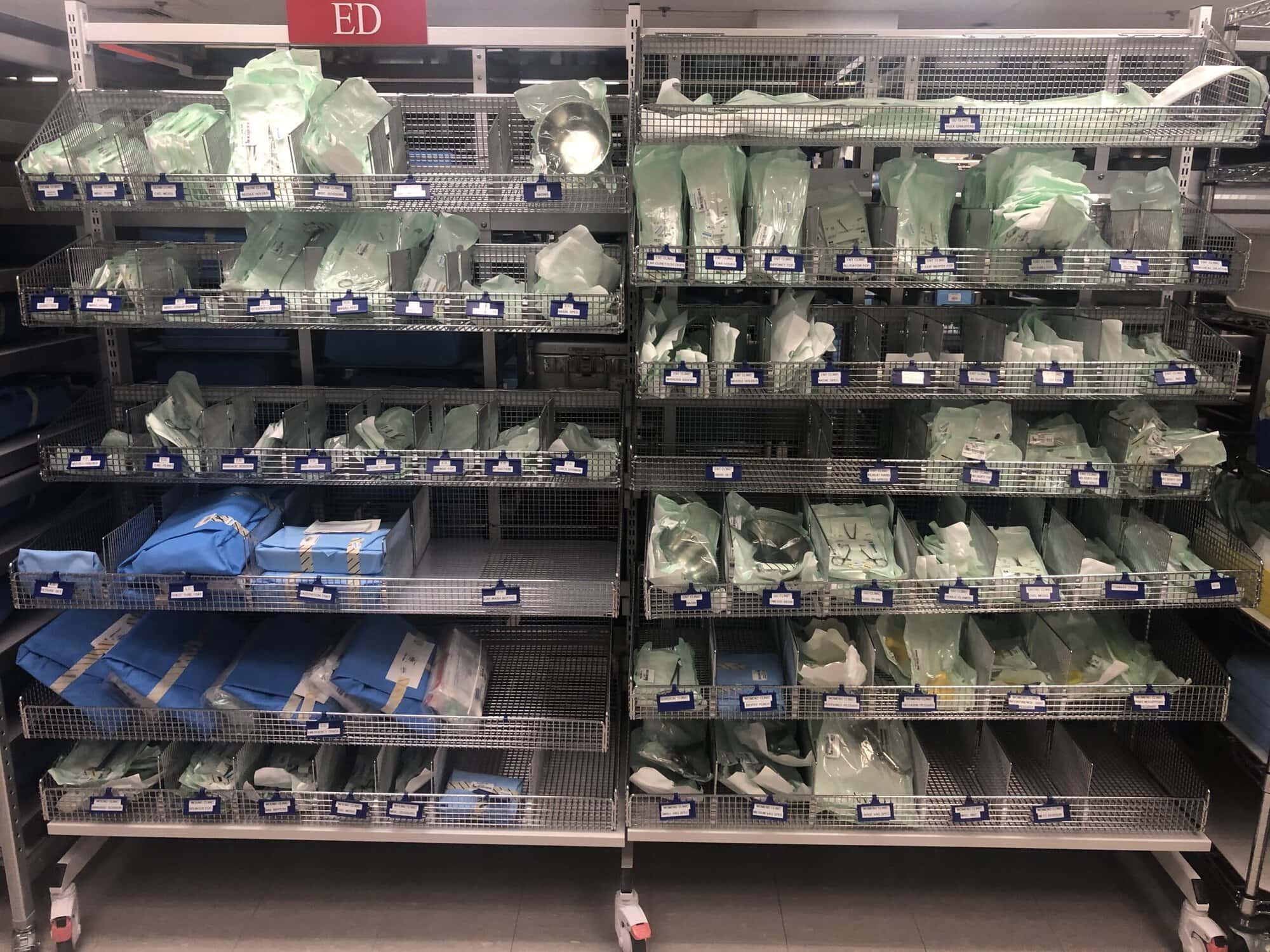
Floor-standing stainless-steel cabinets provide high storage capacity with glazed or solid doors, adjustable shelving, and pegboard configurations. These units feature welded construction, smooth satin finishes, tempered glass options, and sloped tops, reducing dust accumulation. Budget models start at $4,044, mid-range units cost approximately $5,339, and premium configurations reach $9,809.
Heavy-duty stainless steel products resist corrosion and withstand repeated chemical cleaning protocols required in sterile core areas. Enclosed storage protects instruments from environmental contamination while maximizing cubic capacity. High-volume facilities prioritize these systems for durability, infection control performance, and total cubic capacity.
Wall-mounted cabinets conserve floor space and facilitate easier environmental cleaning by eliminating horizontal surfaces beneath storage units. These systems mount directly to structural walls using solid or glazed doors. Budget wall-mounted cabinets cost approximately $2,369, mid-range units average $3,159, and premium models reach $4,235.
Space-efficient designs support point-of-use access where floor area is constrained by equipment and circulation requirements. Wall-mounted systems reduce clutter and improve sightlines while maintaining infection control standards. Small to mid-sized ORs and ambulatory procedure suites gain storage capacity without sacrificing maneuverability.
Mobile carts feature wheels or casters, enabling rapid instrument movement, overflow staging, and flexible deployment across multiple rooms. Medical carts range from $349 for basic utility models to $989 for mid-range configurations and $3,219 for premium specialty transport systems. Mobile storage supports case-cart assembly, turnover efficiency, and temporary capacity during renovation.
Dedicated robotic and specialty cabinets provide equipment-specific storage with HEPA filtration, hospital-grade power integration, and accessory-optimized interiors. Robotic storage cabinets cost between $4,900 and $6,900 or more, depending on features. High-volume robotic centers benefit from purpose-built storage protecting delicate accessories and reduces docking delays.
Material selection directly impacts infection control performance, structural durability, cleaning efficiency, and total lifecycle cost. Stainless steel and aluminum represent the two dominant material classes, each offering distinct trade-offs in corrosion resistance, weight, and maintenance requirements.
Stainless steel delivers superior corrosion resistance, easy sterilization compatibility, and long service life under repeated chemical exposure and impact stress. Heavy-duty stainless steel construction withstands high-volume sterile processing demands without surface degradation. Welded stainless-steel cabinets maintain structural integrity over multi-decade service cycles.
Aluminum offers lighter weight and easier handling, but provides less durability in heavy-duty hospital applications. Facilities prioritizing mobility or temporary installations may accept reduced impact resistance for lower transport effort. Stainless steel remains the dominant material for sterile core, OR, and central supply applications where contamination control outweighs weight considerations.
Material surface properties determine how effectively storage systems resist biofilm formation, withstand chemical disinfectants, and maintain cleanability. Smooth, non-porous stainless steel surfaces prevent microbial harboring and tolerate aggressive cleaning protocols without corrosion. Infection control ranks as the most significant priority among 75% of surgery-unit facility managers in healthcare material selection studies.
Durability impacts the total cost of ownership through replacement frequency and maintenance burden. Depreciation schedules range from seven years for modular systems to 31 years for fixed stainless-steel casework. Materials resisting impact, moisture, and chemical exposure reduce long-term operational costs despite higher initial investment.
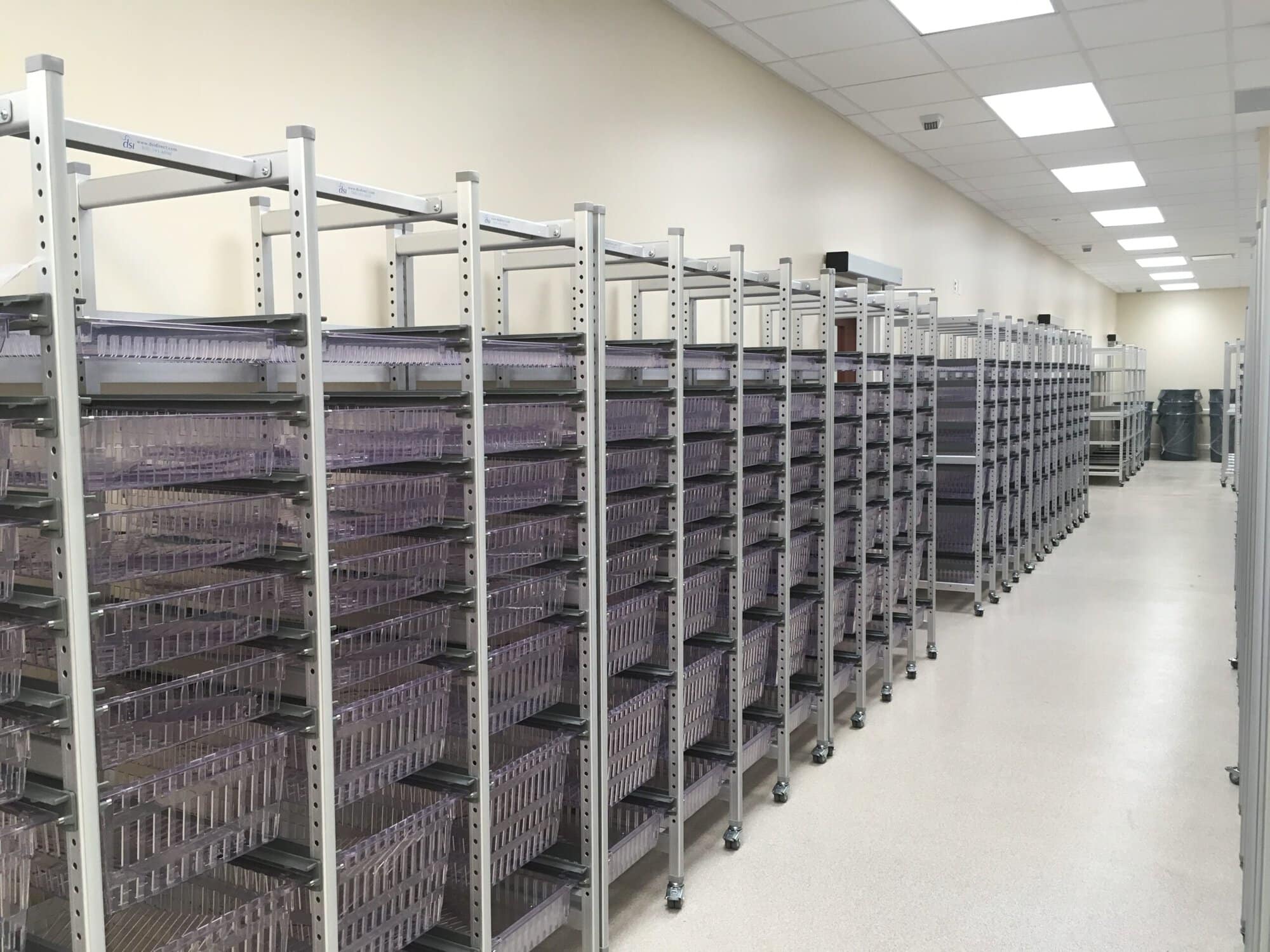
Modular systems use reconfigurable cabinet formats supporting phased renovation, service-mix evolution, and lower installation costs compared to fixed casework. Modu-Stor CTS configurations adapt to changing workflow requirements through adjustable shelving and interchangeable components. Modular casework qualifies for seven-year depreciation schedules while dedicated systems follow 31-year fixed-asset timelines.
Material choice in modular systems balances flexibility with structural performance through aluminum-clad or hybrid construction, maintaining reconfigurability. Facilities undergoing growth gain lifecycle value from systems accommodating future changes without full replacement. Modularity becomes critical as robotic adoption and workflow standardization initiatives require storage adaptation.
Robotic surgery adoption creates specialized storage requirements for accessories, instrumentation, drapes, and equipment staging, differing from traditional open procedures. Robotic programs demand solutions addressing equipment clutter, cord management, docking clearances, and contamination control.
Modular casework systems provide reconfiguration capability and lower installation costs through flexible cabinet formats adapting to evolving robotic workflows. These systems support multiple procedure types and accommodate phased program expansion without replacement. Modular solutions prioritize adaptability for facilities maintaining diverse service lines.
Dedicated robotic cabinets deliver purpose-built storage with HEPA filtration, hospital-grade power, drip trays, and accessory-specific interior configurations optimized for robotic components. Specialty scope cabinets protect delicate instruments while maintaining contamination control through filtered air circulation. High-volume robotic centers justify dedicated systems when accessory inventory and equipment protection requirements exceed general-purpose storage capabilities.
Robotic surgery utilization increased from 1.8% of common general surgery procedures in 2012 to 15.1% in 2018 across 73 hospitals. The share of surgeons performing robotic procedures rose from 8.7% to 35.1% during the same period. Hospitals initiating robotic surgery during the study represented 31.5% of the cohort, demonstrating continued program expansion.
Volume thresholds determine whether dedicated robotic storage delivers sufficient utilization to justify specialty cabinet investment. Low-volume programs may stage robotic accessories within existing storage, while high-volume centers require purpose-built systems to prevent workflow bottlenecks. Facilities planning robotic program launches should evaluate storage requirements during initial capital planning.
Equipment, cords, and lack of space represent major contributors to robotic surgery flow disruptions in peer-reviewed room-flow studies. Room size effects show statistical significance during pre-docking and docking stages when clutter compromises efficiency. Dedicated storage zones reduce disruption frequency by consolidating accessories and preserving circulation clearances.
Poorly organized robotic storage creates delays and increases contamination risk through excessive staff movement. Structured storage systems support standardized accessory placement and rapid retrieval protocols, reducing setup variability. Surgeon input becomes critical in storage design because procedure-specific accessory requirements directly shape optimal cabinet organization.
Evidence-based buyer priorities for OR storage systems emphasize infection control, durability, maintenance efficiency, and workflow optimization over initial purchase price. Quantitative priority rankings from surgery-unit facility managers demonstrate clear preference hierarchies informing materials manager decision frameworks.
Infection control receives the highest priority rating from 75% of surgery-unit facility managers evaluating material selection criteria. Contamination prevention requirements drive specification decisions toward materials and construction methods supporting aggressive cleaning protocols without degradation. Storage systems function as critical elements preventing cross-contamination between sterile and soiled zones.
Cleanability features include smooth non-porous surfaces, sealed construction, sloped tops preventing dust accumulation, and corrosion-resistant finishes withstanding chemical disinfectants. Systems failing to maintain surface integrity under repeated cleaning compromise infection control, regardless of initial cost advantage. Materials managers must prioritize storage solutions demonstrating measurable contamination control benefits.
Durability ranks as the most significant priority for 54.84% of surgery-unit facility managers, while ease of maintenance scores 37.10%. Long service life reduces the total cost of ownership through extended replacement cycles. Heavy-duty welded construction, impact-resistant materials, and corrosion-proof finishes extend operational lifespan.
Maintenance burden affects ongoing operational costs through cleaning labor, repair frequency, and component replacement expenses over multi-decade service periods. Storage systems requiring specialized cleaning products impose hidden costs, eroding initial price advantages. Cost-effectiveness emerges from balancing upfront investment against lifecycle maintenance expenses.
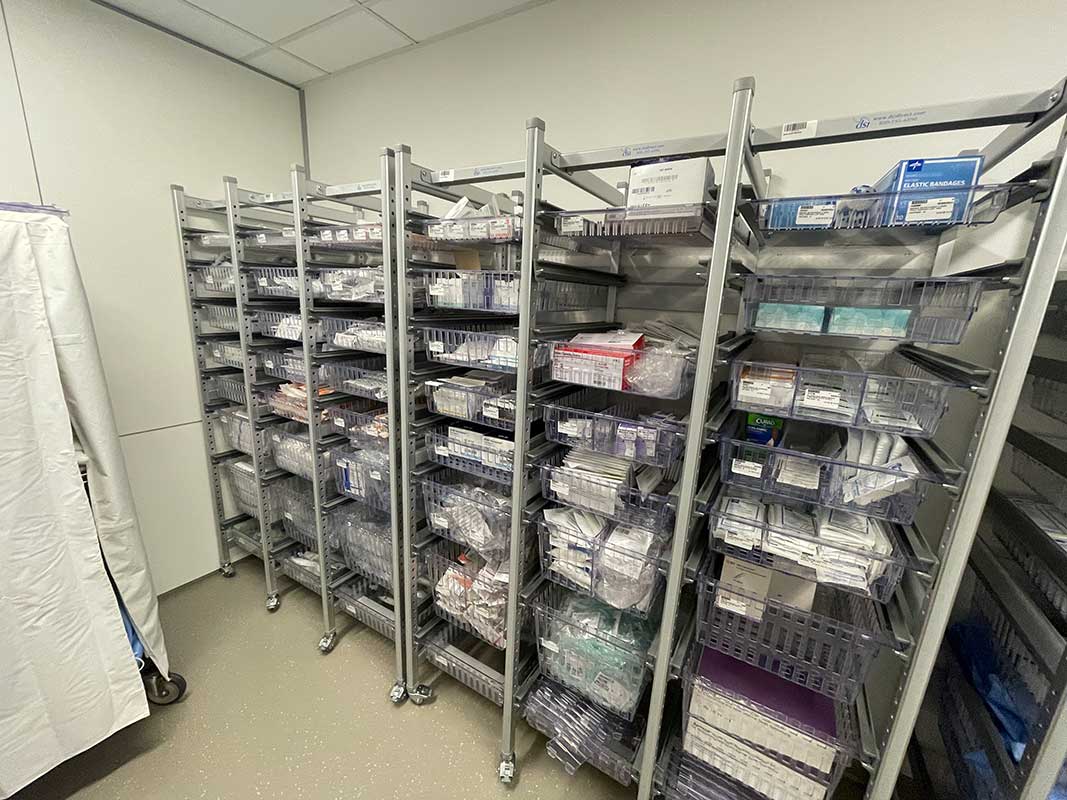
Workflow efficiency determines how storage systems support staff productivity, procedure turnover speed, and point-of-use access during time-sensitive perioperative activities. Ergonomic design, logical organization, and minimal travel distance reduce motion waste. Track systems and wire shelving configurations support high-density shelving strategies, maximizing cubic capacity while maintaining visual inventory management.
Adaptability enables storage systems to accommodate changing service lines, equipment evolution, and facility expansion without full replacement. Facilities undergoing growth require storage infrastructure supporting modification rather than obsolescence. Materials manager planning horizons should evaluate whether modular reconfiguration or fixed specialty configurations best align with anticipated workflow changes.
Geographic distribution, facility size, and regional market concentration shape storage strategy through case volume, space constraints, capital availability, and service-line specialization patterns. Facility characteristics determine optimal storage configurations and investment priorities.
Urban facilities represent 94% of ambulatory surgery centers, while rural centers account for 6% according to Medicare Payment Advisory Commission data. Urban concentration creates higher competition, greater case-volume density, and stronger justification for specialty storage investments. Metropolitan markets support premium storage systems because patient volume generates sufficient utilization.
Rural facilities prioritize space-efficient multifunctional storage and lower-capital mobile solutions serving diverse procedure types. Budget constraints and lower case volumes favor flexible general-purpose cabinets over dedicated specialty systems. Storage selection in rural environments emphasizes versatility, ease of maintenance, and cost-effectiveness.
Hospitals with more than 300 beds demonstrate a higher likelihood of adopting robotic technology and advanced surgical capabilities requiring specialized storage infrastructure. Large facilities maintain greater case volume and sufficient capital budgets to justify dedicated robotic cabinets and high-capacity stainless-steel systems. Bed count correlates with OR suite size, requiring proportionally scaled storage solutions.
Smaller facilities balance storage investment against limited floor space by prioritizing wall-mounted systems and mobile carts. Case-volume thresholds determine whether floor-standing high-capacity cabinets deliver sufficient utilization. Materials manager capacity planning should align storage cubic volume with actual instrument turnover rates.
California maintains the highest ASC count at 896 facilities, followed by Florida with 517, Texas with 497, and Georgia with 423 centers. The Southeast region holds 32.82% of U.S. ASC capacity, representing the largest concentration. State-level market density influences storage vendor distribution strategies, affecting price negotiation and service availability.
High-concentration markets support stronger vendor presence, faster technical support, and more competitive pricing. Regional ASC clusters create knowledge-sharing opportunities and standardization potential across multi-site operators. Materials managers in concentrated markets gain negotiating leverage through higher purchase volumes.
Facility planning integrates storage systems into workflow design, encompassing clean-dirty separation, unidirectional flow, adjacency relationships, and future expansion capacity. Storage placement and configuration decisions impact infection control compliance and operational efficiency.
Workflow must follow unidirectional progression from soiled arrival through cleaning to sterile distribution with physical separation of clean and soiled areas. Department of Veterans Affairs sterile processing design standards require dedicated receiving, decontamination, assembly, sterilization, and storage zones, preventing cross-contamination. Storage systems support separation through strategic placement, defining clean-side inventory distribution separate from soiled instrument return paths.
Physical barriers and distinct storage zones maintain contamination control by preventing soiled materials from entering clean assembly areas. Materials managers collaborate with infection prevention teams to ensure storage layouts support regulatory compliance. Properly designed separation reduces infection risk while supporting efficient instrument flow.
Optimal layouts position storage systems near points of use while maintaining adequate circulation clearances. Point-of-use access reduces staff travel distance during procedure setup. Layouts must balance storage density with accessibility by avoiding over-consolidation, forcing excessive movement.
High-density shelving configurations maximize cubic capacity within constrained footprints by using vertical space and adjustable shelf spacing. Strategic placement of wall-mounted units preserves floor area for equipment circulation while mobile carts support flexible staging. Workflow mapping identifies high-frequency retrieval patterns informing storage-zone placement.
Facilities planning expansion should prioritize modular storage systems supporting reconfiguration without full replacement when service lines change. Fixed built-in casework follows 31-year depreciation schedules, creating financial lock-in, while modular systems qualify for seven-year depreciation, offering greater lifecycle flexibility. Renovation timelines influence whether dedicated specialty storage or general-purpose modular solutions deliver better long-term value.
Expansion planning requires evaluating whether the current storage infrastructure can scale through additional units or requires replacement. Phased growth strategies favor modular platforms accepting incremental additions without disrupting workflows. Materials managers should assess storage investments against facility master plans to avoid premature obsolescence.
Standardization reduces supply variability, simplifies inventory management, and improves storage efficiency through consistent product selection and organized placement protocols. Surgeon input and materials manager collaboration enable storage optimization supporting both clinical preferences and operational requirements.
Surgeon preference variability can amplify waste when unconstrained preference cards create excessive SKU counts and redundant inventory. Poorly standardized storage systems create excess stock by failing to consolidate similar items or enforce par-level discipline. One laparoscopic cholecystectomy preference-card analysis across ten surgeons revealed disposable supply costs ranging from $92 to $637, with a mean of $333, demonstrating the variation's cost impact.
Standardization initiatives reduce total inventory value, minimize expired product waste, and improve space utilization by consolidating similar items. Collaborative surgeon-materials manager discussions identify clinically acceptable equivalents, reducing variability without compromising outcomes. Storage systems supporting standardized bin locations and visual management reinforce compliance.
Modern storage platforms integrate with digital inventory tracking through barcode scanning, RFID tagging, and automated replenishment systems, improving visibility and control. Digital integration enables real-time stock monitoring, usage tracking, expiration alerts, and demand forecasting, reducing manual labor. Storage system design must accommodate scanning equipment access.
Point-of-use inventory systems embedded within storage cabinets automate par-level replenishment and consumption tracking, eliminating manual count cycles. Materials managers implementing digital inventory solutions should specify storage with adequate depth, adjustable shelving supporting label visibility, and ergonomic access enabling efficient scanning workflows. Technology integration transforms storage into an active inventory management infrastructure.
Different procedure types generate distinct accessory requirements, instrument sets, and consumable volumes requiring customized storage configurations. Robotic procedures demand cord management and delicate accessory protection, while minimally invasive cases require organized trocar and camera storage. Orthopedic implant storage differs fundamentally from endoscopy accessory organization, requiring tailored interior layouts.
Surgeon input during storage design ensures cabinet organization matches procedure-specific needs rather than imposing generic layouts. Procedure-family analysis identifies common access patterns and high-frequency items, informing custom drawer configurations. Storage customization should balance procedure specificity against flexibility, allowing adaptation when service mixes evolve.
OR storage selection requires integrated evaluation of material properties, capacity, infection control performance, workflow efficiency, and lifecycle cost rather than isolated feature comparison. Evidence demonstrates infection control and durability consistently outrank initial price in surgery-unit environments where contamination risk and operational intensity demand premium materials. Stainless steel remains the dominant choice for high-acuity applications because it delivers superior corrosion resistance, cleanability, and service life supporting multi-decade depreciation schedules.
Facility type, case volume, and robotic adoption determine optimal storage configurations, with floor-standing cabinets dominating high-volume hospitals while wall-mounted and mobile solutions serve space-constrained applications. Robotic program maturity influences whether modular general-purpose systems or dedicated specialty cabinets better address workflow challenges. Materials managers should align storage investments with facility master plans and anticipated service-line evolution to avoid premature obsolescence.
Standardization initiatives supported by surgeon input reduce waste, simplify inventory management, and improve storage efficiency through consistent product selection and organized placement protocols. Digital inventory integration transforms storage into an active management infrastructure, enabling real-time visibility and automated replenishment. Organizations treating storage as an operational system achieve better infection control outcomes, reduced carrying costs, and improved staff productivity.
DSIDirect brings over 30 years of healthcare storage expertise, helping facilities implement LEAN inventory management and workflow-optimized storage solutions supporting improved patient care and operational efficiency. Effective OR storage selection balances clinical requirements, operational priorities, and lifecycle value through evidence-based evaluation.
OR storage selection affects infection control, instrument access, and surgical team efficiency on every case. Distribution Systems International brings over 30 years of healthcare storage expertise to help acute care facilities evaluate, design, and implement storage systems built for real clinical demands. From floor-standing cabinets and mobile carts to specialty robotic storage configurations, our team provides a complimentary on-site analysis to assess your current setup, identify workflow gaps, and deliver a custom storage solution backed by LEAN methodology.
Choose Distribution Systems International for OR storage guidance grounded in evidence and operational experience. Contact our team to schedule your complimentary facility assessment today.

With 21 years of sales management, marketing, P&L responsibility, business development, national account, and channel management responsibilities under his belt, Ian has established himself as a high achiever across multiple business functions. Ian was part of a small team who started a new business unit for Stanley Black & Decker in Asia from Y10’ to Y14’. He lived in Shanghai, China for two years, then continued to commercialize and scale the business throughout the Asia Pacific and Middle East regions for another two years (4 years of International experience). Ian played college football at the University of Colorado from 96’ to 00’. His core skills sets include; drive, strong work ethic, team player, a builder mentality with high energy, motivator with the passion, purpose, and a track record to prove it.