Hospitals managing inconsistent medical carts across departments face increased errors, higher costs, and workflow inefficiencies. Medical cart standardization establishes uniform configurations that improve patient safety, reduce training burden, and optimize supply chain operations.
The medical carts market reached $1.01 billion in 2024 and is projected to reach $2.11 billion by 2030. This 12.54% compound annual growth rate reflects increasing recognition that configuration management directly impacts clinical outcomes and operational efficiency.
Medical cart configurations define the physical layout, equipment placement, and supply organization within mobile hospital equipment. Standardization creates uniform setups across departments to eliminate variation in critical supply locations and equipment interfaces.
The market expansion supports growing adoption of standardized systems across facility types. Mobile workstations command 72.38% market share, while emergency crash carts hold 40.53% share among specialized equipment categories.
Emergency crash carts store resuscitation supplies and operate under strict regulatory protocols in critical response situations. Medication carts distribute pharmaceuticals across nursing units with locking mechanisms that ensure controlled substance security and access tracking.
Procedure carts represent the fastest-growing category with 18.2% annual growth driven by ambulatory surgery center expansion. Mobile workstations integrate electronic health records directly at point-of-care locations for documentation efficiency.
Standardization reduces medication discrepancies by 80% through consistent supply placement that eliminates search-related errors. Staff walking distance drops 50% when cart locations and contents follow predictable patterns across units and shifts.
Operating room readiness reaches 95% when procedure carts maintain identical configurations across all surgical suites. Training time decreases 65% as new staff learn one system instead of multiple department-specific arrangements.
Inconsistent configurations force clinical staff to search for supplies in varying locations across departments and shifts. Variable equipment placement increases cognitive load during high-stress situations when rapid access determines patient outcomes.
Maintenance costs escalate when diverse cart models require different parts, service protocols, and vendor relationships. Inventory tracking becomes unreliable when identical supplies occupy different drawer positions across otherwise similar cart types.
Standardization requires multidisciplinary participation to address clinical workflow, technical requirements, and administrative constraints simultaneously. Clinical staff provide frontline insight while administrators ensure budget alignment and supply chain optimization through coordinated planning.
Successful initiatives engage stakeholders from nursing, pharmacy, materials management, information technology, and facility operations teams. Department representatives must possess decision-making authority to commit resources and implement changes within their areas.
Clinical representatives identify workflow requirements and validate that proposed configurations support patient care delivery patterns. Materials management teams evaluate supply chain optimization opportunities, including inventory reduction and standardized purchasing agreements.
Information technology specialists assess integration requirements for electronic health record systems and clinical decision support tools. Facility operations staff determine space constraints, charging infrastructure needs, and maintenance protocols across campus locations.
Regular steering committee meetings maintain momentum and resolve conflicts between competing departmental priorities throughout the project lifecycle. Establishing clear decision-making authority prevents deadlocks when clinical preferences conflict with budget limitations or technical constraints.
Pilot testing in representative departments validates configurations before hospital-wide deployment and captures user feedback. Documentation of decisions and rationale creates institutional knowledge that informs future equipment procurement and configuration updates.
Capsa Healthcare leads with 22% market share through modular workstations and customization capabilities that accommodate facility-specific requirements. Ergotron holds 18% share, specializing in mobile computing solutions with height-adjustable platforms for ergonomic optimization.
Harloff Manufacturing commands 15% market share, focusing on emergency and anesthesia carts built with antimicrobial surfaces. Metro captures 12% share while GCX Corporation holds 8% through technology mounting systems and integration accessories.
Selection criteria must balance clinical functionality, financial constraints, and long-term operational requirements through structured evaluation frameworks. Prioritization matrices help teams weigh competing factors based on facility-specific needs and strategic objectives.
Durability and reliability score 95 out of 100 in buyer priority rankings due to equipment lifespan impact. Cost and total cost of ownership rank 87, reflecting budget pressures and growing focus on value analysis.
Customization options score 72 in priority rankings as facilities seek configurations matching specific departmental workflows and protocols. Mobility and ergonomics rate 68 due to aging workforce demographics, with average registered nurse age reaching 43.4 years.
Technology integration scores 65, reflecting increasing electronic health record adoption that demands seamless digital access at the point-of-care. Locking mechanisms, power management systems, and antimicrobial surfaces appear across all categories as baseline requirements for infection control.
Emergency crash carts range from $2,700 to $3,756 for budget configurations meeting basic code response requirements. Premium mobile workstations command $7,000 to $10,000 or more when integrating advanced computing, powered accessories, and specialized mounting systems.
Total cost of ownership includes maintenance expenses, replacement parts, and workflow inefficiency costs beyond the initial purchase price. Configuration management that reduces training time and maintenance complexity delivers measurable return despite higher upfront investment.
Aging clinical workforce demographics require equipment designs that minimize physical strain during routine cart movement and supply access. Swivel casters, ergonomic handle heights, and accessible drawer pulls reduce musculoskeletal injury risk across extended shifts.
Weight distribution affects maneuverability in crowded hallways and patient rooms where space constraints limit the turning radius. Cart stability during transport prevents supply spillage and equipment damage that disrupts workflow and increases replacement costs.
Implementation frameworks provide structured approaches spanning needs assessment through long-term sustainability monitoring and continuous improvement. A six-phase framework guides organizations through discovery, design, procurement, deployment, training, and evaluation stages with defined deliverables.
The twelve-step procurement framework addresses vendor selection, contract negotiation, and purchasing coordination across multiple departments simultaneously. Three-phase standardization focuses specifically on assessment, pilot testing, and full deployment with built-in feedback mechanisms.
The discovery phase establishes baseline metrics, identifies pain points, and documents current state workflows across all departments. The design phase translates requirements into specific cart configurations with detailed specifications and vendor engagement for customization validation.
Procurement executes competitive bidding, negotiates contracts, and coordinates delivery schedules that align with facility operations calendars. Deployment manages physical installation, existing cart decommissioning, and supply transfer while minimizing service interruption.
Initial pilot departments test configurations under real-world conditions and provide feedback for refinement before broader deployment. Selection of pilot sites should represent diverse clinical environments, including emergency, surgical, and medical-surgical units.
Sequential rollout schedules allow adjustment based on lessons learned while managing organizational change fatigue and staff training capacity. Department-by-department implementation maintains service continuity and provides troubleshooting time before expanding to additional areas.
Medication error rates measure safety improvements directly attributable to consistent supply placement and reduced search time. Staff satisfaction scores capture user experience and identify ongoing training needs or configuration adjustments.
Cart downtime tracking quantifies maintenance efficiency improvements from standardized parts and service protocols across equipment types. Inventory accuracy assessments verify that inventory consistency reduces waste and improves supply availability.
Resistance emerges when clinical staff perceive standardization as limiting autonomy or disrupting established workflows and personal preferences. Budget constraints create competing priorities between standardization investment and other capital equipment needs across the organization.
Technology integration challenges arise when legacy systems lack interoperability with new cart-mounted computing and clinical decision support. Addressing these barriers requires strategic communication, stakeholder engagement, and phased implementation that demonstrates early wins.
Departmental silos perpetuate a preference for customized solutions that address narrow needs without considering hospital-wide efficiency gains. Clinical champions may resist change when current configurations feel familiar despite objective evidence of inefficiency or safety concerns.
Limited capital budgets force difficult tradeoffs between immediate standardization investment and competing equipment replacement or facility improvement needs. Vendor relationship constraints from existing contracts may restrict equipment choices or delay implementation timelines significantly.
Comprehensive training programs build competency and confidence with new configurations before staff encounter them during patient care. Hands-on demonstrations during paid training time signal organizational commitment and reduce anxiety about workflow disruption.
Regular communication explaining rationale, benefits, and implementation timelines helps staff understand the broader safety and efficiency objectives. Early involvement of frontline staff in design decisions creates ownership and reduces perception of top-down mandates.
Electronic health record adoption reaches 92% in urban hospitals but only 75% in rural facilities. This disparity creates technology integration challenges requiring different hospital-wide policy approaches based on existing digital infrastructure capabilities.
Cart-mounted computing must interface seamlessly with existing clinical systems to avoid workflow disruption and documentation delays. Power management systems ensure continuous operation during extended shifts without tethering carts to wall outlets that limit mobility.
Rural hospitals face unique resource constraints, including smaller budgets, limited staff, and lower technology adoption rates. Urban facilities typically possess greater capital resources and larger equipment fleets that benefit from standardization economies of scale.
Hospital size significantly influences standardization adoption, with large facilities achieving 87% adoption compared to 48% at small hospitals. These disparities reflect available resources, project management capacity, and the urgency of efficiency improvements at different scales.
Limited capital budgets restrict rural facilities' ability to replace entire cart fleets with standardized configurations simultaneously. Smaller staff numbers reduce internal project management capacity for complex standardization initiatives requiring multidisciplinary coordination.
Lower EHR adoption rates limit technology integration opportunities that urban facilities leverage for maximum standardization value. Geographic isolation may reduce vendor competition and increase costs for customization, installation, and ongoing maintenance support.
Large hospitals justify standardization investment through greater equipment volumes that amplify efficiency gains and purchasing leverage. Economies of scale reduce per-unit costs when purchasing standardized configurations across hundreds of carts simultaneously.
Small hospitals may pursue incremental standardization targeting the highest-impact departments first rather than hospital-wide transformation initiatives. Limited equipment replacement budgets necessitate longer implementation timelines, extending standardization benefits over multiple fiscal years.
Regional healthcare market characteristics, including competition, patient volumes, and reimbursement rates, affect capital equipment investment capacity. States with robust Certificate of Need programs may expedite standardization approval when framed as quality improvement investments.
Geographic proximity to vendor service centers influences maintenance cost projections and response time expectations during equipment failures. Regional purchasing cooperatives provide smaller facilities access to standardized configurations and negotiated pricing that improve project feasibility.
Scottsdale Healthcare implemented comprehensive standardization, reducing medication discrepancies 80% through consistent cart configurations and supply placement. The initiative demonstrated measurable improvements across multiple operational metrics, including safety, efficiency, and cost performance.
Real-world outcomes validate standardization frameworks and provide benchmarks for organizations evaluating similar initiatives at their facilities. Case study analysis reveals critical success factors, including leadership commitment, staff engagement, and sustained compliance monitoring.
Strong executive sponsorship provided the resources and organizational authority necessary to implement changes across multiple departments simultaneously. Multidisciplinary steering committee representation ensured clinical relevance while maintaining budget discipline and operational feasibility throughout the project.
Structured pilot testing in representative departments validated configurations and identified refinements before hospital-wide deployment began. Comprehensive training programs built competency and addressed concerns before staff encountered new configurations during patient care delivery.
Walking distance reduction of 50% translated directly to increased clinical time available for patient care activities. Operating room readiness improvements to 95% reduced procedure delays and increased surgical throughput, supporting revenue growth.
Training time decreased 65%, allowing faster onboarding of new staff and reducing orientation costs across departments. Maintenance cost reductions of 55% resulted from standardized parts inventory and simplified service protocols across equipment types.
Organizations should establish clear baseline metrics before implementation to measure standardization impact and calculate return on investment. Phased approaches allow refinement based on early results while maintaining operational stability during organizational change.
Sustained compliance monitoring prevents configuration drift that erodes standardization benefits over time as staff turnover occurs. Regular audits verify that storage solutions maintain intended organization and supply placement across all departments.
Medical cart standardization delivers measurable improvements in patient safety, operational efficiency, and cost management through structured implementation approaches. Multidisciplinary collaboration ensures clinical relevance while maintaining budget discipline and technical feasibility throughout complex organizational change initiatives.
Organizations pursuing standardization should establish baseline metrics, engage stakeholders early, and implement phased rollouts that demonstrate value. Sustained compliance monitoring and continuous improvement processes maintain benefits long-term as staff, technology, and clinical protocols evolve.
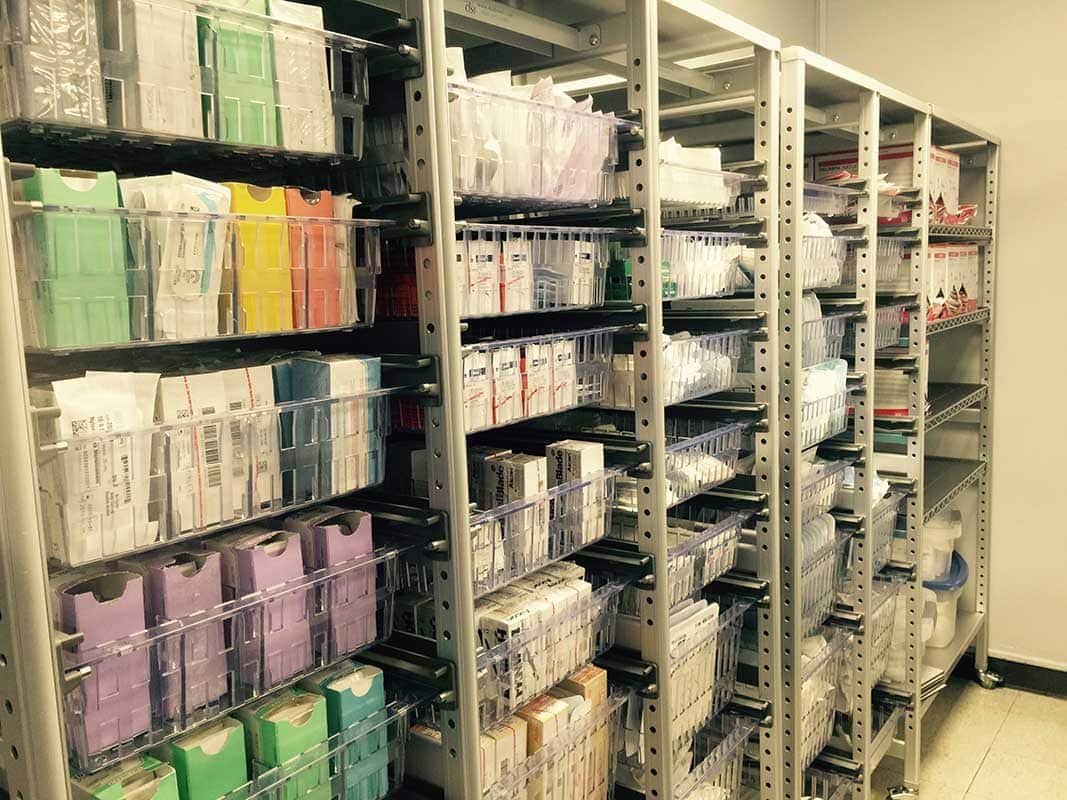
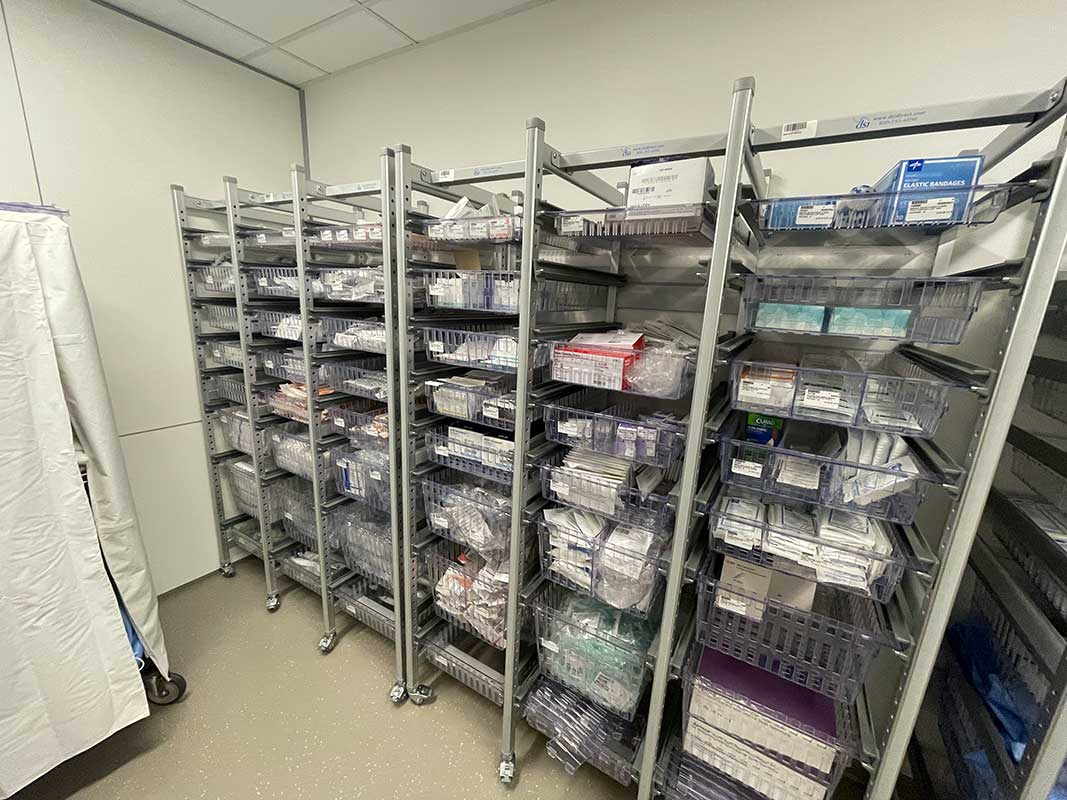
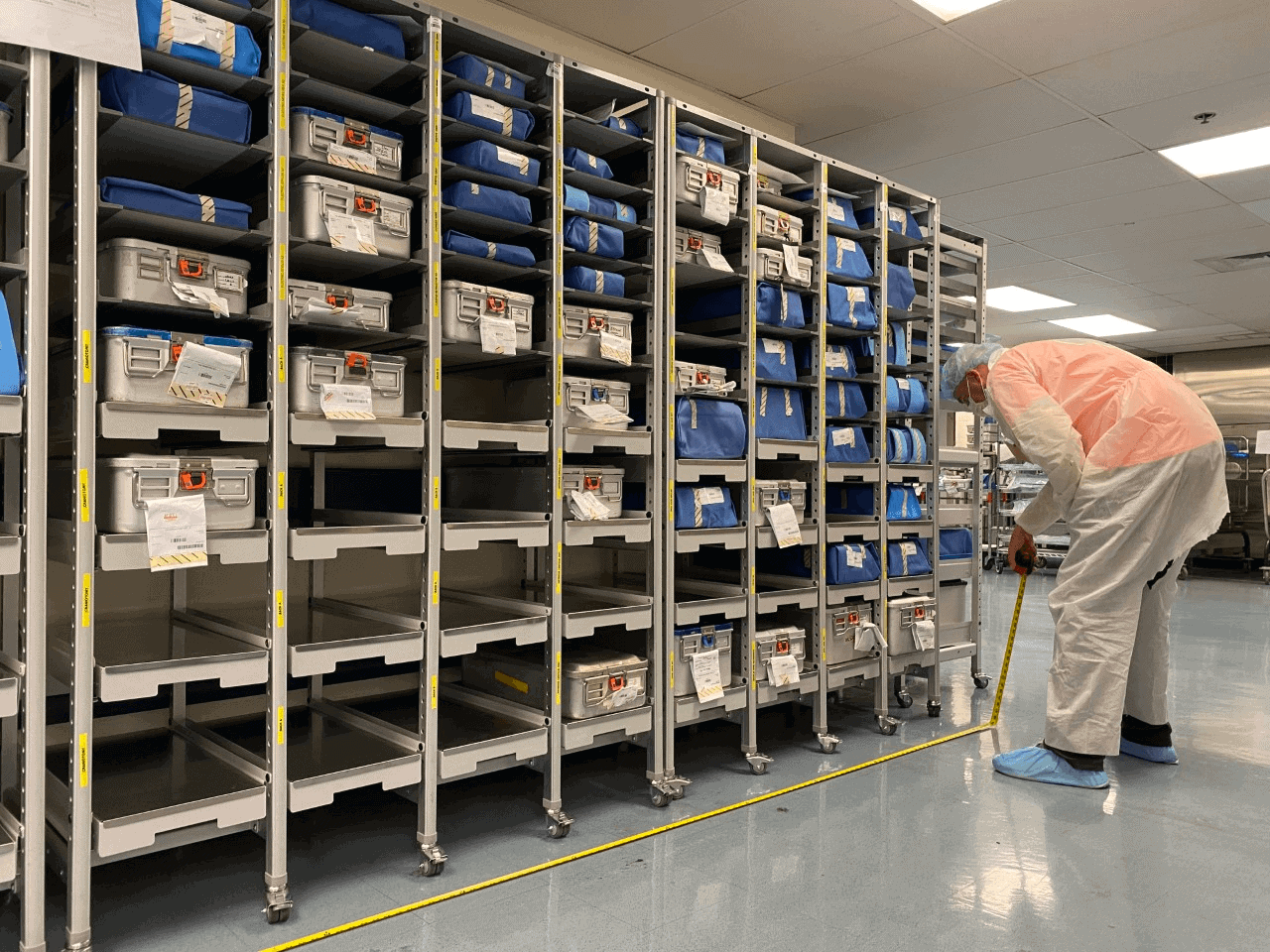
Standardizing cart configurations across every department takes more than new equipment. It takes a partner who understands acute care workflows and the cost pressures behind them. Since 1990, Distribution Systems International has helped hospitals, surgery centers, and medical office buildings turn disorganized storage into a strategic asset using LEAN inventory management and consistent, repeatable system design.
The process starts with a complimentary on-site storage analysis of your current carts, PAR levels, and usage. From there, our team delivers CAD layouts built around your departments and a full turnkey installation that handles delivery, assembly, inventory transfer, and after-sales support, all with minimal disruption to patient care.
Ready to standardize cart configurations the right way? Contact Distribution Systems International today for a free, no-obligation storage analysis.

With 21 years of sales management, marketing, P&L responsibility, business development, national account, and channel management responsibilities under his belt, Ian has established himself as a high achiever across multiple business functions. Ian was part of a small team who started a new business unit for Stanley Black & Decker in Asia from Y10’ to Y14’. He lived in Shanghai, China for two years, then continued to commercialize and scale the business throughout the Asia Pacific and Middle East regions for another two years (4 years of International experience). Ian played college football at the University of Colorado from 96’ to 00’. His core skills sets include; drive, strong work ethic, team player, a builder mentality with high energy, motivator with the passion, purpose, and a track record to prove it.