Choosing between in-house and outsourced materials management shapes cost, control, and resilience for every acute care facility. Every materials management program sits on this same foundational decision. Supply chain is the second-largest controllable hospital cost, behind only labor. Medical supply costs consume 15% to 25% of operating expenses, and purchased services exceed 20% of annual expenditures. The operating model (whether in-house, outsourced, or hybrid) determines how effectively a facility absorbs cost volatility, maintains clinical workflow integration, and positions itself for technology adoption. As of early 2025, the United States carried 270 active drug shortages, new tariffs threatened to raise hospital costs by at least 15%, and 90% of supply chain professionals reported expecting procurement disruptions.
Five distinct models represent different balances of cost, control, and resilience. This analysis maps these models against total cost of ownership, operational control dimensions, and technology readiness, providing acute care leaders with a decision framework grounded in current benchmarking data.
In-house materials management structures range from full self-distribution to GPO-supported internal operations. Health systems choosing in-house self-distribution own warehousing or consolidated service centers and act as distributors, carrying maximum control but also maximum fixed cost. In-house operations with GPO support allow internal staff to run daily materials management while group purchasing organizations supply contract pricing, analytics, and advisory services.
Roughly 45% of hospitals owning or leasing warehousing engage in some self-distribution. Over 25% operate a consolidated service center, and another 25% plan to build one within three years. Group purchasing saves hospitals 10% to 18% annually through contract leverage.
In-house self-distribution means the health system owns warehouse infrastructure and performs all distribution functions internally. This model delivers maximum control over inventory policy, formulary decisions, PAR levels, and substitution rules but requires the highest internal headcount and management overhead. Facilities pursuing self-distribution typically operate at scale and prioritize data ownership and rapid response over capital efficiency.
In-house operations with GPO support represent the most common arrangement, where internal teams handle daily operations while GPOs deliver contract pricing and benchmarking analytics. This structure preserves strategic control and institutional knowledge while offloading contract negotiation.
Outsourced solutions transfer distribution, inventory, and replenishment responsibilities to an external partner under service contracts. Fully outsourced third-party logistics arrangements mean the external partner owns the platform and labor, running standardized processes across multiple clients to achieve scale efficiencies. Commercial distributor reliance involves buying through a national distributor while holding minimal internal infrastructure, shifting both capital and operational complexity away from the facility.
Outsourcers run standardized templates that deliver efficiency but reduce flexibility in PAR level adjustments and formulary customization. Outsourcing sends sensitive procurement data to third parties, requiring strong governance, clear service level agreements, and cybersecurity protocols. Loss of oversight is the most cited outsourcing risk, followed by exposure to vendor staff turnover.
Hybrid oversight plus specialist partner arrangements let facilities keep strategic control and internal staff while engaging specialized partners for LEAN implementation, storage design, and process optimization. This model captures the control and customization of in-house arrangements without the capital and staffing burden of full self-distribution.
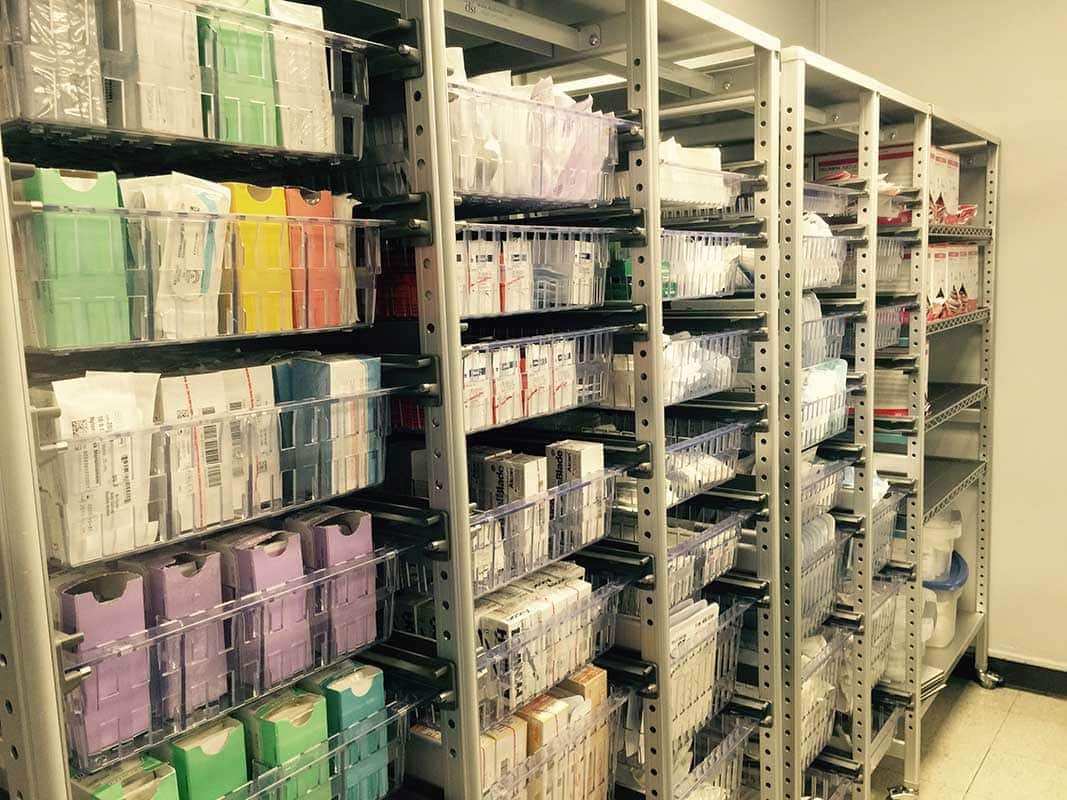
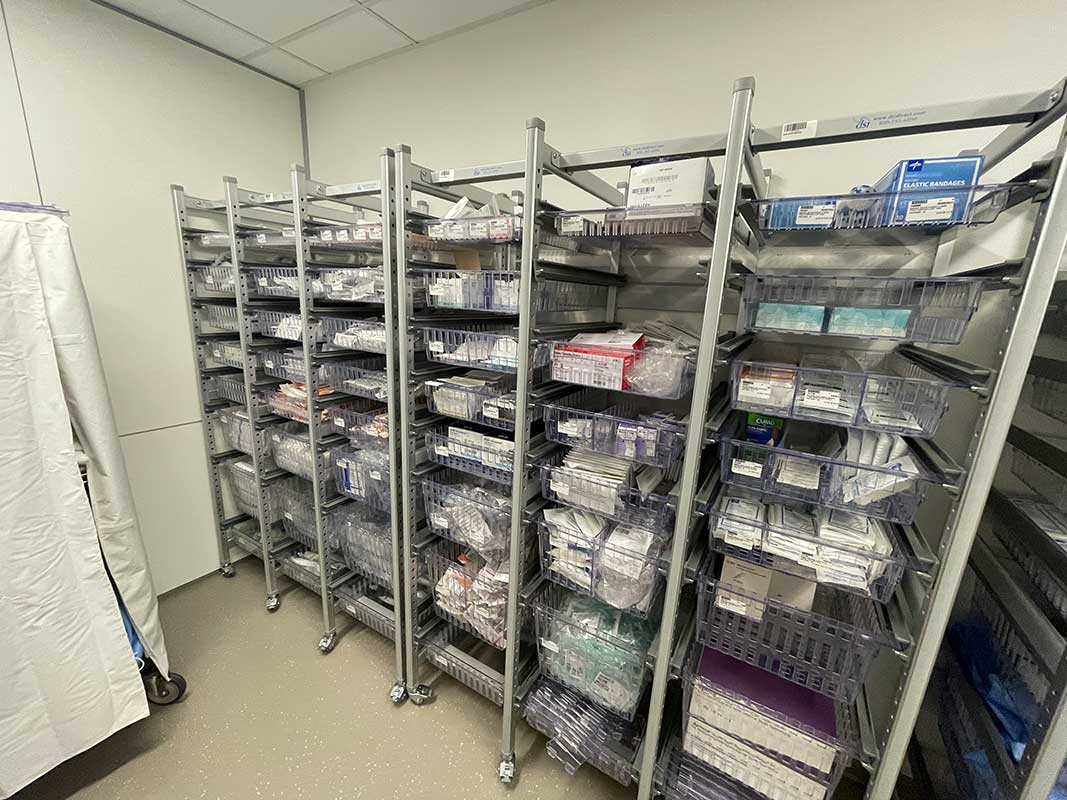
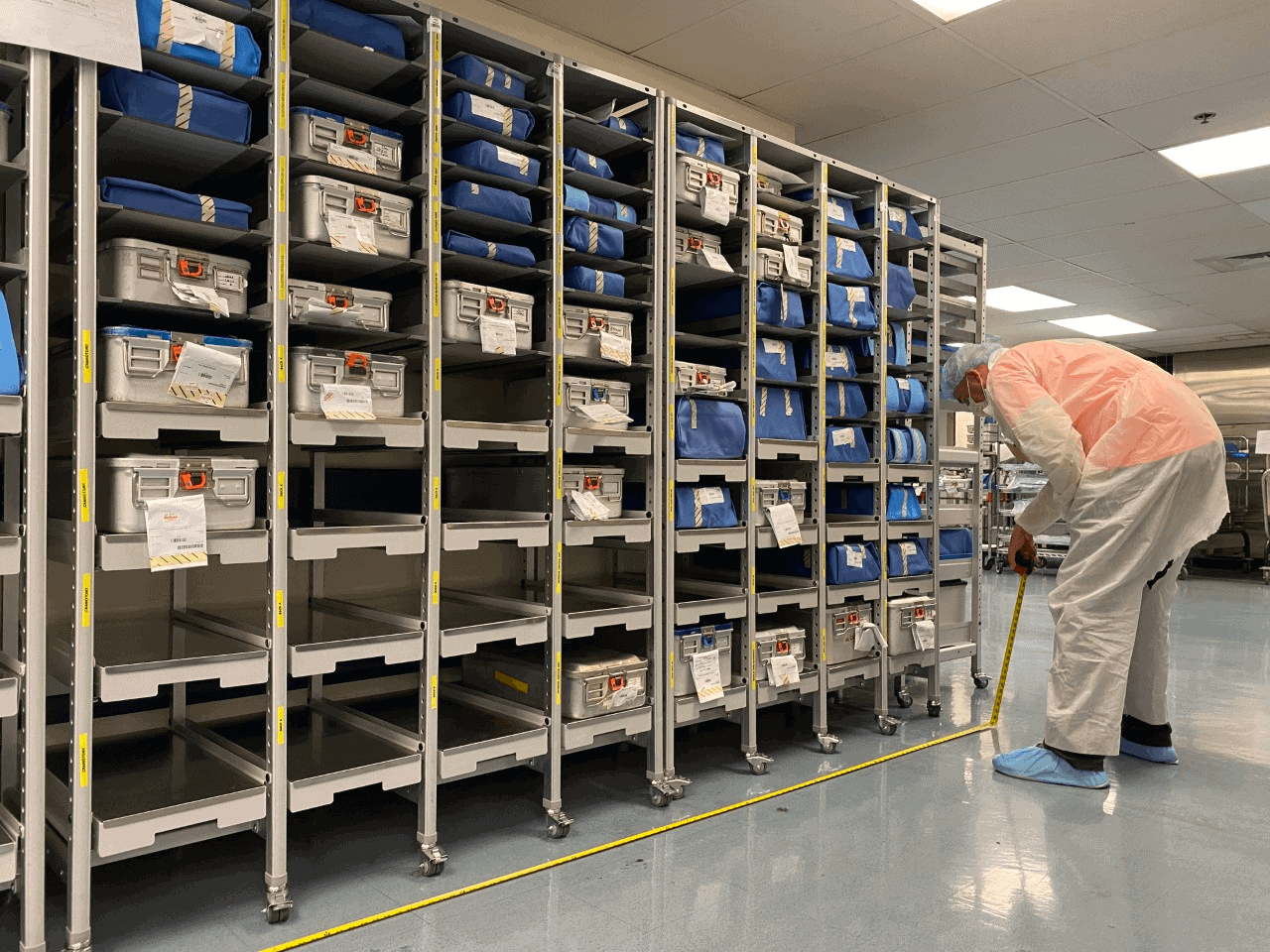
The hybrid specialist model follows a structured process: on-site analysis of PAR levels, usage patterns, and workflow; custom-configured storage design with architectural CAD drawings and ROI calculations; and full turnkey implementation covering delivery, assembly, inventory transfer, and support. Documented LEAN and KANBAN implementations through specialist partners have produced 5% to 7% annual reductions in recurring supply expenses and 15% to 25% lower overall inventory. Early adopters report that storage solutions customized to department-specific workflows eliminate stock-outs and supply hunts while freeing clinical staff to focus on patient care.
The choice between in-house and outsourcing determines both cost structure and operational flexibility across the second-largest controllable expense category. Total compensation accounts for roughly 56% of hospital costs, making supply chain the next category where leadership decisions directly influence margin. CFOs commonly undercount the true cost of in-house materials management by missing benefits, technology infrastructure, turnover, retraining, and management overhead spread across cost centers.
The model decision also shapes resilience during disruption. Facilities maintaining in-house or hybrid control can improvise substitutions immediately during backorders, while outsourced responses are governed by service level agreements and standardized templates.
Medical supply costs, consuming 15% to 25% of operating expenses, create measurable margin pressure. Group purchasing delivers estimated savings of 10% to 18% annually through contract leverage and advisory services.
The cost comparison healthcare requires must account for benefits adding 20% to 30% to salary, technology infrastructure capital expense, and turnover costs. One health system cut rental costs by 20% by switching to ownership, demonstrating capital deployment decisions significantly impact total cost of ownership.
In-house and hybrid models let facilities set PAR levels, formulary decisions, and substitution rules without external approval. Internal teams can improvise substitutions immediately during backorders, while outsourced responses are governed by service level agreements. In-house models keep procurement data on facility-owned systems, supporting compliance audits and strategic planning without third-party data-sharing agreements.
Outsourced models run standardized templates that deliver efficiency but reduce department-specific customization. Facilities lose direct oversight and become exposed to outsourcer staff turnover. In-house teams retain institutional knowledge and can customize storage layouts, PAR levels, and replenishment triggers to match clinical demand patterns.
In-house and hybrid arrangements outperform on control and compliance, customization to clinical workflows, and integration with sterile processing, operating rooms, pharmacy, and materials management departments. Tight integration raises case throughput and on-time OR starts. LEAN storeroom redesigns have delivered 80% to 90% staff satisfaction by removing stock-outs and search time.
Outsourced and GPO-supported arrangements outperform on unit cost, access to external expertise, and freeing internal resources. GPOs build shortage protection into contracts through mutual commitments that stabilize supply. Facilities under margin pressure report relief at offloading transactional work, while facilities valuing control report frustration when outsourcing flattens processes.
Facilities evaluate cost versus control trade-offs by mapping total cost of ownership against operational control dimensions including inventory policy authority, substitution speed, data ownership, and clinical workflow customization. Full self-distribution sits in the high-control, high-cost corner and remains rare, while commercial distributor reliance sits low on both dimensions. GPO-supported and hybrid specialist models cluster in the high-control, cost-efficient quadrant.
Facilities prioritizing supply chain reliability, department-level customization, and rapid disruption response favor in-house and hybrid models. Facilities under margin pressure or lacking internal expertise favor outsourced and GPO models for unit cost advantages and specialized expertise access.
Materials Management Models at a Glance
| Model | Cost Profile | Control Level | Ideal Fit |
| In-House Self-Distribution | Highest fixed cost; full capital exposure | Maximum | Large systems prioritizing data ownership and rapid response |
| In-House + GPO Support | Moderate staffing cost; 10% to 18% contract savings | High | Facilities wanting internal control plus contract pricing support |
| Hybrid Specialist Partnership | Lean internal team; project-based specialist fees | High | Facilities wanting control without full self-distribution costs |
| Fully Outsourced 3PL | Capital shifted to partner; contracted service fees | Low | Facilities under margin pressure needing scale efficiencies |
| Commercial Distributor Reliance | Lowest internal headcount and capital exposure | Lowest | Smaller facilities with limited administrative infrastructure |
In-house self-distribution carries the highest fixed cost and capital exposure through full FTE loads, benefits adding 20% to 30% to salary, warehouse management systems, training costs, and warehouse capital deployment. Fully outsourced 3PL shifts capital to the partner but replaces internal headcount with contracted service fees. Commercial distributor reliance delivers the lowest internal headcount and capital exposure but sacrifices control.
In-house plus GPO support balances moderate staffing costs with contract pricing delivering 10% to 18% estimated annual savings. Hybrid oversight plus specialist models maintain a lean internal team while engaging specialists on a project basis, limiting capital to storage systems rather than full warehouse infrastructure.
Control over inventory policy determines how quickly facilities adjust PAR levels in response to demand shifts or disruptions. In-house and hybrid models allow immediate PAR adjustments and formulary substitutions without external approval. Outsourced models require change requests governed by service level agreements, introducing lag time.
Data ownership shapes compliance readiness and strategic planning capability. In-house models keep procurement data on facility systems, simplifying audit trails. Outsourcing sends data to third parties, requiring clear SLAs, cybersecurity protocols, and governance frameworks.
Facilities valuing control and compliance, customization, and clinical integration report higher satisfaction with in-house and hybrid models. These facilities prioritize rapid substitution during disruptions and department-specific storage layouts. Roughly 36% of leaders prioritize supply chain reliability when selecting partners.
Facilities under margin pressure or lacking internal expertise report higher satisfaction with outsourced and GPO models, prioritizing unit cost reductions and access to external analytics. LEAN storeroom redesigns delivered 80% to 90% staff satisfaction, demonstrating process discipline drives satisfaction regardless of infrastructure ownership.
Facilities switch materials management models in response to volume changes, rising costs with falling service levels, or resilience concerns following supply disruptions. Significant changes in patient volume or bed capacity can flip the economic math. Benchmarking against the market through a GPO, consultant, or benchmarking service is typically the first step when reassessing model fit.
Fragmented delivery models across multiple sites create variation in cost and quality, prompting health systems to standardize. Post-pandemic resilience concerns motivated 45% of hospitals owning or leasing warehousing to engage in some self-distribution, yet true self-distribution has not surged because commercial distribution and hybrid partnerships proved more cost-effective.
Total compensation accounting for roughly 56% of hospital costs makes labor the largest controllable expense, positioning supply chain second. Rising bed-rental costs prompted one health system to switch to ownership, cutting costs by 20%. Volume growth strengthens negotiating leverage, while volume contraction reduces tolerance for fixed overhead.
Benchmarking reveals whether a facility's current model delivers competitive cost and quality. Facilities commonly reassess models when program cost climbs while service-level performance drops.
Resilience concerns shape model selection when facilities face recurring stockouts or disruptions. The United States carried 270 active drug shortages as of early 2025, and new tariffs threatened to raise hospital costs by at least 15%. Roughly 90% of supply chain professionals reported expecting procurement disruptions.
Facilities build resilience by tightening internal operations, including better forecasting, analytics, and inventory discipline, rather than relying solely on supplier diversification. Roughly 36% of leaders now prioritize supply chain reliability when selecting partners. GPOs contribute by negotiating mutual supply commitments that stabilize demand and availability.
The market has moved toward hybrid solutions preserving internal strategic control while importing scale and specialized expertise. In-house plus GPO support is the dominant model, combining internal operations with contract pricing, analytics, and advisory services.
GPO-supported and hybrid specialist models cluster in the high-control, cost-efficient quadrant.
Full self-distribution remains rare because capital and staffing burdens outweigh control benefits for most facilities. True self-distribution has not surged despite post-pandemic interest because commercial distribution and hybrid partnerships proved more cost-effective. More leaders describe hybrid relationships pairing internal teams with specialist partners for LEAN services and process optimization.
Leaders select the right materials management model by evaluating facility size, internal expertise, strategic priorities, and budget constraints against the control and cost profiles of each model. Large systems with capital and internal expertise can sustain in-house self-distribution if control and data ownership are the highest priorities. Facilities with strong internal teams but limited capital should consider hybrid models retaining oversight while engaging specialist partners.
Facilities under margin pressure or with limited administrative infrastructure should evaluate fully outsourced 3PL arrangements with clear service level agreements, or commercial distributor reliance paired with GPO contract pricing. The right model is rarely static, making ongoing reassessment critical.
Facility size determines capital availability and fixed-cost tolerance. Large health systems with multiple sites can spread fixed costs across greater scale, supporting in-house self-distribution. Smaller facilities with limited administrative infrastructure favor models with lower internal headcount.
Internal expertise shapes model fit by determining whether the facility can sustain daily operations without external support. Facilities with experienced materials management teams can maintain in-house operations with GPO support. Facilities lacking internal expertise benefit from outsourced models importing specialized knowledge, or hybrid specialist partnerships training internal teams.
Strategic priority determines whether a facility optimizes for control and compliance, cost efficiency, or balance. Facilities prioritizing control, data ownership, and clinical workflow customization favor in-house self-distribution or hybrid specialist models. Facilities prioritizing unit cost and freeing internal resources favor GPO-supported or fully outsourced models.
Resilience as a strategic priority pushes facilities toward models with tighter internal operations and better forecasting. Facilities prioritizing supply chain reliability increasingly choose GPO-supported or hybrid arrangements combining internal control with external contract protections.
Ongoing assessment ensures the chosen model continues delivering competitive cost, quality, and resilience as market conditions evolve. Facilities should reassess their model annually against cost, quality, and resilience benchmarks. Performance drifts over time as labor markets shift, technology capabilities advance, and supply chain disruptions emerge.
Reassessment involves comparing total cost of ownership against market benchmarks, evaluating service-level performance, and testing resilience through scenario planning. High-performing organizations build model reassessment into annual strategic planning cycles.
Technology trends are transforming materials management from manual, reactive ordering into a data-driven, predictive, increasingly autonomous discipline. AI-powered demand forecasting, robotic process automation, IoT-enabled smart shelving, RFID perpetual inventory, and LEAN methodologies are converging into a single intelligent ecosystem. These trends reinforce each other, where a KANBAN bin pairs with an RFID tag and IoT sensor to update perpetual inventory in real time, triggering AI-adjusted PAR levels and RPA-generated purchase orders.
The AI hospital inventory market is projected to grow from roughly $571 million in 2026 to about $1.77 billion by 2036. Gartner projects 70% of large organizations will adopt AI-based supply chain forecasting by 2030, and a 2023 GHX survey found nearly 70% of hospitals likely to adopt cloud-based supply chain management by 2026. Facilities that have standardized storage through product gallery offerings and adopted 2-Bin KANBAN are well positioned to layer AI, RFID, and IoT on top.
AI demand forecasting trains machine learning models on multi-signal data to predict consumption 30 to 90 days ahead and adjust PAR levels dynamically. Traditional forecasting relies on historical averages with manual seasonal adjustments, failing during census changes or surgical-schedule shifts. AI-based forecasting delivers roughly a 31% improvement in forecast accuracy over traditional methods.
Early adopters report 15% to 25% inventory cost reductions from AI forecasting, and AI systems can reduce stockouts by as much as 95%. Cleveland Clinic's machine-learning inventory tracking saved $1.5 million in a single year while cutting manual data entry time by 80%. Intermountain reported $32 million saved through predictive analytics, and the American Cancer Society cut oncology medication waste by 28% using AI-driven demand models.
Robotic process automation handles high-volume, rule-based work including purchase order generation, three-way matching, vendor onboarding, and data reconciliation. The Hackett Group found procurement workload rose 8.0% in 2024 while headcount and budgets stayed flat, opening a 6.6% productivity gap. Accounts-payable automation achieves 70% to 85% reduction in manual processing time within six months.
Smart shelving uses weight sensors, RFID, and IoT connectivity to detect when stock is drawn down and trigger automatic replenishment alerts. An RFID smart shelf can inventory an entire shelf in about 10 seconds. e-KANBAN pairs bins with RFID or barcode scanning so predictive alerts can fire 5 to 7 weeks before potential stockout. RFID smart cabinets deliver real-time visibility for high-value implants, reducing shrinkage, automating replenishment, and supporting UDI regulatory compliance across application gallery implementations.
2-Bin KANBAN methodologies have crossed from isolated pilots into scaled, multi-department implementations. Each item lives in two bins at the point of use, and when the first empties it triggers replenishment while staff draws from the second. Hospital deployments report 30% improvement in supply chain efficiency, 25% reduction in supply holding space, 5% to 7% annual reduction in recurring supply expenses, and 15% to 25% lower overall inventory.
LEAN and KANBAN implementations produced near-elimination of supply hunts that consume clinical time. One multi-site program returned more than 14,000 clinical hours annually to patient care and saved 7 to 8 clinical FTEs per site. A three-year peer-reviewed quality improvement study recorded 40% to 50% cost reduction, 50% decrease in stockouts, and 80% to 90% staff satisfaction. e-KANBAN with RFID extends these benefits by enabling predictive alerts 5 to 7 weeks before stockouts.
Sustainability initiatives and workforce evolution are reshaping materials management by aligning cost reduction with environmental performance and shifting staff from transactional work to strategic analysis. More than two-thirds of health systems included environmental performance in supplier selection by late 2025. Global healthcare emissions exceeded 4% of the world total in 2025, and some hospitals generated 12% to 18% more hazardous waste in 2025 than in 2019.
The workforce is shifting from manual counting and reactive ordering to data analysis, vendor relationship strategy, and advisory work. Automation removes transactional burdens, freeing specialists to focus on strategic sourcing, forecasting, and supplier performance management.
Sustainability initiatives aligning with cost reduction are gaining traction as health systems report roughly four-year payback periods on sustainability investments. Healthcare plastic packaging waste, emissions, and cost could grow 35% to 40% by 2040 if unaddressed. Facilities focus on reusable and reprocessed devices, reusable shipping totes, SKU rationalization, expiry management to cut waste streams, and packaging redesign.
One manufacturer cut packaging raw material by 417,000 pounds annually through a single packaging change. Programs reducing waste also lower total cost of ownership by cutting disposal fees and minimizing expired inventory write-offs. Sustainability performance is increasingly tied to supplier selection, with facilities favoring vendors that deliver both environmental improvements and operational efficiencies through solutions reducing packaging and supporting circular-economy models.
The materials management workforce is evolving from transactional counting to strategic analysis and supplier relationship management. Robotic process automation frees procurement specialists from manual purchase order generation, redirecting time toward strategic sourcing. AI demand forecasting and IoT sensors remove the need for manual PAR adjustments, shifting staff focus to interpreting demand signals and managing supplier performance.
Hospital deployments that adopted KANBAN and LEAN returned more than 14,000 clinical hours annually to patient care and saved 7 to 8 clinical FTEs per site. The materials management professional of 2026 spends less time on the storeroom floor and more time analyzing data, qualifying alternative suppliers, and building resilience frameworks.
Resilience frameworks integrate into materials management by tightening internal operations, improving forecasting, and building strategic buffer stock. The dominant approach in 2026 strengthens resilience through better analytics and inventory discipline rather than relying solely on supplier diversification. Facilities qualify alternative suppliers in advance, build buffer stock strategically, and use AI to monitor supplier financial health continuously.
GPOs contribute to resilience by negotiating mutual supply commitments that stabilize demand and availability. Circular-economy strategies including refurbishment, reprocessing, and reusable packaging increasingly serve double duty as both resilience and sustainability levers. Facilities report that resilience frameworks integrated into daily operations through services including LEAN implementation, storage redesign, and predictive analytics deliver sustained performance improvements.
The materials management landscape in 2026 reflects a decisive market shift toward hybrid arrangements preserving internal strategic control while importing scale and specialized expertise. Facilities have moved away from both extremes (full self-distribution and pure commercial distributor reliance) toward models balancing control with cost efficiency. In-house plus GPO support remains the dominant model, combining internal operations with contract pricing delivering 10% to 18% estimated annual savings, while hybrid specialist partnerships capture control and customization without the capital burden of full self-distribution.
Technology trends are converging into a unified intelligent ecosystem where LEAN storage foundations integrate with AI forecasting, RFID perpetual inventory, IoT sensors, and robotic process automation. The physical storage discipline defining hybrid specialist models (LEAN inventory management, 2-Bin KANBAN, custom storage design, and turnkey implementation) serves as the prerequisite for the 2026 technology stack. Facilities that have standardized storage through product gallery offerings and adopted KANBAN are well positioned to layer predictive analytics and sensor-driven automation on top, achieving near-zero stockouts and autonomous replenishment while returning clinical hours to patient care.
Organizations including Distribution Systems International operate at the intersection of physical storage discipline and technology readiness, delivering custom-configured storage designs with architectural CAD drawings, ROI calculations, and full turnkey implementation that let facilities retain control, cut supply and inventory costs, and prepare for the predictive, sensor-driven future of materials management. Facilities seeking to balance control with cost efficiency while positioning for AI-driven forecasting and IoT-enabled replenishment should prioritize hybrid specialist partnerships that build the foundation before layering technology.
Choosing between in-house and outsourced materials management does not have to be a guessing game. Distribution Systems International has partnered with acute care facilities since 1990, combining on-site workflow analysis, custom-configured storage design, and full turnkey implementation to help hospitals control costs without giving up clinical control. Whether you run in-house, are weighing a hybrid specialist partnership, or need help evaluating an outsourced model, our team can map the right fit for your facility. Call (800) 393-6090 or request a complimentary storage and supply chain quote today.
In-house materials management means the health system owns the warehousing, staffing, and inventory decisions for its supply chain, giving it direct control over PAR levels, formulary choices, and substitution rules. Outsourced materials management shifts distribution, inventory, and replenishment responsibilities to an external partner under a service contract. In-house models keep procurement data on facility-owned systems, while outsourced models require data-sharing agreements and service level agreements to govern response times. Most facilities land somewhere between the two extremes, blending internal oversight with GPO or specialist partner support.
Cost depends on the specific model rather than a simple in-house versus outsourced split. Full self-distribution carries the highest fixed cost and capital exposure because it requires complete staffing, warehouse systems, and infrastructure. Group purchasing organizations save hospitals 10% to 18% annually through contract pricing, and hybrid specialist partnerships produce 5% to 7% reductions in supply expenses without the staffing burden of full self-distribution. Commercial distributor reliance carries the lowest internal headcount and capital exposure but sacrifices the most control.
A hybrid model lets a facility keep strategic control and internal staff while engaging a specialist partner for LEAN implementation, storage design, and process optimization. The approach typically follows a structured process: on-site analysis of PAR levels and workflow, custom-configured storage design with CAD drawings and ROI calculations, and full turnkey implementation covering delivery, assembly, and inventory transfer. Documented hybrid specialist partnerships have produced 5% to 7% annual reductions in recurring supply expenses and 15% to 25% lower overall inventory. This model captures much of the control and customization of in-house arrangements without the capital and staffing burden of full self-distribution.
2-Bin KANBAN is a LEAN inventory method where each supply item lives in two bins at the point of use. When the first bin empties, it triggers replenishment while staff draw from the second bin, keeping supplies available without manual counting. Hospital deployments of 2-Bin KANBAN report a 30% improvement in supply chain efficiency, a 25% reduction in supply holding space, and a 50% decrease in stockouts. Facilities that adopt 2-Bin KANBAN as part of an in-house or hybrid model are well positioned to layer AI forecasting, RFID tracking, and IoT sensors on top as those technologies mature.
Facilities should reassess their materials management model at least annually against cost, quality, and resilience benchmarks, since performance drifts as labor markets shift and supply chain disruptions emerge. Reassessment involves comparing total cost of ownership against market benchmarks, evaluating service-level performance, and testing resilience through scenario planning. Facilities also revisit their model sooner after a significant change in patient volume or bed capacity, since that shift can flip the underlying economics. High-performing organizations build this reassessment into their annual strategic planning cycle rather than waiting for a crisis to force the conversation.
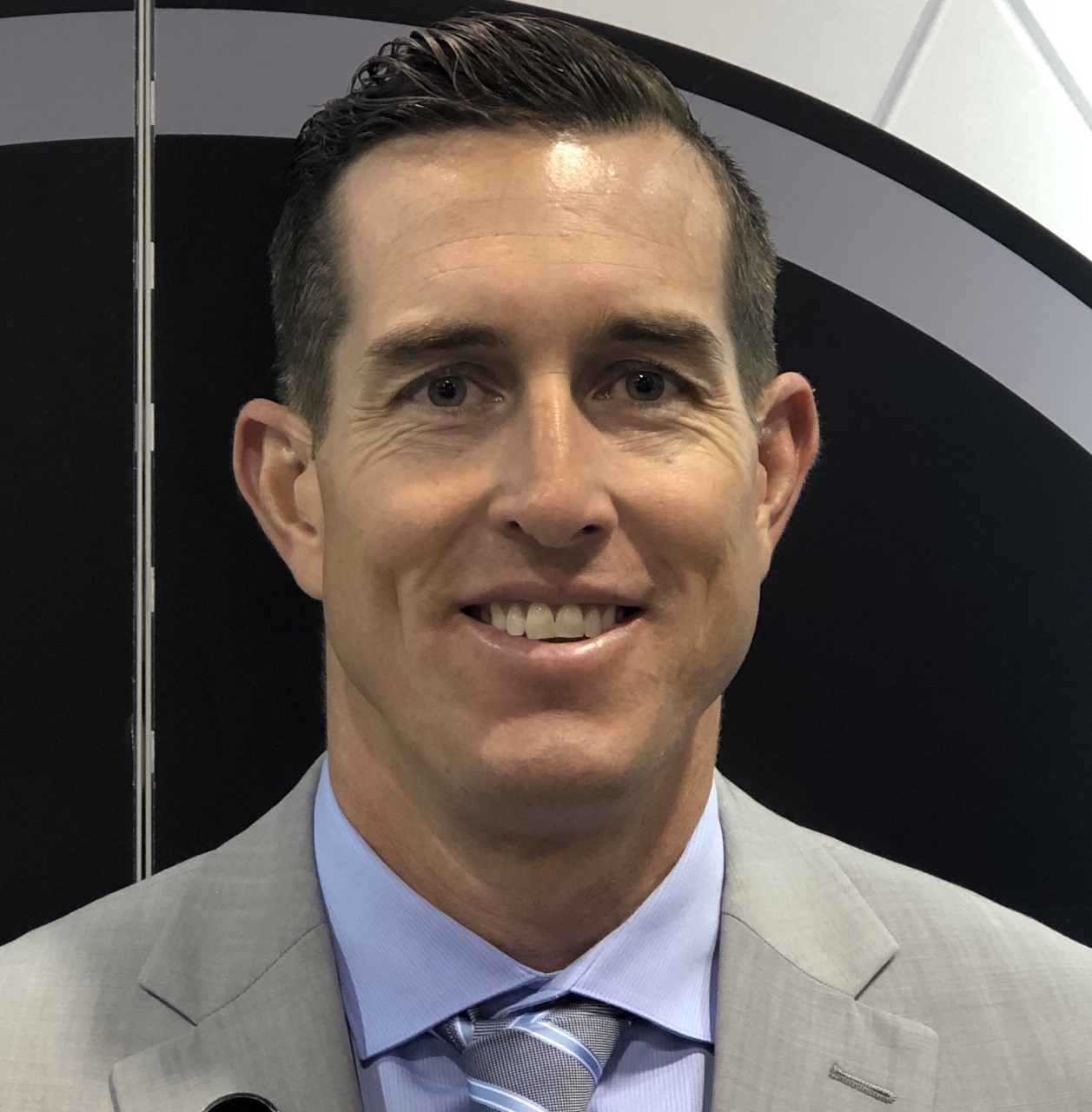
With 21 years of sales management, marketing, P&L responsibility, business development, national account, and channel management responsibilities under his belt, Ian has established himself as a high achiever across multiple business functions. Ian was part of a small team who started a new business unit for Stanley Black & Decker in Asia from Y10’ to Y14’. He lived in Shanghai, China for two years, then continued to commercialize and scale the business throughout the Asia Pacific and Middle East regions for another two years (4 years of International experience). Ian played college football at the University of Colorado from 96’ to 00’. His core skills sets include; drive, strong work ethic, team player, a builder mentality with high energy, motivator with the passion, purpose, and a track record to prove it.