Key Takeaways
Hospital equipment purchasing decisions often focus on initial price tags, but savvy procurement teams know that upfront costs tell only a fraction of the story. For medical storage systems operating in sterile processing departments, operating rooms, and surgical supply areas, the real financial impact unfolds over years of daily cleaning cycles, replacement events, contamination incidents, and regulatory audits.
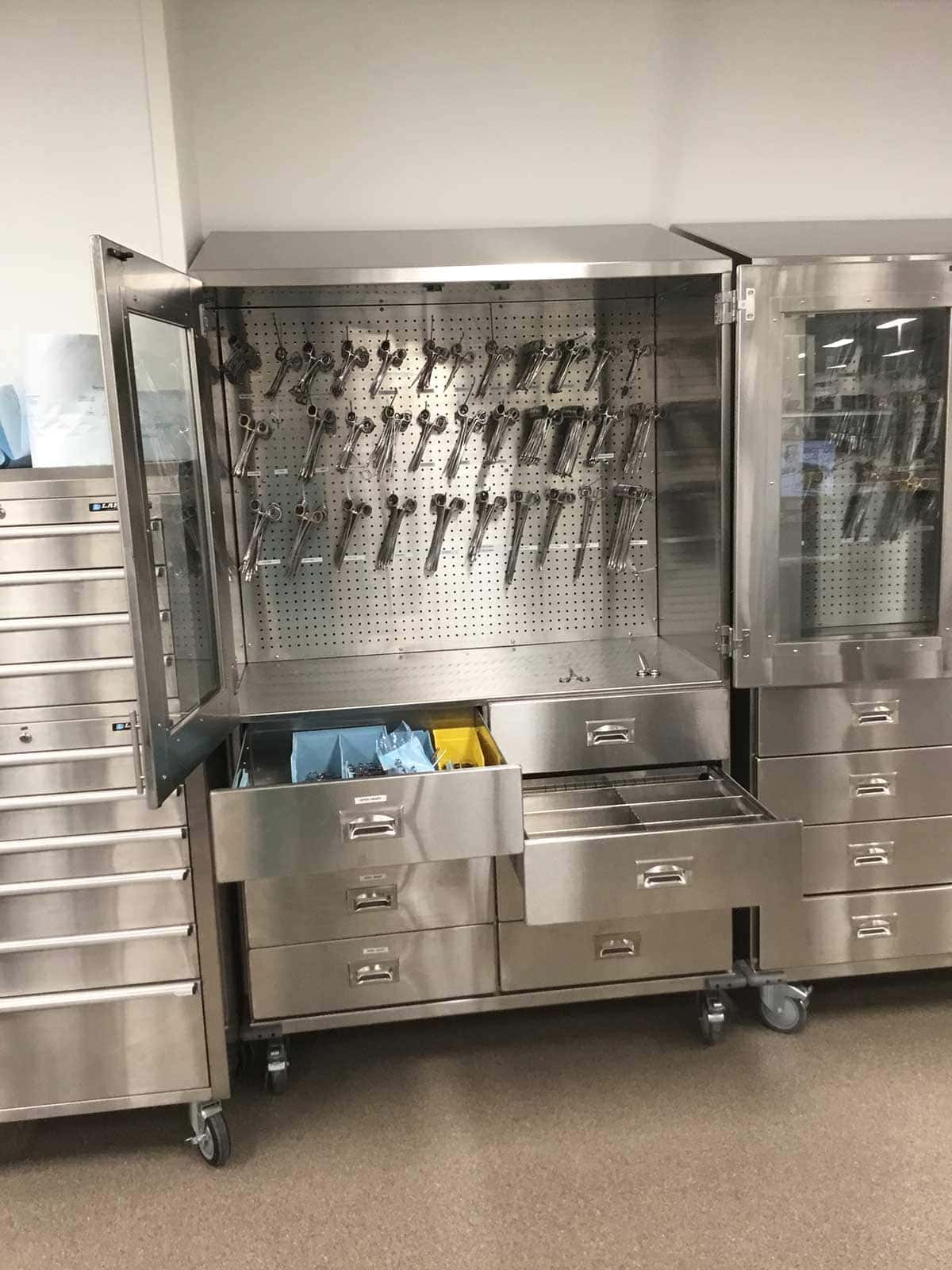
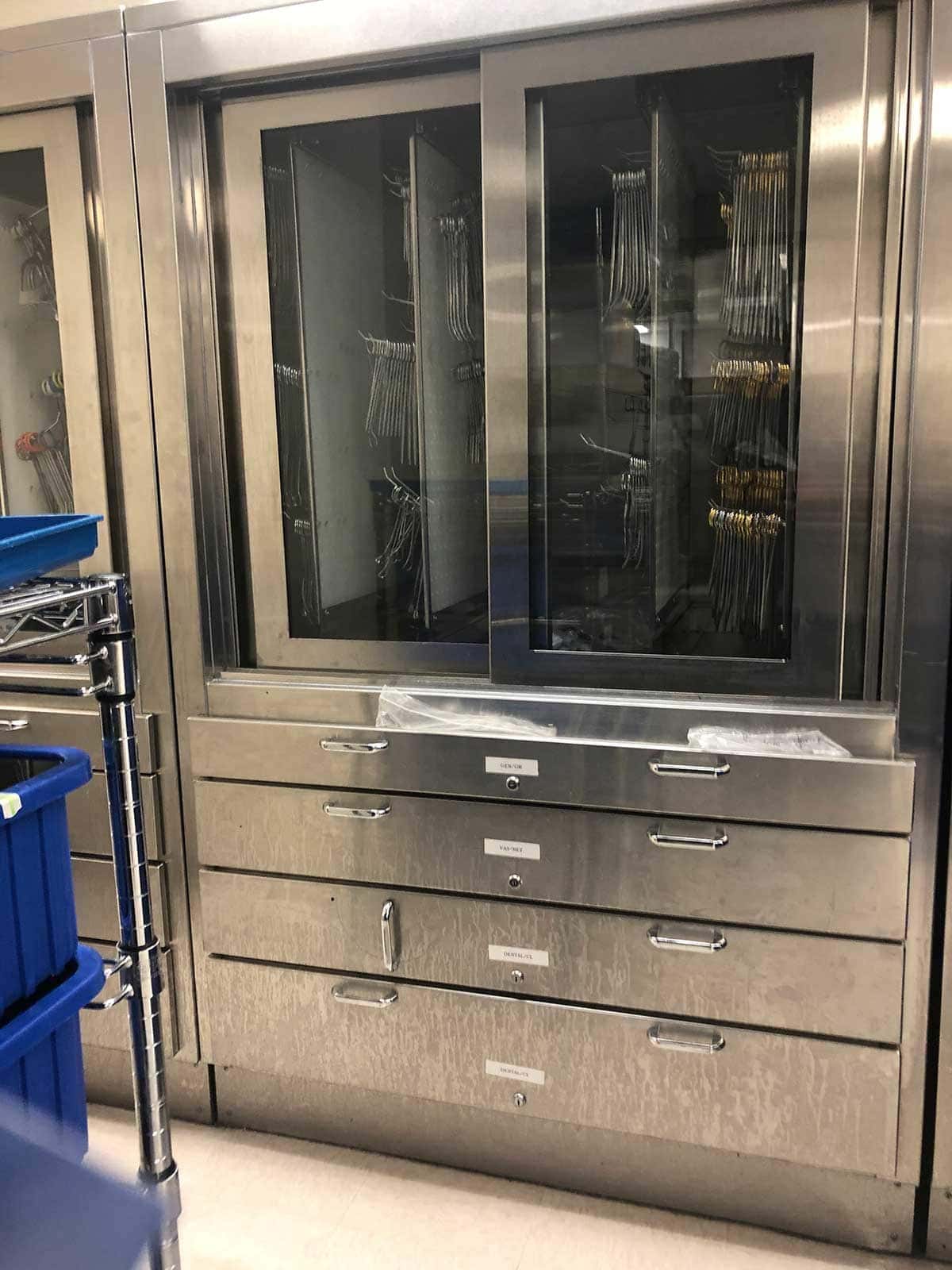
This analysis cuts through manufacturer claims to reveal the actual 10-year total cost of ownership for SterileShelf polymer systems versus traditional shelving alternatives, including chrome wire, epoxy-coated, stainless steel, and powder-coated options.
Who this is for:
Procurement managers evaluating capital equipment quotes, operations/facilities directors planning storage upgrades, quality assurance teams ensuring FDA/OSHA/AAMI compliance, finance/CFO teams approving capital expenditures, and infection control specialists reducing HAI risk.
What decision it supports:
Standardize on one shelving platform across SPD, OR, and surgical supply. Replace aging chrome wire systems with contamination-resistant alternatives. Expand storage capacity with compliant systems. Reconfigure layouts to improve cleaning efficiency.
What "good" looks like:
Auditable inputs (vendor quotes, time studies, facility measurements). Comparable capacity (unit-for-unit, equal linear feet and accessibility). Defensible assumptions (conservative labor rates, validated cleaning frequencies).
When to use 10 years vs. 5 years:
Use 10 years for leases ≥10 years, no major renovations planned, or to capture full replacement cycles. Use 5 years for leases <7 years, planned facility changes, or rapid technology shifts expected.
SterileShelf definition:
Non-porous polymer with embedded silver-ion antimicrobial technology. Heat-resistant to 350°F, chemical-resistant, 100% corrosion-proof. 60-70% faster cleaning (4 min vs. 12.5 min per unit). 15+ year lifespan with Limited Lifetime Warranty. 45 lbs/shelf capacity (designed for sterile instrument trays).
Traditional shelving variants:
| Variant | Environment Fit | Cleanability | Corrosion Risk | Replacement Drivers | Hidden Costs |
| Chrome Wire | Dry storage only | 85% contamination risk; 12.5 min cleaning | High (3-5 year lifespan) | Rust, surface degradation | $850/year maintenance; 2-3 replacements in 10 years |
| Epoxy-Coated Wire | Moderate humidity | 40% contamination risk; wire structure hard to clean | Moderate (10-15 years) | Coating damage → rust | $400-$600/year maintenance |
| Stainless Steel 304 | High-corrosion areas, permanent installations | 15% contamination risk; non-porous | Low (20-30 years) | Minimal | $200-$400/year; highest upfront but lowest TCO |
| Powder-Coated Steel | Dry supply storage | 35% contamination risk | Moderate (10-20 years) | Coating failure | $300-$500/year maintenance |
TCO includes:
Capacity/Layout:
Standard 4-tier unit: 48"W x 18"D x 74"H. 45 lbs/shelf (SterileShelf) vs. 600-800 lbs/shelf (chrome wire), compare by application (sterile tray storage), not raw capacity. 100-unit facility = 400 linear feet, ~720 sq ft footprint.
Operating:
Shifts: 2/day (SPD), 1/day (OR supply). Touches: 50-100/day per bay (SPD). Cleaning: Weekly (52x/year) + quarterly deep clean.
Compliance:
Joint Commission triennial survey + quarterly internal audits. Weekly cleaning logs, quarterly inspections. IQ/OQ/PQ validation for new installations.
Replacement:
Chrome wire: 3-5 years (2-3 replacements in 10 years). SterileShelf: 15+ years (0 replacements). Stainless steel 304: 20-30 years (0 replacements).
Initial purchase:
Chrome wire: $230/unit. Epoxy-coated: $350/unit. SterileShelf: $675/unit. Stainless steel 304: $900/unit. Powder-coated: $500/unit. Installation labor: $150/unit ($20-$50/linear foot) across all systems.
One-time costs:
Removal/disposal: $50-$100/unit. System downtime: $7,500-$25,000/minute (OR/SPD), stagger installation over 10 months to minimize.
Material spec choices:
304 vs. 316 stainless: +10-30% cost for 316 (500-1,000 ppm chloride tolerance vs. 200-500 ppm for 304). Solid vs. wire: +50-100% for solid polymer, justified for sterile processing, not dry storage. Mobile vs. fixed: +$50-$150 for casters.
Cleaning labor (per unit):
| System | Min/Clean | Frequency | Annual Hours | Annual Cost ($30/hr) | 10-Year Total |
| Chrome Wire | 12.5 | 52/year | 10.8 | $325 | $3,250 |
| SterileShelf | 4 | 52/year | 3.5 | $104 | $1,040 |
| Savings | 8.5 min | , | 7.3 hours | $221/year | $2,210 |
For 100 units: 736 hours/year saved (0.35 FTE) = $22,080/year = $220,800 over 10 years.
Other recurring costs:
Consumables: Chrome wire uses 20-30% more wipers/disinfectants = $50-$100/unit/year differential. Maintenance: Chrome wire rust remediation ($150/unit/year) vs. SterileShelf minimal maintenance ($46/unit/year).
Compliance/admin: Chrome wire deviation investigations ($300-$600/unit/year) vs. SterileShelf routine logs ($50-$100/unit/year).
Total annual maintenance:
Chrome wire: $850/unit/year. SterileShelf: $150/unit/year. Differential: $700/year = $7,000 over 10 years.
Particle traps: Wire intersections require 2-3x longer cleaning and specialty brushes, drives $221/year labor differential.
Surface reactivity: Chrome plating degradation increases bacterial adhesion (85% contamination risk vs. 12% for SterileShelf), drives $278,500 annual HAI prevention savings. Corrosion flaking: Chrome wire rust flakes contaminate adjacent supplies, requiring quarantine and reinspection ($50-$200/incident).
Contamination sources to acknowledge:
Glove lint, packaging fibers (wire traps 2-3x more). Wiping abrasion (chrome plating micro-scratches). Corrosion flaking (airborne contaminants). Hard-to-reach crevices (quarterly deep-clean costs $50-$100/unit more for wire).
Risk events (annual probability × impact):
| Event | Probability (Chrome Wire / SterileShelf) | Impact Cost | Annual Cost Estimate |
| Contamination (minor) | 10-20% / 1-2% | $5,000-$20,000 | $1,000-$4,000 / $50-$400 |
| Contamination (major) | 1-2% / 0.1-0.2% | >$400,000 | $4,000-$8,000 / $400-$800 |
| Joint Commission deficiency | 5-10% / 0.5-1% | $5,000-$50,000 | $2,500-$5,000 / $250-$500 |
| Premature replacement | 20-30% (Years 3-5) / <1% | $450-$650 | $90-$195 / $0 |
Downtime: OR/SPD disruption costs $7,500-$25,000/minute, contamination incidents cause 4-8 hours downtime ($3,000-$40,000/event for chrome wire).
Step 1: Map current state
Time study: 20-30 cleaning cycles per shelving type. Document: Cleaning logs, deviation records, and audit prep hours. Sign-off: EVS manager, SPD manager, infection control, and finance.
Step 2: Define the unit of comparison
Same SKU mix (sterile instrument trays). Same footprint (48"W x 74"H per bay). Same service levels (pick rate, restock cycles).
Step 3: Build CapEx schedule
Year 0: Initial purchase + installation. Year 4, 8: Chrome wire replacements (2-3 cycles). Year 5: Expansion (10 units for 2-5% growth).
Step 4: Build OpEx schedule
Annual cleaning labor, consumables, maintenance, and compliance. Escalate 2-3% annually for labor/consumables.
Step 5: Run scenarios (base/best/worst)
Labor rate: $25/$30/$40 per hour (±$170,000 NPV impact). Chrome wire lifespan: 3/4/5 years (±$30,000 replacement CapEx). Contamination rate: 5%/10%/20% (±$200,000 risk-adjusted costs).
One-page CFO summary must include:
NPV: Chrome wire $1,450,000 vs. SterileShelf $850,000 (100 units, 10 years) = $600,000 savings. Break-even: 7.7 months (maintenance savings alone); 4-6 months (including contamination avoidance). Top 5 drivers: Cleaning labor ($70,000/year), replacement cycles, contamination risk, compliance overhead, and rust remediation. Key caveats: Manufacturer-sourced data needs independent validation; facility-specific variability ±20%.
Data sources:
| Input | Source | Confidence | How to Validate |
| Initial purchase price | Vendor RFPs (3+ suppliers) | High | Multi-vendor quotes |
| Cleaning time | Time-motion study (20-30 cycles) | High | Direct observation |
| Contamination risk (12% vs. 85%) | Manufacturer data | Medium | Request independent testing, current user references |
| HAI prevention savings ($278,500) | Manufacturer case study | Medium | Validate against facility's HAI cost model |
| Replacement lifespan | Vendor specs + maintenance logs | High | Internal replacement history |
Vendor evidence to request:
Warranty terms (Limited Lifetime vs. 1-5 years). ASTM B117 salt spray test results (corrosion resistance). Cleanability validation (microbial sampling pre/post-cleaning). References from 3-5 similar facilities (200-300 bed hospitals, SPD installations, 5+ years in service).
Safe external benchmarks (sanity checks only):
BLS cleaning labor rates: $25-$40/hour ✓. Industry publications: Chrome wire 3-7 year lifespan ✓. ASTM standards: Stainless steel 20-30 years ✓.
Rule: Never override internal measurements with benchmarks.
| Input | Low / Base / High | NPV Impact | Break-Even Shift | Decision Risk |
| Labor rate | $25 / $30 / $40 | ±$170,000 | ±6 months | Low (SterileShelf wins across range) |
| Cleaning frequency | 26 / 52 / 104 per year | ±$110,000 | ±8 months | Low (break-even <12 months even at 26/year) |
| Chrome wire lifespan | 3 / 4 / 5 years | ±$30,000 | ±3 months | Low (SterileShelf advantage grows with shorter lifespan) |
| Contamination rate | 5% / 10% / 20% | ±$200,000 | ±12 months | Low (downside risk favors SterileShelf) |
Conclusion: SterileShelf delivers positive NPV across all scenarios, with break-even in 4-18 months regardless of assumptions.
SterileShelf-leaning conditions:
High cleaning frequency (≥52/year). Harsh chemistries (bleach >1,000 ppm chloride). High audit burden (frequent Joint Commission surveys). High value-at-risk (sterile instruments $500-$5,000/tray). Modular expansion needs (2-5% annual growth).
Traditional-leaning conditions:
Low cleaning frequency (≤26/year). Low compliance burden (dry supply closets, non-patient-care). Low corrosion exposure (<50% RH, minimal disinfectants). Low value-at-risk (non-sterile supplies). Short horizon (relocation/renovation within 3-5 years).
Hybrid zoning:
Critical zones (SPD, OR, ICU): SterileShelf or stainless steel. Non-critical zones (dry storage, admin): Epoxy-coated or chrome wire. Blended TCO: (40% high-risk × $8,500) + (40% moderate × $7,500) + (20% low-risk × $14,500) = $9,200/unit vs. $14,500 all-chrome baseline = $530,000 savings (100 units).
Warranty/service:
What's covered vs. excluded? (corrosion resistance, structural integrity). Response times? Parts availability window (≥10 years)?
Corrosion evidence:
ASTM B117 salt spray results (500+ hours for chrome wire, 1,000+ for SterileShelf)? Tested disinfectants and concentration ranges?
References:
3-5 current users in a similar ISO Class (7-8), cleaning regimen, and humidity. Site visits showing 5-10 year performance?
Hidden add-ons checklist:
Casters, leveling feet, seismic restraints, shelf dividers, spare parts kit, installation labor (after-hours premium?), removal/disposal, training, IQ/OQ/PQ validation.
Avoid:
Comparing unequal capacity: Define functional requirement (sterile tray storage) first, not raw load specs. Ignoring labor minutes: Conduct time studies; weight labor at 50-70% of TCO scorecard. Assuming away compliance time: Quantify historical Joint Commission deficiencies, deviation hours. Single-point risk estimates: Run 3-scenario sensitivity tests; weight decision toward the lowest downside risk. Vendor quotes omitting accessories: Require itemized quotes (base unit, casters, install, disposal, warranty).
Choose SterileShelf when NPVs are close, your facility prioritizes contamination risk mitigation (12% vs. 85%), faces a high audit burden, or has a history of storage-related deficiencies; values reduced administrative overhead and easier staff training; and the vendor has a 15+ year track record with a Limited Lifetime Warranty. This investment analysis demonstrates that SterileShelf delivers 41% total cost ownership reduction ($8,500 vs. $14,500 per unit over 10 years), with break-even in 7.7 months and $600,000 savings for a 100-unit facility, driven by 68% faster cleaning, zero replacements, 86% contamination risk reduction, and 95-98% regulatory compliance.
The long term value becomes clear when you factor in eliminated replacement cycles, reduced labor burden, and superior infection control performance. Standardizing one platform across SPD, OR, and storage areas simplifies training, reduces spare parts inventory, and streamlines compliance documentation.
Next steps:
Pilot installation (10-20 units, 90-day validation). Time study (validate 60-70% cleaning time reduction claim). Validate vendor quotes (itemized RFPs from 3+ vendors). QA review (compliance documentation, contamination data). Finance review (TCO model assumptions, NPV methodology). Sign-off (infection control, facilities, procurement).
Supporting tools:
Cleaning labor calculator. Audit readiness checklist. Deviation cost model. TCO spreadsheet template.
Ready to validate these savings for your facility? Contact our sterile storage specialists for a customized TCO analysis and pilot program, or explore our complete implementation guide for high-density storage systems.
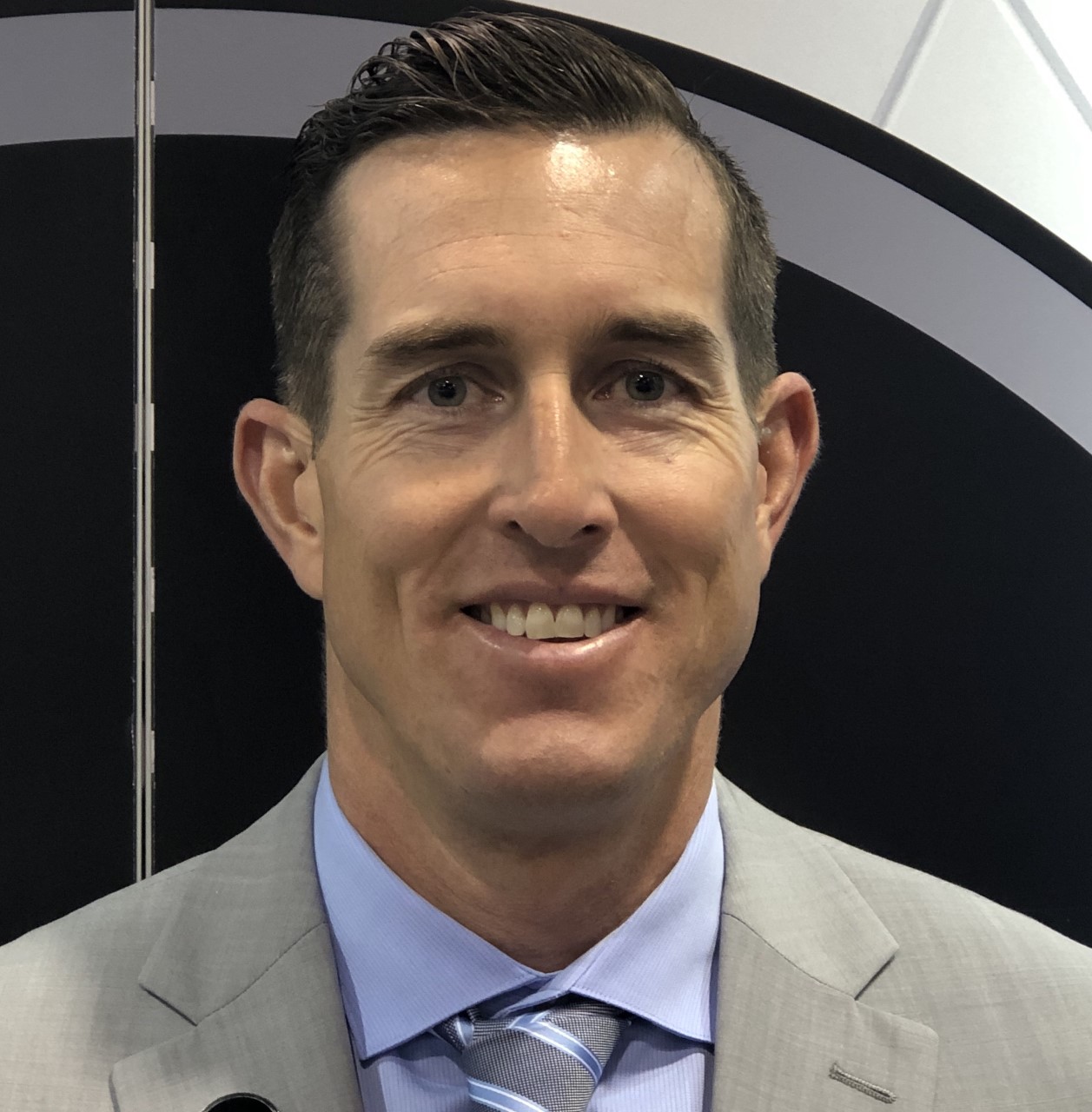
With 21 years of sales management, marketing, P&L responsibility, business development, national account, and channel management responsibilities under his belt, Ian has established himself as a high achiever across multiple business functions. Ian was part of a small team who started a new business unit for Stanley Black & Decker in Asia from Y10’ to Y14’. He lived in Shanghai, China for two years, then continued to commercialize and scale the business throughout the Asia Pacific and Middle East regions for another two years (4 years of International experience). Ian played college football at the University of Colorado from 96’ to 00’. His core skills sets include; drive, strong work ethic, team player, a builder mentality with high energy, motivator with the passion, purpose, and a track record to prove it.