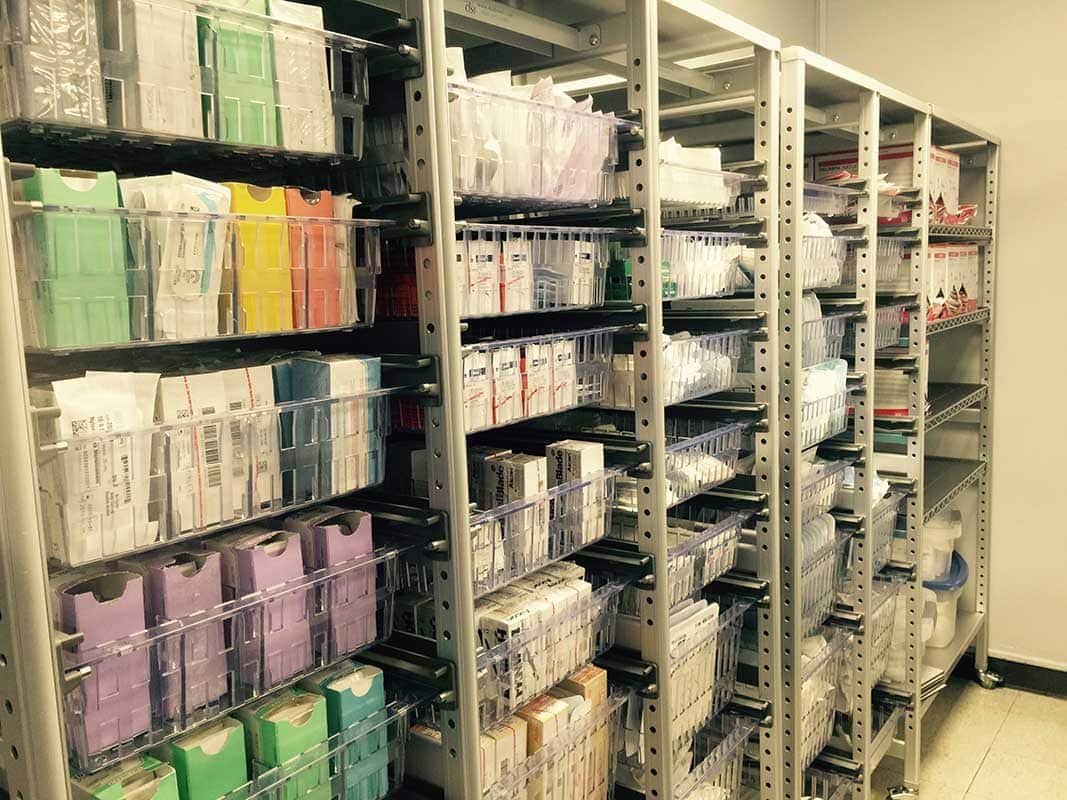
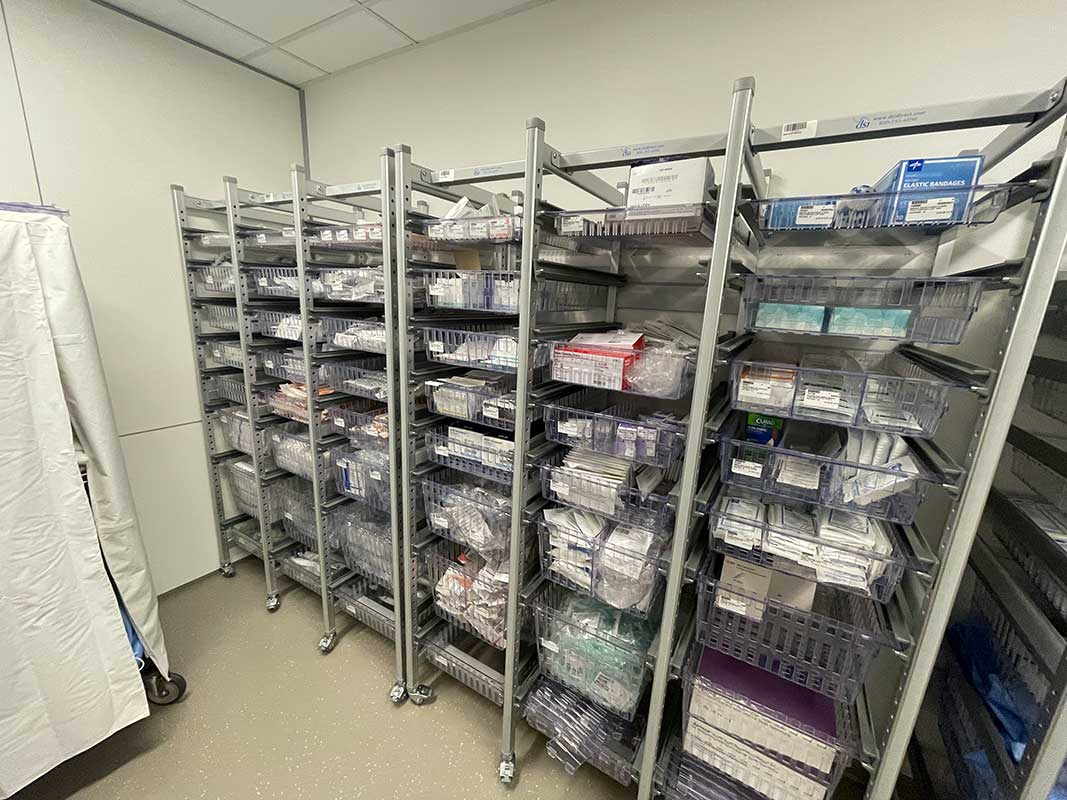
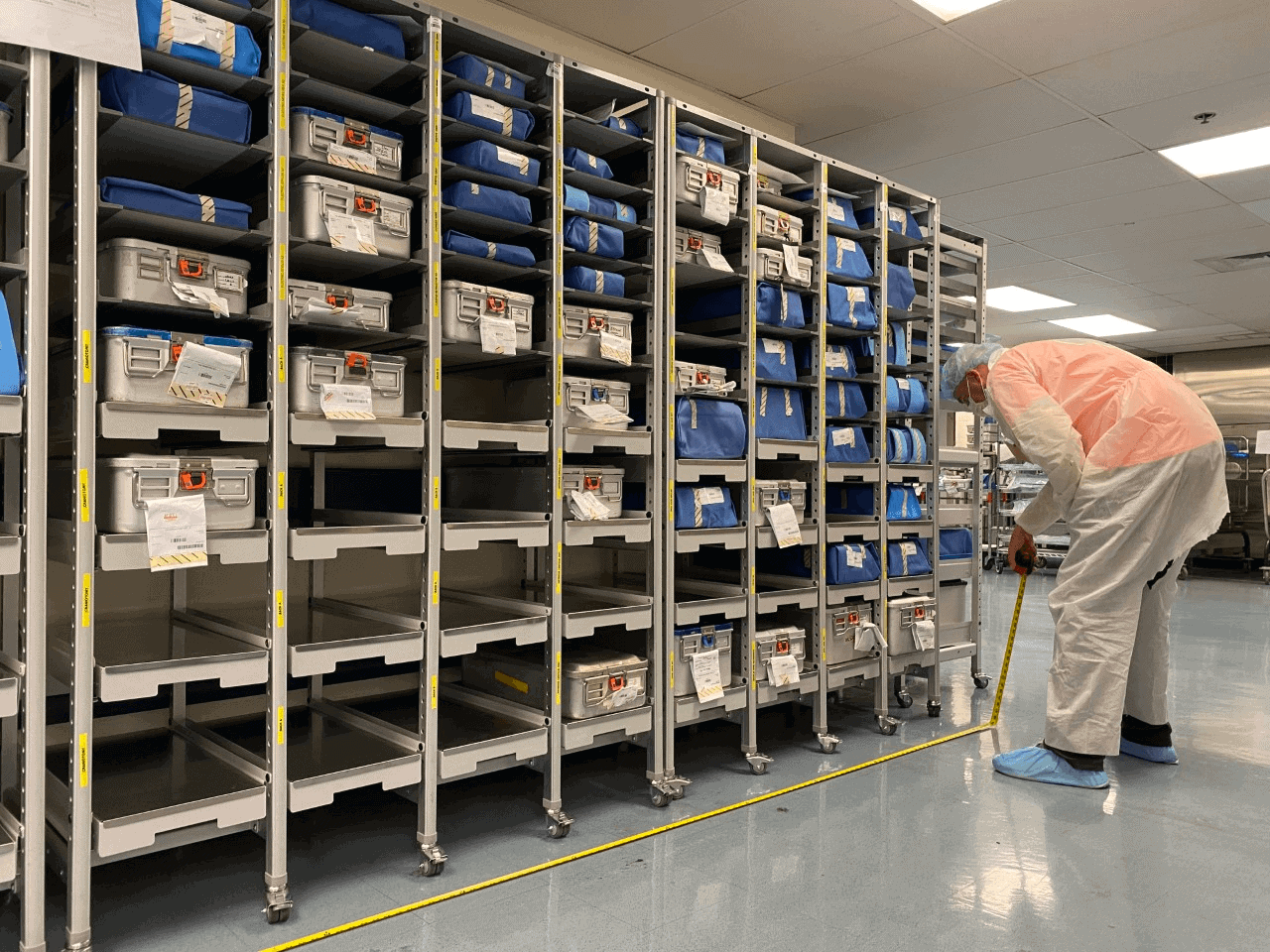
Hospitals lose more than 25 billion dollars annually to supply chain inefficiencies, creating urgent demand for qualified materials management consultants. Directors of materials management, SPD managers, and OR directors face mounting pressure to reduce costs, improve workflow efficiency, and ensure compliance while clinical staff spend valuable time hunting for supplies. Selecting the right consultant requires evaluating credentials, methodology, documented impact metrics, compliance expertise, and the difference between a consultative partner and a transactional catalog supplier.
This decision carries strategic weight because logistics activities account for 30 to 46 percent of hospital budgets. A qualified consultant brings measurable ROI through inventory optimization, labor recovery, space reclamation, and compliance protection, transforming supply chain operations into a competitive advantage. For background on core principles before evaluating consultant credentials, see our overview of materials management.
A materials management consultant analyzes hospital supply chain operations and implements data-driven improvements to reduce costs and improve workflow efficiency. These consultants conduct on-site assessments of inventory levels, PAR settings, usage patterns, storage design, and staff workflows to identify improvement opportunities. They design department-specific solutions for sterile processing, operating rooms, pharmacy, and central supply that address unique compliance and operational requirements.
Consultants implement LEAN and KANBAN methodologies proven to deliver 35 percent inventory holding cost reductions and 40 to 50 percent weekly consumable cost reductions. They provide turnkey implementation covering design, installation, inventory transfer, staff training, and post-engagement performance monitoring. The strongest consultants maintain ongoing partnerships supporting continuous improvement.
Core responsibilities include conducting comprehensive workflow audits, analyzing inventory management practices, and designing custom solutions addressing facility-specific challenges. Consultants document baseline performance metrics including inventory levels, carrying costs, expired stock, staff time on supply tasks, and space utilization. They create detailed ROI models projecting savings in inventory, labor, and capital avoidance before implementation begins.
Implementation responsibilities encompass project management, change management, staff training, and performance monitoring to ensure projected savings materialize. Logistics activities account for 30 to 46 percent of hospital budgets, and purchased services reach 40 to 50 percent of operating expenses. Qualified consultants reduce these costs through structured process improvement and storage solutions designed for healthcare workflows.
The American Hospital Association reports hospitals lose more than 25 billion dollars annually to supply chain inefficiencies. Nurses lose up to 60 minutes per shift hunting for supplies, generating aggregate costs near 14 billion dollars annually across the profession. Research shows nurses spend only 31 percent of the day on direct patient care, with supply search activities consuming time that should support patient outcomes.
Over one-third of nurses spend at least an hour searching for supplies during each shift. Improved materials management through inventory optimization recovers this lost clinical time and redirects it toward patient care. Healthcare supply chain improvements demonstrate operational efficiency gains of approximately 30 percent when structured LEAN and KANBAN methodologies are properly implemented.
Healthcare facilities operate under regulatory requirements and workflow constraints that differ fundamentally from retail, manufacturing, or general logistics environments. Consultants must understand AAMI standards for sterile processing, Joint Commission requirements for storage and environmental controls, FDA regulations for medical devices, and department-specific workflows affecting patient safety. Generic supply chain expertise cannot address the compliance layer where storage design and patient safety intersect.
Healthcare-specific consultants understand PAR level optimization for clinical supplies, expiration date management for perishable inventory, and workflow patterns unique to emergency departments, operating rooms, and sterile processing departments. Facilities that select consultants without healthcare specialization frequently face implementation failures when solutions conflict with clinical workflows or regulatory requirements.
Credentials serve as qualifying filters separating healthcare-specialized consultants from generalist vendors. The three most important certifications for materials management consultants are CMRP, Lean Six Sigma credentials, and sterile processing certifications. These credentials demonstrate command of healthcare-specific supply chain principles, structured process improvement methodologies, and compliance requirements affecting patient safety.
Consultant evaluation should verify credentials through direct confirmation with issuing organizations. Facilities should request proof of certification and verify credentials remain current.
CMRP stands for Certified Materials and Resource Professional, administered by the American Hospital Association Certification Center for AHRMM. This certification represents the recognized standard for healthcare supply chain professionals and signals healthcare-specific competence rather than generic logistics knowledge. CMRP requires a baccalaureate degree plus three years of healthcare resource and materials management experience before candidates qualify for the examination.
The CMRP examination tests five domains covering the complete healthcare supply chain lifecycle from strategic sourcing through inventory management. Procurement and Product Value Analysis carries the largest exam weight at approximately 28 percent. Unlike generalist supply chain certifications such as CSCP or CPIM, CMRP focuses exclusively on healthcare operations, regulatory requirements, and clinical workflow considerations.
Lean Six Sigma credentials demonstrate command of the DMAIC method: Define, Measure, Analyze, Improve, Control. This structured, data-driven approach produces the strongest documented results in hospital storerooms and operating rooms. Green Belt certification indicates proficiency in executing improvement projects, while Black Belt certification signals mastery of advanced statistical analysis.
A Dublin OR Lean Six Sigma project using DMAIC methodology cut stock held 17.7 percent, expired stock 91.7 percent, and staff prep time 45 percent. AHRMM hosts Lean and Six Sigma education specifically for healthcare supply chain teams, recognizing these methodologies as essential tools for cost savings analysis. Consultants holding both CMRP and Lean Six Sigma credentials combine healthcare-specific knowledge with proven process improvement frameworks.
Sterile processing certifications signal understanding of compliance requirements where storage design directly affects patient safety. CRCST designates certified sterile processing technicians who understand decontamination, assembly, sterilization, and storage workflows. CIS certifies instrument specialists with advanced knowledge of complex surgical instrumentation.
CHL identifies certified sterile processing managers who understand both technical processes and departmental leadership requirements. CER certifies endoscope reprocessors who manage high-level disinfection for flexible scopes requiring specialized storage and tracking. Consultants working on SPD or OR projects should hold at least one HSPA certification demonstrating familiarity with AAMI ST79 requirements and Joint Commission standards.
| Certification | Full Name | What It Signals |
| CMRP | Certified Materials and Resource Professional | Healthcare-specific supply chain competence, verified through AHRMM |
| Lean Six Sigma | Green Belt or Black Belt | DMAIC process improvement skill; Black Belt signals advanced statistical analysis |
| CRCST | Certified Registered Central Service Technician | Decontamination, assembly, sterilization, and storage workflow knowledge |
| CIS | Certified Instrument Specialist | Advanced knowledge of complex surgical instrumentation |
| CHL | Certified Healthcare Leadership | Technical processes plus departmental leadership for sterile processing |
| CER | Certified Endoscope Reprocessor | High-level disinfection and storage for flexible scopes |
A qualified consultant follows a closed-loop methodology structured around measurable outcomes rather than improvising solutions during implementation. The methodology should map to DMAIC phases and include mandatory on-site assessment, custom design with documented ROI projections, turnkey implementation with change management, and post-engagement performance monitoring. Consultants who skip on-site audits or refuse post-implementation support signal transactional vendors.
The strongest consultant methodologies include explicit deliverables and milestones at each phase with quantified success criteria agreed upon before work begins. Facilities should request examples of ROI models, CAD drawings, and performance dashboards delivered for comparable facilities.
Step one requires an audit and measurement phase consisting of on-site assessment of current inventory, PAR levels, usage patterns, workflow, and space utilization. Consultants who propose solutions before conducting thorough on-site audits lack the data foundation required for effective design. This phase includes staff interviews, workflow observation, and purchasing data analysis to establish baseline performance metrics.
Step two involves design and analysis, producing custom department-specific layouts, CAD drawings, and documented ROI models projecting savings in inventory, labor, and space. Step three covers implementation and improvement through turnkey rollout with change management and staff training. Step four establishes measurement and control through post-engagement performance monitoring, comparing actual results against projected outcomes.
On-site audits capture facility-specific constraints that generic templates cannot address, including physical space limitations, existing infrastructure, staff workflows, and departmental culture. Consultants who skip this step produce solutions that fail during implementation when designs conflict with physical realities or clinical workflows. Direct observation reveals inefficiencies that purchasing data and staff interviews miss.
Workflow assessment identifies root causes rather than symptoms, ensuring solutions address underlying problems. Facilities with identical bed counts and service lines often have dramatically different workflow patterns based on building layout, staffing models, and historical practices. Consultants who customize application-specific designs based on thorough on-site assessment deliver superior results compared to consultants applying standardized templates.
Post-implementation monitoring ensures projected savings materialize and identifies opportunities for continuous refinement as workflows evolve. Consultants who deliver reports and disappear leave facilities struggling with adoption challenges and unable to measure actual performance against projections. Structured follow-up visits at 30, 60, and 90 days allow consultants to observe real-world usage patterns, address staff concerns, and adjust designs before problems become embedded.
First-pass yield moved from 81 percent to 97.4 percent with quality programs including ongoing monitoring. Defect rates cut from 2.2 percent to under 0.1 percent demonstrate the value of sustained engagement. Facilities should negotiate explicit post-implementation support terms in consultant contracts.
Impact metrics must be specific, measurable, and tied directly to facility financial and operational outcomes. The strongest consultants commit to quantified targets before engagement begins and measure actual performance against projections after implementation. Key performance indicators should cover inventory and cost improvements, staff satisfaction and compliance, and space and workflow efficiency gains.
Facilities should establish baseline measurements before consultant engagement to enable accurate before-and-after comparisons. Metrics should be tracked monthly during the first year post-implementation to identify trends and address deviations from projected performance.
| Metric | Documented Result |
| Inventory holding cost reduction | 35 percent |
| Weekly consumable cost reduction | 40 to 50 percent |
| Operational efficiency gain | Approximately 30 percent |
| Compliance rate | 76 percent to 95 percent |
| Staff satisfaction | 79 percent to 90 percent |
| OR supply assessment time | 18-20 minutes down to 20-40 seconds |
| Stock value held in OR | Reduced 17.7 percent |
| Stock expiring before use | Reduced 91.7 percent |
| Clinical staff prep time | Reduced 45 percent |
| Floor area recovered via mobile shelving | 40 to 50 percent |
Inventory holding cost reduction through 2-Bin KANBAN systems averages 35 percent according to HFMA-cited surveys. Weekly consumable cost reduction using modified KANBAN in a three-year study demonstrated 40 to 50 percent savings. Annual medical supply expense reductions typically range from 5 to 7 percent when structured materials management improvements are implemented.
Overall inventory reductions of 15 to 25 percent commonly result from improved PAR level management and elimination of excess stock. AHRMM benchmarks establish healthy inventory turnover at 3 to 5 turns annually. Inventory carrying costs typically run 20 to 30 percent of inventory value annually, meaning a 400-bed hospital carrying 3.5 million dollars in supplies at a 27 percent rate spends roughly 945,000 dollars per year just to hold inventory.
Compliance improvement from 76 percent to 95 percent demonstrates measurable gains from structured materials management programs. Staff satisfaction increased from 79 percent to 90 percent in the same peer-reviewed quality improvement study. These metrics indicate well-designed systems reduce staff frustration while improving adherence to established processes.
Facilities should measure compliance through regular audits of PAR adherence, proper storage practices, and inventory accuracy. Staff satisfaction surveys should include specific questions about ease of finding supplies, time spent on inventory tasks, and confidence in supply availability.
OR supply assessment time reduced from 18 to 20 minutes down to 20 to 40 seconds through implementation of 2-Bin KANBAN systems with enclosed carts. Stock value held in OR reduced 17.7 percent through Lean Six Sigma projects using DMAIC methodology. Stock expiring before use reduced 91.7 percent, eliminating waste while ensuring supply availability.
Clinical staff time preparing stock reduced 45 percent through workflow optimization and improved storage design. Mobile shelving recovers 40 to 50 percent of floor area by removing fixed aisles, enabling facilities to avoid construction costs. Converting from six-level wire racks to nine-level modular storage systems adds approximately 33 percent capacity from improved vertical utilization before calculating aisle savings.
Some consultants also add RFID-enabled tracking so staff can locate high-value instruments and carts in real time, further reducing search time.
Consultant selection requires understanding specific red flags that signal underqualified vendors and green flags that indicate reliable strategic partners. The difference between qualified and unqualified consultants often becomes apparent only after poor implementation results emerge, making upfront evaluation critical. Facilities that select consultants based primarily on the lowest fee frequently experience failed implementations.
The strongest evaluation approach combines credential verification, reference checks with comparable facilities, methodology assessment, and ROI transparency review. Facilities should interview at least three consultant candidates. Selection committees should include representatives from materials management, clinical departments, finance, and facilities.
Vague improvement promises with no specifics indicate consultants lack documented methodology or measurable track records. Refusal or inability to provide references from comparable facilities suggests limited experience or poor past performance. Senior partners who pitch proposals then hand delivery to junior staff signal misalignment between promised expertise and actual implementation capability.
Rigid one-size-fits-all methodology indicates consultants cannot customize solutions to facility-specific constraints. Choosing consultants based on lowest fee often signals inexperience, inadequate staffing, or unrealistic project scoping. Consultants who propose solutions before conducting on-site assessments lack the data foundation required for effective design.
Institutional trust is demonstrated through documented track records, on-time delivery, and references confirming the consultant delivers what it promises. Consultative capability includes complimentary on-site workflow and space audits that diagnose problems before proposing solutions. Turnkey implementation provides a single point of accountability covering design, installation, training, and performance monitoring.
Total cost of ownership transparency includes clear savings modeling that accounts for inventory, labor, space, and compliance. Consultants should provide comprehensive service offerings that address the complete project lifecycle from assessment through ongoing support. Named references from facilities of similar size and complexity allow verification of past performance.
| Red Flag | Green Flag |
| Vague improvement promises with no specifics | Documented ROI models with quantified success criteria |
| No references from comparable facilities | Named references from facilities of similar size |
| Senior partner pitches, then hands delivery to junior staff | Consistent team from proposal through implementation |
| Rigid one-size-fits-all methodology | Custom design based on thorough on-site assessment |
| Selection driven mainly by lowest fee | Selection driven by institutional trust and turnkey accountability |
ROI transparency requires documented projections covering inventory savings, labor recovery, space reclamation, and compliance risk mitigation. Inventory carrying cost typically runs 20 to 30 percent of inventory value, creating substantial savings opportunities when consultants reduce excess stock. A 400-bed hospital carrying 3.5 million dollars in supplies at a 27 percent rate spends roughly 945,000 dollars per year to hold inventory.
Typical high-density storage ROI is cited around 18 months when comparing implementation costs against inventory, labor, and space savings. Consultants should model facility-specific ROI using baseline data collected during on-site audits rather than applying industry averages. Facilities should negotiate performance guarantees or risk-sharing arrangements when consultants claim particularly aggressive savings projections.
Compliance requirements fundamentally constrain storage design options in sterile processing departments, operating rooms, and pharmacy areas where environmental controls affect patient safety. Consultants who lack healthcare-specific expertise frequently propose solutions that violate AAMI standards or create Joint Commission citation risks. Storage designs must maintain required clearances, environmental controls, and material handling practices while improving operational efficiency.
The consultant's compliance knowledge directly determines whether improved efficiency survives accreditation surveys. Facilities should verify consultant familiarity with AAMI ST79, Joint Commission standards, CDC guidelines, AORN recommendations, and FDA requirements during consultant evaluation. Solutions that improve cost metrics while compromising compliance create greater long-term risk.
AAMI ST79 establishes environmental and material handling requirements for sterile processing departments that storage designs must accommodate. Standards require storage at least 8 to 10 inches from floors, 18 inches from ceilings, and 2 inches from outside walls. Sterile storage areas require a minimum of 4 air changes per hour with positive pressure relative to surrounding areas.
Temperature and humidity must be controlled within specified ranges to prevent microbial growth and material degradation. A 350-bed hospital redesigned SPD with high-density mobile shelving and gained 35 percent capacity while maintaining AAMI ST79 environmental requirements. Consultants must design storage that increases capacity and efficiency without compromising environmental controls or required clearances.
Joint Commission accredits roughly 21,000 to 22,000 US healthcare organizations and conducts regular surveys evaluating storage practices. Common citations include items stored on floors creating contamination risk, uncontrolled humidity in storage areas, and overstuffed shelves that prevent proper cleaning and create fire hazards.
Consultants should design storage with clear compliance margins rather than pushing maximum density limits that create citation risks. Wire shelving systems properly configured maintain required clearances while maximizing usable capacity within compliant parameters.
Environmental controls prevent microbial contamination of sterile supplies and surgical instruments that could cause surgical site infections. Positive pressure in sterile storage areas prevents contaminated air from adjacent spaces entering clean environments. Negative pressure in decontamination areas prevents aerosolized contaminants from spreading during instrument cleaning.
Temperature control prevents heat-sensitive materials from degrading, while humidity control prevents moisture that promotes microbial growth. Consultant storage designs must accommodate HVAC requirements, maintaining adequate air circulation around stored items while maximizing density.
Consultative partners diagnose facility-specific problems before proposing solutions, while catalog suppliers offer standardized products without workflow analysis. This fundamental difference determines whether implementations address root causes or apply generic fixes. Industry reporting documents a clear shift from transactional buying to strategic partnerships as supply chain leaders recognize the limitations of product-focused relationships.
Healthcare Purchasing News frames modern suppliers as acting like consultants who provide insight beyond transactions. Becker's Hospital Review reports supply leaders say their most important vendor relationships have moved from transactional purchasing to deeper strategic partnerships. The satisfaction gap between consultative partners and catalog suppliers is measurable across every dimension buyers care about.
Problem diagnosis satisfaction reaches 90 for consultative partners versus 35 for catalog-only suppliers. Consultative partners conduct on-site audits and workflow analysis while catalog suppliers fulfill orders without understanding facility-specific constraints. Outcome accountability satisfaction scores 88 for consultative partners versus 40 for catalog suppliers.
Labor and workflow impact satisfaction reaches 85 for consultative partners versus 30 for catalog suppliers because partners design solutions that recover wasted staff time. ROI transparency satisfaction scores 84 for consultative partners versus 45 for catalog suppliers. Compliance support satisfaction reaches 86 for consultative partners versus 55 for catalog suppliers.
Consultative service begins with understanding current workflows, identifying inefficiencies, and quantifying improvement opportunities before proposing solutions. This approach ensures recommendations address actual problems rather than selling predetermined products. Workflow improvements documented through peer-reviewed studies include 45 percent reductions in clinical staff time spent on supply tasks and 30 percent operational efficiency gains.
ROI improves because consultative partners optimize total cost of ownership rather than minimizing unit price. Purchased services can reach 40 to 50 percent of hospital operating expenses, and managing them transactionally produces inconsistent pricing, off-contract spend, and redundant vendors. Consultative partners consolidate spending, improve contract compliance, and deliver measurable savings across inventory, labor, and space.
Turnkey implementation provides a single point of accountability covering design, delivery, assembly, inventory transfer, staff training, and performance monitoring. This eliminates coordination challenges when multiple vendors each own a piece of the project but no one owns the outcome. Facilities avoid the risk of designs that cannot be installed as drawn or products that arrive without installation support.
Change management and staff training ensure new processes achieve adoption rather than reverting to old habits. Performance monitoring verifies projected savings materialize and provides early warning when adjustments are needed. Catalog suppliers typically end involvement at delivery, leaving facilities to manage installation, training, and performance measurement alone.
Institutional trust and reliability carry the highest weight at 16 percent because facilities need partners who deliver what they promise. Product quality, safety, and regulatory compliance rank second at 14 percent weight. Total cost of ownership and ROI transparency rank third at 13 percent, reflecting the importance of documented savings over unit price.
Consultative capability ranks fourth at 12 percent weight, recognizing the value of on-site audits and problem diagnosis. Turnkey implementation ranks fifth at 11 percent, demonstrating buyers prefer single-source accountability. Together, these five highest-weighted factors account for more than half the total selection weight and represent areas where consultative partners fundamentally outperform catalog suppliers.
Selecting a qualified materials management consultant requires evaluating credentials including CMRP and Lean Six Sigma certifications, verifying proven methodology with mandatory on-site audits, confirming documented impact through measurable KPIs, and ensuring compliance expertise protects your facility during accreditation surveys.
The difference between qualified consultants and catalog suppliers manifests in satisfaction scores where consultative partners achieve 85 to 90 percent satisfaction across problem diagnosis, outcome accountability, workflow impact, and ROI transparency while catalog suppliers score 30 to 55 percent in the same categories. Facilities that prioritize institutional trust, consultative capability, and turnkey implementation over lowest unit price achieve documented savings averaging 35 percent inventory holding cost reduction, 40 to 50 percent weekly consumable cost reduction, and 30 percent operational efficiency gains while using solutions like plastic bin systems properly integrated into comprehensive materials management strategies.
Distribution Systems International has worked with acute care facilities since 1990, pairing hands-on materials management consulting with full turnkey storage implementation. A storage professional completes a complimentary on-site assessment, documents your current PAR levels and workflow gaps, and builds a facility-specific ROI model before you commit to any product.
Call (800) 393-6090 to speak with a specialist and request a free storage quote or schedule your consultation.
Consultant fees vary by facility size, project scope, and whether the engagement bundles assessment, design, product, and installation into one turnkey contract. Many consultants offer a complimentary on-site assessment and ROI model before any fee is discussed, which lets hospital leaders compare projected savings against project cost before committing. Facilities should request a written scope of work and a documented ROI projection, so cost comparisons reflect total value rather than unit price alone.
A typical engagement moves through four phases: on-site audit and measurement, design and ROI modeling, turnkey implementation, and post-engagement monitoring. Facilities should expect structured follow-up visits at 30, 60, and 90 days after installation to confirm adoption and measure results against projections. Total timelines depend on facility size and the number of departments involved, so multi-department rollouts take longer than a single-unit redesign.
CMRP, or Certified Materials and Resource Professional, demonstrates healthcare-specific supply chain knowledge and requires a bachelor's degree plus three years of relevant experience. Lean Six Sigma credentials demonstrate mastery of the DMAIC method, the structured process improvement framework used to cut inventory, labor, and space waste. Consultants who hold both credentials combine healthcare-specific knowledge with a proven process improvement framework, which is why facilities often look for both on a single resume.
Yes, when the consultant follows a turnkey process that includes change management and phased implementation. Turnkey implementation covers product delivery, assembly, inventory transfer, and staff training under a single point of accountability, which limits the coordination gaps that cause disruption. Facilities should ask prospective consultants how they sequence work around active departments and confirm they have executed similar rollouts in occupied acute care environments.
Ask for references from facilities of similar size and complexity, and confirm those references reflect projects the firm delivered in the last two to three years. Request documented ROI models and CAD drawings from comparable past projects rather than generic marketing materials. Confirm the consultant conducts a mandatory on-site audit before proposing solutions, and ask who performs the actual implementation work, since some firms hand delivery to less experienced staff after a senior partner closes the deal.
With 21 years of sales management, marketing, P&L responsibility, business development, national account, and channel management responsibilities under his belt, Ian has established himself as a high achiever across multiple business functions. Ian was part of a small team who started a new business unit for Stanley Black & Decker in Asia from Y10’ to Y14’. He lived in Shanghai, China for two years, then continued to commercialize and scale the business throughout the Asia Pacific and Middle East regions for another two years (4 years of International experience). Ian played college football at the University of Colorado from 96’ to 00’. His core skills sets include; drive, strong work ethic, team player, a builder mentality with high energy, motivator with the passion, purpose, and a track record to prove it.